Precision agriculture was once dismissed as a passing phase, a technological trend that would fade with time. Today it is as embedded in modern farming as artificial intelligence is in daily life, and neither can be easily set aside without real consequence. Precision agriculture tools have changed how contemporary farmers work, taking out drudgery, improving efficiency, and lifting profitability. They have also sharply reduced dependence on manual labour. Those benefits are clear and visible.
Yet resistance persists. Looking at the criteria that drive adoption, the barriers that hold precision agriculture back are often not technical at all. They are cultural and traditional, the kind usually assumed to belong to the past, and they are surprisingly stubborn. Farmers of earlier generations relied on specific, time-tested methods without access to tools that might have raised their yields. Those tools are everywhere now, and adoption is growing among farmers who have seen the benefits firsthand, but resistance has not gone away. Three reasons for it keep coming up.
Deep-seated risk aversion
Farmers are naturally risk-averse because their craft depends on patience and on the turning of the seasons. They tend to avoid anything that looks risky, putting every safeguard in place for a trouble-free season. A new tool, even one designed to remove uncertainty and reduce risk, can feel alien and get resisted for that reason alone. The resistance is rarely about the tool itself. It comes from how exposed a farmer is to uncertainty, and a tool that has not been tested or used personally looks risky precisely because it is not yet understood.
This is made harder by the fact that farmers work within tight windows and often cannot correct course if something goes wrong. Research on technology adoption confirms that higher risk aversion reduces both the scale and the speed at which farmers take up new technology, and studies of conservation agriculture have found that risk aversion strongly affects how far and how intensively farmers adopt new practices, a finding that carries directly over to precision agriculture.
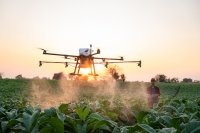
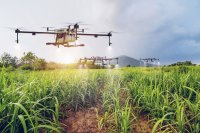
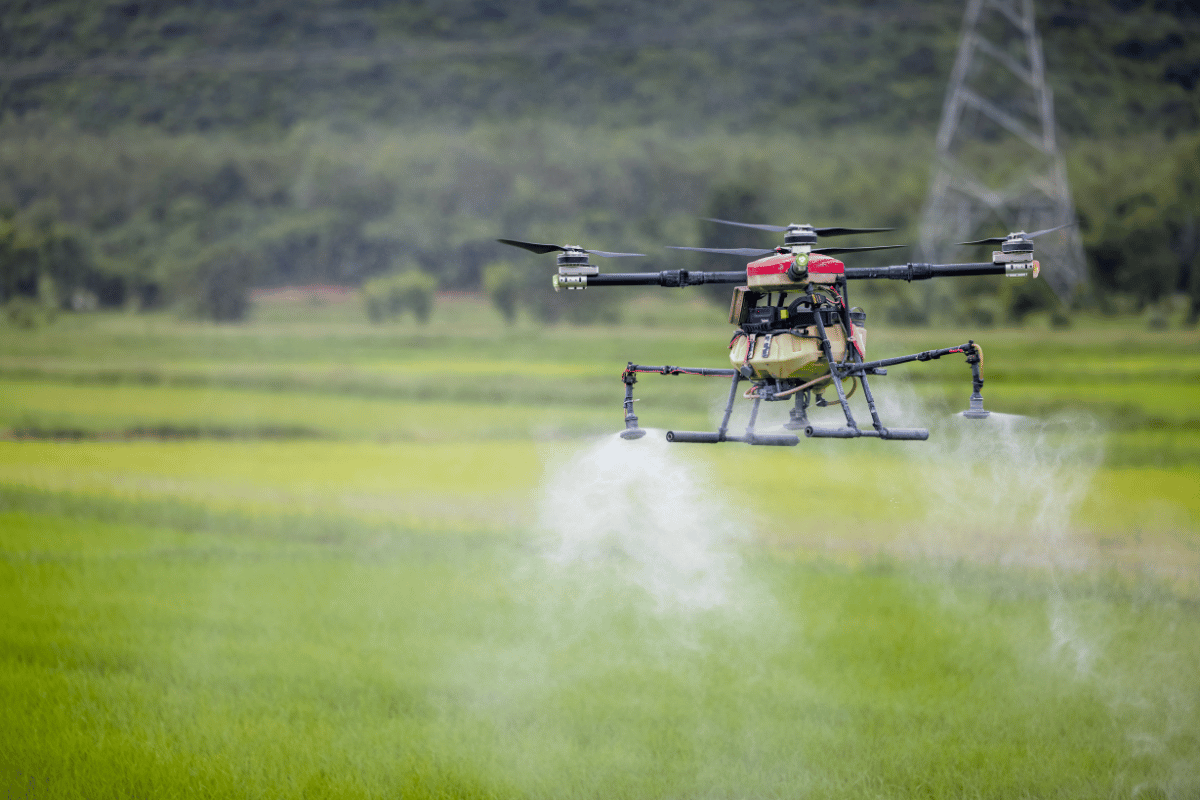
An example from my own work shows how this plays out. On the farm where I work, we introduced drones for spraying. Whether from the novelty of it or something else, resistance appeared among the staff. It was not an open refusal; it was subtle, a reluctance to engage with the idea and a hesitation to help the drone operators and their support crew. We dealt with it by making sure everyone understood the drones for what they actually were: tools to make spraying easier and more efficient. Acceptance did not come overnight, but over time the attitude softened. Clearing up ambiguity and showing the benefit plainly are what overcome risk-related resistance.
A lack of digital literacy
Low digital literacy is one of the main reasons precision-agriculture tools go unused. The questions in a farmer's mind are simple and fair, what is this, and how does it help me, and until they are answered clearly, adoption stays low. Agricultural digital literacy, the ability to understand and apply digital tools to improve productivity and crop monitoring, is the foundation that lets a farmer use these tools at all. Systematic reviews point to age, education level, and access to technological infrastructure as the main factors shaping it, and research has found that stronger digital literacy improves a farmer's ability to anticipate and manage climatic, economic, and regulatory risk.
The practical answer is training. Sessions and demonstrations should give intended users the basics of how each tool works and what it does, with the benefits spelled out in terms they can relate to their own operation.
A moment from my own learning makes the point. Out of enthusiasm for the technology, I have always looked for chances to use it. As a novice drone pilot on one of my first flights, I finished mapping the area I wanted to cover and launched the drone, a fixed-wing eBee X used to capture images that become vegetation-index maps. It completed its flight pattern and began circling the waypoint, and I could not understand why it would not land.
It never occurred to me that I had missed a step in the flight plan, I had not clicked "land at home point." I learned that the hard way as the drone circled until the battery nearly ran out and forced an emergency landing, and I had to go back to my trainer, who pointed out the error. Training matters, and it should be standard practice for every new tool a farm brings in.
Conflict with ancestral methods
This barrier is not about skill or tools or effort. It is a deeper disconnect. Traditional farming treats the farm as a whole living system, understood through qualitative, observed knowledge handed down over generations. Precision agriculture approaches the same farm as something to optimise, using data gathered over time from sensors across different areas to drive decisions. To an older farmer, that data-driven approach can feel like a dismissal, even an erasure, of the traditional way. Recent studies identify psychological resistance to change and a low perceived benefit as key barriers in European contexts, and work in developing regions points to socio-cultural barriers and resistance to change as significant factors in adoption.
The way through is to marry the two approaches rather than pit them against each other. Farmers need to see where old and new methods align, and how the new adds to what they already do. Precision agriculture does not discard ancestral wisdom; it adds data to it. When a farmer sees that the technology strengthens their own judgement instead of overriding it, the resistance fades.
The path forward
Widening the adoption of precision agriculture is not only a technological task. It is cultural, psychological, and educational. The tools deliver real, measured benefits. The most authoritative US study attributes about a 5% increase in crop production to current adoption, with a further 6% possible as adoption widens, alongside meaningful reductions in fertiliser and herbicide use and billions of dollars in efficiency gains across the farm economy. A global meta-analysis puts the average return on investment 22% higher and net profit around 18% higher where the technology is adopted. Those gains cannot be realised, though, without addressing the human factors that govern whether farmers take the tools up at all.
Risk aversion, weak digital literacy, and clashes with inherited methods are not set in stone. They call for deliberate, patient, and empathetic work. As other accounts of smallholders taking up these tools show, farmers should be treated as partners in the change, not merely as end-users of it. Training has to be practical, accessible, and ongoing. Demonstrations have to show clear, measurable results within the tight windows farmers actually work in. Above all, bringing traditional knowledge and modern technology together should be presented as an evolution of the craft, not a replacement of it. The tools are ready and the evidence is strong. The task now is to make sure the people are ready too.
Sources
Arangurí, M., Mera, H., Noblecilla, W., and Lucini, C. (2025). Digital literacy and technology adoption in agriculture, a systematic review of factors and strategies. AgriEngineering, 7(9), 296.
Arangurí, M., et al. (2026). Impact of digital literacy on the adoption of precision agriculture in rice cultivation. Frontiers in Sustainable Food Systems, 10.
Association of Equipment Manufacturers (2025). The benefits of precision ag in the United States.
Barham, B. L., et al. (2014). The roles of risk and ambiguity in technology adoption. Journal of Economic Behavior & Organization, 97, 204-218.
Getahun, S., et al. (2024). Application of precision agriculture technologies for sustainable crop production. PMC.
Simutowe, E., et al. (2024). Risk aversion, impatience, and the adoption of conservation agriculture. PMC.
U.S. Government Accountability Office (2024). Precision agriculture, benefits and challenges for technology adoption. GAO-24-105962.
Žáková Kroupová, Z., et al. (2026). Drivers and barriers to precision agriculture adoption in Czech agriculture. Precision Agriculture.
Farm-level economic and environmental benefits of precision agriculture technology adoption (2025). A meta-analysis of global evidence. Sustainability, 17(24), 11223.