Biosecurity in Poultry Farms: A Critical Shield Against Disease and Loss
I. Introduction
A. Importance of Biosecurity in Poultry Production
Biosecurity constitutes the foundation of poultry production systems, acting as the primary line of defense prior to the utilization of pharmaceuticals or immunizations. Its importance is amplified considering increasing microbial pressure. The World Organization for Animal Health (WOAH, 2023) asserts that biosecurity is the most cost-effective approach to disease management in poultry farms. It reduces production losses, minimizes unneeded medication usage, and decreases mortality rates.
B. The meaning of Biosecurity
On a farm, biosecurity encompasses all physical, mechanical, and cultural measures implemented to prevent the transmission of illnesses. It is not a transient emergency plan; rather, it is an adaptive and continuous culture. A study evaluated the frequency of Escherichia coli (E. coli) and biosecurity protocols in commercial chicken farms in Sharkia, Egypt. Four farms' worth of samples revealed that each had subpar biosecurity ratings (less than 50%). Nearly 80% of all samples had E. coli, with the largest concentrations occurring in the cloaca, water, and litter. (Zaki et al., 2024)
II. External Biosecurity – Protection from the Outside World
- Site Selection: To prevent airborne diseases, the best sites should be chosen, considering factors like waste disposal, wind direction, and a sufficient distance from other farms (Kabeta et al, 2024).
- Disinfection gates and entry points: The presence of personnel decontamination chambers and vehicle disinfection units considerably lowers the entry of external pathogens (Kabeta et al, 2024).
- Suppliers and Visitors: Visitors must follow a rigorous protocol. In Egypt, when visitor logs and hygiene precautions were absent, farm visits were associated with a higher risk of disease transmission.
- Disinfection of Vehicles and Equipment: Using the right chemicals and creating a designated disinfection zone can help minimise the indirect spread of pathogens through fomites (Kabeta et al, 2024).
III. Internal Biosecurity – Protecting the Inside of the Farm
- The FAO recommends the All-in, All-out System, which has been successfully used in disease-free compartments and reduces the spread of disease between age groups (FAO, 2020).
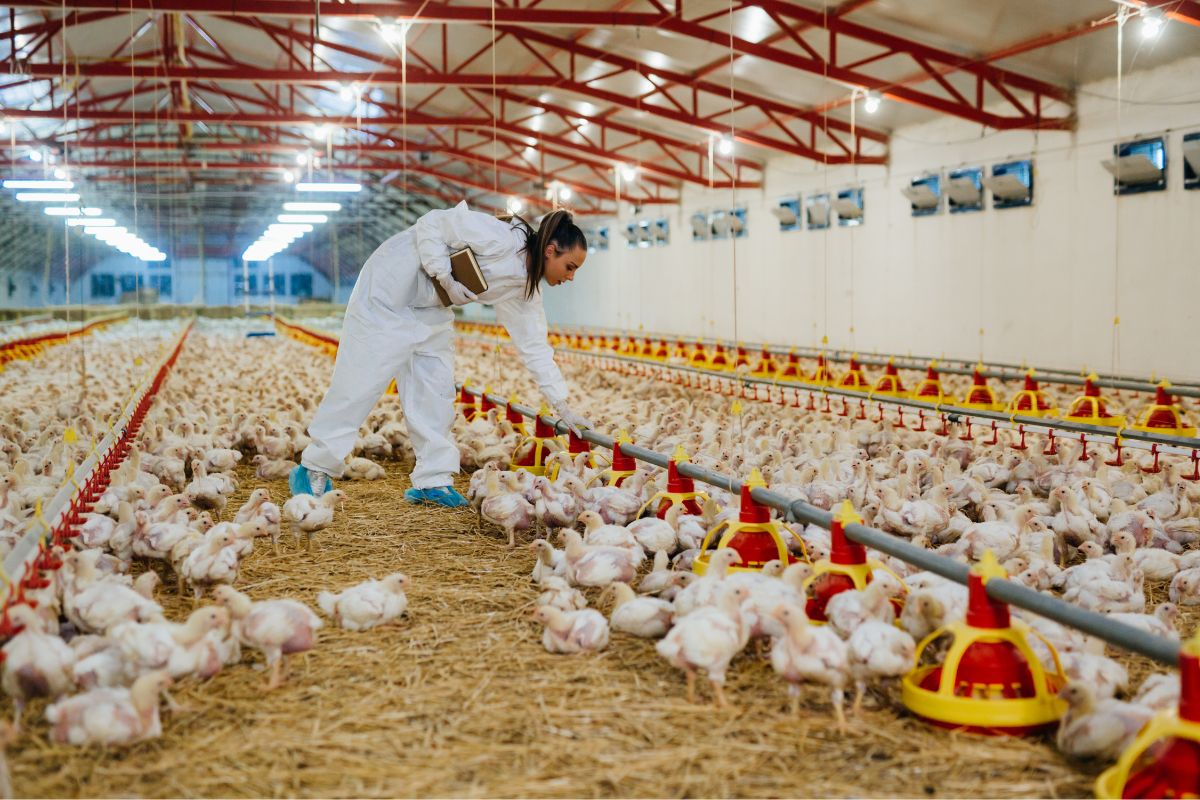
- House-specific Equipment and Clothes: Using colour-coded and sanitised equipment for every poultry house decreases the risk of cross-contamination.
- Movement Protocols: Workers should move in a hierarchy from the youngest to the oldest birds. Models from Thai and Dutch poultry farms demonstrate that training dramatically increases compliance.
- Regular Disinfection and Documentation: It's important to clean and disinfect regularly without omitting the pre-cleaning step. A logbook or digital platform improves accountability (WOAH, 2023).
IV. Diversity in Disinfectants – A Vital but Neglected Weapon
- A single disinfectant compound used for an extended period of time may promote microbial resistance.
- Rotational Programs: It works well to alternate between formalin, iodine, chlorine, and QACs.
- Farm-Specific Pathogen Sensitivity: Before choosing disinfectants, it is strongly advised to perform bacterial culture and sensitivity testing (Zaki et al., 2024).
- Appropriate Application Parameters: Optimising concentration, contact duration, and ambient pH/temperature maximises effectiveness (FAO, 2020).
- For instance, in cycle 2, if quaternary ammonium compounds (QACs) were utilised in cycle 1, switch to formalin or iodine.
V. Disinfectant Application Methods – Spraying, Fumigation, and Immersion
- Spraying: After cleaning, high-pressure sprayers work best. Verification of coverage is aided by test sprays (WOAH, 2023).
- Fumigation works best in vacant homes. Although formalin-based fumigation is frequently used, it requires close concentration monitoring and airtight conditions (FAO, 2020).
- Immersion: Every day, footwear and tools should be submerged in disinfectants. One possible addition is heat sterilisation.
- A weekly rotation of these techniques guarantees optimal coverage and efficacy.
VI. Rodent Control – The Hidden Enemy
- Numerous farm outbreaks in Egypt have been linked to rodents, which are vectors for Salmonella, Clostridium, and Coccidia.
- Baiting Programs: It's crucial to rotate the types of bait and conduct monthly monitoring.
- Infrastructure Sealing: Use rodent-proof materials to seal off holes and gaps.
- Monitoring Tools: Tracking powders and traps can be used to locate infestation hotspots.
VII. Vaccinations – The Line of Immune Defense
- Despite being technically distinct, vaccination enhances flock resistance, which supports biosecurity.
- Tailored Programs: Area-specific vaccinations must be added to the core vaccines. Egypt's Ministry of Agriculture advises annual reviews.
- Documentation: Traceability is enhanced by digital logs or tracking via QR codes.
- Serological Monitoring: Before and following vaccination cycles, antibody titers are used to evaluate the effectiveness of vaccines (WOAH, 2023).
VIII. Building a True Biosecurity Culture
- Worker Training: Frequent seminars that go over the "why" behind each protocol greatly increase adherence.
- Regular Monitoring: Environmental samples and swabs can identify breaches early.
- Record-keeping: Visitor, vaccination, and disinfection logs facilitate traceability and enhance decision-making.
IX. Evaluating Biosecurity Success
- Important Indicators: Drug use, feed conversion, and mortality rates offer information about the effectiveness of biosecurity.
- Post-outbreak Analysis: Examining past disease outbreaks improves readiness. • Environmental Testing: Accredited laboratories' air and surface tests help guarantee that invisible threats are identified early (FAO, 2020).
X. Realistic Challenges and Practical Solutions
- Cost: Although the initial setup may be expensive, it will be worth it in the long run due to the savings and gradual implementation.
- Human Factors: It's critical to train seasonal employees and provide rewards for adherence.
- Farm Location: Additional precautions and physical barriers may be necessary if the farm is close to contaminated areas.
Conclusion
In poultry management, biosecurity is an essential investment that cannot be skipped. Increased profitability, reduced mortality, and healthier flocks are the results of every pound spent on preventive systems. Biosecurity will continue to be the determining factor that separates resilient farms from those that are constantly at risk as the global poultry industry expands and changes.
References
- Food and Agriculture Organization (FAO), 2020. An evidence-based approach towards improving poultry biosecurity. Rome: FAO. Available at:
- https://openknowledge.fao.org/bitstreams/b7525fc9-3cbc-4d2a-b299- 814262cf7d41/download [Accessed 9 May 2025].
- Kabeta, T., Tolosa, T., Nagara, A., Chantziaras, I., Croubels, S., Van Immerseel, F. and Antonissen, G., 2024. Awareness of poultry farmers of interconnected health risks: A cross-sectional study on mycotoxins, biosecurity, and salmonellosis in Jimma, Ethiopia. Animals, 14(23), p.3441. https://doi.org/10.3390/ani14233441
- World Organisation for Animal Health (WOAH), 2023. Chapter 6.5: Biosecurity procedures in poultry production. Terrestrial Animal Health Code. Paris: WOAH. Available at:
- https://www.woah.org/fileadmin/Home/eng/Health_standards/tahc/2023/chapitre_biosecu _poul_production.pdf [Accessed 9 May 2025].
- Zaki, M.S., Fahmy, H.A., Khedr, M.H., Goha, M.A., and Attia, A.S., 2024. Relationship between poultry biosecurity assessments and Escherichia coli prevalence in poultry farms. Journal of Advanced Veterinary Research, 14(3), pp.362–367. Available at: https://www.advetresearch.com/index.php/AVR/article/view/1561 [Accessed 9 May 2025].
Further reading
Grape pomace as a natural feed additive for sustainable poultry production
Optimizing Broiler Nutrition: Feed Strategies for Growth & Sustainability
Non-Conventional Strategies to Combat Coccidiosis in Poultry: Herbal Extracts & Feed Additives
Transforming Poultry Waste into Organic Fertilizer: A Circular Agriculture Solution
Managing Heat Stress in Poultry: Effects on Broilers & Layers
Early Weight Gain and Growth Optimization in Broiler Chicks: Key Strategies
Gumboro Disease in Chickens: Symptoms, Pathogenesis, and Control