

Introduction
Bees are far more than honey producers—they are essential guardians of biodiversity and life on Earth. Their role as pollinators supports ecosystems, food production, and the health of both wildlife and humans. This article explores a series of educational and scientific projects in Varaždin, Croatia, that highlight the importance of bees, the threats they face, and the urgent need to protect them.
A Lifelong Passion for Bees
I became interested in bees, or rather, I fell in love with bees when I was 17. I read about them and heard about the experiences of beekeepers, including those of my great-grandfather, who kept them in hives that were known as “pološke” in our country. Even in the fourth grade of high school, I refused to go on a graduation class trip to the Adriatic Sea and asked my parents to let me invest that money in the purchase of my first two honey bee hives. They agreed and I was indeed happy. That love has lasted, strange as it may seem to me, for 25 years now.
In the meantime, I graduated from high school as a Chemical Technician, gained my faculty diploma as a Doctor of Veterinary Medicine and a Master of Theology, and earned a science doctorate (Ph.D.) in Environmental Engineering. Personal interest and love for bees has not faded; on the contrary, it has grown. My employment at the University of Zagreb at the Faculty of Geotechnical Engineering and in the Environmental Engineering study program gave me a special opportunity to combine my love and passion for bees with my many years of work in the Laboratory for Environmental Geochemistry.
The “Save the Bees so that Life on Earth does not Perish” Project
Through cooperation with the communal water company from Varaždin in 2021, a project with the local community called “Save the Bees so that Life on Earth does not Perish” was formed by myself and my dear colleague Jelena Loborec. The project activities were conceived and successfully implemented in three phases. The first phase was to establish a so-called public apiary in the (former) public city orchard. For this purpose, with the support of the communal company, we purchased two honey bee colonies (Apis mellifera carnica) in LR hives, with the necessary beekeeping equipment, and placed them in the public orchard.
These bees played the role of pollinators in the city of Varaždin, which is known as a city of parks, greenery, flowers and a place where people still have their own private gardens and orchards next to their family houses. The city of Varaždin is located in the northern continental part of Croatia and has a population of around 44,000. In this way, our bees contributed to the maintenance of biodiversity, both of wild and cultivated plant species.
Education and Community Outreach
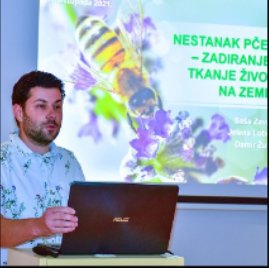
The second phase was the education of children and young people as well as the interested public. It took place in two ways. The first was to invite and bring children from the city and surrounding kindergartens, primary and high schools from the city area, but also beyond, to our faculty. There, we would have educational workshops for them, which consisted of lectures with PowerPoint presentations and video clips.
The lessons included the place of bees in the animal kingdom, the biology of the honey bee (Apis mellifera L.), the life of bees in the colony/hive, reproduction and the life cycle of a bee, the bee sting, the importance of bees as pollinators, the impact of the environment on bees, the contamination that bees encounter, honey bee diseases, and the consequences of losing bees. This was followed by a practical part where the construction of the hive, honeycomb, beekeeping tools and equipment would be demonstrated, with the little ones especially enjoying trying on beekeeping suits and taking photographs in them.
In the last part of the workshop, depending on their age, the children would paint representations of bees or take part in a knowledge quiz showing what they had learned about bees. At the end, the participants would be rewarded with commemorative badges as a reminder of bee protection and special homemade honey cookies. Another way to carry out this phase of the project was to personally visit the school where we would provide education to children and teachers in the classroom, presenting the aforementioned content. Thus, during the official duration of the project, until the fall of 2022, and due to the continuous interest shown in the following years, more than 600 children and young people went through our education. We consider this as a success of great value.
The experience with the children turned out to be very positive. The little ones were happy to participate in the workshops, sharing their experiences with bees, wasps, hornets, bumblebees, and more. They were also happy to answer questions. At the end, they would, together with their teachers, thank and reward us with applause. A special reward certainly was their curious faces, absorbing knowledge about bees and the inevitable smiles.
Urban Honey as an Environmental Indicator
The third phase of the project involved the collection of so-called urban honey, or honey samples that were produced as a product of bee activity on honey pastures in the city area. These included rapeseed and sunflowers that bloomed at the very entrance to the city, as well as linden trees that are located throughout the city. Twelve heavy metals and toxic elements were determined in the honey samples in order to gain insight into the state of potential contamination in the city of Varaždin. Thus, bee colonies actually served as biometric stations, and bees as biological indicators of the presence of certain contaminants.
The purpose of all project segments was to learn about the life and importance of bees in our environment, as well as their significant role in maintaining biodiversity, food production, and the survival of humanity. Also, emphasis was placed on the anthropogenic impact of environmental contamination on bees and the health of people who are the ultimate consumers of their products.
Expanding the Research and Ongoing Education
This project was followed up in 2023 by another one named “Bees - Guardians of Life on Earth,” carried out through cooperation with Varaždin County. The activities of this project were linked to the third phase of the previous project in a way that we expanded the sampling and analysis. Five locations were determined in Varaždin County where soil, water, melliferous plants growing and blooming there, honey bees, and honey as the final product were sampled. The locations were assumed to have different human influences.
Thus, we sampled in an urban environment, namely in the city of Varaždin, next to the city where there is agricultural production and traffic, and in the surrounding hill forest area. The results were used as part of our more comprehensive scientific research work throughout the Republic of Croatia in the same and the following year. By sampling the so-called non-living components of the water and soil environment, with those living like melliferous plants, bees, and their products, we gained insight into the presence of potentially contaminating substances in water and soil and their transfer via plants (flowers) to and into bees and honey.
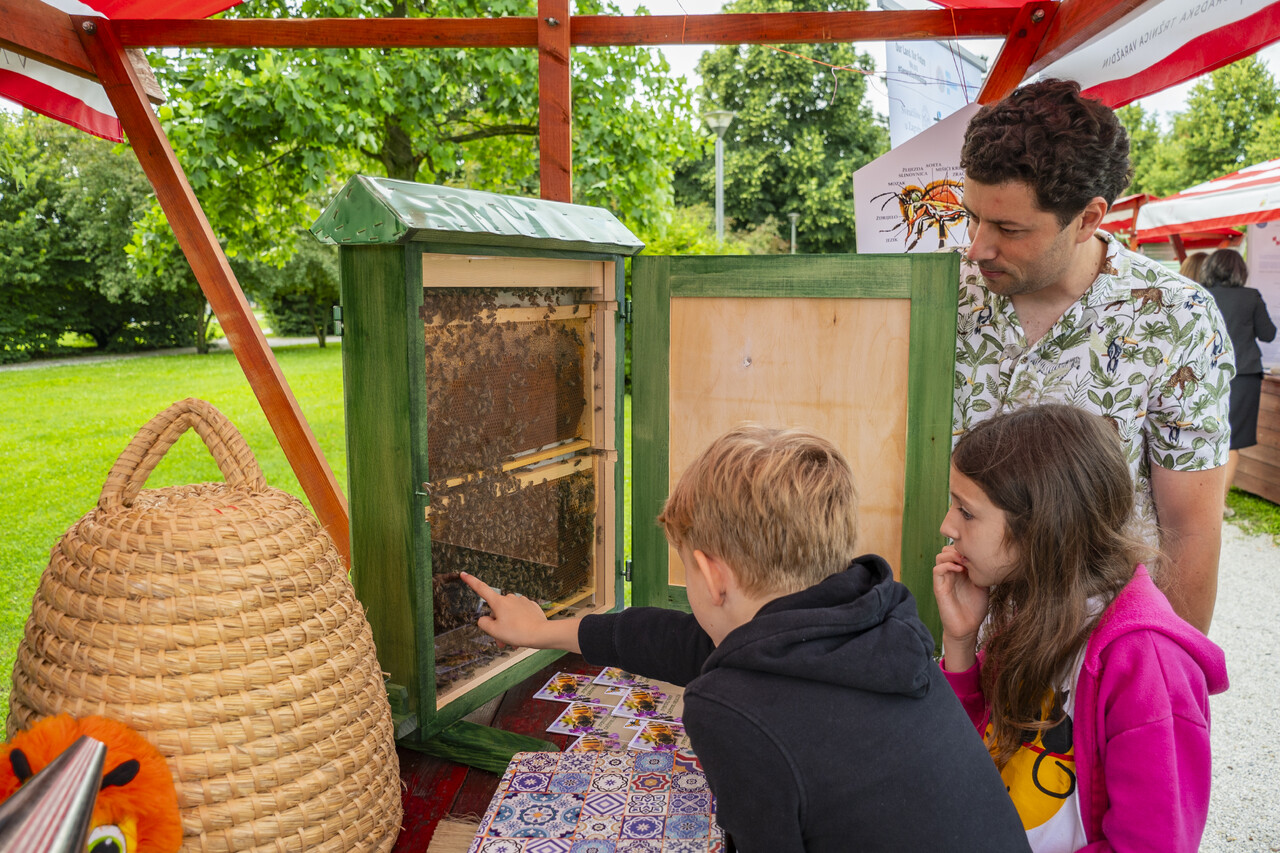
Educational work continued during that period too. For that purpose, we bought an apisarium—a small hive with glass sides so everyone can see the life of honey bees up close. The final results of this project were presented at a lecture in a local elementary school. We have also been participating in the celebration of World Environment Day for a few years now, where we have a stand with messages about the role, importance, and protection of bees, and where people can enjoy sweet honey bee products and get useful information.
Interdisciplinary Approach and the Future
These projects are actually a good demonstration of interdisciplinarity in Environmental Engineering, where the issue of bees and contamination was viewed from a biomedical (veterinary) point of view, a technical engineering and chemical analytical position, but also from a bioethical perspective. We are grateful for such opportunities to realize projects with bees and consider them a testament of a better future in which it is necessary to raise awareness of the important role of bees in nature, our common environment, and human society. Apes donum sunt—bees are a gift to us, let’s protect them.
Further reading
How beekeeping helped me finance my university education
How to manage beehives for healthy colonies and profitable honey production
In a world without bees, who will feed humanity?
6 energetic factors that drive honeybee colony health
Bees in Sustainable Agriculture: Natural Guards & Pollination Heroes
Wild Pollinators: Your Farm's Unsung Heroes
Beekeeping for Kids: Engaging children in the world of beekeeping
Solitary Bees and Their Crucial Role in Urban Forestry and Agriculture
Protecting Pollinators: Safeguarding Nature's Essential Insect Workforce