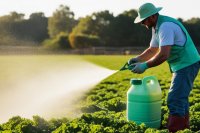
For farming families, a crop disaster usually starts with a phone call made too late. The crop has already been sprayed, the money has been spent, and the leaves are still turning brown. In Bangladesh, farmers are usually asked to act at the last stage, once the disease is visible, the damage is done and the cheapest options have already been tried. That is crisis management, and it should not be mistaken for plant health management.
The difference matters because climate change is shifting conditions in favour of pests and diseases. A small rise in temperature, an unexpected shower, a few humid nights, salinity, drought or excess nitrogen can tip the balance between a crop and its enemies. The result is a changing disease profile as well as more pests, in which a familiar symptom may come from a new pathogen, or appear at an unusual time or on an unusual scale.
Bangladesh already loses close to a third of its crops to pests and diseases
Recent evidence from the region shows the scale of the problem. FAO estimates that invasive pests and diseases cause 30% annual crop losses in Bangladesh. In an FAO project in Mymensingh district, okra growers combined three biological control agents, the fungus Trichoderma, the predatory mite Neoseiulus longispinosus and the egg parasitoid Trichogramma, and cut fungal disease and insect damage by 60 to 70% at the project sites. The project also relied on Farmer Field Schools and management adapted to local conditions.
No single microbe or product will save agriculture. What the project shows is that plant health improves when diagnosis, ecology, timing and farmers' decisions are managed as one system.
Early warning only works when data reaches farmers in time
Bangladesh needs a stronger culture of early warning. The country collects climate, crop and farm data, yet farmers receive little plant health information in time to use it. A forecast that rain is coming helps. A forecast that explains how that rain will interact with crop stage, variety, humidity and disease pressure helps far more. The same applies to soil tests. A laboratory result is of little use unless it changes a decision about seed, irrigation, fertiliser, variety or disease scouting.
Three reforms would move plant health from reaction to prevention.
A shared field record would link observation to action
Extension staff, local laboratories, farmer groups and research institutions should keep a common field record of pest and disease outbreaks. Of the three reforms, this is the simplest to start. Each entry would note the crop and variety, growth stage, symptoms, recent weather, soil information and spray history, with photographs or samples where available. These records would not replace expert diagnosis. They would help experts spot patterns early and help farmers avoid treatments that do not work.
Spray decisions should follow risk instead of the calendar
The second reform is to replace calendar-based spray programmes with decisions based on risk. Integrated pest management is more than a way to cut chemical use. It is a decision-making process. Farmers monitor the crop, identify the problem correctly, protect natural enemies, and intervene only when the expected loss outweighs the cost and risk of acting. FAO's definition of IPM speaks of keeping pesticides and other interventions to levels that are economically justified. Supporting such decisions requires research on pathogen biology, host resistance, seed health, soil health and local weather, carried out under real farm conditions and not only in demonstrations that work when everything goes right.
Farmers should be co-observers of their own fields
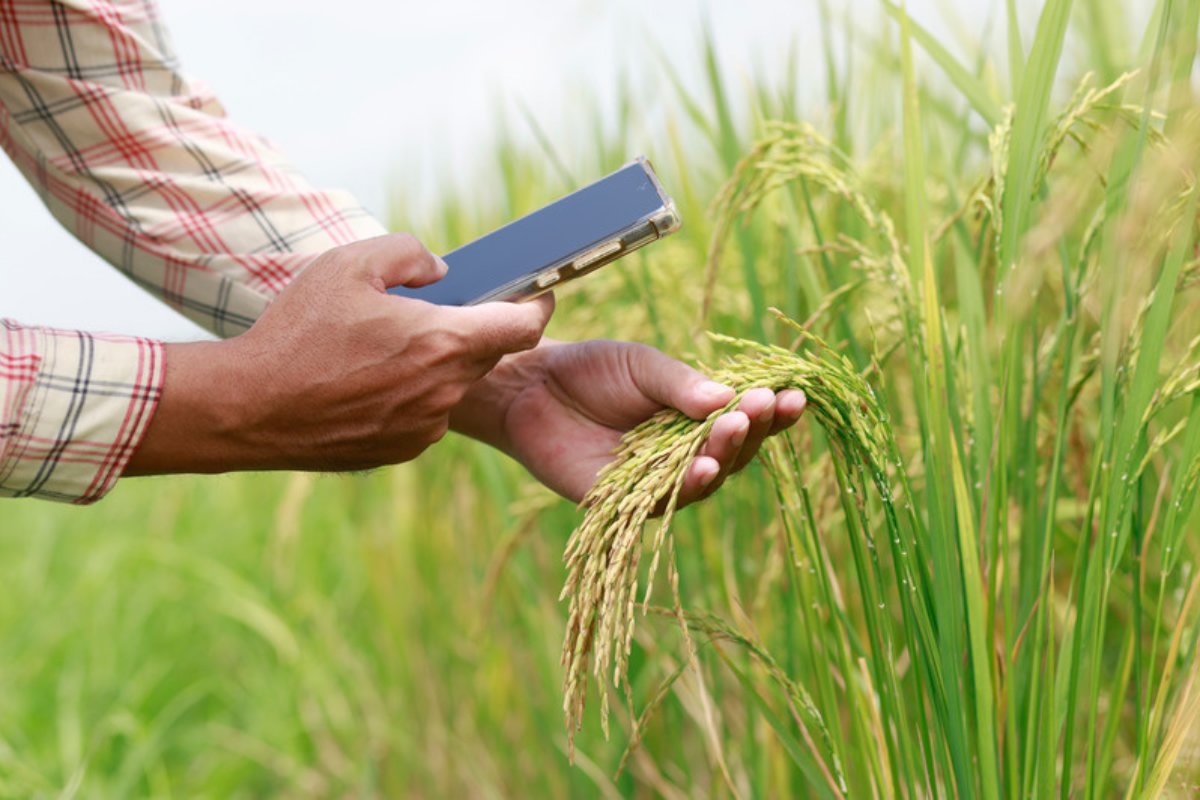
The third reform is to treat farmers as active observers instead of passive recipients of advice. A farmer usually knows which part of the field is weak, which varieties collapse after heavy rain and which treatment failed a few years ago. A scientific system would record that knowledge, verify it and share it with other farmers. Farmer Field Schools and demonstration plots are the places where science becomes useful to farmers instead of a burden.
Plant health training has to connect the laboratory and the field
Plant health education also needs to become more integrated. The Erasmus Mundus PlantHealth programme is one model. Its first year covers crop science, crop protection, population biology, molecular biology and statistics, and its second year specialises in integrated pest management across different agroecosystems and climatic zones. That combination answers the problem Bangladesh faces now. When diagnosis ignores the host, the environment, the data and the constraints farmers work under, diseases become much harder to manage.
Technology alone will not close the gap. Bangladesh needs people who can link the laboratory and the field, including epidemiologists who understand crop disease in the field, breeders who understand disease pressure, data analysts who understand field variation, and extension staff who can explain findings without oversimplifying them. Building that capacity takes longer than distributing a new spray, but it is the only way to make good decisions as the climate and the pathogens change.
Honest records would build farmers' trust in advice
Better records would also build trust. Farmers resist new recommendations that come without reasons, and they see a product that worked in one field fail in the next. With clear records of symptoms, weather, treatment and outcome, extension services could talk openly about uncertainty instead of hiding it. Researchers could also see where a recommendation holds, where it needs local adjustment and where it does not work. In plant health, an honest warning is worth more than a confident prescription that fails.
Bangladesh does not need another impressive emergency response after the next harvest fails. It needs a plant health intelligence system that detects risk before it becomes visible, tests recommendations honestly and gives farmers practical advice in time to act. As the climate shifts, the countries that protect their harvests best will be those that understand their fields earliest, well before the first spray.
Sources
FAO (2025, 15 December). Implementing natural pest and disease remedies for greater climate resilience in Asia and the Pacific. Food and Agriculture Organization of the United Nations.
FAO. Integrated pest management. Food and Agriculture Organization of the United Nations.
PlantHealth Consortium. Erasmus Mundus Master Degree in Plant Health in Sustainable Cropping Systems. Universitat Politècnica de València.