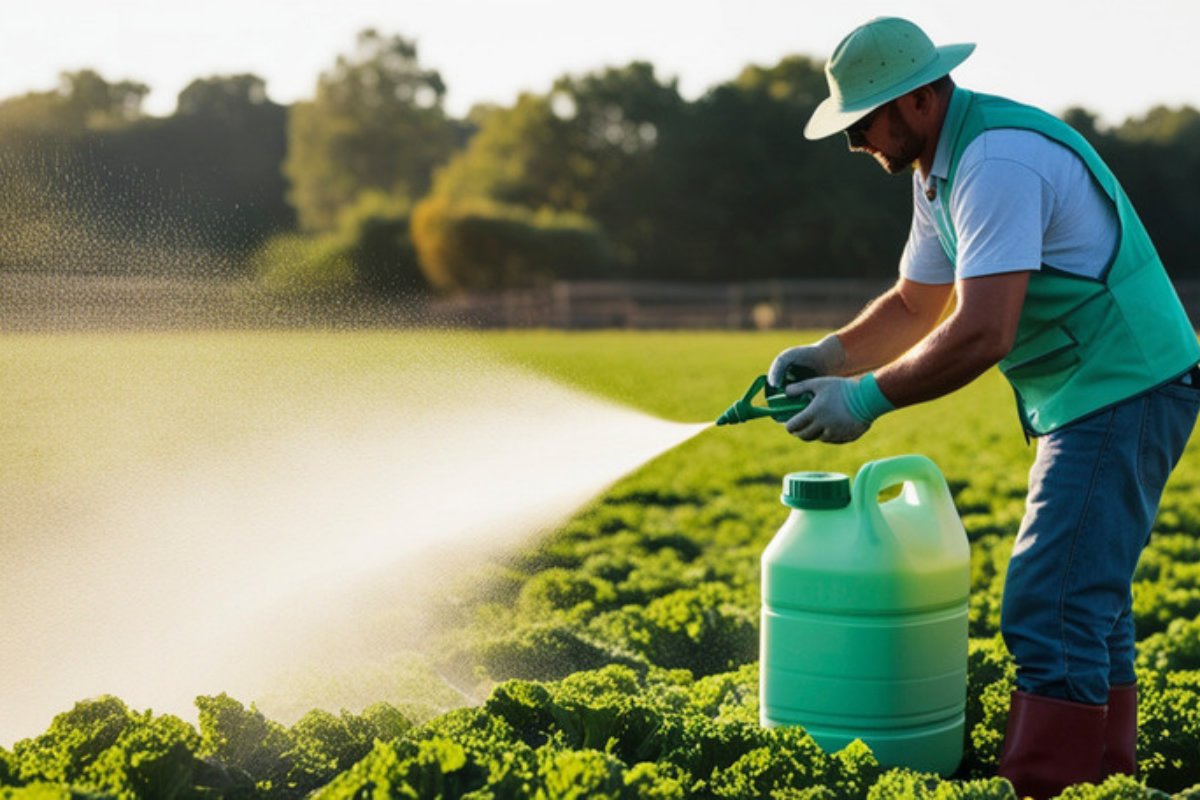
A farmer does not choose a pesticide in a laboratory. When a crop is at risk, the choice is forced by a spreading disease, a neighbour's spray, whatever product the local shop has and the family's need to save the harvest. From outside, repeated spraying can look like a lack of awareness. From the field, it can look like the only insurance available.
The pesticide treadmill is a failure of the system around farmers
The pesticide treadmill is not a moral failing of farmers. If a spray gives a farmer more certainty than diagnosis and monitoring do, the rest of the crop protection chain is failing them. When a new outbreak appears, spraying is often the only visible answer, and farmers end up covering for the gaps of the whole system.
The cost goes beyond the environment and reaches the practical side of farming. A wrong diagnosis leads to the wrong treatment, just as it does in medicine. A nutrient deficiency can be mistaken for a disease, a virus for a fungus, and a stress response for insect damage. Even the right product works only when the timing, dose and water quality are right, when the pest has not developed resistance and when applications are not repeated beyond what the crop needs. The name on the label matters less than the decision made in the field.
Biological control results from Bangladesh point to another design
An FAO project in Mymensingh district offers a useful example. Okra growers combined three biological control agents, a beneficial fungus, a predatory mite and an egg parasitoid, and cut fungal disease and insect damage by 60 to 70% at the project sites while relying less on chemical pesticides. These results should not be copied as a package without local testing. They do show that crop protection can be built on the ecological relationships in a field, with natural enemies doing part of the work, instead of on a bare field that is sprayed whenever a problem appears.
Bangladesh needs a working diagnostic chain
The first priority is a diagnostic chain that works. Each district needs trained staff, simple sampling procedures, laboratories within reach and clear referral routes. Farmers should know where to take a sample, how long the result will take and what evidence the recommendation rests on.
"Spray this" is not a plant health service. A real service explains what was found, what was ruled out, what to watch for next and which non-chemical measures can reduce the problem.
Prevention has to make economic sense to farmers
The second priority is to make the economics of prevention visible. Seed treatment, resistant varieties, field sanitation, crop rotation, balanced nutrition, soil organic matter, biological control and targeted monitoring are often praised for their environmental benefits. Farmers will adopt them more widely when they are assessed in terms of labour, risk, time and returns.
A practice that cannot be carried out during the busiest week of the season is not low cost in that season. And for a farming family, a practice that cuts spraying but loses yield is not sustainable.
Research has to test whether results hold on real farms
This is why plant health research has to connect the laboratory and the farm. In work on seed priming, crop stress, biological control, soil conditions or field disease assessment, a statistically significant response is only the first question. The harder question is whether the result holds across different varieties, climates, soil types, diseases, labour supply and farm resources. Without testing those limits, studies produce recommendations that look good on paper and fail in the field.
Training matters as well. Programmes such as the Erasmus Mundus PlantHealth master's combine crop protection, population biology, molecular biology, statistics and integrated pest management across climatic zones. That is the kind of training needed to tell a good product from a good biological control strategy, to link molecular evidence with field symptoms, and to judge efficacy, feasibility and risk together.
Incentives should reward advice instead of product sales
A serious transition also needs better incentives. Expert advice, diagnosis and stewardship should be rewarded more than product sales. Demonstration plots should report their failures as well as their successes. Extension programmes and public procurement should favour varieties, seed systems and practices that reduce the risk of loss. Universities should train students to ask, once a trial ends, who will pay for the method, who will use it, how resistance will be monitored and what happens when the weather differs from the trial season.
Asking farmers to sacrifice their food security for the sake of ecology is wrong for Bangladesh. The country should build a crop protection system in which the best scientific choice is also a sound economic choice for the farmer. That calls for clear public investment in diagnosis, extension, resistant varieties, local testing, biological control and regulation, and an end to blaming households that reach for the tool closest to hand.
The aim is a field where every intervention, chemical ones included, is timed, based on evidence and part of an overall strategy, with no need to ban every pesticide. Integrated plant health asks for more science and more responsibility, from farmers and from the institutions that serve them.
Sources
FAO (2025, 15 December). Implementing natural pest and disease remedies for greater climate resilience in Asia and the Pacific. Food and Agriculture Organization of the United Nations.
PlantHealth Consortium. Erasmus Mundus Master Degree in Plant Health in Sustainable Cropping Systems. Universitat Politècnica de València.