

co-author: Christina Marantelou
Understanding economically motivated adulteration (EMA)
Economically motivated adulteration (EMA) takes place when a valuable component or element of a food product is deliberately omitted, extracted, or replaced. EMA may also occur when a substance is introduced into a food item to enhance its appearance or perceived value. For instance, when producers blend a cheaper vegetable oil with premium olive oil and market the mixture as 100% olive oil, they mislead their consumers. This particular form of EMA is referred to as food fraud.
Food fraud represents the most prevalent type of EMA that the FDA addresses; however, EMA can also manifest in other products, including animal feed and cosmetics. Certain forms of EMA may also lead to misbranding infractions. Quantifying food fraud is challenging due to its design to evade detection. Experts estimate that food fraud impacts 1% of the global food sector and incurs costs ranging from $10 to $15 billion annually, although some recent studies suggest that the financial impact could reach as high as $40 billion per year. Common instances of food fraud include honey and maple syrup, olive oil, seafood, juice, spices, and herbs1. Beyond the frequently reported cases of food fraud and adulteration involving honey, olive oil, and herbs/spices, numerous incidents in recent years have posed significant health hazards or even resulted in fatalities among consumers.
Notable examples of previous food fraud cases include the Chinese melamine infant formula scandal (2008), the Irish horsemeat scandal (2013), olive oil fraud (2016 and recent crackdowns in Europe, 2024-2025), Canadian honey laundering (2018), and Operation Opson VIII, among others. Furthermore, the European investigation titled 'From the Hives' revealed that 46% of honey samples imported into the EU were found to be adulterated or involved in fraudulent activities.
Why spices are especially vulnerable
Specifically, spices are particularly vulnerable to fraud due to their high market value, limited availability, and the intricate nature of their production and sourcing. Spice fraud occurs when a costly spice (such as saffron) is diluted with non-spice plant materials (such as plant stems).
Another form of fraud involves the use of dyes to impart a particular colour to spices, especially when this coloration significantly influences the perceived quality. Spices like chili powder, turmeric, and cumin have been discovered to contain lead-based dyes and various industrial dyes, which may lead to health issues, including cancer.2

Figure 1. Spices are susceptible to fraud due to their high value, limited supply, and the complexity of their production and sourcing.
How AI and machine learning help detect food fraud
AI and ML models can scrutinise ingredient information, supply chain records, and consumer feedback, to identify patterns and anomalies and detect risky features that indicate potential fraud in the food industry. Not only can AI and ML technology aid in the detection of food fraud but it can also contribute to prevention efforts. For instance, by analysing historical data and detecting fraudulent patterns, ML algorithms can help food organisations identify vulnerable points in their supply chains and implement measures to prevent fraudulent activities3.
Bouzembrak and Marvin4 utilized Bayesian network (BN) modeling to forecast various types of food fraud by analyzing notification data from the Rapid Alert System for Food and Feed (RASFF) covering the years 2000-2013. The research aimed to predict potential forms of food fraud for imported products based on their established product categories and countries of origin, thus facilitating targeted enforcement actions. The model exhibited an accuracy rate of 80% when the fraud type, country, and food category were known beforehand, and a 52% accuracy rate when this information was not previously recorded in the RASFF database.
Such a system could be employed by risk managers and inspectors at border control points to efficiently prioritize checks for types of fraud while managing imported goods. Mithun et al. applied deep learning methods to differentiate between bananas that have ripened naturally and those that have undergone artificial ripening. The authors noted a risk associated with artificially ripened bananas, as they may have been treated with substances that could lead to cancer, such as calcium carbide. The deep learning model used in the research achieved a classification accuracy of 90%, with potential accuracies reaching up to 98.74% and 89.49% using random forest and MLP feed-forward neural network classifiers, respectively5.
AI and deep learning for detecting adulteration in red chilli powder
Why is chilli powder a high-risk product
With a high production rate, chilli is recognised as one of the most widely consumed spices around the world. It has been utilised in various forms, including fresh, dried, and powdered, and acts as a crucial component in spice blends, oleoresins, and essential oils6. The dried Red Chilli Powder (RCP) holds significant economic value due to its high market demand; consequently, it is particularly vulnerable to economically motivated adulteration7.
Adulterants fall into two main groups:
- natural adulterants, such as low-grade chilli varieties, rice hull, and wheat bran
- artificial adulterants, mainly synthetic dyes added to intensify colour8
The rising prevalence of food adulteration not only jeopardises consumer health but also erodes the trust in food regulatory systems9.
How deep learning improves detection
While traditional methods have offered valuable insights into the authenticity of RCP, each approach faces challenges in achieving an ideal balance between speed, cost, sensitivity to different adulterants, and the need for clear decision support9. The problem of RCP adulteration can be effectively tackled using Artificial Intelligence (AI)-based technologies. Recent advancements in computer vision and machine vision techniques leverage colour, texture, and morphological characteristics from digital images to detect potential adulterations. AI-driven methods, such as Deep Learning (DL), provide quick and non-destructive solutions for identifying adulterants in RCP.
DL has transformed various sectors by allowing computers to replicate human intelligence through Two-Dimensional Convolutional Neural Networks (2D-CNNs), which excel in tasks like computer vision10. One of the primary benefits of DL is its capacity to autonomously learn patterns and features from extensive datasets without the need for manual feature engineering11. This capability has proven to be highly effective in the field of food quality assessment, particularly in adulteration detection12.
In recent years, various pre-trained 2D-CNN models have been developed by researchers for food classification, including ResNet, EfficientNet13, DenseNet 14, and Visual Geometry Group (VGG)15. Despite the remarkable capabilities of deep learning (DL), a significant concern has been the lack of interpretability and transparency. DL models often function as black boxes, which complicates the understanding or explanation of their decision-making processes16.
This lack of clarity has led to considerable challenges, particularly in high-stakes sectors such as food, where trust and accountability are paramount17. To mitigate this limitation, researchers have increasingly turned their attention to Explainable AI (XAI), a specialised field focused on enhancing the interpretability and comprehensibility of DL models18. Numerous methods have been investigated to enhance transparency in AI-driven decision-making.
Feature attribution techniques, such as Shapley Additive Explanations (SHAP) and Local Interpretable Model-Agnostic Explanations (LIME), have proven useful in pinpointing the key parameters that influence a model’s predictions, thereby increasing the clarity of AI-generated outcomes19. Moreover, visualisation tools like Gradient-weighted Class Activation Mapping (Grad-CAM) and saliency maps highlight crucial areas of an image that have impacted the model’s predictions, facilitating a more intuitive understanding of AI model outputs20. Collectively, these approaches contribute to enhancing the reliability, trustworthiness, and usability of AI systems in detecting natural adulterants in RCP.
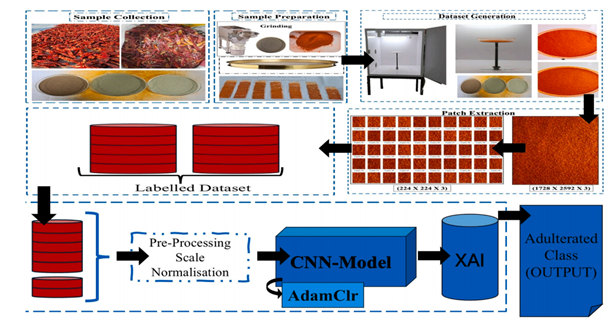
Fig 2. An experimental framework designed to identify adulteration in Red Chilli Powder (RCP) utilising convolutional neural networks (CNN) and Explainable Artificial Intelligence (XAI).4
The task of image classification is utilised in evaluating food quality, with CNN models proving to be effective instruments for assessing food quality 19. Recently, there has been an increase in the application of 1D-CNN and 2D-CNN models to detect food adulteration20.
An integrated XAI and 2D-CNN framework for chilli powder authentication
D.S. Brar et al. are the first who, introduced an artificial intelligence (AI)-driven framework that employs empirical analysis of eight pre-trained two-dimensional convolutional neural network (2DCNN) models for the detection of RCP adulteration4. The experimental framework of the proposed method is depicted in Fig. 2. This research study highlights three significant innovations. Therefore, to address the existing research gap, this study suggests an integrated 2D-CNN-XAI framework that directly tackles these limitations through three principal innovations.
An improved optimisation strategy
Firstly, it utilises the AdamCLR optimiser, which is a combination of Adam with gradient centralisation and a cyclic learning-rate schedule, demonstrated to enhance both convergence speed and generalisation performance when training on diverse image datasets.
A comprehensive and well-controlled dataset
Secondly, assemble a thorough image library (dataset) that encompasses both pure RCP samples and RCP that has been adulterated with various natural substances (such as rice hull and wheat bran) as well as low-grade chilli powder adulterants, all captured under uniform lighting conditions. This variety guarantees that the convolutional neural network acquires discriminative features that are resilient to real-world variability. Figure 3 illustrates the original image alongside the corresponding Grad-CAM heatmap visualisation, which was utilised to elucidate the decision-making process of the DenseNet_169 (2D-CNN model). The model classified the sample as adulterated RCP (C2_ARcP) with a confidence level of 1.00, which perfectly matched the true label, signifying an accurate classification of the adulterated samples. The intensity of the colour was associated with the region of interest; the red colour indicates the highest relevance, suggesting that the features within this area were pivotal in the decision-making process.
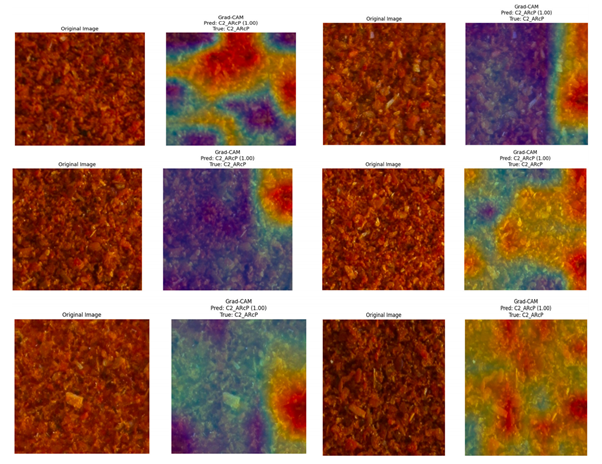
Fig 3. Visualisation of DensNet_169 by Grad-CAM heatmap for the adulterated Red Chilli Powder (RCP).4
Whereas yellow represented a moderately significant area that contributed meaningfully, but to a lesser extent. These regions might correspond to the particles of natural adulterant present in the RCP. These were correlated with the granule size, particle distribution, colour intensity and other physical characteristics. That remained unnoticed by the naked eyes of humans (Fig. 3). The blue regions covering the less critical areas indicate they played a minimal role in the decision-making process.
Integration of explainable AI tools
Ultimately, they incorporated explainable AI tools (Grad-CAM and LIME) to illustrate the specific areas and spectral textures influencing each classification decision, thus offering transparent, per-image interpretability that is essential for quality-control processes.
By merging these components, advanced optimisation, a meticulously organised image dataset, and an XAI layer, the proposed framework not only attains enhanced classification accuracy across adulterant categories but also provides actionable insights for professionals in related domains (such as chemometrics, food-safety engineering, and industrial quality assurance), rendering it widely applicable beyond the immediate scope of RCP adulteration detection4
The future of AI in food safety and adulteration control
The study conducted by D.S. Brar et al. presents a robust and effective solution for addressing RCP adulteration through the use of AI technology. By incorporating the XAI-2D-CNN model, this framework guarantees high specificity and reliability in quality assessment. Additionally, its capacity for real-time monitoring and large-scale deployment makes it an essential resource for regulatory agencies. The utilisation of AI in this model extends beyond simple detection, providing in-depth analytical insights into patterns of adulteration, facilitating predictive modelling, and supporting proactive regulatory measures. Nevertheless, future developments are needed to enhance its robustness and generalizability. A significant area for enhancement is the expansion and diversification of datasets. Furthermore, the creation of portable, AI-driven smart devices for field applications could transform on-site adulteration screening, allowing for swift decision-making at regulatory checkpoints and throughout supply chain nodes4.
The anticipated function of AI technology in identifying food adulteration presents remarkable potential, offering sophisticated solutions to improve food safety standards. By utilising deep learning algorithms, AI can thoroughly examine large datasets, quickly recognising patterns that suggest food adulteration and facilitating more accurate and rapid detection techniques. In addition to detection, AI applications can also enhance traceability, overall quality, and nutritional content within the food sector. High-quality sensors with excellent reproducibility are essential for effectively identifying adulterants and toxic substances in food products. Furthermore, it is crucial to address ethical considerations, ensure model reliability and interpretability, and mitigate potential biases, as these are vital aspects that require careful focus when integrating AI into food safety protocols21.
References
- https://wikifarmer.com/library/en/article/food-fraud-economically-motivate-adulteration-ema-in-food
- https://wikifarmer.com/library/en/article/food-fraud-in-spices-herbs
- Gbashi, S.; Njobeh, P.B. (2024) Enhancing Food Integrity through Artificial Intelligence and Machine Learning: A Comprehensive Review. Appl. Sci., 14, 3421.
- Bouzembrak, Y.; Marvin, H.J.P. (2016) Prediction of Food Fraud Type Using Data from Rapid Alert System for Food and Feed (RASFF) and Bayesian Network Modelling. Food Control, 61, 180–187.
- Mithun, B.S.; Shinde, S.; Bhavsar, K.; Chowdhury, A.; Mukhopadhyay, S.; Gupta, K.; Bhowmick, B.; Kimbahune, S. (2018) Non Destructive Method to Detect Artificially Ripened Banana Using Hyperspectral Sensing and RGB Imaging. In Proceedings of the Sensing for Agriculture and Food Quality and Safety X, Orlando, FL, USA, 17–18 April 2018; Volume 10665, pp. 122–130.
- Singh, S.S.; Ghodki, B.M.; Goswami, T.K. (2018) Effect of grinding methods on powder quality of king chilli. J. Food Meas. Charact. 12, 1686–1694.
- BR, H.P.; Kala, A.A.; Mutturi, S.; Martin, A. (2024) Comprehensive quality evaluation of Indian chilli powder using physiochemical indicators coupled with multivariate analysis. J. Food Compos. Anal. 133, 106472.
- Brar, D.S.; Singh, B.; Nanda, V. (2024b) Application of image-based features and machine learning models to detect brick powder adulteration in red chilli powder. J. Food Process Eng. 47 (11), e14762.
- Brar, D.S.; Singh, B.; Nanda, V. (2025) Application of deep learning and explainable artificial intelligence (XAI) for detecting red chilli powder adulteration. Journal of Food Composition and Analysis 146 (2025) 107947.
- Hinton, G.; LeCun, Y.; Bengio, Y. (2015) Deep learning. Nature 521 (7553), 436–444.
- Yao, L.H.; Leung, K.C.; Tsai, C.L.; Huang, C.H.; Fu, L.C. (2021). A novel deep learning–based system for triage in the emergency department using electronic medical records: retrospective cohort study. J. Med. Internet Res. 23 (12), e27008.
- Brar, D.S.; Aggarwal, A.K.; Nanda, V.; Kaur, S.; Saxena, S.; Gautam, S. (2024a) Detection of sugar syrup adulteration in unifloral honey using deep learning framework: an effective quality analysis technique. Food Hum. 2, 100190.
- Tan, M.; Le, Q. (2019) EfficientNet: Rethinking model scaling for convolutional neural networks (May). Proc. 36th Int. Conf. Mach. Learn. (ICML). PMLR, pp. 6105–6114.
- Huang, G.; Liu, Z.; Van der Maaten, L.; Weinberger, K.Q. (2017) Densely connected convolutional networks. Proc. IEEE Conf. Comput. Vis. Pattern Recognit, 1. IEEE, 4700–4708.
- Simonyan, K.; Zisserman, A. (2014) Very deep convolutional networks for large-scale image recognition. Comput. Vis. Pattern Recognit.
- Hasan, M.; Vasker, N.; Khan, M.S.H. (2024) Real-time sorting of broiler chicken meat with robotic arm: XAI-enhanced deep learning and LIME framework for freshness detection. J. Agric. Food Res. 18, 101372.
- Buyuktepe, O.; Catal, C.; Kar, G.; Bouzembrak, Y.; Marvin, H.; Gavai, A. (2023) Food fraud detection using explainable artificial intelligence. Expert Syst., e13387.
- Adak, A.; Pradhan, B.; Shukla, N.; Alamri, A. (2022) Unboxing deep learning model of food delivery service reviews using explainable artificial intelligence (XAI) technique. Foods, 11 (14), 2019.
- Bhatia, S.; Albarrak, A.S. (2023) A blockchain-driven food supply chain management using QR code and XAI-faster R2D-2D-CNN architecture. Sustain., 15 (3), 2579.
- Selvaraju, R.R.; Cogswell, M.; Das, A.; Vedantam, R.; Parikh, D.; Batra, D. (2020) GradCAM: Visual explanations from deep networks via gradient-based localization. Int. J. Comput. Vis. 128, 336–359.
- Brar, D.S.; Singh, B.; Nanda, V. (2025) Deep Neural Networks for Adulteration Detection in Red Chilli Powder: A Pillar for Food Quality 4.0. Journal of Future Foods.