


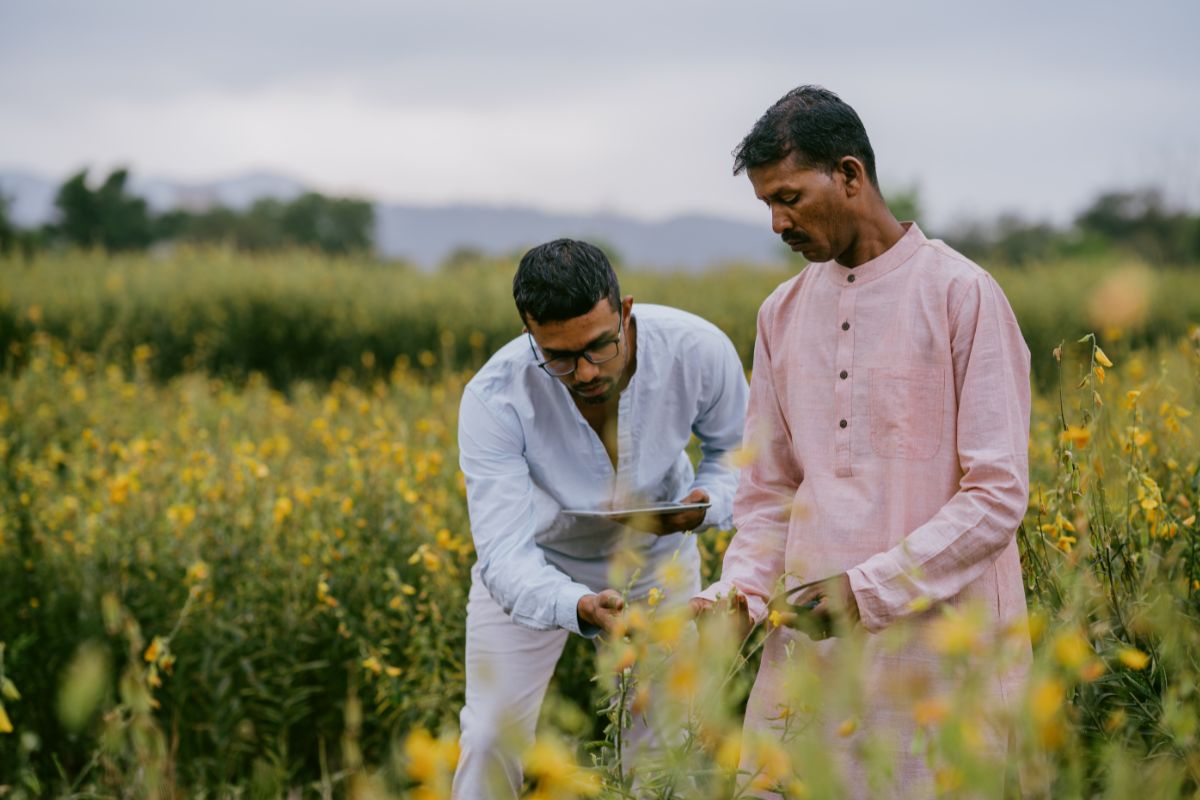
Starting a Successful Farm in India: A Step-by-Step Guide
The farming sector in India contributes 17% to the GDP, and over 70% of India's rural population depends on it for their livelihood. According to a report by the Food and Agriculture Organization (FAO), India is the world's largest producer of milk, pulses, and jute and ranks second-largest in rice and wheat production. It is also a leading producer of vegetables, fruits, spices, fish, poultry, and livestock.
Thanks to a large number of people engaged in farming activities for starting a successful farm in India, there is never a shortage of grassroots wisdom. Besides, Indian agricultural research institutions, particularly the Indian Council of Agricultural Research (ICAR), provide efficient R&D support. It includes Krishi Vigyan Kendra (Agricultural Science Centre), which serves as a knowledge and resource center with a focus on technology transfer, capacity building, and skill development of farmers. From soil testing to providing improved seed varieties, 731 KVKs spread across the country with a minimum of 80 acres of farm each for carrying out their research and experiments ensure farmers in every part of the country have access to scientific solutions to their farming needs
India offers a broad spectrum of options for growing crops, cultivating horticulture, and raising animals. From subsistence to commercial and organic farming, a farming enthusiast has many choices. However, what farming activity one chooses has to be based on soil type, climate, and sufficient water for irrigation.
5 Steps to starting a successful farm in India
Starting a successful farm/agribusiness in India will require planning and effort. The first step is always to acquire knowledge and insights about the particular farming venture one has in mind. Is the soil, climate, and availability of water for irrigation suitable for the crop or farming business one wants to start? If any of the areas need specific efforts to resolve the issue. As with any commercial venture, setting up a successful farm in India requires efficient management. Here are some areas that need attention as one tries to start a farming business in India.
Acquiring land
The land is crucial to setting up a farm. Its soil quality will suit only a few types of farming activity. Given this, it makes sense to choose the crop one wants to cultivate, considering the soil type.
One of the challenges Indian farming faces is small-size farms. As nearly 70% of the rural population pursues subsistence farming, the size of land available for renting or buyouts is relatively small. If one wants to set up a big farm and grow crops or livestock at a commercial level, finding a suitable farm size may require considering various options available across rural and remote areas.
Once the land is in sight, testing its soil at an agricultural facilitation center and seeking advice around topics one wants help with can offer a more accurate start.
Acquiring resources
Converting a piece of land into a thriving farm requires working with the farm and setting up necessary farming resources. It will require farm workers to set up the farm for the crop one wants to grow. Resources like electricity, irrigation and storage facilities, and efficient connectivity with the market are necessary. All of this will require extensive planning and effort.
Crop Selection
When it comes to choosing the crop or livestock one wants to raise, there is a wide range of options available, including field crop farming, farming of medicinal herbs, nursery, floriculture, dairy farming, fish farming or aquaculture, mushroom farming, oyster farming, and greenhouse farming. Factors like land type, climate, and natural irrigation sources should guide the selection of crops or other farming activities.
Indian agriculture has two primary crops: one that starts with the monsoon (June-September) and one in the winter, starting from mid-November when the monsoon rain has kept the land moist to support another crop. A spring crop is also grown in some areas, particularly in the hills.
Market access
Easy access to the market for farm produce is one of the most critical aspects of setting up a prosperous farm in India. Thorough market research is required before buying or renting land. It helps you know the demand for your produce and the commercial viability of the entire project. It also offers a fair estimate of various costs, which helps draw a sound financial plan.
Legal and regulatory requirements
Understanding the legal requirements of running a farm in India is one of the key steps to the success and long-term viability of the project. It is imperative for commercial and industrial farming, which is cost-intensive and involves a substantial amount of investment. A sound legal footing for the project is a must to protect the investment and earn a profit from the venture. Here are a few key things to consider:
Registration: It allows the business to be run as a legal business entity. A few options are proprietorship, partnership, and private limited company. A law professional can provide detailed information and procedures for registration.
License and Permits: A license or a few permits may be required for livestock farming and food processing-based projects. Various industry certifications relevant to the agribusiness project may also prove fruitful.
Taxation: Cost-intensive and profit-oriented farming projects may attract relevant tax laws. Goods and Services Tax (GST) and Income Tax are the two most popular taxes. However, detailed and authentic information about tax obligations for a project can be obtained from a tax professional such as a chartered accountant.
Import-Export regulations: If a farming business is export-oriented or it involves import, it has to comply with import-export regulations. A fair knowledge of this domain is necessary for the smooth functioning of your farm business.
Challenges of Indian farming
Despite technological advancements and improved agricultural practices, the Indian farming sector faces challenges. Outdated farming practices, small landholdings, lack of access to credit and finance, and limited access to technology and research are key challenges that any farming sector entrepreneur will face in India. However, within these challenges lies the opportunity for hard-working agri professionals to tap and prosper.
Final thoughts
The Indian agriculture sector is vast and diverse. On the one hand, it represents the very best of technological and modern farming practices; on the other hand, it also suffers from several shortcomings. Thanks to ICAR and its different wings strategically located across the country, scientific farming solutions are never too hard to come by. However, one needs to proactively find such institutions and work with them to bring the latest and most efficient solutions to one's farm. Setting up a successful farm in India is a lot about overcoming local problems and proceeding with a well-crafted plan that identifies the problems and helps align them with the most efficient solutions available.
References:
India at a glance — FAO in India
https://kvk.icar.gov.in/
https://www.kanakkupillai.com/learn/starting-a-farming-business-in-india-a-comprehensive-guide/
How to be successful in the agriculture industry — Desh Bhagat University
Start an Agriculture Farm Business
Further reading
A 100-Year History of Organic and Natural Farming in India
Women Empowerment: Bamboo Industry in Rural Areas
Seaweed: an important new product with high demand
Policy, Governance, and Technological Innovations in Food Waste Management in Urban India
Farming 101 - How to be a Farmer - Step by Step Guide
Can Young Farmers Afford Climate-Smart Agriculture? - The Profitability Challenge Explained
