


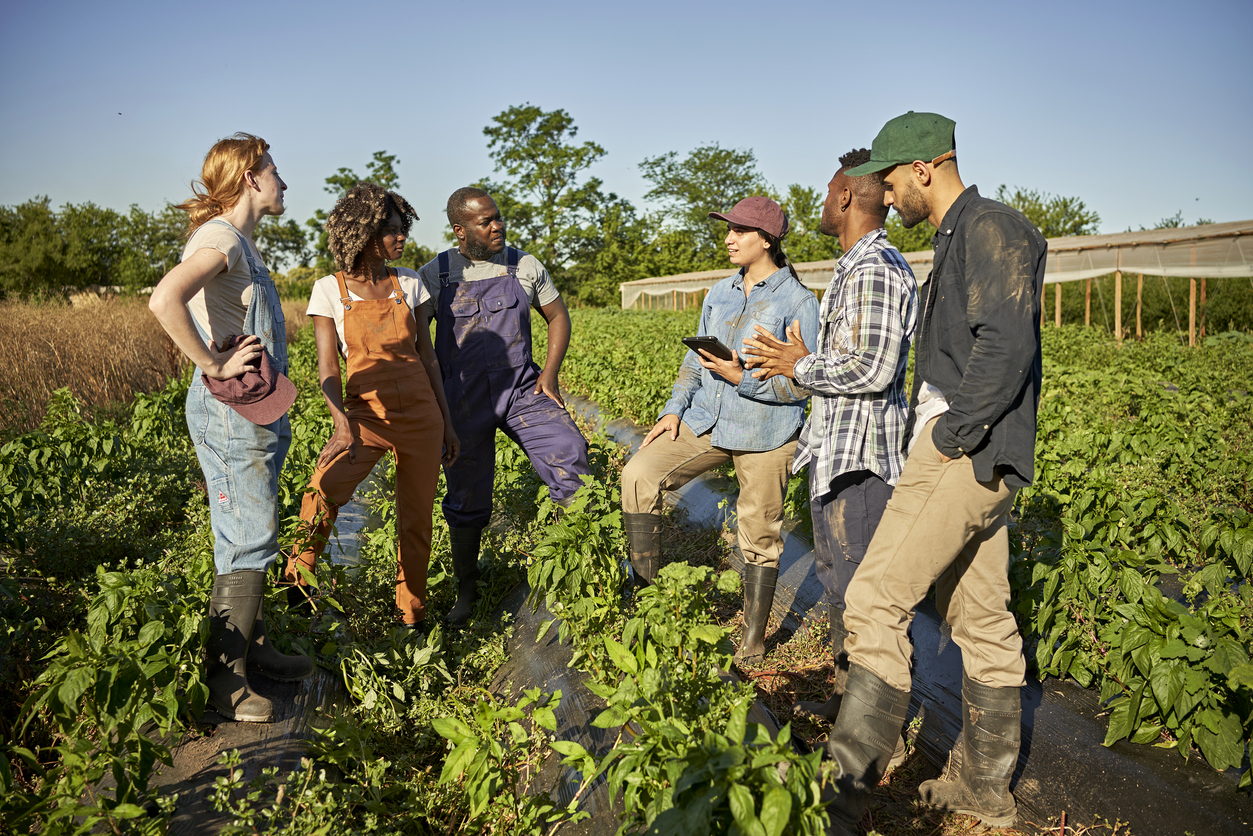
The Financial Barriers to Climate-Smart Agriculture: Challenges for Young Farmers
The Financial Reality of the Adoption of Climate-Smart Agriculture (CSA)
Climate-smart agriculture (CSA) is widely promoted as a key solution for building more resilient and sustainable food systems. However, for many young farmers, adopting these practices comes with serious financial challenges.
While CSA can improve productivity and resilience in the long run, the cost of transition, limited financial support, and weak market demand make it difficult for farmers to make a living while implementing these changes (WFO, 2025).
The Global Youth Producers' Consultation on Climate-Smart Agriculture —the first-ever global consultation with young farmers on CSA, conceived by the World Farmers’ Organisation (WFO)—gathered insights from young farmers worldwide. The results were clear: CSA is not yet profitable enough for many to sustain their businesses.
What are the most significant barriers? And what must change to ensure that young farmers can adopt CSA without risking their livelihoods?
The High Cost of Transition
For many farmers, switching to CSA requires significant upfront investment. New techniques often mean higher production costs in the early years, while income may drop before benefits are fully realised. 93% of young farmers consulted highlighted that the financial burden of transition discourages CSA adoption, especially as they initially lose income before seeing improvements in productivity. Many farmers cannot afford this transition period without external financial support. (WFO, 2025)
A young farmer from Pakistan shared their struggle:
"We are moving towards organic farming, but it's more expensive and time-consuming. Without financial support, it's difficult to sustain" (WFO, 2025).
In Malawi, another farmer explained:
"CSA is more expensive than monoculture, but the market does not reward farmers for adopting it" (WFO, 2025).
Finding Solutions
Financial mechanisms such as grants, insurance schemes, and low-interest loans must be expanded to support farmers during this transition. In addition, investment in research and training can help make CSA techniques more affordable and accessible.
Limited Access to Finance
Even for those who want to invest in CSA, financial barriers remain a major obstacle. Many young farmers struggle to secure due to complex application processes, or high interest rates—making borrowing nearly impossible (WFO, 2025).
A farmer from Uganda described their frustration:
"We need improved seeds, irrigation systems, and capacity-building to implement CSA. But securing loans is nearly impossible—I was offered a loan with a 28% annual interest rate, and there is no insurance to protect us" (WFO, 2025).
A Cambodian farmer added:
"Farmers struggle to secure loans, unlike sectors such as construction. We need financial assistance, irrigation, and strong backing from policymakers" (WFO, 2025).
A Way Forward
To remove these financial barriers, loan and grant programs need to be simplified and adapted to young farmers' realities. Governments, financial institutions, and the private sector must work together to create accessible financing models that allow young farmers to invest in CSA without taking on excessive risk.
Weak Market Demand for CSA Products
Even when young farmers successfully transition to CSA, selling their products remains challenging. The market does not offer higher prices for CSA products, making them financially uncompetitive compared to conventional goods (WFO, 2025).
A farmer from Uganda explained:
"CSA offers long-term benefits, but the market doesn't reflect them. There's no premium price or clear edge for CSA products, making it hard to justify the higher costs and effort" (WFO, 2025).
Similarly, in Argentina, another young farmer expressed frustration:
"Financial support for CSA adoption is crucial, but we also need market recognition. A price difference would help because farmers have families to feed" (WFO, 2025).
Building Market Opportunities
For CSA to be financially viable, consumers need to understand its value. Certification and labeling schemes might help to segment the market in favor of CSA products but might also not be the primary way. Certification comes with associated costs, and labeling schemes might also need a complex policy framework. Alliances along the value chain seem more fast-paced, securing farmers’ income with long-term contracts and insurance mechanisms. At the same time, stronger engagement from retailers, policymakers, and industry leaders is essential to create demand for sustainable goods.
Young Farmers: Leaders of CSA Adoption
Despite these financial barriers, young farmers remain eager to innovate and apply climate-smart solutions in their work. However, they cannot do it alone. Their voices must be included in policy discussions, research priorities, and funding decisions to ensure CSA adoption is realistic and financially sustainable (WFO, 2025).
A young farmer from Argentina highlighted the importance of farmer-led advocacy:
"Our Young National Farmers' Organisation works with politicians to ensure they understand CSA realities. Many decision-makers are poorly informed, so we position ourselves as a key source of information" (WFO, 2025).
Why Their Voices Matter
Young farmers are risk-takers and keen to bring innovation in how they interpret farming. Their insights should guide CSA-related policies, funding programs, and research efforts to ensure that future solutions are practical and economically viable.
What Must Change?
To make CSA adoption financially feasible for young farmers, stakeholders across the agricultural sector must take action:
- Expand financial support through low-interest loans, grants, and insurance programs to help farmers manage the transition.
- Address the unpredictability of land tenure, either in lacking longer rental contracts or higher costs for young farmers, which discourage long-term investments that are at the base of CSA.
- Tackle systemic inequalities that disproportionately make it difficult for women farmers to access finance, technology, markets, land, and more.
- Increase market incentives by developing premium pricing structures, certification schemes, and consumer awareness campaigns.
- Strengthen training and research to ensure CSA techniques are accessible and cost-effective.
- Encourage multi-stakeholder collaboration, bringing together governments, businesses, and farmer organizations to drive change.

From Policy to Practice
The Global Youth Producers' Consultation on CSA provides a clear message: Young farmers want to adopt CSA but cannot afford to do so without support (WFO, 2025).
If CSA is to become not just an environmental necessity but a viable business model, then financial policies, market structures, and research efforts must align with the realities of young farmers. Their role in shaping the future of food systems must be recognized, valued, and supported.
References
- WFO (2025). Global Youth Producers' Consultation on Climate-Smart Agriculture Report. Rome: World Farmers' Organisation. Global Youth Producers Consultation Report 2025 (PDF)
Further reading
Climate-Smart Forestry: Strategies, Benefits and Challenges
Rethinking Agribusiness: Climate-Smart Agriculture, Fertilizers & Sustainable Solutions
Climate-Smart Agriculture Solutions in Rice
Rwanda’s Agricultural and Economic Landscape: Challenges and Sustainable Solutions
Reviving Traditional Rice Farming Practices for Sustainability and Resilience