


Introduction
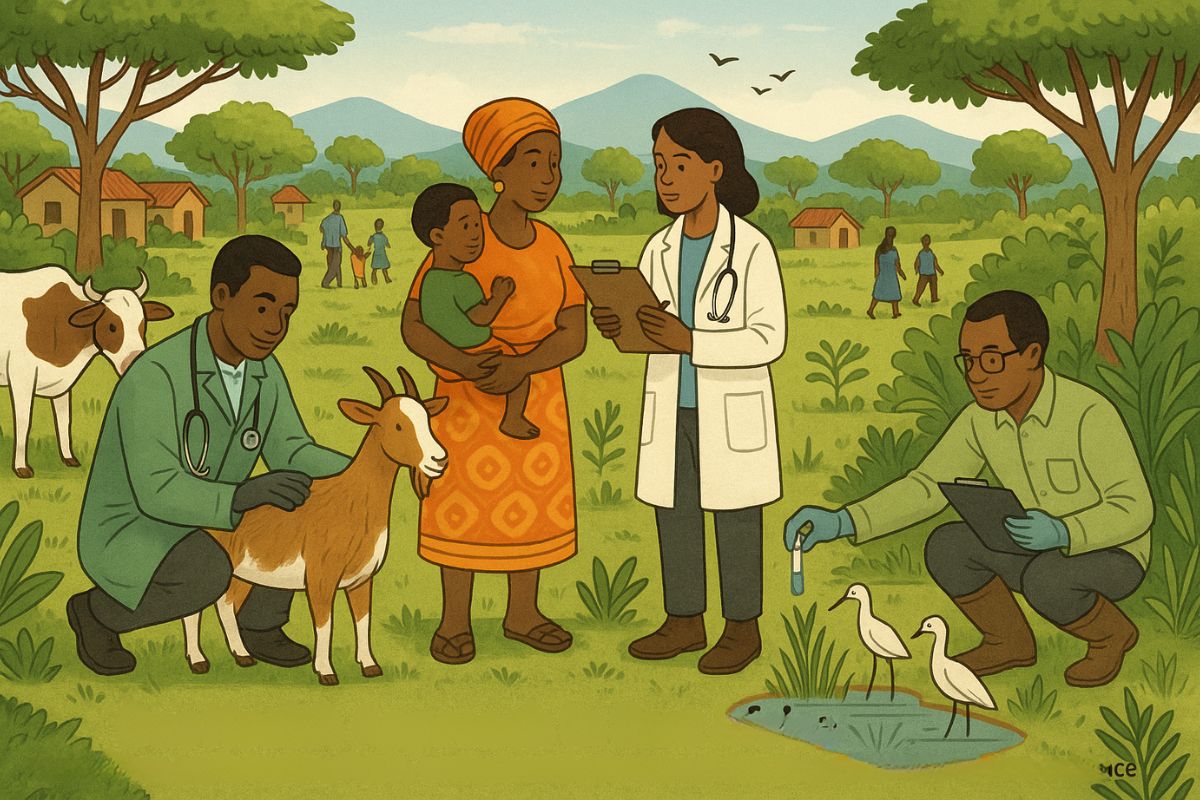
Zoonotic diseases, those transmitted between animals and humans, are not theoretical concerns in East Africa. They are daily realities for farmers, pastoralists, and humanitarian responders navigating the front lines of climate shocks and fragile surveillance systems. The One Health approach, which integrates veterinary, medical, and environmental expertise, offers hope for more effective prevention and response—if it is rooted in community engagement and real-time collaboration.
Mpox 2025: A Wake-Up Call for Integration
In June 2025, Ethiopia confirmed its first Mpox (formerly monkeypox) case in Moyale, Oromia Region, followed by additional infections in Metema and Bahir Dar in Amhara Region. By mid-month, 18 cases and one fatality—a one-month-old infant—had been reported nationwide. Despite swift responses from the Ministry of Health and the Ethiopian Public Health Institute, including testing and contact tracing, the outbreak exposed a dangerous gap: veterinary and environmental surveillance systems were not fully incorporated into the national response.
In high-risk areas like Moyale, where human-animal interactions are frequent and complex, this fragmentation can prove fatal. Zoonotic threats do not respect sectoral boundaries. A truly resilient system requires veterinarians, public health officials, and environmental scientists to share data, co-design interventions, and respond as one.
The Power of Community-Based Surveillance
There is a different path—already being charted. In 2023, a community-led One Health surveillance model in Ethiopia’s Adadle district trained Community Animal Health Workers and linked them with public health staff to detect diseases like anthrax and Rift Valley Fever. By harnessing trust, local knowledge, and shared accountability, the model dramatically improved early detection and rapid response.
Gaps That Persist—and Must Be Closed
Yet, many African countries still lack formalized, adequately funded One Health programs. A 2023 African Union review emphasized the importance of institutionalized coordination, expanded diagnostic capacity, and sustained political commitment. The East African Community’s 2020–2024 strategy echoes this need, calling for region-wide cooperation on transboundary animal diseases and zoonoses.
Farmers as Frontline Sentinels
In my work, I’ve met farmers who reported early signs of brucellosis or rabies long before any laboratory test was deployed. When empowered with mobile reporting tools, basic biosecurity training, and access to veterinary care, these frontline actors become our most valuable sentinels.
A Region Under Pressure: Key Zoonotic Diseases
East Africa’s ecological diversity, close animal-human contact, and mobile pastoralist systems create a perfect storm for zoonotic emergence. Some of the region’s most pressing zoonotic diseases include:
- Rift Valley Fever: A mosquito-borne virus tied to heavy rainfall and flooding. It causes abortion in livestock and hemorrhagic fever in humans.
- Brucellosis: Transmitted through contact with infected animals or unpasteurized dairy, it’s endemic in many parts of East Africa and leads to chronic illness in people and livestock.
- Anthrax: A deadly bacterial disease common in pastoralist settings, often underreported due to cultural or logistical barriers.
- Rabies: Persistently fatal in underserved rural areas with poor access to post-exposure prophylaxis.
- Ebola & Marburg Viruses: Though less frequent, outbreaks in Uganda and neighboring regions highlight the need for rapid multi-sectoral coordination.
- Leptospirosis & Q Fever: Often overlooked, these bacterial infections are increasingly linked to livestock and rodent exposure in flood-prone or resource-limited settings.
- Monkeypox: Rising case numbers and links to wildlife contact signal a growing zoonotic frontier.
From Buzzword to Blueprint: Building a Resilient One Health System
To prepare for the next pandemic—not just respond to the last—we must invest in community-led surveillance, climate-sensitive forecasting, and One Health platforms that function beyond policy meetings. That means funding grassroots networks, mentoring youth in agri-health careers, and embedding veterinarians and ecologists into decision-making bodies.
Mpox 2025 must not become a forgotten chapter. It should be the catalyst for a new generation of One Health leadership, centered on prevention, powered by communities.
Conclusion
Zoonotic diseases remain a persistent and evolving threat in East Africa, demanding urgent action and cross-sectoral collaboration. By investing in community-driven surveillance, integrated One Health systems, and real-time response, the region can move from crisis management to true resilience. The future of public health in East Africa depends on breaking down silos and empowering those on the front lines.
References
-
Osman, A., Dejene, S., & Ahmed, M. (2023). Operationalizing a community-based One Health surveillance and response in Adadle district of Ethiopia. CABI One Health.
-
Alimi, A. O., & Wabacha, J. (2023). Strengthening coordination and collaboration of the One Health approach for zoonotic diseases in Africa. One Health Outlook.
-
East African Community (EAC). (2019). Strategy for the Control of Transboundary Animal Diseases and Zoonoses 2020–2024. FAOLEX.
-
Kemunto, N., Mogoa, E., Osoro, E., et al. (2018). Zoonotic disease research in East Africa. BMC Infectious Diseases, 18, 545. Zoonotic disease research in East Africa
-
Mdetele, D. (2023). Current Zoonotic Diseases Challenges in the East Africa Region. TRAFFIC Wildlife Trade News.
-
World Health Organization (WHO). (2022). In Africa, there has been a 63% jump in diseases spread from animals to people in the last decade. WHO Regional Office for Africa.
-
Getahun Tsegaye, june 2025.Mpox Cases Confirmed in Amhara Region, Health Authorities Urge Vigilance
Further reading
Unlocking Silvopasture: Transforming Unused Land into Sustainable Livestock Systems
Improving Sheep Welfare During Transport: Stress Factors, Impacts, and Mitigation Strategies
African Swine Fever: Causes, Symptoms, Transmission, and Prevention
Alternative Veterinary Medicine: Opportunities, Challenges, and Future Prospects
Understanding Tail Biting in Pigs: Causes, Prevention, and Management
Lameness in Poultry: Causes, Impact, and Management Strategies