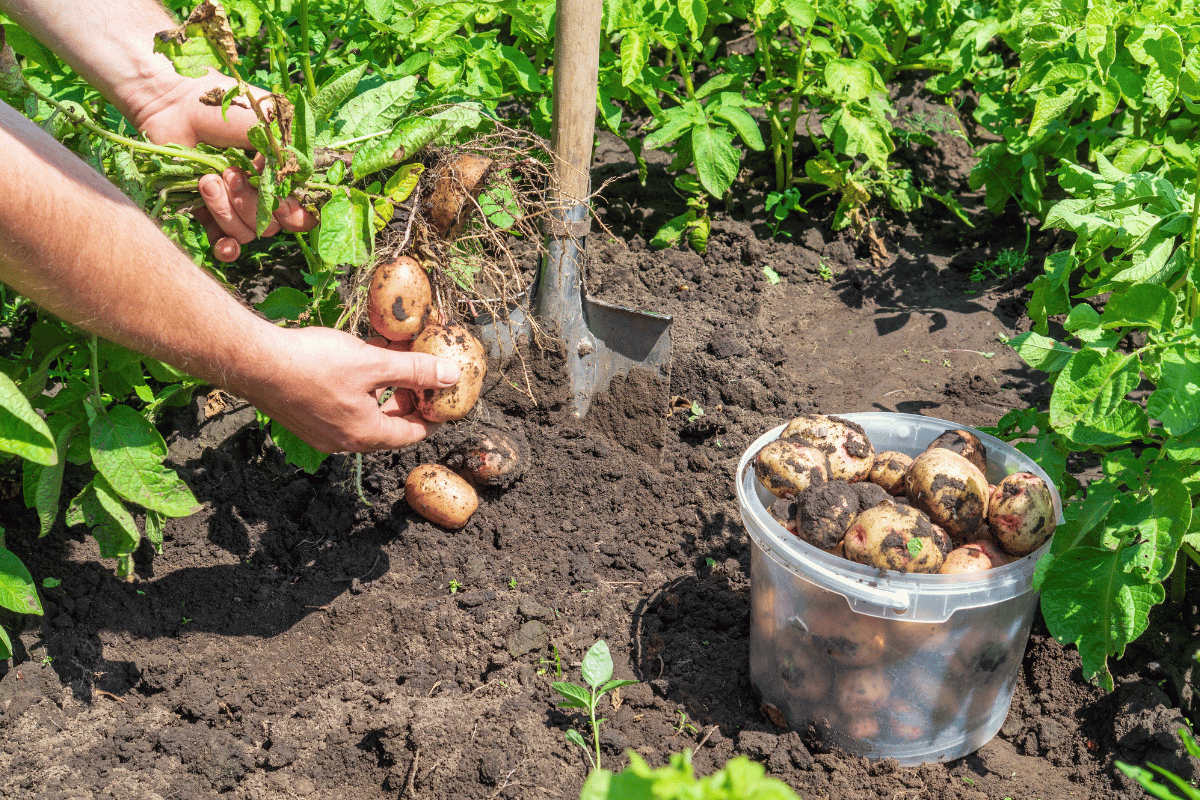
Potato (Solanum tuberosum L.) is the world's third most important food crop after rice and wheat, feeding more than a billion people, and millions of hectares are grown each year for fresh markets, processing, and seed. Stable yields are constantly challenged by soil-borne pathogens, and these are among the hardest problems a grower faces.
Soil-borne diseases are especially destructive. Where foliar diseases can be managed with sprays, soil-borne pathogens persist in the ground for years, infect underground tissues early, and cause heavy losses of yield and quality that can exceed 50% in severe cases. Once infection takes hold in seed tubers, stolons, roots, or daughter tubers, curative control is rarely effective, so success depends on prevention. That means integrated disease management built on healthy seed, crop rotation, biological agents, judicious fungicide use, balanced nutrition, careful irrigation, and good soil health.
Why soil-borne diseases are so hard to control
Soil acts as a reservoir for fungi, oomycetes, bacteria, and protozoa that survive as sclerotia, chlamydospores, oospores, or other resting structures in crop debris, many of them persisting for years with no potato host present. The problem is made worse by potato monoculture, infected seed, poor drainage, soil compaction, excess irrigation, mechanical injury, nutritional imbalance, and warm, humid conditions. Because the crop is most exposed early on, protecting seed tubers and emerging sprouts is critical.
The major soil-borne diseases
Rhizoctonia stem canker and black scurf (Rhizoctonia solani AG-3)
One of the most economically important potato diseases worldwide. It survives as sclerotia, the black scurf seen on tubers, both on seed and in the soil.
- Symptoms: poor emergence, brown stem cankers, stunting, fewer stems, and black sclerotia on tubers that reduce market quality.
- Favourable conditions: cool soils of 10 to 18°C, delayed emergence, heavy or clay soils, excess moisture, deep planting, and compaction.
- Prevention: certified seed, warm and well-prepared soils for rapid emergence, cereal rotations, and seed treatments such as fludioxonil, sedaxane, penflufen, or pencycuron. Trichoderma harzianum shows promise as a biological control.
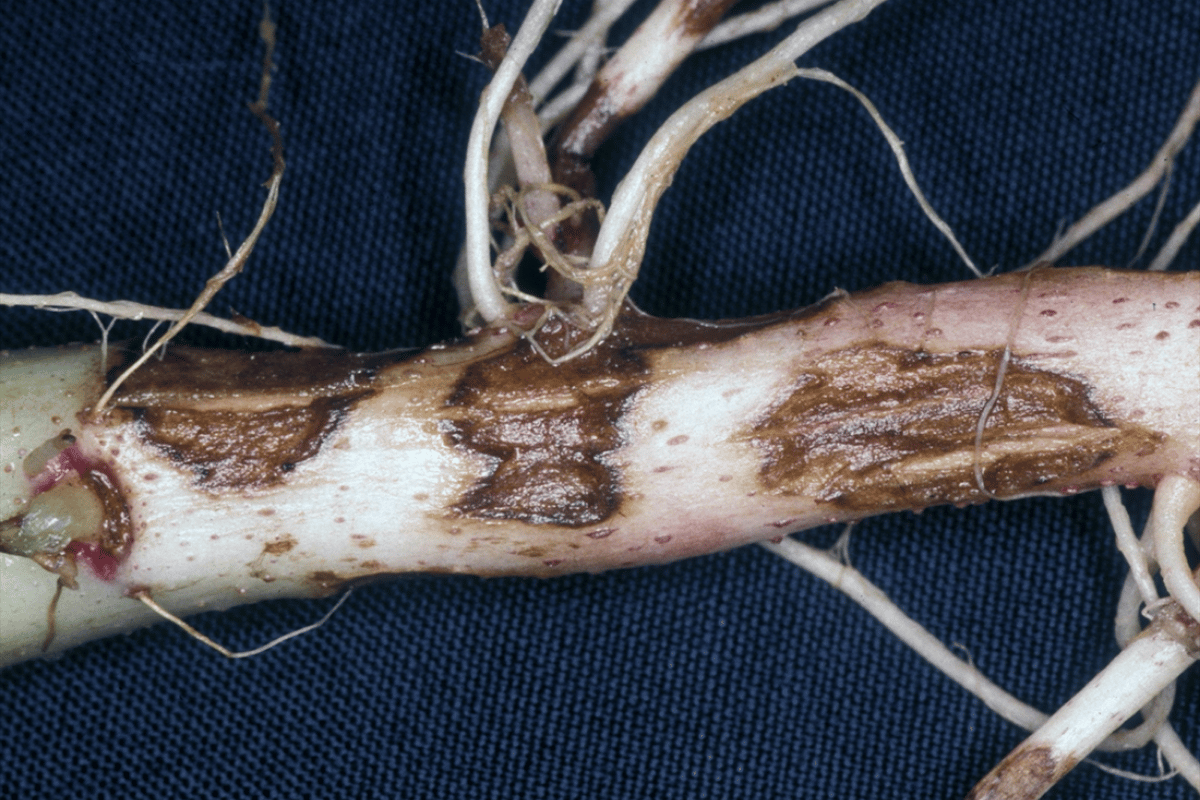
Potato black scurf
Fusarium dry rot (Fusarium sambucinum, F. coeruleum, and others)
The major storage disease, usually initiated at harvest or carried on infected seed.
- Symptoms: sunken lesions, dry and brittle internal tissue with cavities and coloured fungal growth, and poor sprouting.
- Favourable conditions: wounds, cold stress, poor curing, and high humidity.
- Prevention: gentle harvesting, proper curing, sanitation, good storage conditions, and treatment with Bacillus subtilis or Trichoderma.
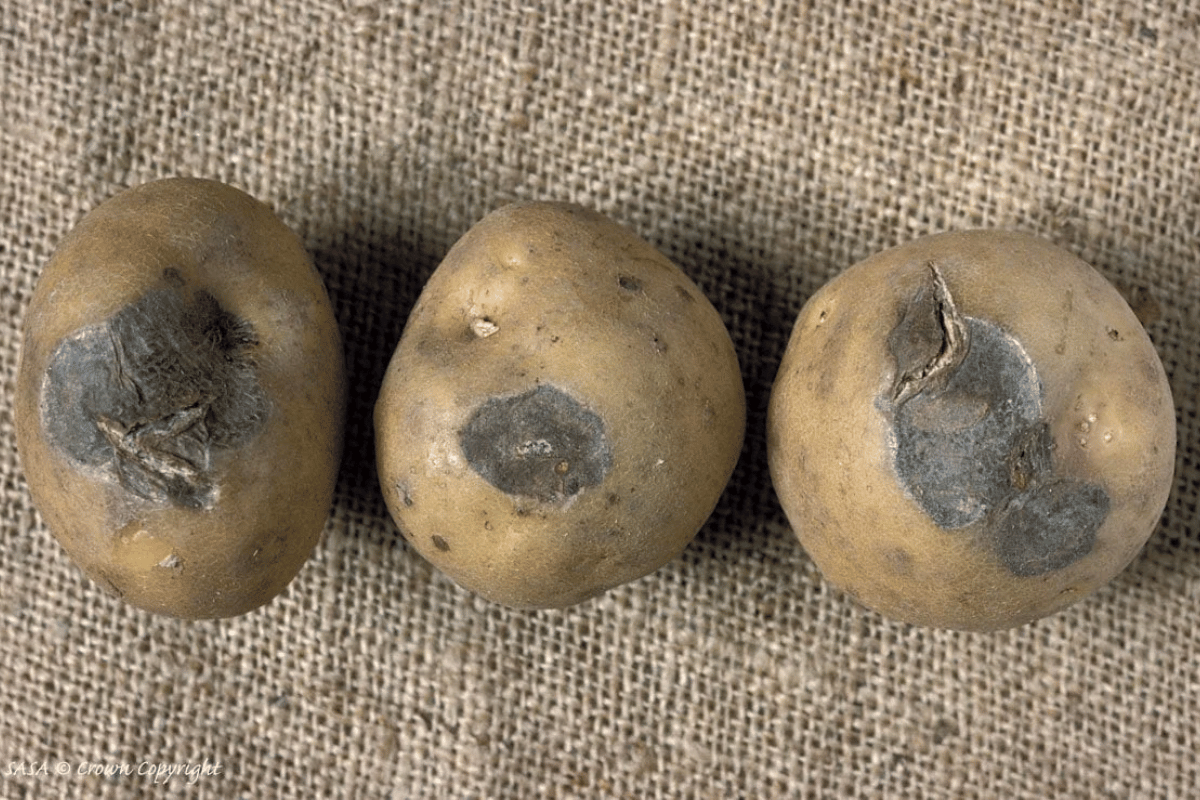
Fusarium dry rot in potato tubers
Common scab (Streptomyces scabies and relatives)
Mainly a cosmetic disease, but one that reduces marketability for fresh and seed potatoes.
- Symptoms: corky, raised, or pitted lesions on the tuber skin.
- Favourable conditions: dry soils, high pH, and liming during tuber initiation.
- Prevention: keep soil moisture up during tuber initiation, avoid excess lime, use resistant cultivars, rotate crops, and plant clean seed.
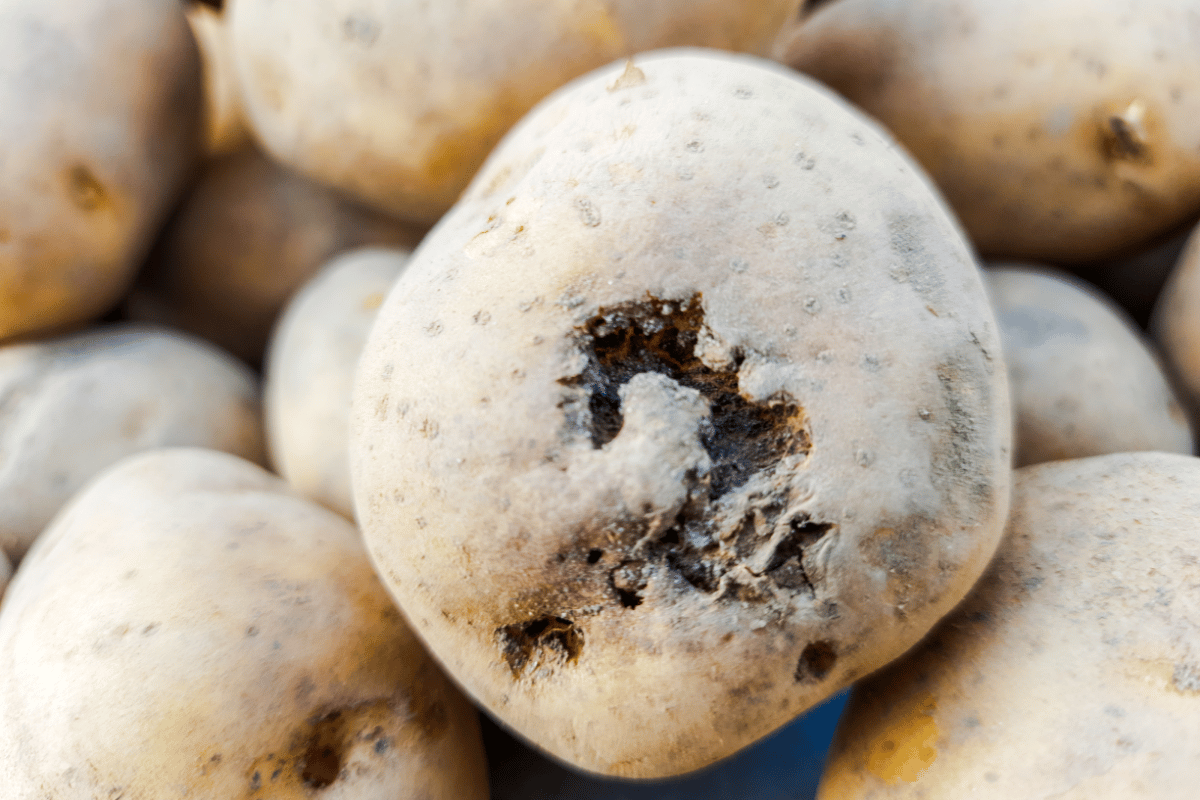
Potato tuber with common scab disease
Powdery scab (Spongospora subterranea f. sp. subterranea)
A protozoan pathogen whose resting spores can survive more than 10 years in the soil, and which also vectors potato mop-top virus.
- Symptoms: raised pustules that rupture to release powdery spores, crater-like lesions, and root galls.
- Favourable conditions: cool soils of 12 to 18°C that are poorly drained, saturated, and heavy.
- Prevention: certified seed, improved drainage, extended rotations of four years or more, and tolerant cultivars. Chemical control is inconsistent, so integrate biological and agronomic measures.

Spongospora subterranea potato - Powdery scab
Verticillium wilt (Verticillium dahliae, V. albo-atrum)
A vascular disease that often occurs in complex with root lesion nematodes, together known as potato early dying.
- Symptoms: yellowing of the lower leaves, chlorosis, wilting, premature senescence, and vascular discolouration.
- Favourable conditions: warm soils of 20 to 27°C, monoculture, nematode pressure, and crop stress.
- Prevention: long cereal rotations, nematode control, added organic matter, Trichoderma, balanced nitrogen, and tolerant cultivars.
Pink rot (Phytophthora erythroseptica)
Increasingly seen in irrigated, poorly drained fields.
- Symptoms: sudden wilt, and internal water-soaked tissue that turns salmon-pink when exposed to air.
- Favourable conditions: saturated, warm soils and poor drainage.
- Prevention: improve drainage, avoid waterlogging, use healthy seed, and harvest in dry conditions.
Leak disease (Pythium ultimum)
A post-harvest disease of wounded, wet tubers.
- Symptoms: soft, watery decay with an odour from secondary bacteria.
- Prevention: harvest dry, minimise injury, cool rapidly, ventilate, and maintain sanitation.
Black dot (Colletotrichum coccodes)
Often underestimated, this disease causes premature senescence.
- Symptoms: root and stolon necrosis, microsclerotia, and a reduced canopy and tuber size.
- Prevention: rotation, clean seed, added organic matter, stress reduction, and biological agents.
White mould (Sclerotinia sclerotiorum)
Soil-borne sclerotia infect stems at the soil line.
- Symptoms: water-soaked lesions, white mycelium, black sclerotia, and stem collapse.
- Prevention: moderate nitrogen, canopy ventilation, rotation, and the biological agent Coniothyrium minitans.
Bacterial soft rot and blackleg (Pectobacterium, Dickeya)
Carried on infected seed and in crop residues.
- Symptoms: black lesions at the stem base, wilting, and soft rot of tubers with a foul odour.
- Prevention: certified seed, careful handling, and avoiding wet harvest and over-irrigation.
Across all of these, Rhizoctonia, Fusarium, Verticillium, and the scab diseases consistently cause the greatest losses, and prevention before planting is the key to managing them.
Fungicide seed treatments
The first line of defence is to protect the seed through the vulnerable emergence stage. Modern treatments, including fludioxonil, sedaxane, penflufen, and fluxapyroxad, improve stands and yields.
Fludioxonil gives strong contact activity against Fusarium and Rhizoctonia. The SDHI treatments sedaxane and penflufen give excellent Rhizoctonia control and better root development. Combinations broaden the spectrum and help manage the risk of resistance.
Apply treatments uniformly to clean seed and integrate them with good agronomy. Fungicides alone cannot eradicate the inoculum already present in the soil.
Biological control
Beneficial microbes complement fungicides through competition, antibiosis, parasitism, and induced resistance. Trichoderma species suppress Rhizoctonia and Fusarium and promote root growth. Bacillus species are spore-forming, compatible with other inputs, and produce antibiotics. Pseudomonas species colonise the rhizosphere, and mycorrhizae support nutrient uptake and stress tolerance.
These agents work best preventively, applied to clean seed or in-furrow, alongside compatible fungicides and under good soil conditions, and they are most effective under moderate disease pressure as part of an integrated programme.
Balanced nutrition
Nutrition has a direct bearing on how well a crop resists soil-borne disease. Excess nitrogen, inadequate potassium or calcium, poor pH management, and improper irrigation all raise susceptibility to diseases such as Rhizoctonia, Fusarium, Verticillium wilt, pink rot, and bacterial soft rot. Well-nourished plants establish faster, tolerate stress better, and are generally more able to limit disease damage, so balanced fertility belongs within disease management, not apart from it.
Bringing it together
Soil-borne diseases are among the most difficult problems in potato production, because the pathogens survive in the soil for years and often infect the crop before any symptoms are visible. Once roots, stolons, or developing tubers are infected, curative control is usually limited, so management has to begin long before the crop emerges.
No single product or practice solves the problem on its own. The most reliable results come from combining several preventive measures: planting certified disease-free seed, rotating crops, improving drainage, avoiding nutritional imbalance, using appropriate seed treatments, and supporting beneficial soil microorganisms. Seed treatment is one of the most valuable tools available because it protects the young plant at its most vulnerable stage, but it works best alongside good agronomy, not as a substitute for it. Biological agents such as Trichoderma, Bacillus, and Pseudomonas contribute to healthier roots and a more suppressive soil when used within a broader programme.
The growers who consistently do best are those who prevent problems instead of reacting to them. By combining healthy seed, crop rotation, balanced fertility, good water management, effective seed protection, and improved soil health, potato producers can cut soil-borne disease losses substantially, improve tuber quality, and build more resilient production systems.
Sources
Pacific Northwest Pest Management Handbooks. Potato (Solanum tuberosum), powdery scab. Oregon State University.
University of Idaho Extension. Potato mop-top virus (PMTV).
Bittara, F. G., et al. (2020). Evaluation of chemical soil treatments and potato cultivars on Spongospora subterranea inoculum and powdery scab. Plant Disease.