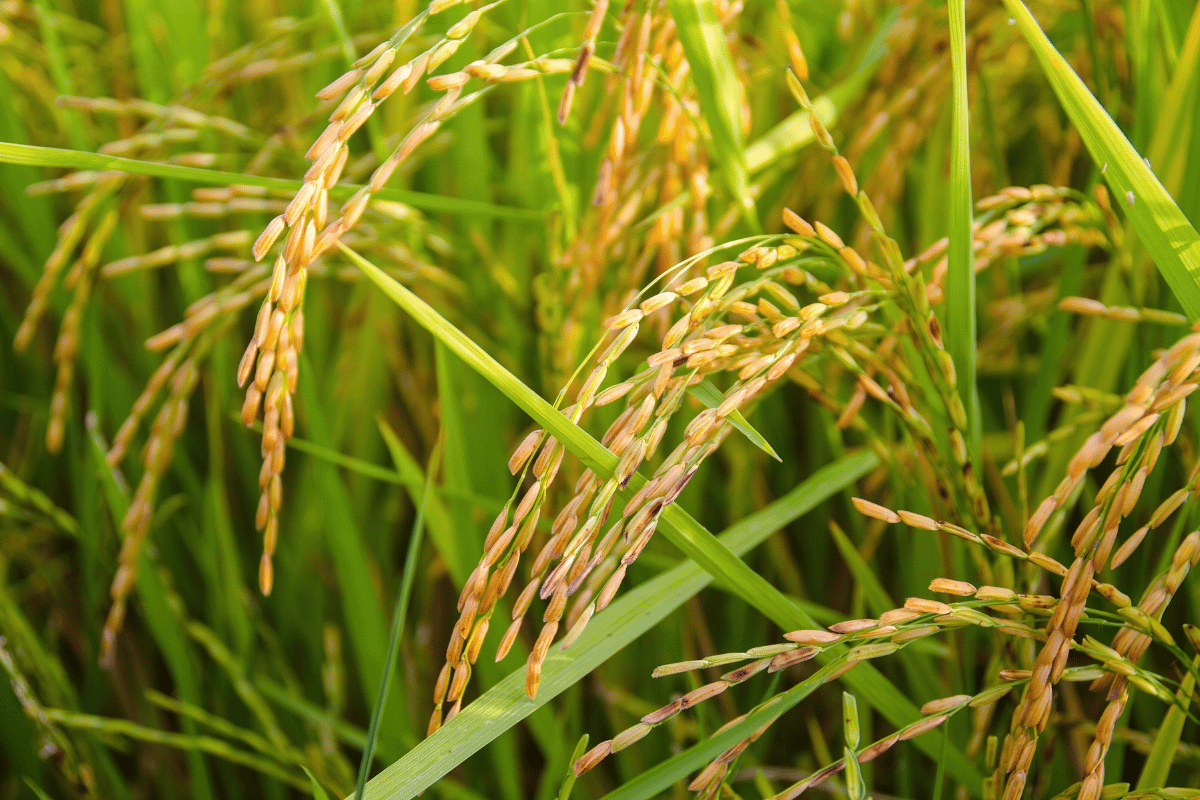
Rice lodging continues to be one of the most challenging problems facing farmers worldwide, causing significant yield losses and harvest difficulties. This comprehensive guide explores the bending phenomenon in rice and provides practical solutions through strategic potassium management and flag leaf optimization.
Understanding rice lodging: The bending phenomenon
Rice lodging occurs when plants lean excessively or fall over before harvest, creating a cascade of problems that can devastate entire crops. This bending phenomenon affects susceptible rice varieties during seed maturation and represents a major constraint to both yield and harvest efficiency.
The science behind lodging
The lodging phenomenon is intrinsically linked to two crucial physiological components that work in tandem: potassium nutrition and flag leaf photosynthetic capacity. Research shows that rice lodging significantly reduces plant height and crop yield, with plants particularly prone to lodging during the late growth stage due to panicle initiation.
Studies have revealed that lignin is the key cell wall polymer that positively determines lodging resistance in rice. The mechanical strength of the basal stem and reduced plant height are directly influenced by lignin content, making it a critical factor in preventing lodging.
Potassium: The foundation of stem strength
The role of potassium in rice plants
Potassium is a primary macronutrient that is indispensable in maintaining cellular turgor, enzyme activation, carbohydrate metabolism, and the synthesis of structural components. This essential nutrient is involved in over 60 enzymatic reactions within the plant.
Potassium improves root growth and plant vigor, helps prevent lodging and enhances crop resistance to pests and diseases. The nutrient is highly mobile both within the plant and in the soil, making proper management crucial for optimal rice production.
How potassium strengthens rice stems
Adequate potassium supply directly contributes to the lignification of sclerenchyma cells and the integrity of vascular bundles within the rice culm, thereby enhancing stem strength and rigidity. This process is fundamental to preventing the bending phenomenon that leads to lodging.
Potassium deficiency results in weaker stems that are highly prone to lodging under the increasing weight of developing panicles and adverse environmental conditions like wind and rain. The symptoms of potassium deficiency include:
- Stunted dark green plants with yellowish brown leaf margins
- Older leaves with necrotic tips and margins
- Unhealthy or black roots
- Greater susceptibility to lodging
- Higher levels of unfilled grains and lower grain weight
Optimal potassium management strategies
Rice crops take up around 19 kg K₂O per ton of grain yield at optimum plant nutrition. For effective potassium management:
- Pre-plant applications are most effective for potassium fertilization
- For rates exceeding 30 kg K₂O/ha, apply 50% basal and 50% at early panicle initiation
- Split potassium applications in at least two doses if soil is sandy with leaching potential
- Topdressing at mid-tillering is possible but not as effective as pre-plant applications
Rice plants with whole-plant concentrations below 1.7% K are deficient, while a range of 1.7% to 2.3% K is considered low at internode elongation.
Flag leaf: The engine of grain production
Understanding the flag leaf function
The flag leaf is the uppermost leaf subtending the panicle and serves as the paramount source of photoassimilates for grain filling during the reproductive stage. This crucial leaf is the last to emerge, indicating the transition from crop growth to grain production.
Photosynthesis in the flag leaf provides the majority of carbohydrates for grain filling. Research demonstrates that flag leaf contributes to 45% of rice grain yield, and when removed, becomes the major component for yield loss.
Flag leaf photosynthetic efficiency
Studies show that flag leaf photosynthetic rate averages 7.56 μmol m² sec¹, significantly higher than lower leaves, which record only 2.96 μmol m² sec¹. This enhanced photosynthetic capacity is crucial for:
- Facilitating nutrient translocation to developing grains
- Supporting optimal grain development and quality
- Providing energy reserves for metabolic processes that contribute to stem strength
Optimizing flag leaf performance
A robust and photosynthetically efficient flag leaf ensures optimal grain development, contributing to both grain weight and quality. Key strategies include:
- Maintaining adequate potassium levels to support flag leaf function
- Preventing premature senescence through proper nutrition
- Ensuring sufficient light penetration to maximize photosynthetic efficiency
- Managing nitrogen applications to avoid excessive vegetative growth that may shade the flag leaf
Integrated management approach
Combining potassium and flag leaf strategies
Mitigating the bending phenomenon requires a holistic approach that prioritizes robust potassium management to fortify stem architecture, alongside practices that optimize photosynthetic efficiency and longevity of the flag leaf.
Research indicates that plant height in the booting stage significantly correlates with lodging results (r = 0.67), while being negatively correlated with yield (r = -0.46). Plants face increased lodging risk if rice plant height exceeds 70.7 cm in the booting stage with continued nitrogen fertilization.
Practical implementation guidelines
Variety Selection and Sowing Methods
- Drill sown crops show better lodging resistance than aerial sown crops
- Delayed permanent water (DPW) crops demonstrate the highest lodging tolerance
- Lodging-sensitive varieties should not be aerially sown
Nutrient Management
- Balance nitrogen and potassium applications to prevent excessive vegetative growth
- Apply potassium before final soil puddling for optimal uptake
- Monitor plant height during booting stage as an early warning system
Water Management
- Avoid continuous flooding from germination as it promotes taller, thinner stems
- Implement controlled water depth during establishment to encourage stronger root anchorage
Environmental Factors and Risk Assessment
Weather-Related Lodging Risks
Environmental conditions significantly influence lodging susceptibility. Research shows that accumulated rainfall in later growth stages, accompanied by strong instantaneous gusts, increases lodging risk. High summer temperatures during stem elongation have also been shown to increase lodging potential.
Monitoring and Prevention
Early detection and prevention strategies include:
- Regular monitoring of plant height during critical growth stages
- Soil testing for potassium levels before planting
- Assessment of flag leaf health during grain filling
- Weather monitoring during vulnerable growth periods
Conclusion
The prevention of rice lodging requires a comprehensive understanding of the complex relationship between potassium nutrition and flag leaf function. By implementing strategic potassium management to strengthen stem architecture and optimizing flag leaf photosynthetic efficiency, farmers can significantly reduce lodging risk while maximizing grain yield.
Success depends on early intervention, proper nutrient timing, and continuous monitoring of plant development throughout the growing season. The integration of these practices ensures sufficient energy partitioning for both structural resilience and optimal grain production, ultimately leading to more profitable and sustainable rice farming operations.
Through careful attention to these interconnected physiological processes, farmers can transform the challenge of rice lodging into an opportunity for enhanced crop performance and improved harvest efficiency.