Hydroponic fodder systems convert dry grain into fresh, nutrient-dense feed in a matter of days, using a fraction of the land and water required by conventional forage production. For cattle ranchers considering this technology for finishing steers, the practical questions matter most: what does the system look like, how much does it produce, how do you feed it, and what logistical issues should you plan for? This article draws on operational data from a container-based hydroponic fodder farm run by FarmBox Foods in Sedalia, Colorado, which supplied feed for a 145-day comparative trial at Sandstone Ranch in 2023.
For the trial's headline results and financial analysis, see Hydroponic fodder vs. grain finishing for beef steers: a 5-month field trial and Feed costs and financial performance: hydroponic fodder vs. grain-fed beef.
How the fodder farm works
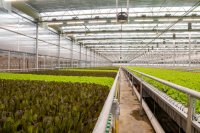
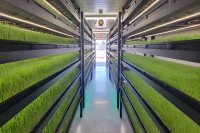
The FarmBox Foods hydroponic fodder farm is a container-based system, the first of its kind in the company's portfolio. It was designed as a showroom facility, which means it had more foot traffic than a typical production unit, resulting in some efficiency and yield losses compared to what a dedicated on-farm installation would achieve.
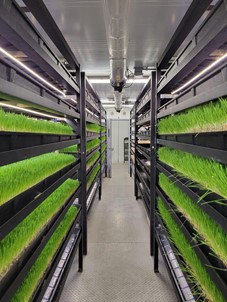
The FarmBox Foods hydroponic fodder farm
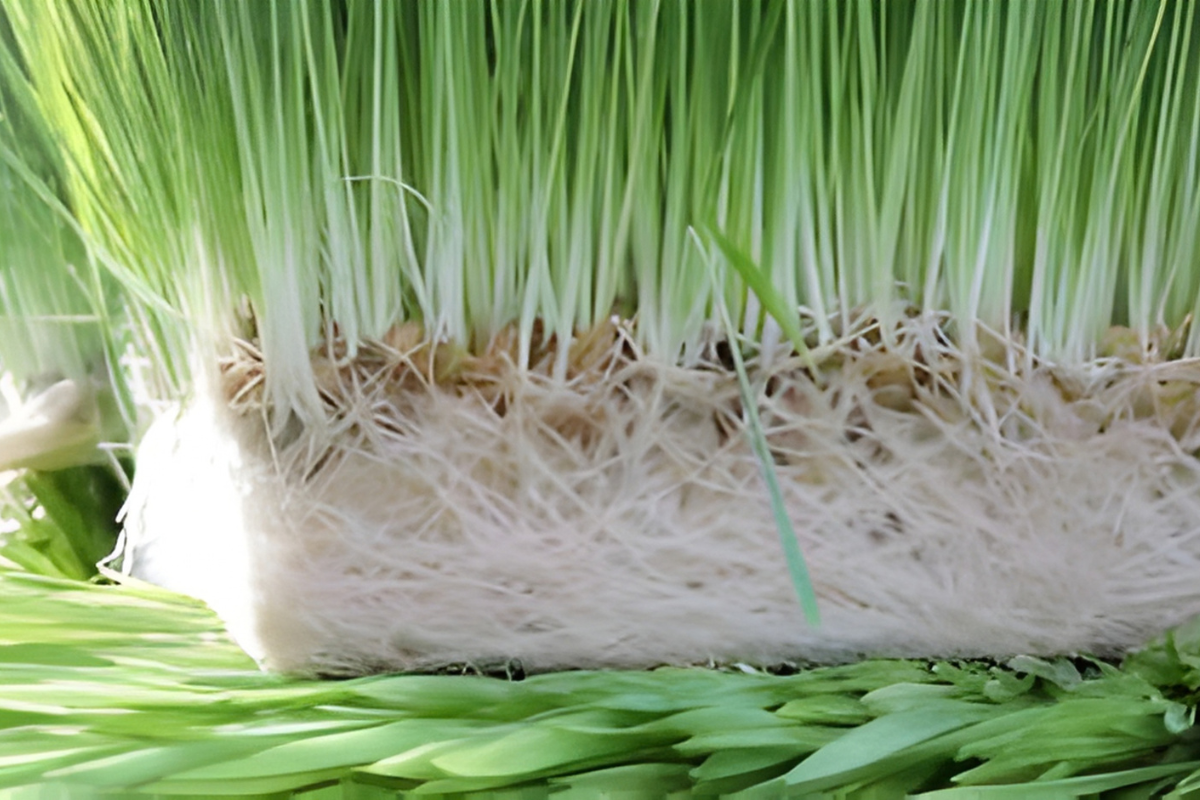
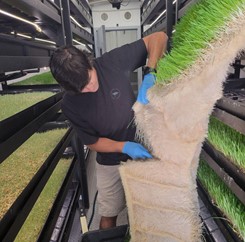
The production process starts with 130 lbs of dry barley grain loaded into trays each day. Over a 7-day growth cycle, the grain germinates and develops into a mat of sprouted fodder. At harvest, those 130 lbs of seed have become approximately 850 lbs of fresh hydroponic fodder, a conversion ratio of roughly 6.5:1 by weight. The system is designed for daily harvesting, meaning that once the cycle is fully loaded, the farm produces 850 lbs of fresh feed every day.
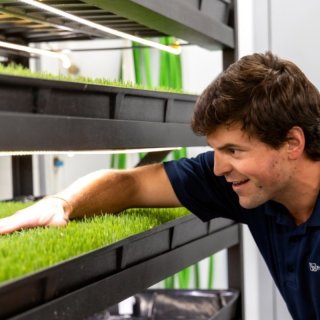
Daily labor commitment is approximately 3 hours, covering harvesting, seeding new trays, and managing the pre-germination process. On an annual basis, the system produces around 155 tonnes of fodder.
Resource consumption
The farm's daily inputs break down as follows: 130 lbs of barley seed, an average of 550 gallons of water, and 27 kWh of electricity. The total production cost, including seed, water, electricity, and other operating expenses but excluding labor, comes to $0.05 per lb of fodder.
The water and land efficiency figures are significant. According to FarmBox Foods, the system uses 99% less water than traditional forage production methods. The annual output of 155 tonnes is equivalent to what roughly 30 acres of conventional farmland would produce in forage, representing a 99% reduction in land use. These figures are specific to the container-based system and to the comparison with traditional field-grown forage; ranchers should evaluate them against their own local conditions, water costs, and available acreage.
For operations where land is limited, water is expensive, or seasonal variability makes pasture unreliable, these numbers point to a meaningful advantage. The system also produces feed year-round regardless of weather, which eliminates the seasonal gaps that can force ranchers to purchase supplemental feed at market prices.
.jpg)
Lab analysis of the barley fodder (average, February to October 2023). At 88% moisture on an as-fed basis, the fodder contains 18.2% crude protein, 73.8% TDN, and 6.04% fat on a dry matter basis.
Feeding schedule and rations
During the Sandstone Ranch trial, fodder was picked up from the FarmBox Foods campus and delivered to the ranch three times per week. The schedule was structured around the rancher's existing routine, with feed split into morning and evening feedings.
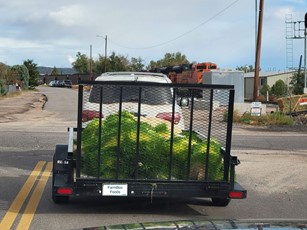
Fodder mats loaded onto the FarmBox Foods trailer for the 16-mile delivery to Sandstone Ranch. Pickups occurred three times per week.
Monday deliveries consisted of 3 trays averaging 300 lbs total, covering Monday evening through Wednesday morning (four feedings). Wednesday deliveries followed the same pattern: 3 trays at 300 lbs, covering Wednesday evening through Friday morning. Friday deliveries were larger at 4 trays averaging 400 lbs, covering Friday evening through Monday morning (six feedings across the weekend). Individual rations averaged 33 to 35 lbs per steer per feeding, depending on the delivery day.
This feeding rate deliberately exceeded the standard recommendation of 3% of body weight. The trial's objective was to test whether steers could be finished exclusively on hydroponic fodder and grass hay, without the addition of traditional concentrates. This is a departure from conventional finishing protocols, where grain-based concentrates typically form the energy-dense core of the diet.
Supplementary feed and minerals
The fodder diet was supplemented with grass hay, water, and mineral blocks, all provided ad libitum. Round hay bales averaging 1,100 lbs were placed in a feeder inside the corral and replenished as the steers consumed them. Fresh potable water was available through a shared drinking fountain, and salt and mineral blocks were positioned inside the corral separately from the feeders.
An important observation from the trial: both the fodder-fed and grain-fed groups consumed hay at the same rate, roughly 38 lbs per steer per day. This consistency meant that hay costs were effectively a constant across both feeding strategies and did not influence the cost comparison between fodder and grain.
The combination of hydroponic fodder, grass hay, and minerals qualifies the resulting beef as grass-fed, which carries a significant retail premium. For ranchers already holding or pursuing grass-fed certifications, this feeding configuration slots directly into that program.
Logistical challenges and what to plan for
The single biggest operational challenge in the Sandstone Ranch trial was the distance between the fodder farm and the ranch, approximately 16 miles. This required a coordinated pickup and delivery operation three times per week, handled by ranch staff. While the system worked, the study's authors acknowledge it introduced variability in feed freshness and delivery timing that would not exist with on-site production.

The 16.9-mile route between the FarmBox Foods campus in Sedalia and Sandstone Ranch. On-site production would eliminate this logistical constraint.
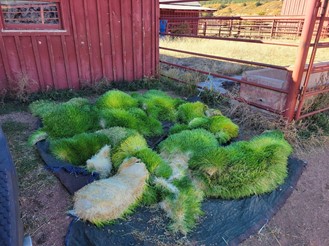
Between deliveries, fodder was stored outdoors at the ranch on a plastic sheet to prevent ground contact, positioned in shade where possible to preserve freshness. This is not ideal. Hydroponic fodder is a live, perishable product with high moisture content, and prolonged outdoor storage in warm conditions accelerates spoilage. Ranchers planning to adopt this system should account for the storage infrastructure needed to keep fodder fresh between harvest and feeding.
The study's authors describe the optimal scenario as on-site fodder production, where the system is installed at or near the feeding operation. This eliminates transport logistics, allows daily harvesting directly into the feed trough, and enables the fodder to be shredded and mixed with hay immediately before feeding. For ranchers evaluating the investment, the container-based system's footprint is compact enough to fit within most existing ranch layouts.
What the trial suggests for adoption
The operational data from this trial points to several considerations for ranchers thinking about hydroponic fodder.
The system is relatively low-labor at 3 hours per day, but that labor is daily and non-negotiable. Seed, water, and electricity must be available consistently, and the 7-day growth cycle means there is a one-week ramp-up period before the first harvest. Ranchers accustomed to the flexibility of stored grain or hay should factor in this production rhythm.
The $0.05 per lb feed cost is compelling, especially against bulk grain at $0.26 per lb and retail grain at $0.34 per lb. But the capital investment in the container system itself is a separate calculation not addressed in the trial. Ranchers will need to weigh upfront equipment costs against the ongoing feed savings documented here.
Growth rates on hydroponic fodder (averaging 2.01 lbs DWG) were lower than grain finishing (3.25 lbs DWG) but comparable to open-range pasture grazing (2.13 lbs DWG). This means fodder-finished steers will take longer to reach target weights, and producers need to factor that extended finishing period into their cost modeling.
The trial was conducted with a sample of four steers and is not statistically representative. Future research with larger herds, on-site production setups, and controlled breed matching would provide a stronger basis for production-scale decisions. The study's primary focus was diet composition and cost; questions about long-term animal health outcomes, meat flavor profiles, and consumer acceptance remain open for further investigation.
References
- Gonzalez, J. (2023). Feeding the Future: A Comparative Analysis of Traditional Grain-Fed and Hydroponic Fodder-Fed Strategies for Finishing Beef Steers. FarmBox Foods.
- USDA. (2023). What is "grass fed" meat?. Ask USDA.
- USDA ERS. (2023). Irrigation & Water Use.
- USDA. (2022). Small Scale Solutions for your Farm: Balancing Animals with Forage. Farmers.gov.