



Regenerative agriculture is not a new term. It was coined in the 1980s, and its principles have been applied around the world for thousands of years. That history is part of why the practices are so hard to pin down, and why there is still no consensus on how they should be applied. They cannot be boxed. Regenerative agriculture should never look the same twice, because no two farms are the same. The practices have to be adapted to the crop, ideally to several crops, and to the agroecology, the social context, the local regulations, and many more variables besides. If we can agree on that, we are left with a problem. How do we determine whether the practices being implemented are truly regenerative?
The answer is that we have to measure the impact objectively. This is where indicators matter, because the subjectivity of which practices to implement takes a back seat once results are running the show. A farm that calls itself regenerative should have the indicators to back that claim: that it is improving its soil health, supporting ecological services, reducing external inputs and pesticides in particular, developing rainfed production systems, and improving the livelihoods of the people who farm it.
What an indicator actually is
Put simply, an indicator is a variable that reflects the outcome of a practice. Farming systems are complex and never identical, as we have said, but the impacts we are looking for should be the same across crops and origins. Three tests decide whether a candidate indicator is worth using.
Measurability: The result must be measured reliably and comparably. That means using proven scientific methods and reporting the result in units the agricultural sector accepts, so a figure from one crop and region can be set against a figure from another.
Sensitivity: The indicator must respond quickly enough to enable you to monitor progress and make decisions based on the data. The right interval varies with the indicator. Pesticide use should be tracked every crop cycle, which can be as short as three months, so a trend in its reduction becomes apparent. Soil organic matter, on the other hand, shifts over the years, and checking it every six months will only frustrate the producer.
Relevance: Finally, indicators should be chosen for their importance, providing as complete a picture as possible while remaining meaningful across crops and regions. The choice should follow from what the principles of regenerative agriculture are actually meant to achieve.
What we should be measuring
What follows is a personal opinion, based on what I understand regenerative agriculture to be and on what my own experience in the field has taught me. And no one would argue with starting at the soil.
Soil
Physical soil indicators: Every producer should know the basics of their soil's physical characteristics, at a minimum: soil type, composition, compaction, and texture. Apart from compaction, these cannot be changed, but they should inform crop and management decisions.
Chemical soil indicators: All soil management and nutrition planning should rest on these. Whether the plan uses synthetic inputs or only organic ones, every application should be set against the crop and soil requirements. At a minimum, a producer should have pH, nutrient availability, and cation exchange capacity.
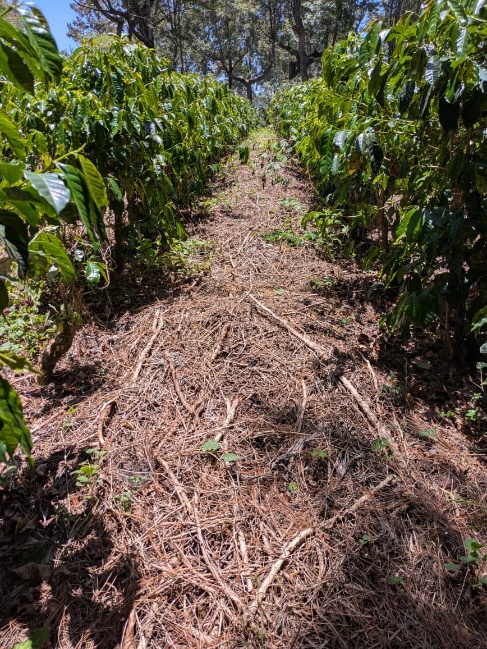
Soil cover in practice. Dry organic residue covering the inter-row in a shaded coffee system, with no bare soil exposed.
Soil organic matter: This could sit in either category above, depending on who you ask, but it deserves its own place. It has a direct effect on the physical and chemical character of the soil, and the farmer's own practices strongly shape it. Conventional practice decimates soil organic matter. Regenerative practices such as no-till, crop rotation, soil cover, and integrated weed management incorporate and conserve it.
Soil cover: Every farm should know how much bare soil it has. Ideally, it is zero, and where it is not, knowing the percentage sets clear goals and points to the practices needed to reach full coverage. Soil cover is a pillar of regenerative agriculture, so it is among the first things worth evaluating on any farm.
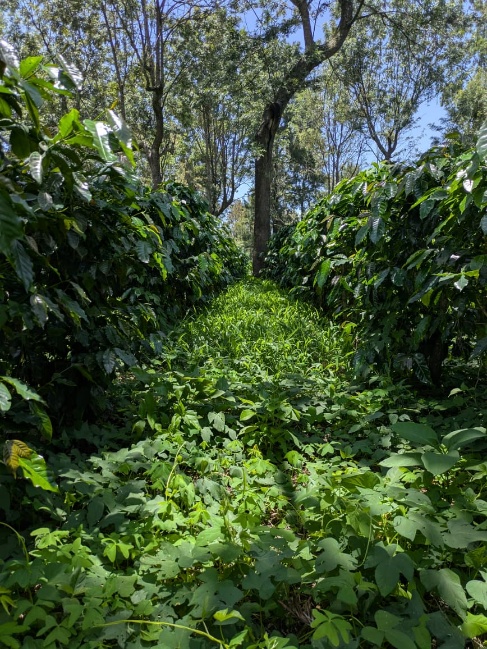
The same principle is achieved with living cover. Spontaneous and sown vegetation between coffee rows keeps the soil covered and feeds soil biology at the same time.
Biodiversity
The importance of biodiversity indicators lies in their role in ecological services, and their effects show up in other areas: soil health, crop health, external inputs, and productivity.
Forestry: Integrating trees into productive models is a priority in regenerative agriculture, and not only in agroforestry systems for shade-tolerant crops. Trees can enter through ecological corridors, windbreaks, alley cropping, riparian buffers, and designated conservation areas, among others. The number, species, and density of trees per unit area should therefore be indicators for every farmer, so those variables can be adjusted to the goals of the operation.
Livestock: Not every productive model can integrate livestock, but where it is integrated, clear indicators on head per hectare allow the impact to be measured. This matters for decisions about livestock, pasture, and crop-cycling management.
Microorganisms: Microorganisms shape crop development, influencing both soil health and the pressure from pests and diseases. Understanding the soil microbiome, through worm counts and the identification and quantification of microorganisms, supports management decisions that favour the beneficial populations and improve the ecological services reaching the crop and the soil.
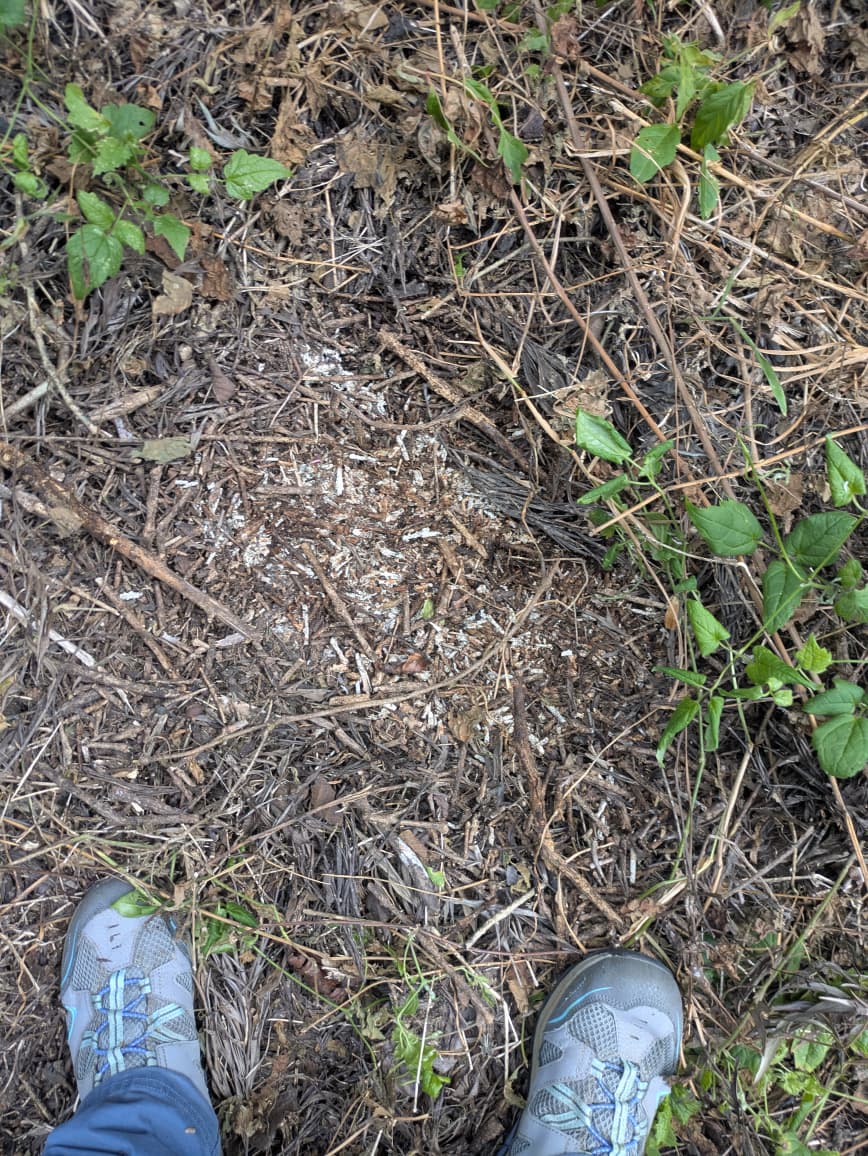
Soil biology at work. White fungal mycelium colonising decomposing residue, which is the kind of observation that can be tracked as a simple, repeatable indicator.
Inputs
Reducing external inputs while maintaining productivity is one of the main goals in regenerative agriculture.
Pesticides. This is much debated, since one line of thinking holds that no synthetic inputs belong in regenerative agriculture at all. I think that should be the goal rather than the rule. My experience is that regeneration can be achieved where synthetic inputs are used correctly, which means chemical control is the last resort in the integrated pest management plan and is always backed by monitoring results. For that to happen, producers need to record:
- Pest and disease monitoring results
- Application and annual or crop-cycle dose per active ingredient
- Toxicity and negative effects of each active ingredient
- Pesticide application events, including date, time, weather, applicator, and equipment
- Efficiency of the pesticide control achieved
- Historic volume per area, per active ingredient, per year or crop cycle
Synthetic fertiliser: In crop production, synthetic fertilisation is the largest single source of greenhouse gas emissions, and agriculture as a whole accounts for more than 80% of anthropogenic nitrous oxide, most of it driven by fertiliser applied to soils. Every fertiliser application should therefore be part of a nutrition plan based on the soil indicators discussed above and the crop's requirements. To keep fertilisation efficient, farmers should track and adjust against:
- Total volume of nutrients per year or crop cycle, for example, kg of nitrogen per hectare
- Efficiency of production by macronutrient, meaning kg of production per kg of nitrogen, per kg of phosphorus, and per kg of potassium
Bio inputs: Nothing should go to waste in regenerative agriculture, and circularity is central to these systems. Producers should know which byproducts the operation generates and in what quantity, because that is what makes processing possible to plan and implement.
Ideally, every organic byproduct is transformed into a bio input, and with so many options available, a farmer can find a fit for almost any operation. Generating them through composting, fermentation, vermicomposting, hydrolysis, pyrolysis, or another process is only the first part, though. For these inputs to have a lasting effect they have to be seen through the same lens as synthetic fertilisers. They are not an extra. They need to be prioritised and quantified within the nutrition plan.
The indicators that make the difference here are:
- Amount of organic byproducts generated
- Quantity of each bio input produced
- Nutritional or biostimulant properties of each byproduct
- Dose of bio input per unit area
Water
Water is often not counted as an input, yet its availability is becoming a greater challenge for producers around the world. Again, I am not arguing that regenerative agriculture must be exclusively rainfed, only that rainfed should be the goal. Regenerative practices have a direct effect on water retention and water cycling, which is why producers should keep a clear picture of this resource by tracking:
- Amount of water used through irrigation
- Amount of water used for productive practices, such as input application
- Amount of water used for processing
Financial indicators
I will not go into detail on the financial indicators because they should be defined by each producer's goals and the structure of the operation. They are essential, though, because they influence every decision made on the farm. Regenerative agriculture should be financially sustainable, and more than that: designed and executed well, it should outperform both conventional and sustainable agriculture financially. Being able to compare and justify decisions on financial indicators is another good reason to track them.
Why indicators matter, and to whom
I want to close by saying that I do not believe all the indicators discussed here are necessary for achieving regeneration. The principles of regenerative agriculture are in no way new, and many cultures implemented them successfully for centuries without a single indicator.
So why should we worry about them? If you are a producer, I hope the justifications above have convinced you. But as consumers, all of us, we have a duty to demand standards from producers and companies that claim to produce regeneratively. The only way to verify that they are genuinely prioritising soil health, ecological services, reduced external inputs, rainfed production systems, and improved farmer livelihoods is through measurable, verifiable indicators. If you are buying from a farmer you know and trust, and you know the work is being done, then none of this is needed. For me that is the only exception.
Sources
FAO. Emissions due to agriculture, global, regional and country trends.
Menegat, S., Ledo, A., and Tirado, R. (2022). Greenhouse gas emissions from global production and use of nitrogen synthetic fertilisers in agriculture. Scientific Reports, 12, 14490.
US Environmental Protection Agency. Agriculture sector emissions.