Proper Senescence in Cannabis: How Aging, Reproduction, and Harvest Timing Shape Quality and Yield
What Does Senescence Actually Mean?
Senescence, according to the Oxford Dictionary, is defined as "the condition or process of deterioration with age; loss of a cell's power of division and growth." While this is the dictionary definition, the concept warrants a deeper look, particularly in the context of agricultural crops. Senescence typically refers to a natural aging process in plants, especially flowers, which are critical to reproduction. In many species, this "loss of a cell’s power of division and growth" triggers a plant’s instinct to reproduce before its life cycle ends. As the plant senses its limited time, it accelerates reproductive processes, prioritizing gene dispersal.
Given this inherent relationship between senescence and reproduction, it is only fitting to examine the phenomenon through the lens of plant sexual systems — specifically, dioecious versus monoecious plants.
Plant Sexual Types: Dioecious vs. Monoecious
Understanding plant sexuality is crucial, particularly in the context of reproduction and senescence. Monoecious plants bear both male and female reproductive organs on the same individual, making self-pollination possible. Conversely, dioecious plants produce male and female organs on separate individuals, requiring external agents like wind, insects, or human intervention for pollination and, in most cases, for setting fruit.
An important nuance arises with cannabis, which, as a dioecious species, behaves somewhat differently. Before delving deeper into cannabis, it is important to emphasize that senescence refers to a gradual, natural deterioration due to aging, rather than an abrupt event caused by external forces. In human terms, it would be comparable to dying of old age rather than becoming paralyzed from an accident.
In most dioecious plants, once pollination is achieved, energy shifts from vegetative growth and the production of secondary compounds toward reproduction and fruit development. Cannabis is a key example of how this shift impacts not only the plant's biology but also its agricultural value.
Cannabis as a Case Study: Reproduction, Senescence, and Yield
Female cannabis plants are constantly primed for reproduction, with their sticky pistils ready to capture airborne pollen. Until pollination occurs, they remain in a seedless state known as sinsemilla—a Spanish term meaning "without seed." Once fertilized, the plant’s energy diverts from the production of valuable compounds such as cannabinoids and terpenes to seed production. This diversion leads to a significant decline in both yield and quality.
Thus, pollination accelerates the senescence process in cannabis, as the plant's resources are redirected toward ensuring seed viability rather than maintaining vegetative vigor. From a cultivation standpoint, successful pollination is undesirable because it triggers early senescence and compromises the final product.
Preserving Senescence in Cannabis Cultivation
In cannabis farming, the goal is to maintain an unpollinated, seedless state for as long as possible. This requires constant scouting for male plants and hermaphrodites to prevent accidental pollination. Once male flowers, often called "nanners," are visible, it is usually too late, as pollen release may have already occurred.
Preserving unpollinated senescence demands vigilance, labor, and investment, but given cannabis’s high market value, these extra measures are justified. Maintaining seedless plants ensures that energy remains focused on cannabinoid and terpene production, optimizing both the potency and overall yield.
A Closer Look at Cannabis Anatomy: Flowers, Fruits, and More
Given the focus on reproduction, it is important to clarify the anatomy of cannabis. Cannabis is unique in that it is not only dioecious but also parthenocarpic — capable of producing fruits without fertilization. More precisely, cannabis exhibits facultative parthenocarpy, meaning it can produce both seeded and seedless fruits depending on whether pollination occurs (Riboulet-Zemouli, 2020).
In cannabis, flowers develop first, and within these flowers, ovaries form fruits even in the absence of fertilization. These seedless fruits are what consumers know as "buds." However, buds are more than just flowers; they are a complex mix of parthenocarpic fruits, leaves, cannabinoids, terpenes, and various other forms of organic matter. Some components of this mixture may contribute to the so-called entourage effect, although much remains to be researched.
Does Parthenocarpy Matter to Farmers or Consumers?
Despite its botanical importance, the parthenocarpic nature of cannabis holds little practical relevance for either farmers or consumers. Growers primarily focus on preventing pollination to safeguard yield and quality. As long as consumers find no seeds in their purchased product, they are generally satisfied.
However, for those with a deeper interest in agriculture, understanding parthenocarpy provides valuable insight into the uniqueness of cannabis and broadens knowledge about plant reproduction in general. This awareness is especially useful when comparing cannabis to other crops like tomatoes, which are monoecious and require pollination to set fruit but do not experience the same dramatic impact on fruit quality or yield following fertilization.
What Happens After Senescence?
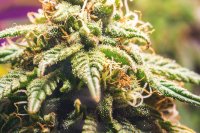
Senescence defines not just the decline but also the optimal harvest window for cannabis. Technically, senescence onset occurs approximately two weeks into the flowering phase. Trichome development serves as a reliable indicator for gauging plant maturity. When trichome heads appear mostly milky with a few turning amber, the plant has reached its peak harvest window. Harvesting earlier can still yield a good product, but it would be considered suboptimal. If harvesting is delayed until most trichomes turn dark amber, quality diminishes.
In terms of numbers, senescence begins about two weeks into flowering. The optimal harvest typically occurs between eight to ten weeks into flowering. Complete senescence — when plants begin to wilt and internal tissues start breaking down — usually finishes within ten to twelve weeks of flowering.
Large-scale commercial growers often harvest slightly earlier to streamline production and reduce costs, while home growers tend to allow plants to reach full maturity, focusing on maximizing quality rather than speed.
How to Manipulate and Delay Senescence
Given that senescence marks the end of active growth, growers aim to postpone it to extend the window for building yield and potency. Techniques such as light manipulation, controlled flushing, and dry-back cycles are commonly used to delay senescence and enhance resilience.
Stress training methods, by deliberately imposing mild stress, can strengthen plants, making them more resistant to aging processes. As a result, plants subjected to well-managed stress training can often stave off senescence longer than untouched plants, continuing to produce cannabinoids and terpenes for a longer period.
Ultimately, growers must understand that cannabis fruits — the buds — are not only possible without pollination but also significantly better without it. While technical knowledge of parthenocarpy is not essential for everyday farming operations, it enriches an agricultural enthusiast’s appreciation for the complexities and uniqueness of cannabis.
Cannabis offers its fruit without requiring reproductive assistance, unlike most other crops, making it a truly fascinating plant for both scientists and cultivators.
References:
- Riboulet-Zemouli, Kenzi. (2020). Observation of parthenocarpy in Cannabis sativa L. (Excerpt from ‘Cannabis’ Ontologies I: Conceptual Issues with Cannabis and Cannabinoids Terminology).
Further learning
DIY vs. Pre-Bottled Cannabis Fertilizers: Which Feeding Strategy Is Best for Your Grow?
Hemp in Animal Feed: A Sustainable Solution for Livestock Nutrition
Genetics in Cannabis: Similarities and differences to conventional crops
Cannabis Physiology: Growth, Cultivation Techniques, and Evolution Explained
Cannabis: A Global Overview of Regions, Restrictions, and Popular Varieties