Plant propagation involves both art and science in cultivating new plants from seeds, grafting, eye budding, cuttings, layering, and splits. The process enables the multiplication of a variety from a few stems to millions. Propagation is divided into two main categories.
Sexual propagation involves using seeds, where only the F1 generation remains true to type. Asexual or vegetative propagation refers to using vegetative parts of plants to generate new ones. The methods mainly used are grafting, eye budding, cuttings, layering, and splits, working with stems, roots, leaves, buds, and rhizomes.
Why propagation matters
Vegetative propagation aids in maintaining true-to-type plants, facilitates the multiplication of plants, and is used in regenerating low-yielding blocks by planting new specimens, which directly enhances farmers' income. It also makes it possible to combine two desired plant characteristics through grafting, without the need for breeding.
Seed propagation
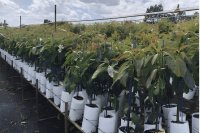
Seed propagation raises new plants from high-quality seeds. It can be done in open field beds or within a controlled environment such as a greenhouse. Advanced seed propagation techniques use trays and inert media in such controlled settings. Commonly used media include cocopeat, peat moss, vermiculite, and sand, applied individually or mixed in various ratios depending on the type of seeds being planted. When seeds are readily available, this method enables rapid propagation of millions of plants within a short period of time.
Several elements contribute to the effectiveness of this approach. The maturity and viability of the seeds matter most. Cleanliness of the seeds is essential. Proper storage in a cool location helps maintain viability. For optimal production, only certified seeds should be used.
Grafting
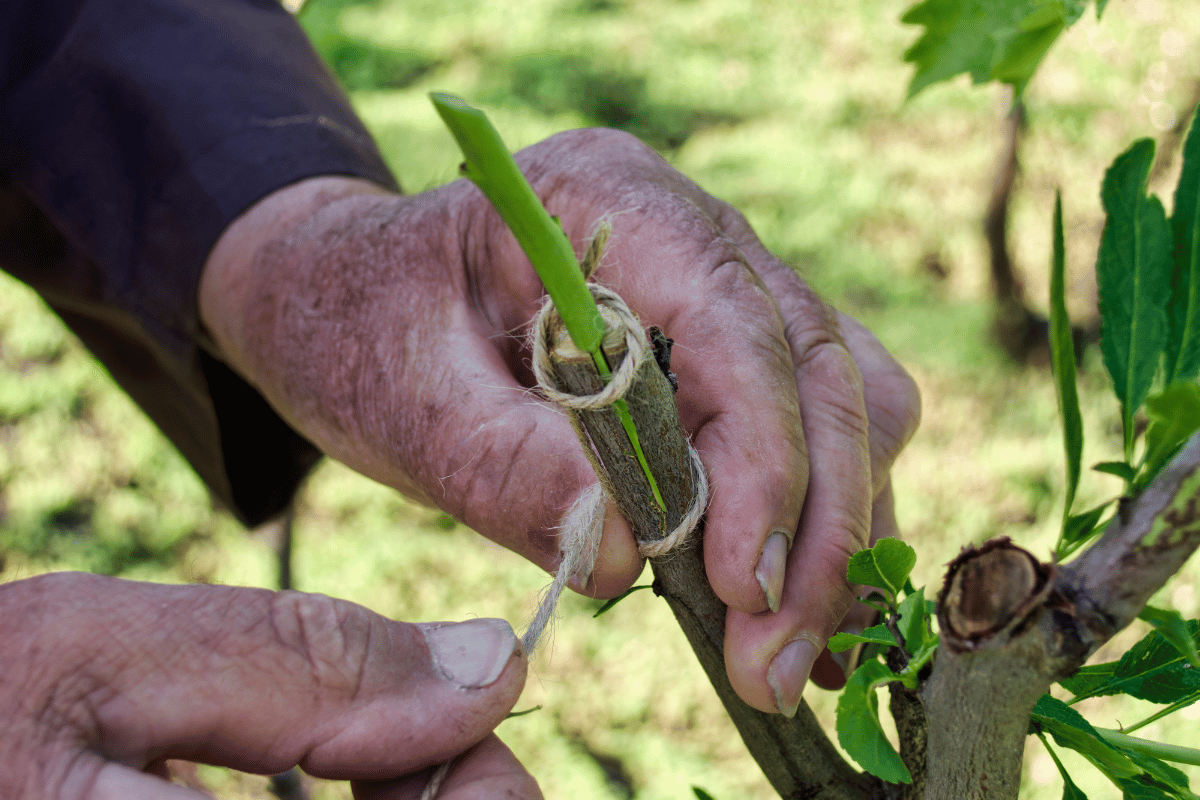
Grafting is a vegetative method of propagation used worldwide to produce plants that are genetically identical to the mother plant. The technique helps maintain desirable characteristics such as disease resistance and fruit quality, and it establishes uniform plants more reliably than seed-grown ones. Grafted trees begin bearing fruit in 2.5 to 3.5 years, compared to over seven years for those grown from seeds.
The method involves joining the scion and the rootstock to create a new plant using grafting tape. It is primarily used for fruit trees, ornamentals, and vegetables. The commonly employed methods include whip and tongue (used for smaller branches), cleft grafting (a common method where the scion is inserted into a split rootstock), and bark grafting (used on larger rootstocks, mainly on trees).
For a successful graft, the size of the rootstock and bud wood should be equal. The cambium layers should be in contact with each other. The scion should fit tightly to the rootstock without leaving any space. The union should be tied securely to ensure proper healing and to prevent water entry that can cause rotting. Plants should be grown under shade with humidity of over 80 percent to increase the survival rate.
Eye budding
Eye budding is a horticultural technique in which a vegetative bud, known as an "eye," from a preferred plant is inserted into the bark of a rootstock. This process results in uniform, vigorous, cleaner, and high-yielding plants. The T-budding method is frequently used, where a pocket is created in the rootstock bark for the insertion of the eye, which is then securely fastened with grafting tape. The outcome is a new, vigorous plant that is genetically identical and true to the type of the original.
Air layering
Air layering is a gentle method of propagation where a stem is encouraged to root while still attached to the parent plant. For this technique to succeed, a healthy, well-matured branch from the previous season is chosen. The section to be rooted is carefully wounded, and a rooting hormone is applied to the wound along with moist media, then securely wrapped with clear paper. Once rooting occurs, the section is severed and planted as an independent plant.
Cuttings
Cuttings involve taking a portion of stem, typically 3 to 5 centimetres long with nodes, from a parent plant and fostering its growth into a new, autonomous plant. The method is suitable for a wide variety of plants including trees, ornamentals, shrubs, vegetables, and herbs. It is among the quickest ways to multiply plants that remain true to type. The technique can be used in tunnels or controlled-environment greenhouses, and has proven particularly effective in propagating tea plants using tunnels.
Select stems that are healthy, disease-free, and well-hardened, avoiding woody and flowering stems. Trim the stems to 3 to 5 centimetres with at least two nodes, remove the lower leaves, dip them in rooting hormone, and plant them in an inert medium such as peat moss, cocopeat, vermiculite, or a combination of these. Maintain the plants at a temperature of 25 to 30 degrees Celsius and a humidity level above 80 percent for faster rooting. The cuttings will take 30 to 90 days to be ready for transplanting.
Splits
Splits is a propagation technique where a mature plant is divided into smaller sections, each with shoots, stems, and roots, which are then grown as independent plants. The method is ideal for clumping perennials such as grasses, spring onions, and pyrethrum. It is suitable for mature, healthy, and disease-free plants.
Water the plants the day before to hydrate the roots and prevent shock, then carefully dig up the entire plant or gently remove it from its pot. Use water to brush away soil from the root zone, revealing the natural division points. Gently pull the root ball apart by hand. For tougher, woody roots, use a sterilised, sharp knife or garden spade to cut through the cluster. Make sure each divided section has an adequate root system and some growing shoots. These sections are then transplanted directly into the field or hardened in the nursery. This method is one of the simplest forms of propagation.
Putting it into practice
All these techniques can be implemented by farmers, whether small-scale or large-scale. The choice of method depends on the plant species, the equipment and facilities available, and the speed at which new plants are needed. Seed propagation works well when certified seeds are available and large numbers of new plants are needed quickly. Grafting and budding give consistent, true-to-type fruiting trees and shorten the time to first harvest. Air layering and cuttings suit smaller-scale operations and species where rooting can be encouraged in a controlled environment. Splits are the simplest and most accessible option for clumping perennials.
Selecting the right technique for the crop at hand is the difference between a multiplication operation that breaks even and one that consistently delivers healthy, uniform, productive plants.