Agroforestry is the integration of trees with agricultural crops or with pasture and livestock within the same field. As the world grapples with climate change driven by global warming, this nature-based approach has drawn fresh attention. It maximises land productivity, diversifies income, and creates ecological balance by mimicking natural forest ecosystems, while helping to draw down carbon through sequestration.
The following are practical agroforestry systems that farmers can adopt.
Agrisilviculture
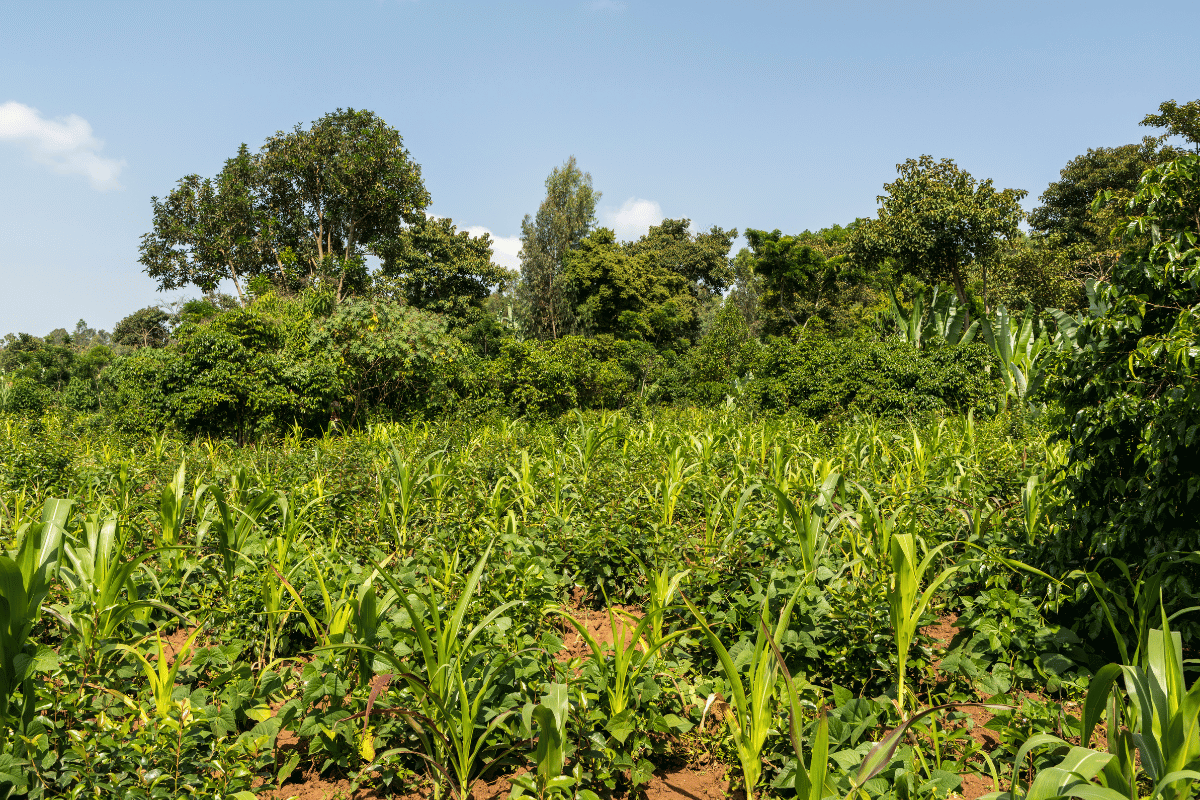
This system combines trees or shrubs with crops. Trees are planted along or around the crops to provide shade, improve soil nutrition, and act as windbreaks. The most common form in Kenya is alley cropping, where crops such as maize, beans, vegetables, potatoes, peas, and bananas are grown in the alleys between rows of Grevillea, Hass avocado, mango, macadamia, or Prunus africana trees, or between rows of nitrogen-fixing shrubs such as Calliandra, Leucaena, or Gliricidia. Farmers can space the trees 7 to 10 metres apart and plant the agricultural crops between the tree lines according to the spacing each crop needs. This system is widely practised in the central part of Kenya.
Silvopastoral
This system combines trees with livestock and pasture. The trees provide forage and shade and act as windbreaks for the animals, while the animals return manure to the trees. It works well in the arid and semi-arid areas, where farmers plant acacia trees in grazing land, and it is practised by pastoral communities in Kajiado and Samburu counties in Kenya.
Agrosilvopastoral
This is the most complex integrated system, combining agricultural crops, trees, and livestock together. The trees provide shade, improve soil nutrition, and act as windbreaks, the crops provide ground cover, and the animals return manure to both the trees and the crops.
Forest farming
This method allows farmers to plant short-season crops on young government forest land while caring for the young trees, so the farmer benefits from the produce while the trees are nurtured through their vulnerable early years. In Kenya it is done in several places, including Kinare forest in Kiambu, Nzoia forest in Kakamega county, and Timboroa forest. In Kinare and Timboroa, farmers grow potatoes, spinach, cabbages, peas, carrots, and beans inside young pine and cypress plantations, while in Nzoia forest in Kakamega they grow maize and beans among the young trees.
Windbreaks and shelterbelts
This system uses rows of trees or shrubs planted along the edges of agricultural fields to reduce wind erosion, protect crops and livestock from harsh weather, mark the boundaries of the land, and retain soil moisture. Farmers in Kenya commonly use cypress, pine, or Markhamia trees, or shrubs such as pencil euphorbia, finger euphorbia, lantana, or Tithonia, for this purpose.
The benefits agroforestry offers farmers
Each of these systems aims to deliver a set of socio-economic benefits to the farmer.
Soil nutrition: leguminous crops and trees fix nitrogen in the soil, and the decomposition of their leaves enriches it further. Deep-rooted trees also draw nutrients up from lower layers and bring them within reach of shallower-rooted crops.
Soil stabilization: tree roots anchor soil particles, while short crops such as beans provide ground cover that combats wind erosion. Trees such as Acacia are valued for creating a cool microclimate.
Diverse products: the farmer gains a range of products, including food crops, pasture, livestock and their products, fruits, and firewood, which provides alternative income in both the short and long term.
Climate change mitigation: agroforestry acts as a carbon sink, with trees, pasture, and crops all absorbing atmospheric carbon. The same systems can be used to restore degraded land.
Nutrition and health: the combination of crops, livestock, and their products supports a balanced diet. African indigenous vegetables such as black nightshade, spider plant, and cowpea, which are rich in iron, calcium, and essential vitamins, fit naturally into these systems, and their high antioxidant content also supports the management of lifestyle diseases.
Windbreaks: trees shelter the farm from strong winds, which protect crops, livestock, and even farm buildings and roofs.
Putting agroforestry into practice
These benefits are the driving force behind a farming approach that is as old as it is practical. A farmer can adopt any of these five systems by combining trees with crops, trees with livestock, or all three together on the same land. Both large-scale and small-scale farmers can take up the agrisilviculture system as a starting point and gradually advance to agrosilvopastoral by introducing livestock onto the farm. By the time a farmer has fully moved to an agrosilvopastoral system, the benefits are well balanced across crops, trees, and animals. The system offers both long-term and short-term returns, depending on the crops the farmer chooses to grow, and it supports the wider goal of sustainable land management.