


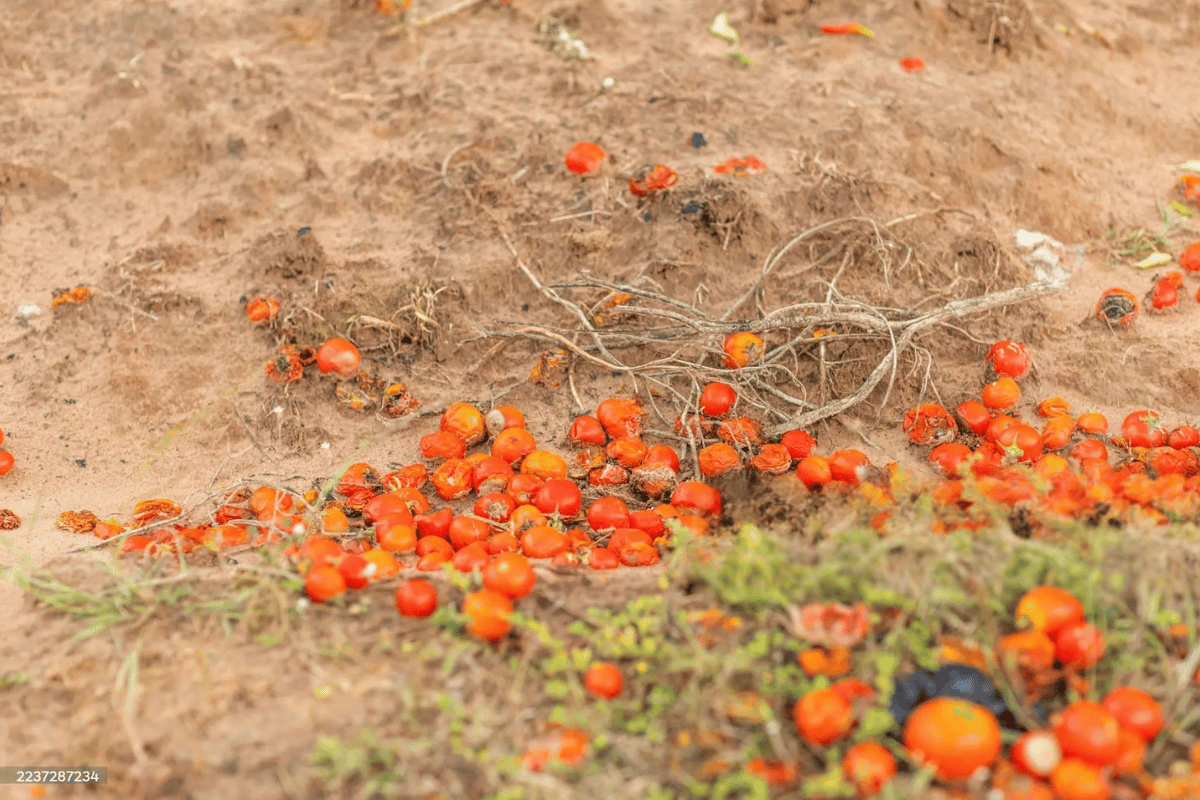
Post-harvest losses (PHL) are a critical issue and a major contributor to food insecurity in many parts of the world. In the context of this article, these are losses that occur at the primary production phase, covering all on-farm post-harvest activities, including harvesting, handling, storage, processing, and transportation. In the United Kingdom (UK), PHL accounts for up to 25% of total food loss and waste, with a significant value of 3.3 million tonnes of food lost on farms each year. This value represents a significant, often underestimated environmental impact and presents a major challenge to food security, farmers' livelihoods, and sustainability goals. The high cost of on-farm losses underscores the need for sustainable solutions to address this challenge for improved food security, socio-economic benefits, and environmental sustainability.
This article critically examines the drivers, impacts, and practical mitigation strategies for on-farm post-harvest losses in the UK, with particular emphasis on market standards, climate variability, and supply-chain dynamics, and proposes system-level solutions that extend beyond farmer-only responsibility.
Causes of post-harvest losses
Market standards and specifications
On-farm losses in the UK are driven by stringent market specifications and policies. Supermarket specifications for uniform size, shape, and appearance, which are typically beyond farmers' control, often result in the rejection of agricultural produce with minor imperfections. Such imperfections may include uneven sizing, varying lengths of fruits, minor scarring, or colour variation in fruits and vegetables such as apples, carrots, and potatoes. But these aesthetic mishaps are sometimes the result of natural growing conditions, weather exposure, or mechanised harvesting. In most cases, they do not necessarily affect the safety, nutritional value, or edibility of the produce. But they are mostly downgraded or discarded entirely because they do not meet supermarkets' aesthetic criteria.
According to a study by the World Wide Fund for Nature (WWF-UK), of the 3.3 million tonnes of food lost on farms, 48% of this loss is due to the high aesthetic standards and specifications for agricultural produce expected from farmers. The emphasis on appearance rather than quality contributes heavily to post-harvest losses and costs farmers, who have to absorb the cost of producing food that does not meet aesthetic standards, thereby eroding their profitability.
Supply and demand mismatches
Variable production and supply demands are another factor contributing to post-harvest losses. In the UK, most farmers enter into contractual agreements with supermarkets to produce a defined quantity of agricultural produce each farming year. With this arrangement, farmers are forced to maintain a consistent supply to fulfil the contract, which often translates into overproduction when later demand from these supermarkets is low. In this fix, farmers struggle to find alternative markets for the surplus crops within a short timeframe, which may result in the devaluation of the produce or significant waste, at a high cost to the farmers.
Climate variability and weather impacts
Weather conditions and climate variability also play significant roles in post-harvest losses. Extreme weather events such as unpredictable rainfall patterns, heatwaves, and late frosts affect crop maturity, crop yield, crop moisture content, harvest windows, and crop quality. For instance, cereal crops harvested during wet conditions often have higher moisture content and are at a higher risk of spoilage and mycotoxin infestation during storage. Apples are at a higher risk of premature fruit fall and fungal disease infestation during extreme wind conditions and excessive moisture. Potatoes are at a higher risk of late harvesting and in-ground crop rotting due to waterlogged farms from excessive rainfall.
The damage due to weather conditions results in higher waste and not only threatens food security but also farmers' productivity, up to 87% in the UK. Understanding climate change impacts on agriculture is essential for developing effective adaptation strategies.
Labour shortages and supply chain bottlenecks
Post-harvest losses in the UK are also influenced by seasonal labour and supply chain challenges. Shortages of seasonal labour can delay harvesting, grading, and packing, which reduces the freshness of the produce and hastens its spoilage. A study by NFU (2022) estimated that about 40% of UK farms experience on-farm losses and waste due to labour shortages. The study further suggested that farms are averagely 14% short of the required labour, resulting in over £60 million worth of food waste from fruit and vegetables alone. Similarly, transport delays, limited processing capacity and other supply chain-related bottlenecks, especially during peak harvest periods, can further reduce product quality before it gets to the market.
Impacts of post-harvest losses
Environmental consequences
Post-harvest losses have significant environmental consequences. Foods wasted on UK farms account for about 10% of agricultural emissions, amounting to 6 million tonnes of carbon dioxide (6 MT CO₂e). Moreover, wasted agricultural produce does not just contribute to greenhouse gas emissions, but also represents a loss of the natural resources used in its production. When food is lost during or after harvest, the land, water, fertilisers, energy, and labour invested in growing that food are also wasted. Additionally, organic waste that is generated from rejected or spoiled foods can further increase methane emissions if not properly managed. Such scenarios undermine national efforts to reduce agriculture-related emissions and meet the UK's net-zero goals.
Economic impacts
Across the value chain, post-harvest losses have a significant economic impact, totalling over £1.8 billion per year. Farmers often bear the greatest burden, as PHL reduces marketable yield, farm income and profitability. This is moreso for fruit and vegetable farmers who are at higher risk for food losses due to strict aesthetic standards, supply and demand mismatches, and labour shortages. These farmers are vulnerable and unprotected from both human and non-human factors that contribute to post-harvest losses, and are often operating on a tight margin due to these losses.
Social implications
Post-harvest losses also have significant social implications, particularly for food access and availability, nutrition, and rural livelihoods. On-farm food losses reduce the availability of affordable and nutritious food produce, and these contribute to food insecurity and dietary inequalities. Presently, food insecurity and poverty within the UK are at an alarming rate, with about 7 million citizens (of which 2 million are children) unable to feed adequately. At the same time, PHL also threatens job security and rural livelihoods of farming communities, as persistent losses typically translate to fewer full-time and seasonal agricultural job opportunities and profitability for farmers. These social implications are dire and highlight the need to reduce post-harvest losses.
Sustainability challenges
From a sustainability perspective, post-harvest losses are slowly eroding the resilience and efficiency of the UK food system. These losses reflect significant loss of natural resources, including land use, water consumption, input use and efficiency. Reducing losses is therefore an important way to improve food system sustainability without increasing crop production or land use. Implementing sustainable farming practices can help address these challenges while improving overall farm resilience.
Solutions for sustainable post-harvest loss reduction
Reducing post-harvest losses in the UK requires a multifaceted approach that combines improved forecasting and agricultural production decision-making, supply chain collaboration, market diversification, and policy, contractual, and financial mechanisms that protect farmers from bearing the full cost of post-harvest losses.
Greater use of weather forecasting, field monitoring, and crop maturity assessments can help farmers make optimal decisions on when to grow and harvest crops and reduce the impact of adverse weather conditions. This technique can be especially effective in reducing post-harvest losses caused by weather conditions and climate variability.
Supply chain collaboration and market diversification are also important ways to reduce losses. With real-time communication and partnership amongst all players in the food supply chain, farmers can be able to align supply with demand and reduce overproduction. In periods of surplus produce, farmers can sell their produce through multiple channels outside supermarkets, such as farm shops, food redistribution organisations, open markets, and food processors, thereby avoiding loss. Moreover, such a partnership can translate to improved transportation methods, which can reduce the volume of farm-stage waste being produced.
Establishing policy, contractual, and financial mechanisms that protect farmers is equally important, as they bear the major cost of on-farm losses, even for factors beyond their control. This should include fairer contracting arrangements that share risk across the value chain and flexible aesthetic standards that do not affect the safety of the produce. Public policy and financial support mechanisms like grants and insurance schemes can further minimise the economic impact of unavoidable losses on farmers.
Table 1: Summary of Key Drivers, Impacts, and Mitigation Strategies for On-Farm Post-Harvest Losses in the UK
|
Driver |
Mechanism of Loss |
Primary Impact |
Evidence Source |
Proposed Mitigation |
|
Cosmetic standards |
Produce rejection |
Economic, food waste |
WWF-UK (2022) |
Flexible grading |
|
Climate variability |
Spoilage, mycotoxins |
Environmental, yield |
Fleurat-Lessard (2017) |
Forecast-guided harvest |
|
Labour shortages |
Delayed harvest |
Economic, quality loss |
NFU (2022) |
Seasonal labour reform |
|
Supply mismatch |
Overproduction |
Economic waste |
Foodrise (2025) |
Market diversification |
What farmers can do now
Plan harvests around weather and crop readiness
Keep a close eye on short-term weather forecasts and crop maturity so harvesting can be timed to avoid wet conditions, heat stress, or delayed lifting that increase spoilage and storage risks. Following best practices for post-harvest safety can significantly reduce contamination and quality loss.
Find extra outlets before surpluses build up
Where possible, line up alternative buyers such as local processors, farm shops, box schemes, or food redistribution groups to take surplus or cosmetically imperfect produce if supermarket demand changes.
Handle and store crops carefully after harvest
Reducing bruising and damage during harvesting, grading, and transport, and keeping crops at the right temperature and moisture levels, can slow deterioration and protect crop value. Investing in appropriate post-harvest storage solutions can make a significant difference in reducing losses.
Work together to share risk and resources
Joining or working through grower groups and cooperatives can help with access to seasonal labour, shared storage or transport, and stronger negotiating power when dealing with buyers.
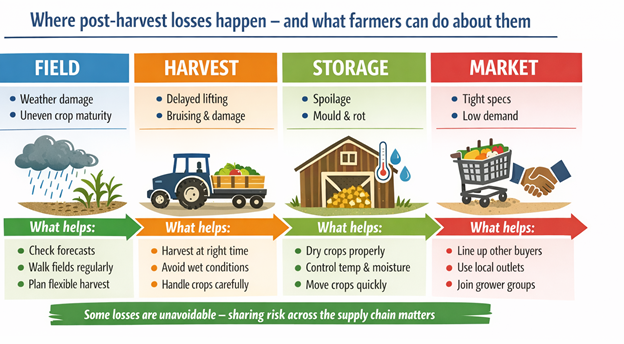
Figure 1. Where post-harvest losses occur on UK farms and practical steps farmers can take to reduce them
Conclusion
Post-harvest losses are a significant yet underestimated challenge within the UK agricultural sector. Despite the country's advanced regulatory and infrastructural system, losses continue to increase due to rigid market specifications, climate variability, supply chain and labour shortages. These losses are a threat to food security, environmental sustainability, farm profitability, and overall food systems resilience and highlight the need for urgent solutions to address the challenge.
However, meaningful and sustainable reductions in post-harvest loss cannot be achieved by farmers alone, as the losses reflect the gaps within the agricultural supply chain and the need for a more connected and resilient food system. Improvements in harvest planning, supply chain collaboration, market diversification, and protecting policies can significantly reduce avoidable losses while also lowering greenhouse gas emissions and resource waste. All stakeholders, including farmers, distributors, retailers, processors, policymakers, and consumers, must work together to reduce post-harvest losses for the resilience and sustainability of food systems.
From a farmer's perspective, reducing post-harvest losses requires a focus on what can realistically be managed on-farm, alongside stronger support beyond the farm gate. Improved harvest planning, use of weather forecasting and crop-monitoring tools, and proactive identification of alternative markets for surplus or cosmetically imperfect produce can help reduce avoidable losses. However, meaningful progress will depend on coordinated action from retailers, processors, and policymakers to ensure fairer contracts, flexible grading standards, and improved access to labour and logistics. Without such shared responsibility, the burden of post-harvest loss will continue to fall disproportionately on farmers.
Addressing post-harvest losses, therefore, represents an immediate opportunity to strengthen farm viability, reduce food waste, and improve the resilience of the UK food system, provided that farmers are supported rather than expected to carry the burden alone.
References
- Fleurat-Lessard, F. (2017). Integrated management of the risks of stored grain spoilage by seedborne fungi and contamination by storage mould mycotoxins - An update. Journal of Stored Products Research, 71, 22-40.
- Foodrise. (2025). Farmers talk food waste: Supermarkets' role in crop waste on UK farms.
- Shah, H., Hellegers, P., & Siderius, C. (2021). Climate risk to agriculture: A synthesis to define different types of critical moments. Climate Risk Management, 34, 100378.
- Howlett, A. (2025). More than 80% of UK farmers are worried about the climate crisis. The Guardian.
- Izdori, F., Mkwambisi, D., Karuaihe, S., & Papargyropoulou, E. (2025). Multi-stakeholder collaboration framework for post-harvest loss reduction: The case of tomato value chain in Iringa and Morogoro regions in Tanzania. Agricultural and Food Economics, 13, 10.
- Khan, A. A., Siddiqui, Y., Siddique, K. H. M., et al. (2024). Minimising postharvest food losses: A vital strategy to alleviate food insecurity and malnutrition in developing nations - A review. Discover Food, 4, 145.
- NFU. (2022). Labour shortages cost millions in fruit and veg waste.
- Vågsholm, I., Arzoomand, N. S., & Boqvist, S. (2020). Food security, safety, and sustainability - Getting the trade-offs right. Frontiers in Sustainable Food Systems, 4, 16.
- WWF-UK. (2022). Hidden waste: The scale and impact of food waste in UK primary production.
- Youssef, K., & Roberto, S. R. (2020). Premature apple fruit drop: Associated fungal species and attempted management solutions. Horticulturae, 6(2), 31.