
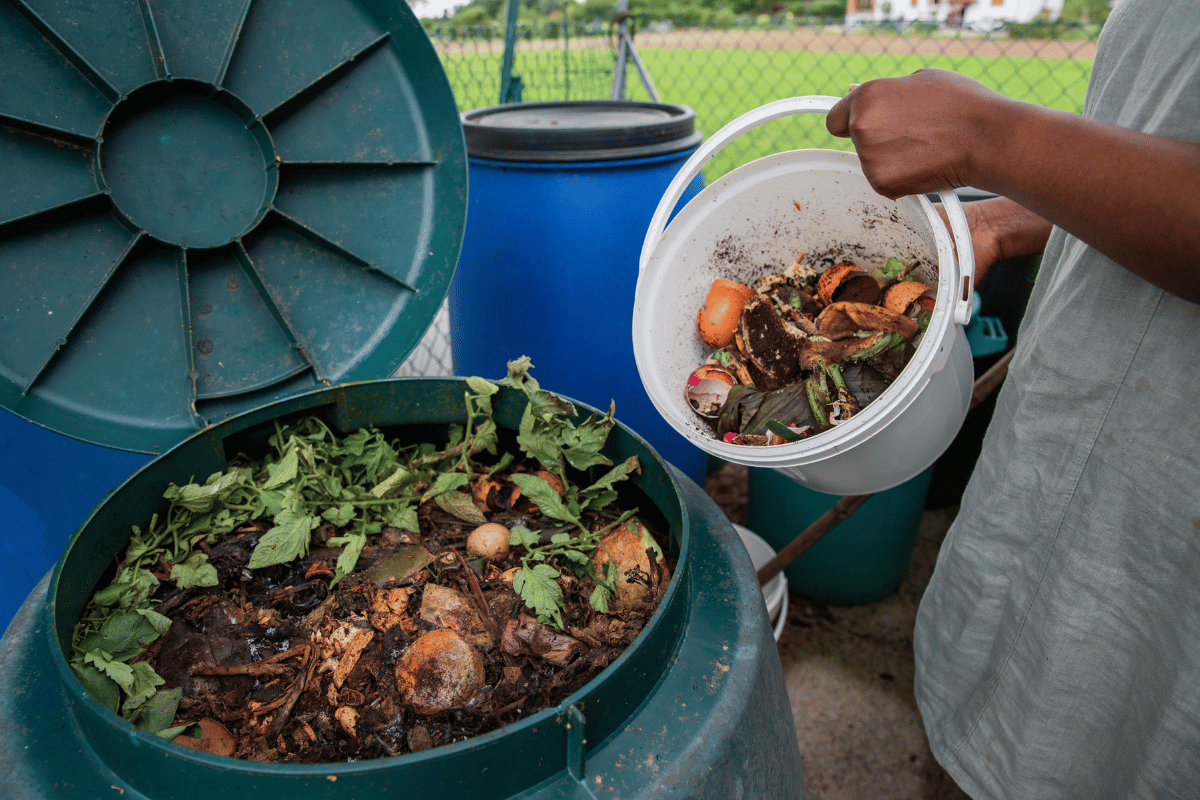
The global organic waste management solution market is witnessing unprecedented growth, with its size projected to nearly double from USD 19 billion in 2025 to around USD 37.7 billion by 2034, reflecting a CAGR of 7.91% (Precedence Research, 2025). This surge is fueled by rising environmental awareness, government policies promoting sustainability, and innovations in composting organic waste, anaerobic digestion, and waste-to-energy technologies.
As nations increasingly prioritize sustainable urban development and the circular economy in agriculture, effective organic waste management solutions are becoming central to reducing landfill reliance and generating renewable resources. Organic waste, including kitchen scraps, garden waste, and agricultural residues, is being transformed into biogas, biofertilizers, and nutrient-rich compost, offering both ecological and economic benefits.
Market overview and projections
The organic waste management sector represents one of the fastest-growing segments within the global waste management industry. This growth trajectory reflects a fundamental shift in how societies view waste—not as a disposal problem, but as a valuable resource that can be recovered, recycled, and repurposed. The market encompasses a wide range of solutions, from simple home composting bins to sophisticated industrial-scale anaerobic digestion facilities that generate renewable energy.
The projected market expansion is particularly significant given the urgency of addressing climate change and the increasing pressure on landfill capacity worldwide. Traditional waste disposal methods contribute substantially to greenhouse gas emissions, particularly methane from decomposing organic matter in landfills. By diverting organic waste to productive uses, these solutions contribute directly to climate mitigation efforts.
Market drivers and opportunities
The market growth is supported by several interconnected factors that are reshaping waste management globally.
Urbanization and waste generation trends
Increasing global waste generation due to urbanization and population growth represents a critical driver. By 2030, global municipal solid waste generation is projected to reach 2.59 billion metric tons, driven by ongoing urbanization and population growth. This dramatic increase in waste volumes creates both challenges and opportunities for agricultural waste management solutions.
Urban areas generate particularly high volumes of organic waste from residential kitchens, food service establishments, and landscaping activities. As cities expand, the cost and environmental impact of traditional landfilling become increasingly unsustainable, creating strong economic incentives for alternative treatment methods.
Government initiatives and circular economy policies
Government initiatives promoting circular economy models and renewable energy are boosting adoption of organic waste treatment. Composting organic waste can reduce waste volumes by 40–50% and save up to US$191 million in Sri Lanka through lower waste management and fertilizer costs.
Policy frameworks worldwide are establishing mandatory organic waste diversion targets, landfill restrictions, and financial incentives for renewable energy in farming and waste management. These regulatory drivers create stable, long-term market conditions that encourage private sector investment in waste processing infrastructure.
Environmental awareness and climate action
Rising public awareness regarding environmental sustainability and climate change has transformed consumer expectations. Households and businesses increasingly demand waste management options that align with their environmental values. This societal shift supports the expansion of community composting programs, workplace green initiatives, and sustainable packaging solutions that reduce organic waste generation.
Technological advancements in waste processing
Continuous technological advancements in automated sorting, composting, and AI-driven waste processing are making organic waste management more efficient and cost-effective. These innovations reduce labor costs, improve processing quality, and enable facilities to handle larger volumes with greater consistency.
Regional insights and leadership
North America: market leader with strong infrastructure
North America leads the market, holding over 39% of global market share in 2024, thanks to established waste management infrastructure and stringent regulations by agencies like the Environmental Protection Agency (EPA). Programs targeting food waste reduction and organic recycling are boosting the adoption of innovative solutions.
The U.S. National Strategy for Reducing Food Loss and Waste aims to cut food wastage by 50% by 2030, directly driving demand for organic waste management solutions (Precedence Research, 2025). State and municipal governments across North America are implementing curbside organic collection programs, commercial food waste bans, and incentive programs that accelerate market growth.
Europe: fastest growth through circular economy policies
Europe is poised for the fastest growth during 2025–2034, supported by policies such as the Circular Economy Action Plan and the Waste Framework Directive, which encourage recycling, composting, and advanced treatment of organic waste. In the EU, annual compost production grew from 14 MT (6.2% of MSW) in 1995 to 36 MT (15%) by 2013 (Rajaeifar et al., 2017).
Composting rates are highest in Austria (31%), Netherlands (27%), Liechtenstein (23%), Switzerland (21%), Luxembourg (20%), and Italy (18%)—all high-income nations. Italy had 285 composting plants in 2017, processing 3.3 MT of MSW and other organic waste, often via anaerobic digestion.
Lithuania has also made major gains, increasing composting from 2.5% in 2011 to over 20%. Some countries, like Ireland, are targeting waste category-specific goals, aiming for 70% of packaging to be recycled or composted by 2030. These ambitious targets create strong market pull for advanced organic waste processing technologies and services.
Asia Pacific: rapid expansion in emerging markets
Meanwhile, Asia Pacific is rapidly expanding due to urbanization, industrialization, and increasing environmental awareness. Countries like China, India, and Pakistan are investing in smart waste management systems and waste-to-energy projects. Initiatives such as the Suthra Punjab Project have attained global attention, harnessing biogas production from organic waste and anaerobic digestion technologies to meet sustainability goals.
Rapid urban growth in Asian cities is creating urgent demand for scalable waste management solutions. Many municipalities are leapfrogging traditional waste infrastructure by adopting advanced technologies like decentralized composting systems and community-scale biogas plants that can be deployed quickly and expanded incrementally.
Product and service trends
Organic waste bins and collection systems
Among product types, organic waste bins currently dominate the market due to their accessibility, cost-effectiveness, and applicability across residential and commercial sectors. These systems form the essential foundation for source separation, which is critical to the success of downstream processing operations.
Modern organic waste bins incorporate odor-control features, pest-resistant designs, and user-friendly mechanisms that encourage consistent participation in waste-separation programs. Smart bins equipped with fill-level sensors and IoT connectivity are emerging in commercial settings, optimizing collection routes and reducing operational costs.
Composting systems and solutions
Composting systems, which are related to compost production and management, are projected to experience significant growth as communities and businesses embrace eco-friendly waste-to-compost solutions. These systems range from simple backyard composters to sophisticated in-vessel composting facilities that process hundreds of tons daily.
Products generated through composting directly improve soil health and fertility, creating valuable organic fertilizers and soil amendments that reduce reliance on synthetic chemicals in agriculture and landscaping.
Collection and processing services
On the service side, collection services remain essential, ensuring the timely segregation and transport of organic waste. These services have become increasingly sophisticated, with route optimization software, GPS tracking, and customer communication systems that improve efficiency and service quality.
Processing services, including composting, automated monitoring for compliance with regulations, anaerobic digestion, and biofertilizer production, are growing rapidly (Precedence Research, 2025). These facilities represent significant capital investments but offer stable, long-term revenue streams from tipping fees, renewable energy sales, and compost product sales.
Technological innovations are driving growth
Artificial intelligence and automated sorting
Artificial intelligence (AI) is transforming organic waste management by optimizing collection routes, automating sorting, and improving recycling efficiency. AI-driven systems can identify compostable and recyclable materials with over 95% accuracy, significantly reducing contamination and enhancing resource recovery.
This high level of accuracy addresses one of the most persistent challenges in organic waste processing: contamination from non-compostable materials. Even small amounts of plastic or other contaminants can compromise entire batches of compost, reducing its market value and usability.
Waste-to-energy technologies
Waste-to-energy technologies, including anaerobic digestion and plasma gasification, convert organic waste into renewable energy while reducing greenhouse gas emissions. These innovations not only address waste disposal challenges but also contribute to clean energy production, reinforcing the role of organic waste management solutions in implementing sustainable agriculture practices.
Anaerobic digestion, in particular, offers a dual benefit: it produces biogas that can be used for electricity generation, heating, or vehicle fuel, while also creating nutrient-rich digestate that serves as a high-quality fertilizer. This dual-product stream creates multiple revenue opportunities and improves the economic viability of waste processing facilities.
IoT and robotics in waste management
Companies such as Quanturi and EverestLabs are leading the technological wave, deploying IoT sensors, robotics, and machine learning algorithms throughout waste management operations. These systems provide real-time monitoring of processing conditions, predictive maintenance alerts, and detailed tracking of material flows from collection through final product distribution.
Robotics are particularly valuable in sorting operations, where they can work continuously without fatigue, handle hazardous materials safely, and achieve sorting precision that exceeds human capabilities. This automation reduces labor costs while improving both safety and throughput.
Applications and end-use sectors
Composting for soil amendment
Composting remains the most widely adopted application, converting organic waste into soil amendments and supporting circular economy practices. The resulting compost improves soil structure, water retention, and nutrient availability, making it valuable for agriculture, landscaping, and erosion control.
High-quality compost commands premium prices in organic agriculture and specialty horticulture markets, creating strong economic incentives for proper processing and quality control. Certification programs for compost quality help ensure product consistency and build market confidence.
Anaerobic digestion and biogas production
Anaerobic digestion is expected to grow at the highest rate, providing municipalities, industries, and agriculture with environmentally friendly methods to produce biogas and nutrient-rich digestate. The biogas produced can be upgraded to biomethane and injected into natural gas pipelines, used for combined heat and power generation, or compressed as vehicle fuel.
The digestate byproduct retains most of the nutrients from the original organic waste in a plant-available form, making it an excellent fertilizer that can replace synthetic products. This closed-loop system exemplifies the circular economy principle of extracting maximum value from resources.
Residential sector adoption
The residential sector currently leads market adoption, driven by household composting, urban gardening, and government-led curbside programs. Municipal organic waste collection programs have expanded rapidly in recent years, with many cities now providing weekly or bi-weekly pickup of food scraps and yard waste.
Home composting continues to grow in popularity, supported by municipal rebate programs, educational initiatives, and the increasing interest in gardening and local food production. Compact, odor-controlled composters designed for urban settings have made composting accessible even in apartments and small homes.
Commercial and industrial applications
The commercial sector is also expanding, especially in food-related industries, where hotels, restaurants, and corporate facilities are increasingly implementing green waste solutions to minimize landfill dependence and align with corporate sustainability objectives.
Large-scale food processors and manufacturers are installing on-site anaerobic digestion systems that convert process waste into energy, reducing both waste disposal costs and utility bills. Retail grocers are partnering with composting facilities to divert expired produce and other organic materials, turning a disposal cost into a sustainability achievement.
Future opportunities and investment outlook
Opportunities are particularly strong in waste-to-energy solutions, as governments worldwide provide incentives to integrate biogas production, plasma gasification, and advanced composting technologies into municipal and industrial waste management systems. Investments in infrastructure and smart technologies are expected to accelerate adoption and operational efficiency.
Emerging markets in Asia, Africa, and Latin America present significant growth potential, as these regions urbanize rapidly and begin implementing modern waste management systems. International development organizations and climate finance mechanisms are supporting these investments, recognizing their contribution to both environmental and economic development goals.
Public-private partnerships are becoming the preferred model for large-scale infrastructure development, combining government policy support and land access with private sector operational expertise and capital. These partnerships distribute risk while ensuring long-term operational sustainability.
Conclusion
The organic waste management solution market is positioned for remarkable expansion over the next decade, driven by technological innovation, regulatory support, and increasing global sustainability awareness. With residential, commercial, and industrial sectors embracing eco-friendly practices, the market not only addresses environmental challenges but also creates economic value from previously discarded resources.
The convergence of environmental necessity, technological capability, and supportive policy creates an exceptionally favorable environment for continued market growth. As waste volumes continue rising and landfill capacity becomes increasingly constrained, organic waste management solutions will transition from optional sustainability initiatives to essential infrastructure.
The most successful market participants will be those who can integrate multiple technologies, collection, processing, and product marketing, into comprehensive service offerings that deliver measurable environmental and economic benefits. The market's evolution from simple waste disposal to sophisticated resource recovery systems represents a fundamental transformation in how society manages its organic materials, creating value where waste once existed.
References:
- Precedence Research. (2025). Organic Waste Management Solution Market Size and Forecast 2025 to 2034.
- U.S. Environmental Protection Agency (EPA). (2024). National Strategy for Reducing Food Loss and Waste and Recycling Organics.
- European Commission. (2020). Circular Economy Action Plan.
- Suthra Punjab Project
- Kaza, S., et al. (2018). What a Waste 2.0: A Global Snapshot of Solid Waste Management. World Bank.
- World Bank. (2023). Gross National Income per capita data.
- Singh, R. P., et al. (2010). Composting of waste from palm oil mill: A sustainable waste management practice.
- Roy, P., et al. (2021). Compost quality and markets are pivotal for sustainability in circular food-nutrient systems: A case study of Sri Lanka.