


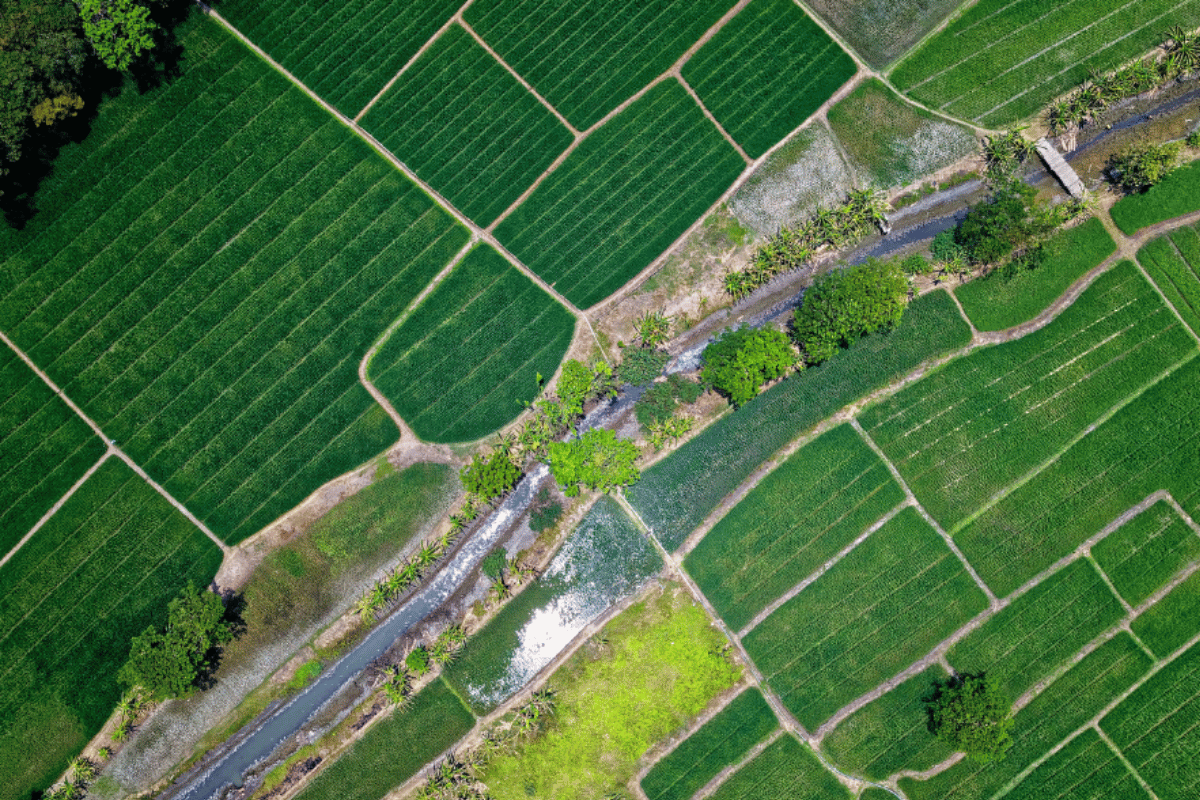
When I tried to grow tomatoes during the confinement in COVID times and hardly succeeded, I knew something was off. How come a person who has already worked for years in agriculture is barely able to grow food? At that point, I was in the middle of my PhD journey: Observing Waterlogging From Space. Ironically, most of my tomato plants died of waterlogging that year. While my tomatoes perished, seeds of discomfort sprouted. The disconnection between me, the scientist, and the real world was where the system flawed me. Of course, as part of my doctorate, I went on fieldwork and observed, learned, and gathered data. But there you go: always as an observer.
The Scientist’s Dilemma: Observing vs. Experiencing
If you are not, to some extent, an embodiment of the context, can you genuinely grasp its problems and design transformative solutions? Aren't we supposed to create new solutions in this era based on a new way of thinking? With the purpose of leaving behind a world that is currently based on environmental deterioration and destruction. This moment of pondering was also the moment when I started reading The One-Straw Revolution by MASANOBU FUKUOKA, an absolute philosophical masterpiece of a previous scientist going farmer and a description of his philosophy and journey. With reflections such as
¨An object seen in isolation from the whole is not the real thing¨
or
¨…To the extent that people separate themselves from nature, they spin out further and further from the center. At the same time, a centripetal effect asserts itself and the desire to return to nature arises. But if people merely become caught up in reacting, moving to the left or to the right, depending on conditions, the result is only more activity. ¨
These words struck a chord. I had been occupied with observing water in agriculture from space for almost a decade. Researching how satellite technology can accommodate changes in water use efficiency in irrigation, understanding signals from space, or using less chemical inputs with the help of imagery. But I always looked at agriculture, which was trying to seek ways to be (slightly) less harmful to its environment. Never was the question: can we measure the positive impact of a different type of agricultural management? And try to maximize the positive impact of agriculture on the environment?
The Irrigation Paradox: When Efficiency Backfires
I can illustrate this with a paradox we see in irrigation: improved Irrigation Efficiency is rarely followed by water reductions in water use at a basin scale1. Due to the optimization on a field level, as a result of farmers optimizing irrigation calculations with satellite data, more water is available to the farmer. This often leads a farmer to increase their production or choose a more water-intensive crop. And can lead to the opposite effect of the initial intention and lead into a further depletion of the precious water resources in a basin. Hence, it is crucial to have a holistic watershed angle and consider the effect on a larger scale, in order to make sure not more water is consumed and that we are talking about real impact.2 Therefore, putting a field-scale technology as a sole solution, can or may have an impeding effect on real transformative change.
Aligning Satellite Technology with Regenerative Agriculture
In order for satellite data to be really helpful in catalyzing positive change we need to align the technological tool with new ways of thinking and doing. We need data to show the positive effect of a nature-inclusive way of farming, where regenerative agricultural management is applied. Returning to the irrigation example, this means growing crops in suitable areas, improving water retention in the soil, replenishing groundwater through smart landscaping, and enhancing resilience by keeping the soil covered, amongst other efforts. By embracing these strategies, we align with nature rather than working against her, and form the best possible partnership with the limited resources we depend on.
Coming back to the words of MASANOBU FUKUOKA: Can satellite data demonstrate the centripetal pull and help guide us back to the center? Can data in agriculture serve as a catalyst for such a shift? I hope it can, but only if this new awareness is aligned with the development of satellite-based technological solutions. Anything else will simply perpetuate the destructive course we are on, even if labeled as sustainable agriculture or another well-intended approach.
A New Path: Researcher and Practitioner
For now, I have chosen a rural life, immersing myself in the hardships and complexities of agriculture. By doing so, I aim to contribute as a credible source in the integration of water data and satellite remote sensing: one that aligns technology with a renewed vision to help pave the way forward and regenerate our agricultural systems from the ground up.
But first, let me plant my tomatoes before the season slips away…
References
- Agua Sabia
- R. Q. Grafton et al. The paradox of irrigation efficiency.Science361,748-750(2018).
- Lankford, B. A. (2023). Resolving the paradoxes of irrigation efficiency: Irrigated systems accounting analyses depletion-based water conservation for reallocation. Agricultural Water Management, 287, 108437.