
Custom Hiring Centres to Enhance Accessibility and Affordability of Farm Machinery
Agriculture serves as a prime & fundamental pillar in many of the economies, providing livelihoods for a significant portion of the population. However, a major challenge, particularly for small and marginal farmers, is the inability to access & afford modern agricultural machinery. Traditional farming practices are often labour-intensive and can lead to increased costs and reduced productivity, compounded by issues like labour shortages and decreased draft animal populations. In regions like the Dry Zone of Myanmar, small-scale farmers cultivating relatively small average holdings (1.8 hectares compared to the national average of 2.21 hectares) face additional climate and environmental stress, leading to migration for employment and a reduction in the availability of younger farmers, especially during peak seasons. A similar scenario we have in many of the regions of India and similar developing countries.
What are Custom Hiring Centres (CHCs)?
Custom Hiring Centres (CHCs), also known as Custom Hiring Services (CHS) of agricultural mechanisation technologies (AMTs), are facilities incorporated to provide farm machinery and equipment on rent to farmers. These centres address the challenges farmers face, especially smallholders, who lack the resources to purchase expensive agricultural machinery. Essentially, a CHC is a unit with a set of farm machinery and implements intended for hire by farmers. This scenario allows farmers to utilise modern equipment by paying a rental charge, converting a potentially high fixed cost into a variable one.
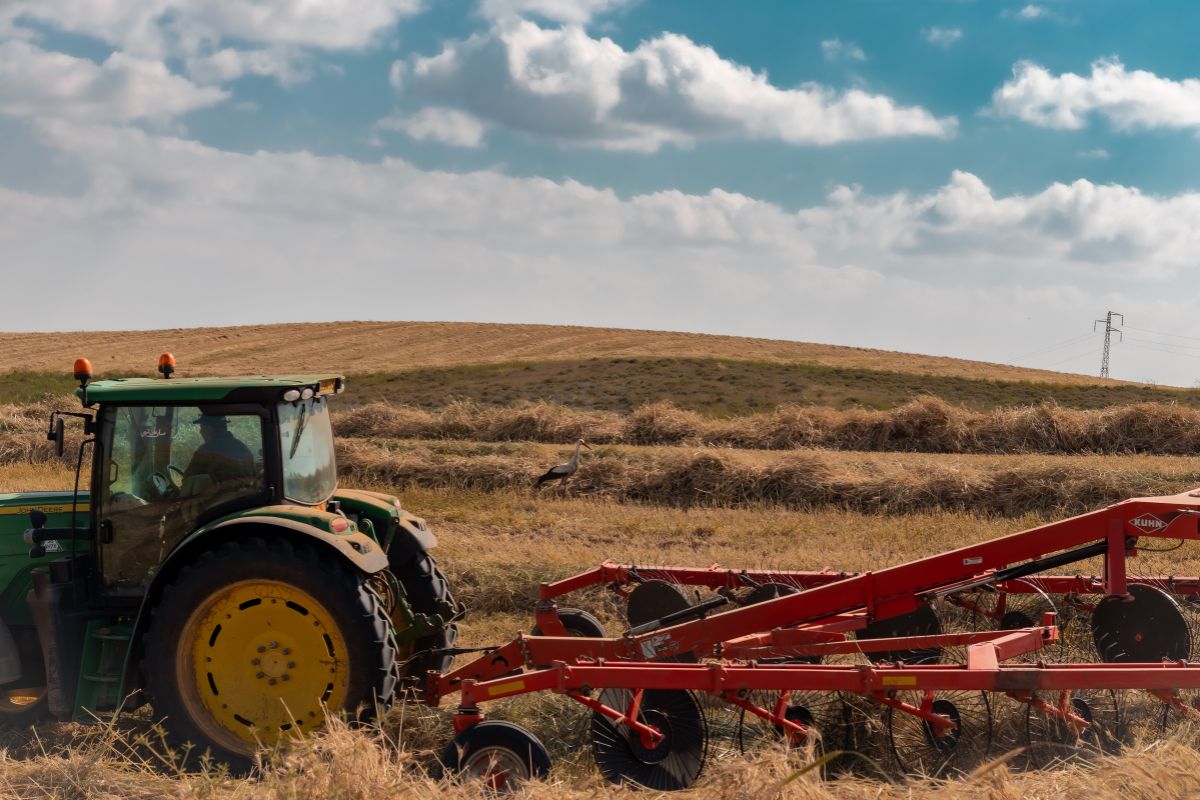
CHCs provides access to many modern and technologically advanced agricultural machinery and equipment, including tractors, harvesters, planters, threshers, dryers, sprayers, harrows, rotavators, and seed drills.
Why CHCs are Useful?
The primary need for CHCs arises from the practical complications of economic realities and operational difficulties faced by small and marginal farmers. In many areas, a large majority of farmers have small landholdings, making the purchase of expensive machinery economically unviable. For example, in India, around 82% of farmers are classified as small and marginal. Similarly, agriculture in Myanmar is characterised by smallholder farming with average holdings below the national average in the Dry Zone. The lack of financial resources and the high cost of machinery are significant barriers to adopting mechanisation.
Furthermore, farmers often lack the necessary technical skills to operate modern machines efficiently, sometimes leading to inefficient utilisation or dependence on external operators who may also not be fully trained.
CHC’s offer a practical solution to such problems. By providing access to agri machinery on a rental basis, they allow farmers to take the benefit of agri mechanisation without the significant upfront investment and related costs of ownership, such as repair and maintenance. This enables smallholders to overcome financial constraints and have insights to modern technology. Custom hiring is considered a proven good practice that reduces drudgery, improves production performance, increases farm operation efficiency, and can lower production costs.
Benefits of CHC’s
The establishment and operation of CHCs offer multiple benefits for both the farmer beneficiaries and the service providers (entrepreneurs).
For farmers, the benefits are substantial:
- Access to modern machinery: CHCs provide access to a wide array of modern and specialised equipment, enabling farmers to adopt advanced farming practices and potentially increase productivity.
- Cost-Effectiveness: Renting machinery from a CHC is significantly cheaper than purchasing it, converting fixed costs into variable ones and reducing the financial burden on small and marginal farmers. Studies, such as one in Uganda, have shown that farmers can save on cultivation costs and gain additional profit by using CHC services.
- Improved Efficiency: Mechanised equipment allows farmers to complete farming operations more quickly and efficiently, saving time and labour and potentially increasing agricultural output.
- Reduced Drudgery: Access to machinery alleviates the physical burden associated with manual labour.
For entrepreneurs operating CHCs, these centres can facilitate alternative income opportunities. A custom hiring business, if managed well, can be profitable and easy to implement, potentially requiring minimal capital investment.
Managing CHCs
Running a successful custom hiring service requires specific business management skills and a thorough understanding of the framework governing custom hiring of agricultural mechanisation. Three key aspects need consideration: technical, social, and economic. These include factors such as the availability of appropriate technology, skilled operators, technical support, farmers' willingness to adopt mechanisation, traditional practices, labour availability, social arrangements for scheduling services, and the custom service provider's capability for operation and management.
Challenges with CHC’s
While the concept of CHCs offers significant advantages, their operation and utilisation face various challenges. Service providers frequently cite issues such as payment problems (including delays and bargaining by farmers), high maintenance costs for machinery, low demand for certain implements, and the high cost of fuel. Beneficiary farmers, on the other hand, often report problems with the non-availability of farm machinery during peak crop seasons, soil compactness due to the use of heavy machinery, high rental costs, and the lack of implements specific to particular crops or horticultural needs. Lack of awareness about the types of machinery available at CHCs is also a concern. The study in Vijayapur district of India noted a decrease in mechanized agricultural practices during the initial phase of the COVID-19 pandemic due to restrictions. However, there was an improvement in the availability and usage of CHSCs by 2022, though utilisation levels remained varied.
Despite these challenges, factors like the availability of capital, access to credit facilities, skilled operators, local agricultural manufacturing capabilities, and research and development extensions (RDE) technical support can enable the successful operation of custom services. Farmers' willingness to mechanise and their perception of AMTs are also important socio-cultural factors.
Some Examples and Case Studies
Gifore, a large agricultural machinery distribution company in China, expanded its business to become a comprehensive service provider and has projects in countries like Myanmar. In India, Zamindara recognised that ownership of expensive farm machines contributed to farmers' financial stress and started a custom hiring operation to allow farmers to convert fixed costs into variable ones. Zantander Trading and Engineering in the Philippines provides custom hiring services, mainly for land preparation, using light equipment like power tillers.
Studies in India highlight the increasing importance of CHCs. The Custom Hiring Scheme under the Sub-Mission on Agricultural Mechanization (SMAM) in Madhya Pradesh aims to economically empower small and marginal farmers and provide self-employment opportunities by supplying modern farm machinery through CHCs. These centres can be run by various entities, including farmers, Farmer Producer Organisations (FPOs), cooperatives, gram panchayats, or private entrepreneurs. The government provides subsidies and interest subsidies under this scheme.
What Can Be Improved?
To enhance the operation and utilisation of CHCs for the the service providers, factors like increasing the government subsidy component, simplifying the bank process for subsidies, ensuring timely disbursement of subsidies, providing implements based on farmer demand, starting mobile repair units, providing training for operators, and subsidising the construction of sheds for machinery storage could be more helpful.
From the farmers perspective, increasing the number of implements available, reducing hiring charges (especially for marginal and small farmers), establishing CHCs at the local level, ensuring particular crop-wise implements are available, and creating more awareness about the services offered. Creating awareness through campaigns, exhibitions, and mass media by extension agencies can play a vital role in improving the utilization of CHCs.
While challenges related to operations, maintenance, costs, and seasonal demand exist, CHCs, supported by enabling environments, appropriate technology, effective business management, and policy support like government subsidies, can be financially viable and highly beneficial. Continued efforts to improve infrastructure, increase the range and availability of machinery, reduce costs, enhance awareness, and provide adequate training and technical support are essential for optimising the impact and sustainability of CHCs, ultimately contributing to increased agricultural productivity and the economic empowerment of rural communities.
Sources:
- Business Management of Custom Hiring of Agricultural Machinery in the Dry Zone - UN CSAM.
- Custom Hiring of Agricultural Machinery - UN CSAM
- Optimizing Farm Machinery Utilization through Custom Hiring Centres: A Farmers’ Perspective: Chitra Das and S. B. Patil
- Optimizing Farm Machinery Utilization through Custom Hiring Centers: A Farmers' Perspective - EM International - Journals
Further reading
The Beginner's Guide to Setting Up a Sustainable Farm
How to choose the right tractor for your farm
Agricultural Machinery - Tractor Attachments for different Farming Operations
Can Young Farmers Afford Climate-Smart Agriculture? - The Profitability Challenge Explained
A Guide to Starting a Successful Farm in India: Key Considerations
The Plow and Power: An Agricultural Origin of Gender Inequality
Optimizing Sowing Efficiency with Pneumatic Precision Seeders