


Across the globe, farmers face a familiar frustration: months of labour, water, and resources can be wasted when a significant portion of the harvest spoils before reaching consumers. For perishable crops such as fruits, vegetables, and leafy greens, the clock starts ticking the moment they are picked. Without ideal storage, natural ageing processes, such as wilting, discolouration, microbial growth, and nutrient loss, set in. In many low- and middle-income countries, post-harvest losses can reach 30–50% of fresh produce (FAO, 2019).
Researchers and innovators are exploring practical, non-chemical methods to extend shelf life to address this challenge. One promising approach is novel visible light irradiation (nVLI), which uses specific wavelengths of light to slow spoilage, preserve colour, and even enhance nutritional value. Unlike high-energy ionising radiation, nVLI relies on carefully tuned LEDs or near-UV light, interacting gently with the surface of produce to benefit both farmers and consumers (Yao et al., 2023).
How light preserves food
Plants naturally respond to sunlight, and their biochemical systems are sensitive to different wavelengths. When harvested crops are exposed to targeted bands of visible or near-UV light, several processes occur (figure 1):
- Slows ageing (senescence): Certain light treatments maintain chlorophyll, delaying yellowing in leafy greens like lettuce and pak choi (Zhu et al., 2024).
- Reduces microbes: Low-dose visible light can damage the DNA or cell membranes of bacteria and fungi on produce surfaces, slowing spoilage (Sonntag, 2023).
- Boosts nutrition: Tomatoes and avocados treated with red or blue LEDs have shown higher levels of lycopene, β-carotene, and phenolic compounds (Poonia, 2022).
- Preserves texture and moisture: Light exposure slows enzymatic breakdown in fresh-cut watermelon, retaining firmness and juice longer (Wang et al., 2018).
The effects of light vary by crop. Small-scale trials can help farmers identify the optimal wavelength, intensity, and exposure time for their produce and storage conditions.
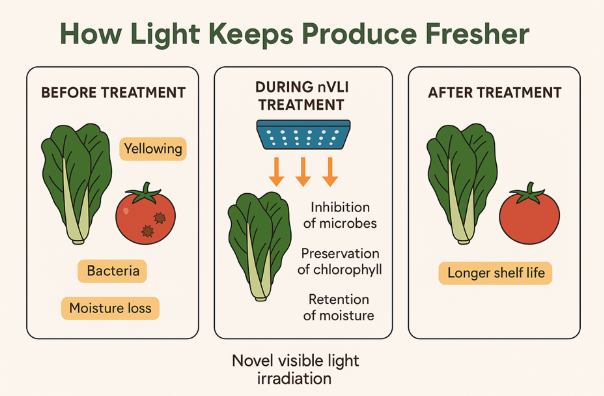
Figure 1: Conceptual Infographic – How Light Keeps Produce Fresher
Evidence from research
Recent studies show strong potential for nVLI:
- Pak choi: UV-A LEDs at 8 J/cm² extended shelf life by ~2 days, preserving colour and chlorophyll (Fan et al., 2025).
- Lettuce: Chlorophyll-targeted LEDs increased chlorophyll content by ~20% and reduced yellowing by 23% after three days (Martínez-Zamora, 2023).
- Ricotta cheese: Near-UV and visible light treatment extended shelf life by 50%, keeping cheese safe and palatable for 6–8 days (Ricciardi et al., 2020).
Even an extra day or two of freshness can mean the difference between selling produce at full price or losing it entirely.
Table 1: Examples of nVLI Applications in Food Preservation
|
Product |
Light Type / Wavelength |
Benefits & Shelf-Life Extension |
|
Pak choi |
UVA-LED (8 J/cm²) |
+2 days freshness, retains colour (Fan et al., 2025) |
|
Lettuce |
Chlorophyll-targeted LEDs |
+19.7% chlorophyll, less yellowing (Martínez-Zamora, 2023) |
|
Ricotta cheese |
Near-UV & visible light combo |
+50% shelf life, preserved taste (Ricciardi et al., 2020) |
|
Red & blue LEDs |
Increased antioxidants, improved firmness (Poonia, 2022) |
|
|
Fresh-cut watermelon |
Visible light up to 3,000 Lux |
Reduced drip loss, better texture (Wang et al., 2018) |
Benefits for farmers
- Affordable and energy-efficient: LED technology is now cost-effective, even for smallholders. Panels can run on standard electricity or solar power, using far less energy than refrigeration.
- Chemical-free: nVLI avoids residues, making it suitable for organic and export markets. Farmers don’t need to worry about pesticide limits or consumer concerns.
- Extended marketing window: Even an extra day or two can allow farmers to reach more distant markets, wait for better prices, or reduce losses.
- Premium pricing: Produce that stays vibrant, firm, and nutrient-rich can attract higher prices, particularly in farmers’ markets, CSAs, or specialty retailers.
By reducing waste, expanding market options, and enhancing quality, nVLI offers a practical, profit-boosting tool for farmers.
Challenges and considerations
- Crop specificity: Different crops and varieties respond differently. Local trials are essential to determine optimal settings (Zhu et al., 2024).
- Surface-only effect: Light treatments mainly affect the produce surface; internal defects or pests are not addressed (Yao et al., 2023).
- Consumer perception: Clear communication is needed to distinguish nVLI from high-energy irradiation. Emphasize that no chemicals or radioactivity are involved (Poonia, 2022).
- Local adaptation: Climate, harvest timing, and storage conditions influence results. Small trials help identify effective setups.
Getting started: A farmer’s roadmap
- Select a crop: Focus on perishable, high-value products like leafy greens, berries, or fresh-cut melons.
- Set up simple LEDs: Affordable red, blue, or full-spectrum panels can fit in crates or packing sheds. Timers help manage exposure.
- Test and compare: Divide your harvest into treated vs untreated batches to measure real-world impact.
- Monitor changes: Observe colour, texture, aroma, and moisture. Take photos or notes daily.
- Adjust and scale: Expand treatment gradually, fine-tuning light intensity and duration for each crop.
Partnerships with agricultural extension officers or universities can support trials and optimise results.
Looking ahead
nVLI is part of a growing trend toward low-energy, non-thermal preservation methods including smart packaging, ozone treatment, and modified-atmosphere storage. For regions with unreliable cold chains, these technologies can reduce waste, protect income, and contribute to sustainable agriculture goals (SDG 12).
By adopting nVLI, farmers can extend shelf life, improve market opportunities, and deliver fresher, longer-lasting produce. With the right approach, this technology could light the way to a more sustainable, profitable future for fresh food.
References
- Fan, Y. et al. (2025) ‘A novel strategy of using ultraviolet A light emitting diodes (UVA-LED) irradiation extends the shelf life of minimally processed pak choi’, Food Chemistry: X, 20, p.100975.
- Martínez-Zamora, L. (2023) ‘Effect of postharvest visible spectrum LED lighting on chlorophyll content and visual quality of lettuce’, Postharvest Biology and Technology, 198, p.112256.
- Poonia, A. (2022) ‘Application of light emitting diodes (LEDs) for food preservation: A review’, Frontiers in Processing and Preservation of Nutrients, 3, pp.1–15.
- Ricciardi, E.F. et al. (2020) ‘Novel technologies for preserving ricotta cheese during storage’, Foods, 9(5), p.580.
- Sonntag, F. (2023) ‘Nutritional and physiological effects of postharvest UV light treatments on fruits and vegetables’, Journal of Agricultural and Food Chemistry, 71(5), pp.1823–1834.
- Wang, Y. et al. (2018) ‘Visible light exposure reduces the drip loss of fresh-cut watermelon during storage’, Food and Bioprocess Technology, 11, pp.1340–1350.
- Yao, J. et al. (2023) ‘Recent advances in light irradiation for improving the preservation of fruits and vegetables: A review’, Trends in Food Science & Technology, 136, pp.178–190.
- Zhu, Y. et al. (2024) ‘Effect of a novel light source on delaying senescence in postharvest leafy greens’, Scientia Horticulturae, 322, p.112158.