Adapting Agriculture to Climate Realities: Challenges and resilience in crop production under changing climate conditions
Climate Change and Crop Production: A Growing Challenge for Farmers
Agriculture has always depended on the balance of nature. Farmers have relied on rainfall patterns, seasonal temperatures, and healthy soil for centuries to grow food. But today, this balance is being disrupted. Climate change, caused mainly by human activities, is bringing unexpected and severe challenges to farmers worldwide. From unpredictable weather to declining yields, crop production is becoming more difficult, especially in developing countries like Pakistan.
As an agriculture student, I have seen how closely linked farming is to the environment. During my internships and field visits, I observed how even a small delay in rain or an early heatwave can destroy a whole crop. Farmers who once planned their planting calendars confidently now face uncertainty every season. This article explores how climate change is affecting crop production and what can be done to support farmers in adapting to this new reality.
The Growing Impact of Climate Change on Crops
One of the biggest effects of climate change is rising temperatures. According to the Intergovernmental Panel on Climate Change (IPCC), global average temperatures have already increased by around 1.1°C since the pre-industrial era. While this might seem small, it has serious effects on crop growth. Many staple crops like wheat, rice, and maize have specific temperature ranges in which they grow best. When temperatures go beyond this range, yields can decrease sharply.
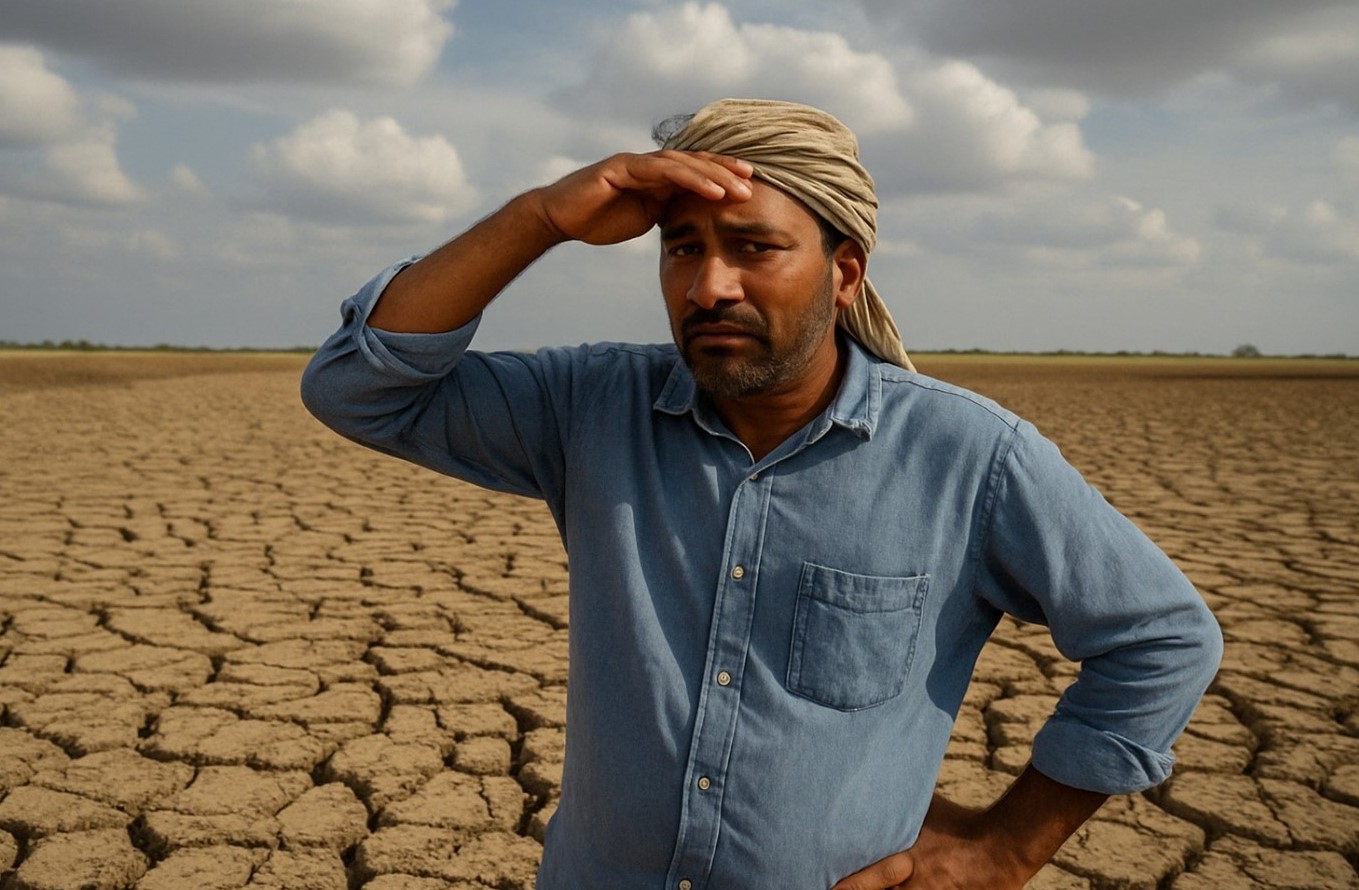
Changing rainfall patterns is also a major concern. In many regions, including South Asia, rains have become less predictable. In some places, heavy rainfall causes floods, while in others, long dry periods lead to droughts. Both extremes are damaging. For example, the floods in Pakistan in 2022 submerged millions of acres of farmland, destroying crops and displacing thousands of farming families.
Pests and diseases are another problem linked to climate change. Warmer and more humid conditions allow pests to survive longer and spread faster. Crops that were once safe from certain diseases are now at risk, reducing both the quality and quantity of food.
Real-Life Struggles of Farmers
The impact is even more severe for smallholder farmers, who make up a large portion of the agricultural workforce in countries like Pakistan. These farmers usually depend on traditional methods and have limited access to technology, information, and finance. When crops fail, they have little or no safety net to fall back on.
During my fieldwork in rural Punjab, I met a farmer named Muhammad Akram. He had grown wheat for over twenty years, but in recent seasons, he noticed a clear decline in yield. “The rains come late, and the heat arrives early,” he told me. “We used to know when to plant, but now, it’s a guess.” His story is not unique. Across the region, farmers are sharing similar experiences.
Soil fertility is also declining due to excessive use of chemical fertilizers and over-cultivation, often driven by the need to recover from losses caused by climate impacts. Over time, this leads to long-term damage, making it even harder to grow healthy crops.
How Farmers Are Adapting to the Effects of Climate Change
Despite the challenges, many farmers try to adapt to this new reality. One promising solution is using climate-resilient crop varieties that can tolerate drought, heat, or floods better than traditional ones. Agricultural research institutes are playing a key role in developing and distributing such seeds.
Another method is changing the planting calendar. Farmers can adjust the timing of planting and harvesting to avoid the worst effects of heat or rain. Some are also practicing crop rotation and intercropping to reduce the risk of total crop failure.
New tools like weather forecasting apps, satellite-based monitoring, and drip irrigation systems have become available in recent years. These technologies can help farmers make better decisions and use resources more efficiently. However, the adoption rate is still low, especially in poorer communities, due to lack of training and affordability.
I believe that local knowledge also has a role. Traditional practices, such as planting native varieties and using organic compost, are being rediscovered as low-cost and sustainable strategies. Farmers who combine tradition with innovation are often the most resilient.
What Needs to Be Done
While individual farmers are making efforts, the scale of the challenge requires bigger actions. Governments must invest more in agricultural research and extension services. Policies should support small farmers by offering financial help, crop insurance, and subsidies for climate-smart tools.
Education is also key. By teaching farmers about climate change and how to adapt, we can empower them to make informed choices. This is especially important for youth in agriculture. If young people are given the right knowledge and support, they can bring fresh ideas and energy to the sector.
International cooperation is another part of the solution. Since climate change is a global issue, no country can face it alone. Richer nations should support developing countries through funding, technology transfer, and fair-trade practices that protect small producers.
Climate-smart agriculture, a concept that focuses on increasing productivity while reducing emissions and enhancing resilience, offers a path forward. It combines science, policy, and local practices to create farming systems that are better prepared for the future.
Conclusion
Climate change is no longer a distant threat; it is a reality affecting millions of farmers daily. Crop production, the backbone of food security, is under serious pressure. But this crisis also presents an opportunity. We can build a more resilient and sustainable agricultural system by listening to farmers, supporting innovation, and taking collective action.
As a graduate student and future researcher, I feel responsible for contributing to this goal. Whether through research, outreach, or policy work, I want to be part of the solution. Farmers like Muhammad Akram deserve our full support because when we protect agriculture, we protect our future.
Further reading
Exploiting wild relatives and landraces to breed future-ready, resilient crops
How legumes improve carbon sequestration and mitigate climate change in agriculture
Can Young Farmers Afford Climate-Smart Agriculture? - The Profitability Challenge Explained
Sustainable Farming Success: How 3 European Farms Are Pioneering Innovation & Profitability