


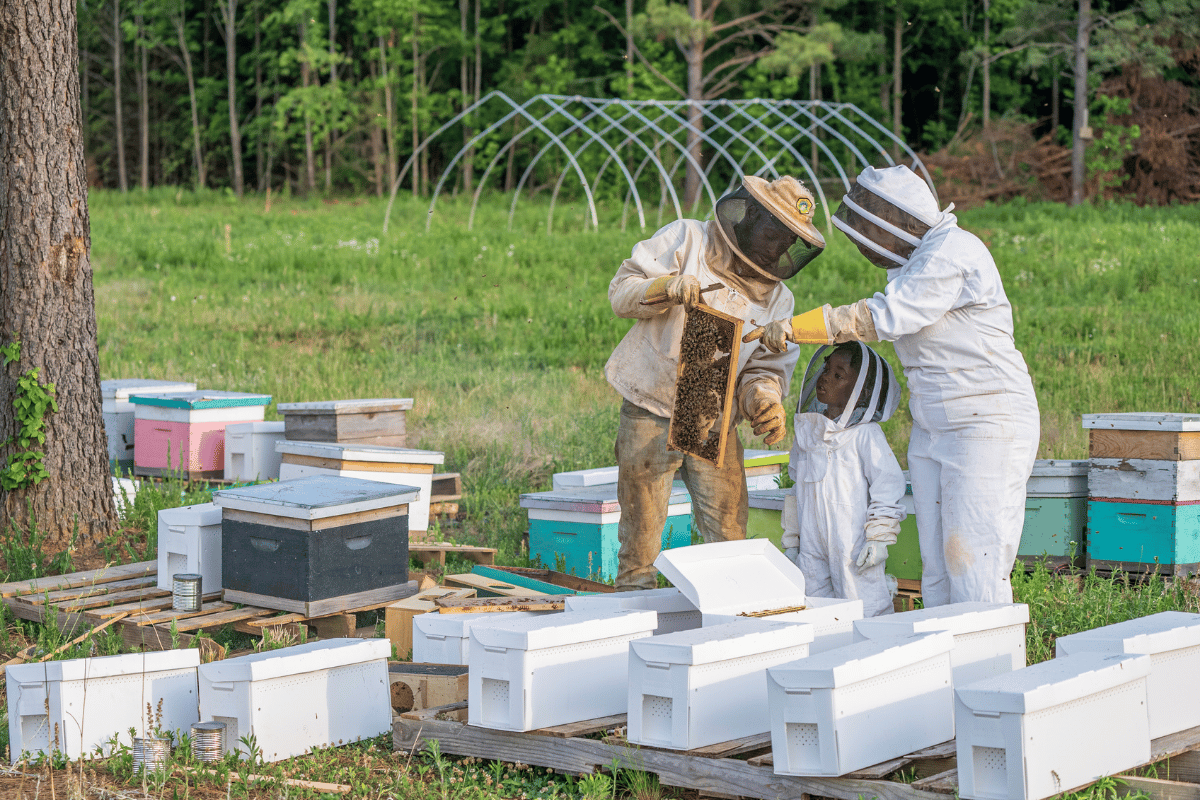
In many rural and underserved communities, a hive is far more than a box of bees. It can become a source of dignity, education, environmental protection, and economic transformation.
While many people associate beekeeping mainly with honey production, community-based apiculture demonstrates that the impact of bees goes much deeper. Bees contribute significantly to pollination, biodiversity conservation, food production, and sustainable livelihoods. Beekeeping can create opportunities for vulnerable families, empower women and youth, and encourage communities to protect the ecosystems they depend on.
In communities where poverty, unemployment, and social challenges continue to affect families, beekeeping offers a practical and sustainable opportunity. It can be practiced alongside farming and does not require large pieces of land or expensive inputs. Through our experience working with communities, we have witnessed how the hive can become a bridge between economic empowerment, environmental stewardship, and social transformation.
Why I chose community-based apiculture
In some communities located around dump sites and informal settlement areas, many children grow up facing extreme poverty and limited opportunities. Some are forced to miss school because their families cannot afford basic educational needs, while others become vulnerable to exploitation, child labour, early marriage, or unsafe environments simply because survival becomes the priority.
Witnessing these realities deeply challenged me. I began asking myself how communities could create sustainable opportunities that generate income while also restoring dignity and protecting vulnerable children from cycles of poverty and exploitation. This is one of the reasons I became passionate about community-based apiculture.
I saw that beekeeping could become more than an agricultural activity. It could become a tool for social transformation. Through honey production and community empowerment, families can gradually improve their livelihoods, support children's education, and create safer, more hopeful futures for young people.
When communities begin earning sustainable income, children are more likely to remain in school and less likely to be exposed to harmful environments. At the same time, communities become more connected to environmental conservation because healthy ecosystems directly support beekeeping activities.
For me, the hive represents more than production. It represents possibility, restoration, and hope for communities that are often overlooked.
What community-based apiculture is
Community-based apiculture is a model of beekeeping in which communities collectively participate in bee conservation, hive management, honey production, training, and income generation. Unlike individual commercial beekeeping focused mainly on profit, community-based apiculture emphasises shared impact, sustainability, education, and local empowerment.
The approach typically involves training local farmers and youth in beekeeping skills, supporting women's groups and vulnerable households, encouraging environmental conservation, creating alternative income opportunities, and building local cooperation and knowledge sharing. The model works especially well in rural areas where communities depend heavily on agriculture and natural resources for survival.
Why community-based apiculture matters
One of the greatest strengths of beekeeping is its ability to generate income while requiring relatively few resources. Honey, beeswax, propolis, pollen, and other bee products can provide additional household income for families. For many rural households, this income helps cover food security needs, school fees, medical expenses, household costs, and small business development. Unlike some agricultural activities that demand large land ownership, beekeeping can be practiced even by small-scale farmers, which makes it more inclusive and accessible to vulnerable groups. Community-based apiculture also encourages communities to think long term, because healthy ecosystems directly affect honey production and pollination.
In many underserved communities, girls are among the most vulnerable when families experience financial hardship. Lack of school fees and basic necessities may expose them to exploitation, early marriage, or school dropout. Income generated through community beekeeping projects can help families support girls' education by paying for school fees, uniforms, books, supplies, and personal essentials. Beyond financial support, beekeeping initiatives can inspire young girls to see agriculture, conservation, and entrepreneurship as meaningful opportunities for their future. When a girl remains in school, the positive impact often extends to the entire community.
Women and young people play a critical role in agriculture and community development, yet they often face limited economic opportunities. Community-based apiculture creates a platform where they can actively participate in income generation and leadership. Through training and involvement in hive management, honey harvesting, processing, and marketing, communities gain financial independence, confidence, leadership skills, entrepreneurship opportunities, and stronger community participation. In many communities, women involved in beekeeping become strong advocates for environmental conservation and sustainable farming practices.
Community-based apiculture can also support social reintegration for vulnerable individuals, including unemployed youth and reformed ex-convicts. Beekeeping teaches responsibility, patience, teamwork, discipline, and long-term thinking. Through meaningful work and participation in community projects, individuals regain confidence, purpose, and dignity. The hive becomes a source of income and, just as importantly, a symbol of restoration and hope.
Environmental importance of beekeeping
Bees play a vital role in pollination, which directly contributes to food production and biodiversity. According to the Food and Agriculture Organization, about 75% of global food crop types depend on pollinators to some extent, and pollination is the highest agricultural contributor to yields worldwide. The vast majority of pollinators are wild, including over 20,000 species of bees. Healthy bee populations help strengthen fruit production, seed production, crop diversity, and ecosystem balance. Communities involved in beekeeping often begin to understand the strong relationship between environmental protection and agricultural productivity.
One of the most important impacts of community-based apiculture is how it encourages environmental conservation. When communities recognise that bees depend on healthy ecosystems, they become more motivated to protect trees and forests, reduce destructive land practices, preserve flowering plants, and avoid harmful chemicals and pesticides. This creates a strong connection between livelihoods and environmental stewardship. Communities begin to understand that protecting nature also protects their future.
How to start a community-based beekeeping initiative
The first step is involving the community and creating awareness about the value of beekeeping. Community participation is essential because long-term success depends on shared ownership and commitment. Open discussions help identify community needs, available resources, interested participants, and suitable locations.
Practical training is necessary before introducing hives. Communities should understand bee behaviour, hive management, safety practices, honey harvesting methods, seasonal management, and basic pest and disease control. Hands-on training builds confidence and reduces fear associated with bees.
Choosing suitable hives depends on local climate, available materials, community budget, and management capacity. Hives should be placed in areas with flowering plants, water access, minimal disturbance, and protection from strong winds and extreme heat. Good hive placement improves colony productivity and survival.
Successful community-based apiculture requires long-term planning. Communities should focus on continuous training, environmental conservation, value addition, market access, knowledge sharing, and youth involvement. Building strong local leadership structures also helps projects remain sustainable over time.
Challenges facing community-based apiculture
Many people fear bees because of limited knowledge or previous negative experiences. Community education and practical demonstrations help reduce fear and increase participation.
Changes in weather patterns, drought, deforestation, and pesticide use can negatively affect bee populations and honey production. Communities must therefore prioritize conservation and sustainable environmental practices. Protecting pollinators through pollinator-friendly farming becomes a shared responsibility between beekeepers and the wider farming community.
Some communities face challenges in accessing protective gear, modern hives, honey-processing equipment, and reliable markets. Partnerships, training programs, and cooperative models can help address these challenges gradually.
The wider promise of community-based apiculture
Community-based apiculture is far more than honey production. It is a pathway toward dignity, sustainability, education, environmental conservation, and economic empowerment. When communities work together to protect bees, they also begin protecting their ecosystems, strengthening livelihoods, and investing in future generations.
The hive teaches patience, cooperation, resilience, and responsibility. It reminds communities that small collective actions can create lasting transformation.
As the world continues searching for sustainable solutions to poverty, food insecurity, and environmental degradation, community-based apiculture offers an important example of how nature, livelihoods, and human dignity can grow together.
/community-based-apiculture-dignity-education-environmental-sustainability