The cashew processing chain generates a number of significant by-products that have been insufficiently valorized, particularly in Nigeria, where the focus remains on raw nut export. The valorization of cashew by-products as livestock feed ingredients has attracted increasing scientific attention between 2020 and 2024 (Ojediran et al., 2024; Rashmi et al., 2024; Frontiers, 2025), making this one of the most rapidly evolving areas in tropical animal nutrition.
This is Part 2 of a three-part review of cashew farming system research in Nigeria. Part 1 covered the cashew farming systems themselves, including botany, varieties, and production configurations. This part examines the science of using cashew by-products in livestock feeding, the bioactive compounds that make them valuable, and the management practices needed to use them safely and effectively. Part 3 covers the West African regional picture and the role of cashew systems in climate change adaptation.
Livestock integration in the cashew farming system
Livestock integration in cashew-based farming systems can be achieved through several pathways. Small ruminants, particularly West African Dwarf goats and Yankasa or Uda sheep, are commonly grazed under cashew trees in the Nigerian cashew belt. These animals use the natural pasture that establishes beneath cashew canopies and consume fallen cashew apples during the harvest season. Cattle are also herded through cashew farms, particularly during the dry season when pasture is scarce elsewhere. This form of integration is largely uncontrolled and can result in damage to young cashew trees through bark browsing and soil compaction, particularly when stocking densities are excessive. The establishment of management protocols for controlled grazing in cashew orchards is therefore a critical research need.
Feed-based integration through the use of cashew by-products represents the most extensively documented form of cashew-livestock integration in recent scientific literature. The pathway enables year-round integration through the conservation and feeding of processed by-products, independent of the seasonal nature of cashew harvesting.
Manure-based integration delivers a third route. Livestock excreta, particularly cattle and small ruminant dung and urine, serve as valuable organic fertilisers for cashew trees. Organic manure applied to cashew orchards has been demonstrated to improve soil organic matter, macronutrient availability, and microbial diversity, supporting tree growth and nut yield. In the context of Nigeria's smallholder cashew system, manure from integrated livestock provides a low-cost alternative to costly synthetic fertilisers, aligning with the low-input philosophy inherent in the cashew farming system.
Finally, draught power integration matters in areas where cashew is grown alongside food crops. Animal traction from cattle and donkeys facilitates land preparation, cultivation, and transportation of produce. While this form of integration is increasingly displaced by mechanisation in commercial systems, it remains relevant in the resource-limited smallholder context prevalent in Nigeria's cashew states.
The potential for integrated cashew-livestock systems to improve income, nutritional security, and resilience of Nigerian smallholder farmers is documented in comparative analyses from other African countries. In Burkina Faso, the development of cashew plantations as part of a climate finance project specifically targeted poverty reduction and livestock welfare improvement through the provision of shade, fodder, and by-products for livestock (CIF, 2022).
The main cashew by-products
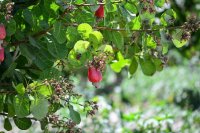
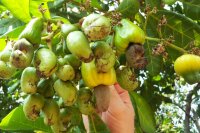
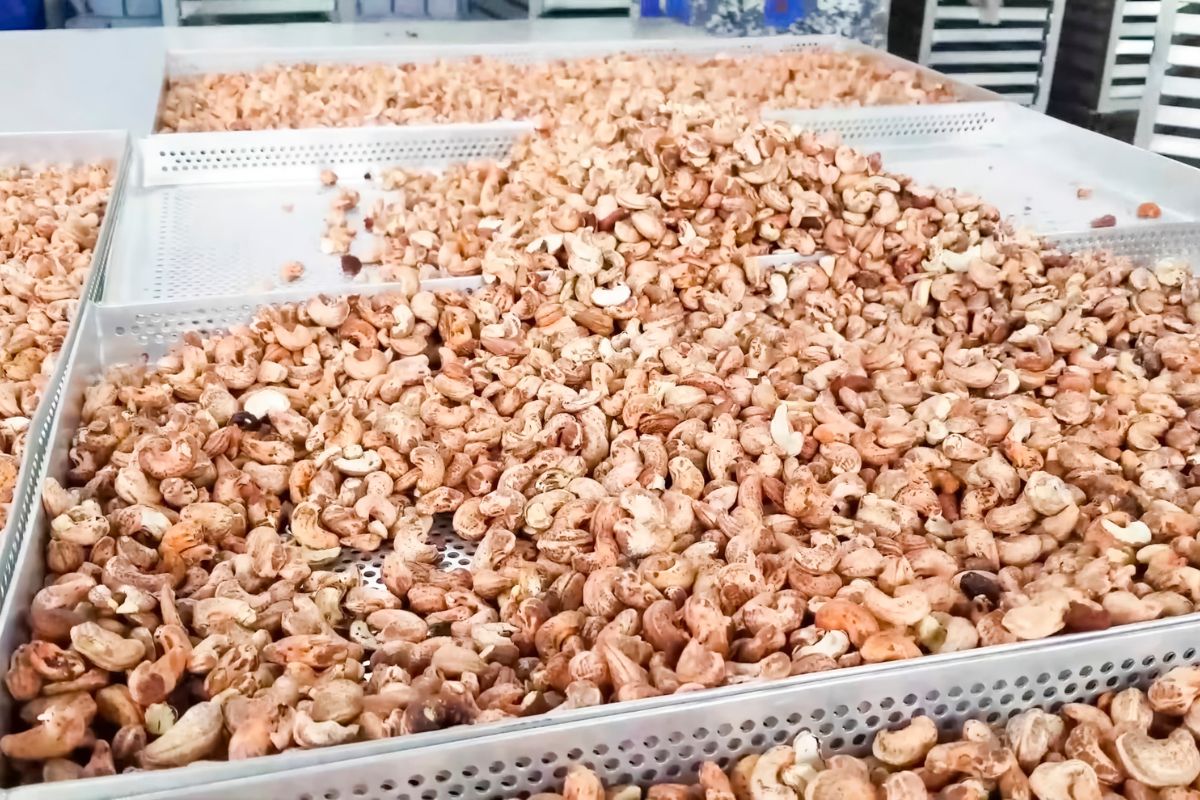
The principal cashew by-products include the cashew nut shell (CNS), which yields the cashew nut shell liquid (CNSL) upon processing; the cashew nut meal (CNM), the defatted residue remaining after oil extraction from the kernel; the cashew apple in fresh, juice, and pomace forms; and cashew apple silage, produced by ensiling the fresh cashew apple or its residue.
Cashew nut shell and cashew nut shell liquid
The cashew nut shell constitutes approximately 25 to 30 percent of the whole cashew nut by weight. It contains CNSL, a natural phenolic oil that is commercially important in the chemical, industrial, and pharmaceutical sectors. Natural CNSL is composed predominantly of anacardic acid (70 percent), cardol (18 percent), and cardanol (5 percent), along with methyl cardol as a minor constituent. CNSL has attracted considerable scientific attention as a feed additive for ruminant livestock due to its anti-methanogenic properties.
Cashew nut meal
CNM is the by-product remaining after the extraction of cashew kernel oil. It contains a favourable proximate profile including crude protein ranging from 20 to 30 percent on a dry matter basis, significant energy content from residual lipid fractions, and a suite of mineral elements including calcium, sodium, phosphorus, potassium, magnesium, iron, and zinc (Silué et al., 2017). CNM also contains bioactive compounds including carotenoids, lutein, zeaxanthin, and thiamine, making it a promising novel protein source for both ruminant and monogastric animals.
Cashew apple and cashew apple pomace
The cashew apple, produced in a ratio of approximately 8:1 to the nut by weight, has an average proximate composition on a dry matter basis of crude protein 130 g/kg, crude fibre 71.7 g/kg, ether extract 61.2 g/kg, ash 49.3 g/kg, nitrogen-free extract 640 g/kg, and metabolisable energy 2,973 kcal/kg. Globally, cashew nut production generates approximately 36.9 million tonnes of cashew apple waste annually (Van Walraven and Stark, 2023), representing a colossal underused resource. In Nigeria, the vast majority of cashew apples are discarded during the harvest season, contributing to environmental pollution and wasted agricultural potential.
Cashew apple silage
Ensiling cashew apple, with or without adjuncts such as maize cobs, rice bran, or molasses, represents a practical method for preserving this perishable by-product for year-round livestock feeding. Research from tropical regions has shown that cashew apple silages combined with maize cobs and rice bran increase ammonia nitrogen (NH3-N) concentrations, enhancing microbial protein synthesis in the rumen (Frontiers, 2025). Cashew apple pomace, the solid residue after juice extraction, similarly shows promise as a feed ingredient for ruminants, particularly when ensiled or dried.
How cashew by-products are used in livestock feeding
The use of cashew by-products in livestock feeding has been investigated across multiple animal species including ruminants (cattle, sheep, goats, buffaloes), swine, and poultry. The body of published evidence, particularly from 2020 to 2024, supports the feasibility of incorporating cashew by-products at moderate inclusion levels into balanced livestock rations, with appropriate processing to reduce anti-nutritional factors.
Cashew nut meal in ruminant diets
CNM has been investigated as a protein supplement for sheep, goats, and cattle. An in vivo trial demonstrated that inclusion of CNM at up to 30 percent in concentrate feed mixtures for sheep did not adversely affect dry matter intake, feed efficiency, rumination, or rumen fermentation patterns (Pimentel et al., 2011; 2012a). Increased average daily gain in Nellore lambs and enhanced nitrogen and energy retention were documented upon dietary inclusion of CNM (Sravani et al., 2021; Costa et al., 2021). Inclusion of CNM at 24 percent in ewe rations, however, showed adverse effects on reproductive function, though no such effects were detected at 12 to 13 percent inclusion levels, suggesting an optimal range for use in breeding animals (Fernandes et al., 2014).
A 2024 study in the Indian Journal of Animal Research evaluated different inclusion levels of CNM supplementation on rumen fermentation kinetics and digestibility in vitro, confirming its potential as an alternative concentrate ingredient (Rashmi et al., 2024). The Indian Journal of Animal Nutrition published a comprehensive review in 2025 examining the feasibility of using CNM as a protein source in livestock diets, underscoring its economic potential in developing countries where conventional protein sources such as soybean meal are costly.
Cashew apple and pomace in ruminant diets
Research reviews published in Frontiers in Sustainable Food Systems (2025) documented that cashew by-products such as cashew fruit flour and apple silage generally stabilise average daily gain without significant growth improvements relative to control diets, while contributing meaningfully to crude protein levels in total mixed rations. Dehydrated cashew apple and bagasse were found to increase crude protein in diets, enhancing protein availability for ruminants. The inclusion of cashew by-products in ruminant diets was shown to improve feed quality consistency, palatability, and overall sustainability of the feeding system.
Cashew by-products in poultry and swine diets
Cashew apple and apple pomace offer readily fermentable carbohydrates and vitamin C that are particularly useful for swine and poultry. The high sugar content of the cashew apple (predominantly sucrose, glucose, and fructose) provides energy for monogastric animals, while the ascorbic acid content may reduce stress-related oxidative damage. Processing of the cashew nut shell, specifically roasting and fermentation, renders the fibre fraction of CNS palatable and digestible for ruminants, expanding its utility as a roughage supplement (TURJAF, 2025).
Cashew nut shell liquid as a feed additive
Perhaps the most pharmacologically significant cashew by-product for livestock is CNSL. Its phenolic constituents (anacardic acid, cardanol, and cardol) have demonstrated efficacy in inhibiting gram-positive rumen bacteria that produce butyric acid and methane, shifting rumen volatile fatty acid profiles toward increased propionate production (beneficial for energy metabolism), and reducing enteric methane emissions by 8 to 18 percent depending on dosage, primarily by inhibiting methanogenesis-related genes such as mcrA (Wikifarmer, 2025; Gaspe et al., 2024; Shinkai et al., 2012). A controlled field study in Japan in 2024 demonstrated that supplementation of dairy cows with 10 g per day of CNSL reduced methane production per unit of dry matter intake and the methane conversion factor without adversely affecting milk production (Gaspe et al., 2024).
Bioactive compounds in cashew by-products
Cashew by-products contain a diverse array of bioactive compounds that confer specific biological functions in livestock, including antioxidant activity, antimicrobial properties, anti-methanogenic effects, and potential immunomodulatory actions. Understanding these compounds is essential for the rational formulation of cashew by-product-containing livestock rations.
Phenolic compounds in CNSL
The cashew nut shell liquid is a rich source of phenolic compounds. Natural CNSL contains anacardic acid (70 percent), cardol (18 percent), and cardanol (5 percent), together with minor quantities of methyl cardol. Technical CNSL, produced by heat treatment that decarboxylates anacardic acid, contains predominantly cardanol and cardol. These phenolics exhibit potent antimicrobial activity against gram-positive bacteria including the methanogenic archaea, inhibit the expression of methanogenesis-related genes, and alter ruminal fermentation dynamics toward propionate production (Wikifarmer, 2025; Gaspe et al., 2024). The Food Safety Commission of Japan assessed anacardic acid in 2024 and concluded that it does not have a negative effect on human health when used as a feed additive at recommended levels (FSCJ, 2025). Importantly, CNSL was not detected in either tissues or milk of treated cattle, confirming its safety for food-producing animals.
Tannins in cashew apple and CNM
Condensed tannins are present in the cashew apple at levels that vary with geographic origin and cultivar (Cuervo et al., 2024). Tannins serve as anti-nutritional factors by forming complexes with dietary proteins, reducing their digestibility, and by binding to digestive enzymes. At moderate concentrations, however, condensed tannins exert beneficial effects including anti-parasitic activity against gastrointestinal nematodes in small ruminants, which is particularly relevant in the Nigerian context where anthelmintic resistance is an emerging challenge (Muklada et al., 2020).
Carotenoids, lutein, and zeaxanthin in CNM
Cashew nut meal contains appreciable quantities of carotenoids including lutein and zeaxanthin, which have antioxidant properties and support immune function in livestock. Thiamine (vitamin B1) in CNM supports carbohydrate metabolism and nervous system function, contributing to overall metabolic health in supplemented animals.
Ascorbic acid in cashew apple
The cashew apple is among the richest natural sources of ascorbic acid (vitamin C) in the plant kingdom, with documented values ranging from 200 to 300 mg per 100 g fresh weight, which is approximately five times the concentration found in orange juice. Ascorbic acid supplementation has been demonstrated to reduce corticosteroid-mediated immune suppression in heat-stressed poultry and reduce oxidative stress in livestock subjected to transport or environmental challenges.
Cardanol and its derivatives
Cardanol, a phenol derived from the decarboxylation of anacardic acid, is of increasing research interest for its applications as a natural resin, coating material, and feed additive. Its meta-positioned unsaturated C15 aliphatic chain allows for diverse chemical modifications, making it versatile in both industrial and biological applications. In livestock nutrition, cardanol's antibacterial activity against pathogens such as Staphylococcus aureus and Listeria monocytogenes suggests a potential role as a natural growth promoter and antimicrobial alternative to antibiotic feed additives.
Why this matters for livestock production
The utilisation of cashew by-products in livestock feeding is driven by a convergence of economic, environmental, nutritional, and strategic considerations.
Feed costs represent up to 75 percent of total production expenses in livestock enterprises. The substitution of conventional, often imported, feed ingredients with locally available cashew by-products has the potential to reduce feed costs significantly, improving the profitability of smallholder and commercial livestock operations in Nigeria. Given that Nigeria exported approximately 315,677 tonnes of raw cashew nuts in 2022, the volume of cashew processing residues available, even at a fraction of total production, is substantial and represents an economically exploitable resource.
An estimated 36.9 million tonnes of cashew apple waste are generated globally per year (Van Walraven and Stark, 2023). In cashew-producing regions of Nigeria, undiscovered cashew apples and shells decompose, creating unpleasant odours, attracting pests, and contributing to environmental pollution. Converting these waste streams into valuable animal feed reduces environmental burdens while creating economic value, embodying the circular economy principle increasingly advocated in sustainable agriculture frameworks.
Livestock products including meat, milk, and eggs are critical sources of high-quality protein and micronutrients for human health. Improving the productivity and profitability of livestock enterprises through least-cost feed formulation using cashew by-products can enhance food and nutrition security at the household and community levels, particularly in Nigeria's rural cashew-growing communities where both food insecurity and livestock production are prevalent.
Methane mitigation is the most novel benefit. The anti-methanogenic properties of CNSL, demonstrated in multiple in vitro and in vivo studies, position cashew by-products as valuable tools for reducing the environmental footprint of livestock production. Enteric methane emissions from ruminants constitute a significant source of agricultural greenhouse gas emissions globally. The ability of CNSL to reduce methane production by 8 to 18 percent while maintaining or improving animal productivity makes it a uniquely attractive dual-purpose feed additive (Goetz et al., 2023; Sarmikasoglou et al., 2024).
Feeding trials have shown that inclusion of cashew by-products in livestock rations enhances gut microbiome health, specifically increasing populations of beneficial Lactobacillus species and reducing pathogenic microbial loads. In an era of escalating antimicrobial resistance, the natural antibacterial properties of cashew phenolics offer a pathway to reduce reliance on antibiotic feed additives in livestock production.
In Nigeria and across sub-Saharan Africa, protein supplementation during the dry season represents one of the most limiting factors in ruminant livestock production. Cashew nut meal, with its crude protein content of 20 to 30 percent on a dry matter basis and digestible energy value, provides a viable protein supplement for ruminants in the dry season, particularly if preserved and stored appropriately during the cashew harvest season.
Management practices for cashew-livestock production
Effective management of integrated cashew-livestock systems requires attention to both the agronomic needs of the cashew trees and the nutritional and health requirements of the animals.
Processing of cashew by-products
Raw cashew by-products contain anti-nutritional factors that must be reduced before safe and efficient feeding to livestock. For CNS and CNM, roasting at temperatures between 150 and 200 degrees Celsius effectively reduces CNSL content and tannin levels, improving palatability and digestibility. Fermentation using Saccharomyces cerevisiae or fungal inoculants such as Aspergillus niger has been shown to reduce tannin and phytic acid contents of cashew by-products while enhancing protein digestibility (TURJAF, 2025). Ensiling of fresh cashew apple, either alone or in combination with dry matter sources such as maize cobs, sorghum stover, or rice bran, represents the most practical conservation strategy in the Nigerian context, producing stable silage with acceptable fermentation quality and nutritional value.
Inclusion rate recommendations
Based on available evidence, recommended safe inclusion levels in total mixed rations are CNM up to 30 percent for sheep (Pimentel et al., 2012b), 12 to 13 percent for breeding ewes (Fernandes et al., 2014), and up to 24 percent for non-breeding sheep and goats; cashew apple silage at 20 to 30 percent dry matter replacement of conventional forage for small ruminants (Frontiers, 2025); and CNSL as a feed additive at 10 g per head per day for dairy cattle (Gaspe et al., 2024). Inclusion rates should be validated under Nigerian feeding conditions with Nigerian breeds.
Grazing management in cashew orchards
To prevent damage to cashew trees by grazing livestock, several management protocols are recommended. Exclude livestock from cashew orchards during the first three to five years of tree establishment. Apply controlled, rotational grazing with appropriate stocking rates, approximately 1 to 2 tropical livestock units per hectare of mature cashew orchard. Establish improved pasture species such as Pueraria phaseoloides, Stylosanthes guianensis, and Panicum maximum as understorey cover to improve forage quality and reduce weed competition. Provide physical tree guards for young trees in mixed grazing areas.
Nutrient cycling
Livestock integration into cashew farms generates substantial quantities of organic manure that, when properly managed, can significantly improve cashew yield. Application of composted livestock manure at 5 to 10 tonnes per hectare annually has been documented to improve soil organic matter, macronutrient availability, and cashew productivity in comparable tropical tree crop systems. Collection of manure from tethered or housed animals overnight and its application as raw manure or compost are the most practical approaches for smallholder cashew-livestock systems in Nigeria.
Health management
Livestock grazed in cashew orchards should be monitored for potential toxic effects of consuming excessive quantities of CNSL-bearing cashew shells or concentrated cashew apples with high tannin levels. Clinical signs of CNSL toxicosis in ruminants include excessive salivation, digestive disturbance, and skin irritation. Limiting access to fresh cashew shells and providing access to adequate water and roughage mitigates these risks. Regular deworming, vaccination, and monitoring for tick-borne diseases are standard health management protocols applicable to livestock in integrated cashew systems.
Benefits of cashew-livestock production
The integration of livestock with cashew farming generates a suite of mutually reinforcing benefits spanning economic, ecological, nutritional, and social dimensions.
Integrated systems provide farmers with multiple revenue-generating activities including nut production, livestock sales, milk production, and potentially cashew apple juice or vinegar manufacture. This diversification reduces income volatility associated with cashew price fluctuations in global commodity markets. Nigeria's raw cashew export value of $252 million in 2022 underscores the importance of the cashew nut market, while the livestock sector's contribution, with Nigeria exporting approximately 3.3 million head of cattle generating $283 million in 2022 (USDA-FAS, 2026), highlights the parallel economic importance of livestock.
Livestock manure applied to cashew orchards improves soil organic carbon, available phosphorus, and microbial diversity, potentially increasing cashew nut yields from the typical 300 to 800 kg per hectare toward the upper end of the yield range or beyond. The synergistic effect of organic manure combined with reduced need for weed management (through controlled grazing) further reduces production costs.
Milk, meat, and eggs from livestock integrated into cashew farms supplement the predominantly starchy diets of rural households in Nigeria's cashew belt, improving dietary diversity and micronutrient intake. The dual presence of nut income and livestock protein creates a more nutritionally balanced household food system.
The use of cashew by-products as livestock feed directly reduces the cost of production. Given that feed accounts for up to 75 percent of livestock production costs, even a 10 to 20 percent reduction in feed costs through cashew by-product inclusion represents a significant financial saving for producers. In Nigeria's context of rising imported soybean and maize costs, this benefit is particularly compelling.
Integrated cashew-livestock systems reduce agricultural waste streams, lower methane emissions per unit of livestock product (through CNSL feeding), improve soil carbon stocks, and reduce pressure on natural forests and communal grazing lands (Gadzama, 2024). These environmental co-benefits align with Nigeria's commitments under the Paris Agreement and the national climate change adaptation framework.
The processing, conservation, and marketing of cashew by-products for livestock feeding creates additional off-farm employment opportunities for processors, traders, and extension workers. The entire cashew-livestock value chain, from orchard management to by-product processing, livestock feeding, and product marketing, is labour-intensive and supports rural employment in Nigeria's cashew-producing states.
What comes next
The scientific evidence on cashew by-products as livestock feed is now substantial enough to justify systematic deployment by Nigerian producers, with the caveat that inclusion rates and feeding protocols must be validated for local breeds and conditions. The bioactive compound profile of cashew by-products, particularly CNSL's anti-methanogenic action, also opens a new dimension of value, positioning Nigerian cashew-livestock farmers to participate in the emerging carbon credit market. Part 3 of this review turns to the regional West African picture, looks at how other cashew-producing countries are already using these by-products, and examines how integrated cashew-livestock systems perform under the pressure of climate change.
References
CIF (Climate Investment Funds). (2022). Climate change mitigation and poverty reduction through the development of the cashew sector in Burkina Faso. Washington DC: CIF.
Food Safety Commission of Japan (FSCJ). (2025). Cashew nut shell liquid (CNSL) risk assessment, feed additive designation. Food Safety, 13(2), e12214202.
Frontiers in Sustainable Food Systems. (2025). Valorising mango, cashew apple, and papaya by-products for sustainable small ruminant production in low-income food deficit countries, a review. Frontiers in Sustainable Food Systems, 9, 1529837.
Gadzama, I. U. (2024). Methane mitigation in livestock, a review of natural and synthetic additives. Journal of Animal Physiology and Animal Nutrition, 108(4), 1225–1238.
Gaspe, C., Watanabe, Y., and Ikuta, K. (2024). Effects of cashew nutshell liquid on milk production and methane emission of dairy cows in a farm condition. Animal Science Journal, 95(1), e13983.
Ojediran, T. O., Akande, O., and Emiola, A. (2024). Cashew (Anacardium occidentale L.) products and byproducts, nutrient constituents and nutritional benefits in livestock diets. Journal of Animal Science and Products (Hayvan Bilimi ve Ürünleri Dergisi), 7(1), 42–62.
Shinkai, T., Enishi, O., Mitsumori, M., Higuchi, K., Kobayashi, Y., Takenaka, A., Nagashima, K., Mochizuki, M., and Kobayashi, Y. (2012). Mitigation of methane production from cattle by feeding cashew nut shell liquid. Journal of Dairy Science, 95(9), 5308–5316.
van Walraven, N., and Stark, A. H. (2023). From food waste to functional component, cashew apple pomace. Critical Reviews in Food Science and Nutrition.