

Why every land restoration project begins with the seed
Everything starts with the seed. The process for any land management program consists of steps that, when built upon, can create a holistic approach to creating and supporting living systems. Seed acquisition is the first step in conducting any Afforestation, Reforestation, and Revegetation project (ARR).
Many project managers for agroforestry systems and native forest restoration think in terms of seedlings as the first step of the project. Yet, in order to begin a project, a seed is required for propagation. Projects have traditionally relied on purchasing seedlings from nurseries or purchasing seed from what is available in their region. In some cases, information about the source of the seed, mother tree information, the number of individuals collected from, the region, and other important information is not known. This information is critical to the development of genetically diverse and resilient ecosystems. In many cases, seed is collected from single, reliable, individual trees, resulting in a lack of genetic variation that creates less robust stands that are susceptible to insect predation and disease. Therefore, even when collecting seeds for a single species, restored ecosystems must be grown from seeds collected from as many individual founders as possible.
Carbon sequestration and biodiversity: The power of native forests
Native forest restoration has been shown to be the most significant natural carbon sequestering system, and the carbon accumulation rate is influenced by tree size and age. In a native forest, the large trees sequester carbon, and the understory species will also sequester carbon and provide food for animals and insects as well as leaf litter, which supports the large trees. The ground covers keep the soil cooler and preserve soil carbon. Native forests are also rich habitats for insects and animals, and they have much higher biodiversity than exotic planting projects; thus, they provide positive impacts through many ecosystem services.
Designing resilient agroforestry systems with multi-layered planting
In an agroforestry system, indigenous emergent trees or noninvasive hardwood trees comprise the overstory and sequester carbon. The understory species consists of fruit and nut crops, hay, annual food crops, nitrogen fixers, and useful ground covers. These land use systems are layered, conduct transpiration, and provide shade, making the crops less susceptible to drought.
Climate change, seed scarcity, and pollinator extinction
Forest species worldwide are at risk today. Seeds are likely to be increasingly rare and expensive due to pollination disruption as extreme climate events continue to accelerate and as projects attempt to scale for carbon credits. Weather patterns are changing, and we cannot be sure what seeds will be available in the near future. This will limit seed production for both native species and food crops. These kinds of events ultimately lead to plant and pollinator extinction.
From monocultures to regenerative carbon projects with co-benefits
A decade ago, carbon sequestration projects were largely monoculture timber projects that did not provide many ecosystem services for the region. Recently, these projects have shifted to developing more ecologically complex projects that provide carbon sequestration benefits and many ecosystem services for the environment, such as habitat for insects and animals, and building soil health. The high-value projects also include many co-benefits for societies, including opportunities for sustainable business models and employment through non-timber forest products, equality between men and women, and climate justice. Crucially, these benefits also provide new ways for communities to relate to existing forests and opportunities to relate to new forests on degraded lands.
When severe weather events such as drought occur, pollinators may be able to access the plants, but the plants are affected by physiological stress, impacts their floral resources (flowers, nectar production, and pollen), and this results in limited seed availability. Some extreme weather events cause crops to die off, and it is important to have more seed saved in order to regrow and keep going.
Why saving and storing seeds properly is vital for food security
It is important for people growing food crops to save their seeds properly. Seeds that are properly processed and stored can be saved for 1 year, 10 years, or decades; therefore, it is an important ex-situ (out of the field) tool for the conservation of heirloom crop seeds. These seeds connect us with our ancestors, and they have been adapted over time to thrive and provide us with the food we need to live healthy lives in connection with the Earth. Unfortunately, many seed growers use old methods to store their seeds, and end up with rotting or quickly aging and dying seeds.
International seed banking standards and best practices
Several institutions, such as the Millennium Seed Bank and Botanic Gardens Conservation International, have developed international standards for seed banking. The protocols and tools for drying and banking orthodox seeds are straightforward. They ensure the preservation of seeds beyond a year or two, which is the outcome when seeds are handled in poor conditions. If seeds are properly handled (cleaned, dried, and packed), many species can be banked for decades or longer.
Regional seed banks: Community-driven solutions for resilience
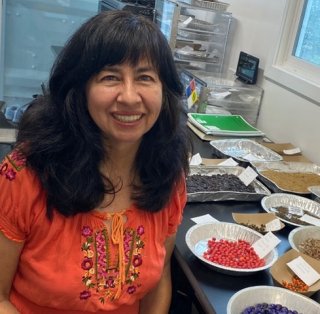
Seed banks (or Seed Arks, as I like to call them) are a wonderful way to save seeds and increase resiliency for people and ecosystems. Seeds should stay in the hands of the people, therefore, small regional seed banks are a wonderful way for people to support their communities and local restoration efforts that need to save their seeds properly.
Without proper seed banking facilities, many projects will collect large amounts of seeds and use what they can before the seeds become inviable, unnecessarily wasting precious seed resources. Simple methods for cleaning and drying seeds ensure that they can retain viability and be useful for years to come, providing a resource for the next generation of land managers who will inherit the projects and resources from the current stewards of the Earth.
For more information: www.josephrockarboretum.org, [email protected]