


From Innovation to Impact: A Tech Entrepreneur’s Agri-Quest
A Technological Entrepreneur's Journey
As the founder and CEO of Biofeed, a company specializing in non-spray crop protection against fruit flies, I spent years developing a breakthrough technology. Using a proprietary platform and formulas, we transformed semiochemicals and natural scent signals into a zero-spray, zero-residue, environmentally friendly solution that requires just one seasonal placement, eliminates chemical spraying, and helps farmers consistently achieve export-grade quality.
The technology proved highly effective in Israel and other developed economies with advanced agricultural sectors. But my true passion lay elsewhere: bringing this innovation to developing countries, where it could make a life-changing difference for smallholder fruit growers, many of whom earn just $1 to $3 a day.
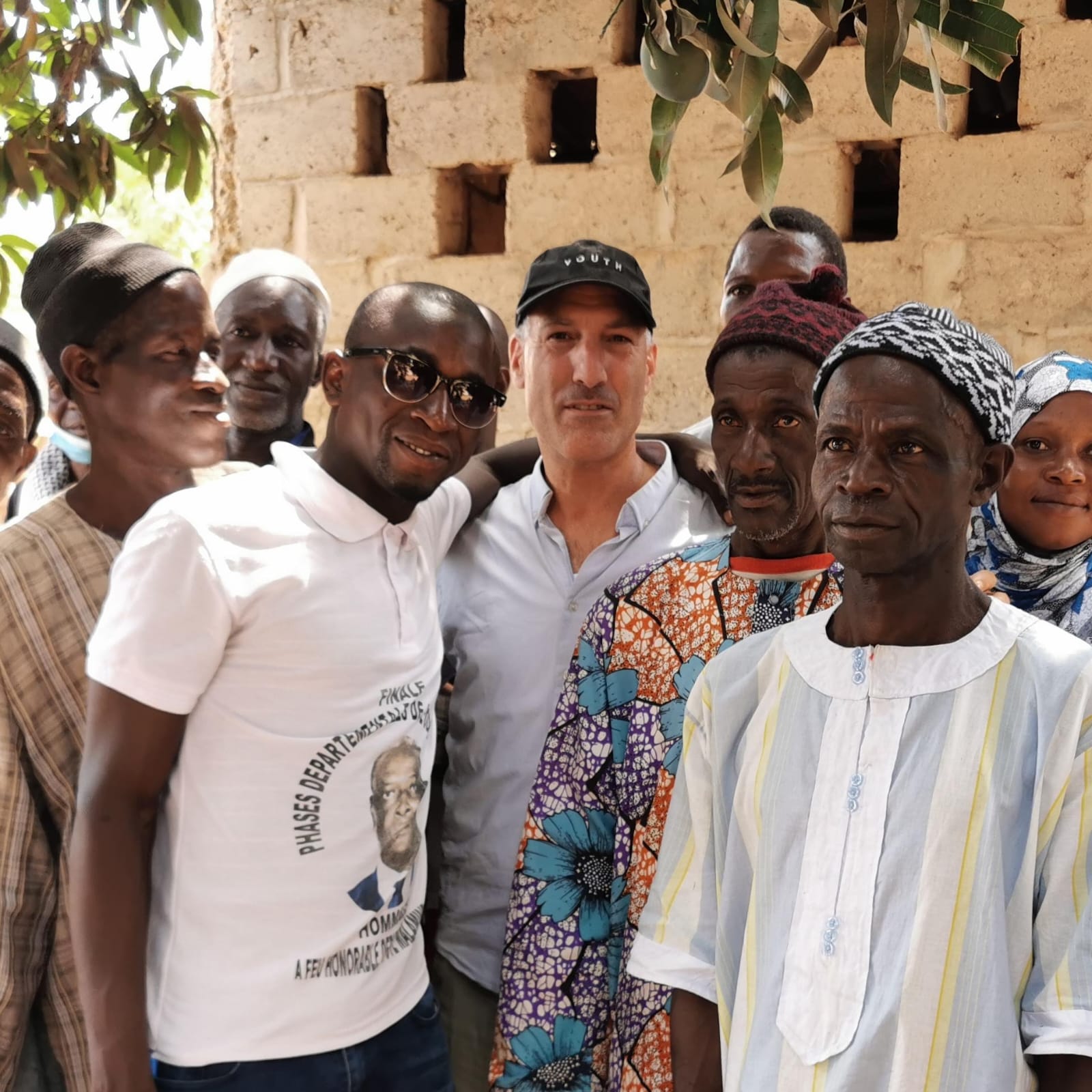
Biofeed began working in Africa and India, where I repeatedly observed a puzzling pattern. Even when farmers dramatically reduced infestation, for example, mango growers cutting losses from 50–80% to less than 1%, their economic situation improved, but not enough to lift them out of poverty. The technology worked; however, the expected prosperity did not materialize.
Looking around, I noticed the same pattern worldwide: yields improved, pest problems disappeared, and production metrics rose significantly, yet the farmers remained in poverty. The improvements were real and often dramatic, but the anticipated economic transformation never followed. This contradiction left me genuinely puzzled, shaking my confidence in the long-held belief that technology alone could drive prosperity and prompting deeper questions: why was this happening, and what essential element was missing?
In time, I understood that the problem was not rooted in the technology itself but in the absence of organizational structures capable of supporting, connecting, and enabling its effective use. Without a framework that links farmers to essential resources, functioning markets, and one another, even the most advanced innovations fail to generate meaningful and lasting change. This realization became a turning point in my journey, challenging everything I had believed and ultimately reshaping how I approach agricultural development, especially in developing economies, where constructing the right structures is critical to achieving shared and sustainable prosperity.
The Paradox: Technology Advances, Yet Farmers Remain Impoverished
For the 550 million smallholder farmers in developing countries, the gap between technological innovation and economic progress remains striking. Technologies like those developed by Biofeed consistently improve yields, reduce crop losses, and eliminate the need for chemical sprays. Yet despite these gains, most smallholders continue to live in poverty.
The problem is not the technology nor the farmers themselves but the fragmented systems into which they are introduced. Isolated farmers lack access to infrastructure, markets, finance, and support, and surprisingly, above all, to one another. Even the best technologies cannot scale or deliver meaningful, lasting change without organizational frameworks that foster collaboration and integration. Technology does not create prosperity on its own; its impact depends on the system in which it operates. Where organizational structures are weak or absent, progress stalls and poverty persists.
Connecting the Past and Present: From Pioneers to Smallholder Farmers
This insight brought to mind the experience of Israel’s early pioneers, who faced similar challenges under the Ottoman Empire more than a century ago. Despite the support of philanthropists, which provided them with access to modern tools, agronomic expertise, infrastructure, and financial aid, they remained impoverished. Their lack of progress was not due to a shortage of innovation or resources but to how their communities were structured.
The real breakthrough occurred when these farmers transitioned from isolated, individual work to cooperative models grounded in shared responsibility. By pooling resources, coordinating labor, and aligning around common goals, they created systems that lowered costs, improved productivity, and strengthened resilience. The Kibbutz, in particular, became a defining model. It prioritized collective success and enabled specialization, transforming generalist farmers into role-specific professionals like an industrial assembly line. This approach increased efficiency, allowed for more strategic use of technology, and enhanced competitiveness.
This structural shift boosted productivity and fundamentally changed rural prosperity's trajectory. Communities that once struggled began embracing innovation earlier, scaling operations more effectively, and taking the lead in agricultural development.
The lesson remains as relevant today as it was then: whether in developing economies or advanced ones, prosperity depends not just on the tools farmers use but on how they are organized. More than technology, it is the structure that determines whether progress can take root and grow.
The Role of Organizational Structures in Agricultural Success
From Israel's pioneers to my experience with Biofeed and smallholder farmers in developing countries, one pattern has become clear: organizational structure is the missing link in modern agriculture. Whether in low-income rural villages or highly mechanized farming regions, prosperity depends on access to technology and the systems that enable farmers to use it effectively.
In smallholder communities, most farmers still operate independently, disconnected from the infrastructure, training, and shared services needed to adopt innovation at scale. Even transformative technologies remain underutilized without cooperation and resource-sharing, and productivity gains are limited.
While conditions in developed economies differ, the importance of well-designed structures remains constant. Farmers must operate within systems that enable collaboration across the value chain, sharing resources, aligning operations, and integrating knowledge to stay competitive. Whether through cooperatives, regional alliances, or vertically integrated agribusinesses, organizational innovation is essential for lowering costs, enhancing resilience, and accelerating the adoption of new technologies.
Ultimately, success is not determined by a farmer's location or tools but by the strength of the structure within which they operate.
Real-World Examples: The Kibbutz and Beyond
The Kibbutz is a well-known example of how organizational design can drive agricultural success. Built on collective ownership and cooperation, Kibbutzim enabled members to share labor, specialize, and scale operations efficiently. This structure allowed them to adopt new technologies rapidly and thrive even in resource-scarce environments.
Similar models exist around the world. In Africa, Asia, and Latin America, cooperatives and professional farming villages demonstrate how shared infrastructure, joint decision-making, and coordinated market access can drive transformation. These systems consistently outperform fragmented individual approaches, boosting productivity, strengthening resilience, and improving livelihoods.
The lesson is the same, whether in developing or developed economies: when farmers are organized to work together, they gain the capacity to compete, adapt, and prosper.
The Path Forward: Organizational Innovation in Agriculture
The future of agriculture depends not only on technological progress but on how well we design the structures that support its cost-effective use. Farmers must move from isolated operations toward integrated, collaborative networks to build truly sustainable and prosperous food systems. This shift will enable them to scale, adopt innovation more effectively, and tackle shared challenges together.
Organizational innovation means more than creating new entities; it requires rethinking and upgrading existing systems to foster cooperation, shared responsibility, and mutual support. Whether through cooperatives, professional villages, or regional agricultural hubs, the goal is the same: to create environments where farmers can connect their resources, knowledge, and efforts and unlock the full potential of their land, labor, and technology.
From Experience to Action
Growing up on a Kibbutz, I witnessed how the right structure could transform a struggling community into a thriving one. It wasn't technology that made the difference, but how people were organized, shared responsibility, aligned around a common purpose, and worked together.
Today, that same principle still applies. Across both developing and developed economies, strategic improvements in how farmers are organized hold greater long-term potential than any single technological breakthrough. To unlock this potential, we must shift our focus to the systems surrounding farmers: models that foster cooperation, strengthen relationships, and build resilience.
Prosperity, in its broader sense, is a byproduct of structure. It begins with effective organization and a deliberate strategy for collaboration across the value and supply chain. If we design agricultural systems for productivity, connection, integration, and shared success, we can do more than feed the world; we can build vibrant rural communities, restore dignity to farming, and lift millions out of poverty.
Author's Note:
This article draws from my upcoming book, Designed to Prosper, which will be published later this year. From early tribal societies to today's global agriculture, the book explores how organizational structure, not technology, determines whether farming communities thrive or remain poor. It shows that technology is a byproduct of societal organization and that lasting prosperity begins with how we structure cooperation.