


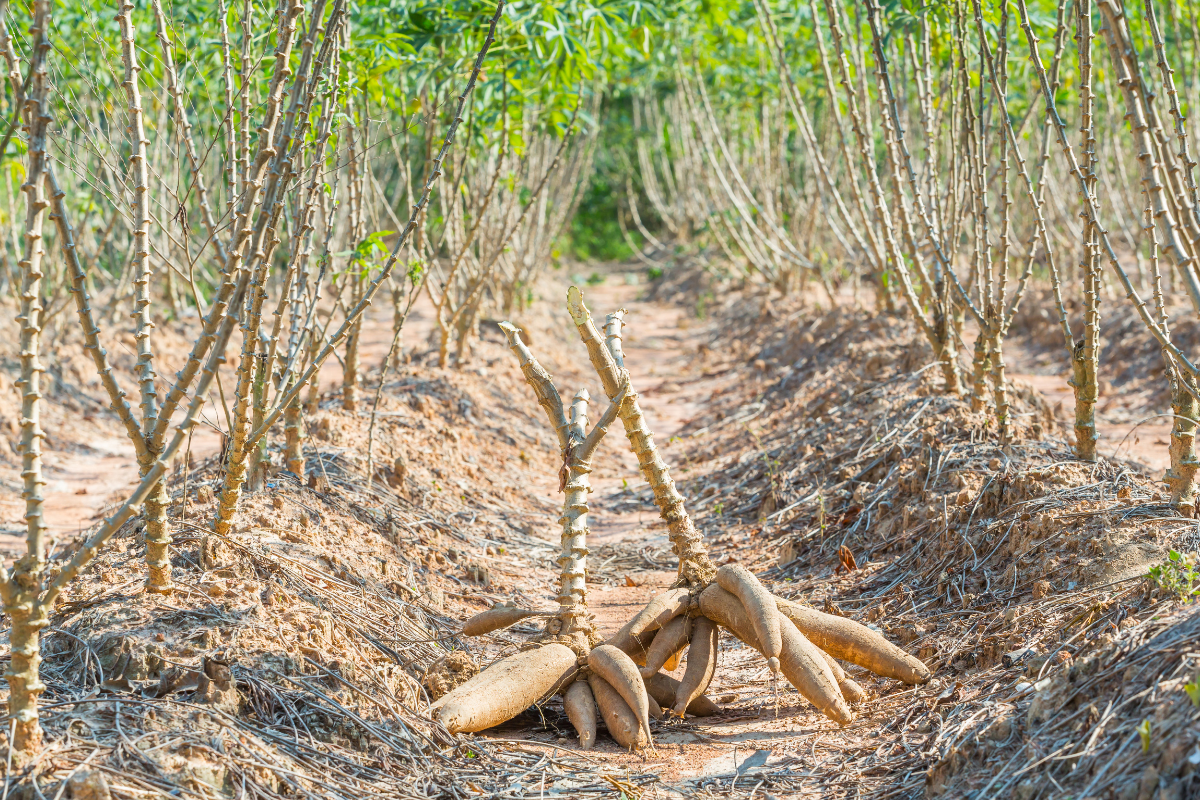
If you ask most cassava farmers in Karamoja and Abim District why they grow cassava, the answer is almost always the same. "It doesn't fail like maize." Northern Uganda has learned, sometimes the hard way, why cassava is called a security crop rather than just a cash crop. Unlike maize or beans, its roots can stay in the ground for months after they mature, a standing food reserve. When the rains fail, when a household's other crops come up short, or when the hunger gap between harvests bites hardest, families dig up cassava. That flexibility, more than its calorie content, has kept it central to household food security across the sub-region for generations, particularly in places like Abim, Kitgum and Pader, where rainfall is increasingly unpredictable.
But here is what I have seen after years of walking gardens, sitting with farmers, and collecting data on cassava production. The crop that "doesn't fail" is failing farmers in a different way, quietly, through disease, poor post-harvest handling, and missed market timing. And the good news is that most of these losses are fixable with what farmers already control.
The first profit decision happens before you plant
Most farmers think profit starts at harvest. It doesn't. It starts with the cutting you put in the ground.
In nearly every disease-affected garden I have assessed, the story is the same. A farmer took cuttings from whatever plant was nearby, often one already showing yellow, mottled leaves or stunted growth, which are early signs of Cassava Mosaic Disease or Cassava Brown Streak Disease. By the time the plant matures, the roots are small, watery, or partly rotten. The farmer invests the same labour as in a healthy garden and harvests a fraction of the value.
The fix costs nothing but attention. Before you cut planting material, walk your garden and mark the healthiest, most vigorous plants, meaning good leaf colour, no mosaic patterns, no brown streaking when you cut a stem open. Take your cuttings only from those plants. This practice, sometimes called positive selection, is one of the few disease-management tools a farmer fully controls, and it requires buying nothing. If a plant looks sick, do not just avoid its cuttings. Uproot it and burn it. A diseased plant left standing is a source of infection for every healthy plant around it, spread by whitefly and by cuttings taken carelessly by neighbours.
Harvest starts a countdown
Cassava roots begin to spoil within 48 to 72 hours of harvest. This single biological fact explains a huge amount of the income smallholder farmers lose every season, yet it is rarely treated with the urgency it deserves.
I have watched farmers harvest a full garden and let the roots sit under a tree for two or three days while they arrange transport or wait for a buyer. By the time the roots reach the market, they have started to develop the blue-black streaking of post-harvest physiological deterioration, and buyers pay accordingly, or refuse them outright.
The practical fix is to treat harvest as the start of a race rather than the end of a task. Harvest only what you can process or sell within a day. If you are not selling fresh, peel and slice the roots the same day and get them drying. Even a simple raised rack made of poles and sticks, off the ground and out of the dust, keeps chips clean and speeds drying. Dried cassava chips can be stored for months, which means you are no longer forced to sell everything at once, right when every other farmer is also harvesting and prices are at their lowest.
The real money is in timing
This is the lesson that took me longest to appreciate, because it is not taught the way agronomy is taught. Two farmers can have identical yields and walk away with very different incomes, purely because of when and how they sold.
Cassava prices in local markets follow a predictable pattern. They crash at peak harvest, when everyone is selling fresh roots at once, and recover a few months later when supply drops.
Farmers who sell everything fresh, immediately after harvest, are selling into the worst possible price. Farmers who convert even half their harvest into dried chips or flour, and hold it for two to three months, are selling into a stronger market, sometimes at double the price per kilogram, with the added benefit that dried product does not rot on them while they wait.
This requires no industrial equipment. A tarpaulin, a drying rack, and a store room free of moisture and rodents is enough to start. Where farmers have organised into groups, as with the SACCOs and farmer groups I have worked alongside, pooling harvests to invest in a simple grating or chipping tool has made an even bigger difference, because it cuts the labour of processing and lets members handle larger volumes before the fresh-root price crashes.
The outbreak that was traced to a single vendor
In one sub-county, an entire cluster of gardens was hit hard by brown streak disease in a single season. Farmers assumed the problem was the soil or the rains, and many simply abandoned the affected plots.
The real cause turned out to be far more traceable. Everyone had sourced planting material from the same market vendor, who was unknowingly selling cuttings from an infected mother garden.
What worked was not a chemical spray or an expensive input. It was organising a clean seed multiplication plot. A handful of farmers agreed to dedicate a small plot to multiplying cuttings from verified healthy, high-yielding plants, isolated from other cassava gardens to reduce whitefly transmission. Within two seasons, that single plot was supplying clean planting material to dozens of neighbouring farmers, breaking the cycle the market vendor had unintentionally started. It cost almost nothing beyond coordination and a little patience, and it solved a problem farmers had been blaming on bad luck for years.
Holding production steady
Keeping production up under disease pressure has not come from a single breakthrough but from farmers stacking the same disciplined practices season after season: positive selection, prompt uprooting of infected plants, timely harvesting and, where possible, group seed multiplication. What has changed more recently is that these practices are no longer carried out in isolation. Government extension programmes, NGOs and farmer groups increasingly coordinate clean-seed multiplication plots at community level, so one farmer's good practice is reinforced by neighbours doing the same. That collective discipline, more than any single input, is what has kept yields from collapsing even as pressure from mosaic and brown streak has persisted.
Farmers are turning to NAROCAS 1
Variety choice now carries part of that resilience too. NAROCAS 1, bred by Uganda's National Agricultural Research Organisation (NARO) and released in the mid-2010s, has become one of the more widely adopted improved varieties among farmers trying to cut both disease risk and time to harvest. As the Daily Monitor has reported, it combines resistance to cassava mosaic disease with drought tolerance and good taste, can mature in as little as six months, and yields around 30 tonnes per hectare, with trials in West Nile recording more than 40. Against brown streak it is tolerant rather than immune, so clean planting material still matters.
For a farmer used to waiting eight to twelve months for a traditional variety, a shorter season together with protection against the diseases that have wiped out so many gardens is a significant shift, both for food security and for how quickly a household can turn a garden into income.
Adoption has not been automatic. In several communities uptake has been slowed less by agronomy than by taste and processing habits. Farmers promoting the variety say its flour is clean, but many households still prefer their traditional cassava. A variety's success in a demonstration plot does not automatically carry into the kitchen or the market, and extension messages need to address taste and processing, not only yield and disease resistance, if adoption is to spread.
What to do this season
None of this requires waiting for outside help.
- Select and clean your planting material every season, and never take cuttings from a sick-looking plant.
- Where clean cuttings of an improved variety such as NAROCAS 1 are available, try them on part of your garden alongside what you already grow.
- Treat harvest as time-sensitive. Process or sell within a day or two, not a week.
- Dry and store at least part of your harvest, so you are not forced to sell at the worst price.
- If disease is spreading in your area, trace it back to the source of planting material. It is often a shared problem with a shared fix.
- Where possible, work with other farmers. Group processing and clean seed multiplication spread the cost and the benefit further than any individual can manage alone.
Food security and income from cassava do not come from a single big intervention. They come from a series of small, disciplined decisions, at planting, in the choice of variety, at harvest and at the moment of sale, that compound season after season into steadier yields and steadier plates. Most farmers already have the power to make them.