



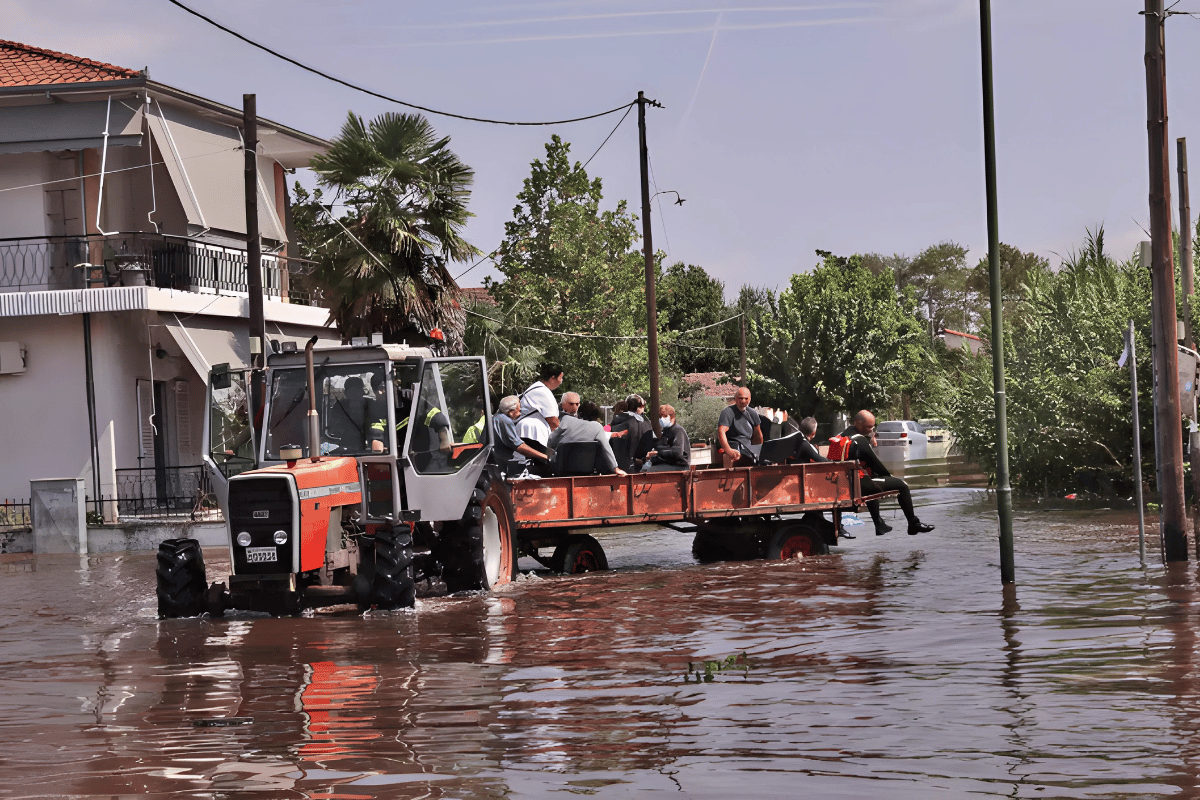
Two full, slow years have passed since the devastating floods of Daniel in the Region of Thessaly, Greece, leaving to this day a sense of stagnation among residents, insecurity, and despair that gradually transformed into abandonment of homes, properties, once vibrant agro-communities, and activities that maintained the primary sector as the pride of the region. Two years after the natural disaster, the question that arises is this: can Thessaly's agriculture and its producers withstand another blow?
The floods of Daniel were not the first tragic experience for Thessaly's primary sector. The earlier ordeal of cyclone Ianos in 2020, and the invasion of torrential waters into the city of Karditsa, transformed its residents overnight into vulnerable and insecure individuals with every possibility of rainfall, even a drizzle, today.
The first signs of destruction for farmers were evident in a 2021 study by the Institute of Entrepreneurship Development, as liquidity dramatically decreased in the primary sector (94.7%) and processing (100%). Compensation from ELGA amounted to 15 million euros, while total damages in the affected areas from Ianos reached approximately 700 million euros.
The chronicle of the flood: Its impact on the lives of residents and farmers
Three years later, on September 7, 2023, Thessaly residents experienced a catastrophe of unimaginable scale, Hurricane Daniel, with 754 tons of rain in just 20 hours! House roofs barely protruded from the unprecedented water level that covered entire villages. Vast areas of land were covered by water that broke through and permeated river embankments, while a huge quantity of mud engulfed acres of land. The geomorphological changes of the soil were now an unpleasant reality for both the residents of the affected areas and the farmers who lost significant agricultural equipment, crops, and land that became eroded by stagnant waters for a long period thereafter.
Lake Karla and the loss of arable land
The extent of the devastation is reflected in the figures of Lake Karla, which approached the size it had in the 1960s, before it was drained to create arable land nearby. Specifically, after Daniel, the water in the lake reached an area of approximately 180,000 – 190,000 stremmata (18,000 – 19,000 hectares). Despite its gradual drainage, it brought to the surface areas that were lost in September 2023, which the eligible farmers found impossible to access, largely losing their livelihood.
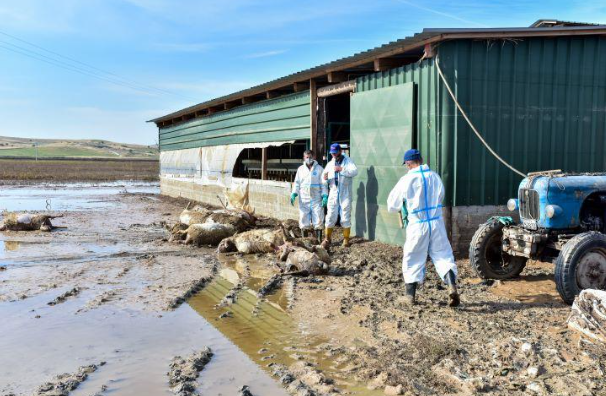
The impact of Daniel, the annihilation of environmental areas, and especially of agriculture, plunged producers and livestock farmers into despair and led to the destruction of almost 1,000,000 stremmata of arable land. Over 220,000 animals and birds perished in total when the water swept away stable facilities and production units. Specifically, this involved the loss of 70,935 sheep and goats, 6,136 cattle, 20,326 pigs, and 131,795 poultry.
Increased production costs, low prices, and the degradation of the farmer's labor
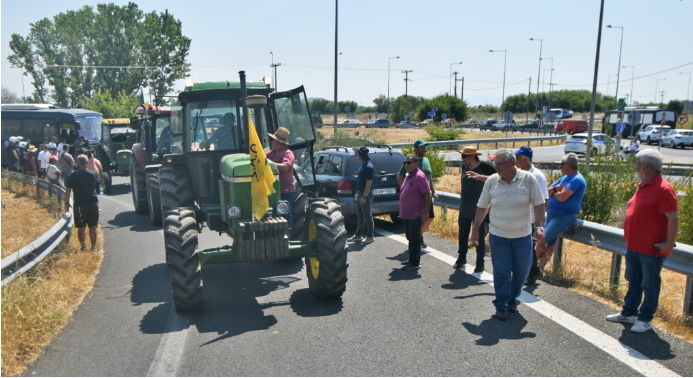
However, Daniel's devastation was the beginning of a generalized calamity for Thessaly's agriculture, as open fronts and new challenges created a suffocating environment for the survival of farmers and livestock breeders. The people of the land are anxious about the future of the sector amidst an energy crisis, loss of income, their livestock, agricultural equipment, and arable land. The blow of Daniel in 2023 came at a time when farmers were already demonstrating in the streets and villages, speaking about the increase in prices for electricity, fuel, raw materials, and conversely the reduction in final prices for their cultivated products, demanding immediate countermeasures from the State. It is noteworthy that agricultural production in Greece was deeply wounded by the floods of 2023, as its decrease reached 16% compared to 2022.
Let us not overlook that compensation was delayed for over a year until the special teams and agencies of the Ministries of Civil Protection and Agricultural Development managed to cross-reference beneficiaries and damages to determine the appropriate amount to be received. To this day, some flood victims appear not to have received the compensation amounts they were entitled to, leaving them with questions about the procedure and uncertain about restarting their lives.
Beyond the rise in prices, farmers faced a change in the scenario of agricultural crop prices after the floods. Prices plummeted, depreciating the effort and toil of a farmer in his field, in the production process. Hard wheat prices showed a decline, ranging from 24 to 27 cents/kg, corn hovers around 24 cents/kg, and cotton, Thessaly's most significant export product to the EU, experienced a drop of approximately 0.50+ cents/kg, perhaps even below this limit, at 46 cents/kg.
Today, farmers and livestock breeders walk on an uncertain path regarding the future of their activities. The new threat, which will remain with us for decades to come, is the water issue in Thessaly. Prolonged droughts with extremely high temperatures led producers to rely on rainfed crops, as water levels in Lake Plastiras and Smokovo prevented several field irrigations during the summer. And if the beneficial August rainfall (with 100 millimeters of rain in Karditsa at the beginning of the month) had not occurred, disputes between local communities, Prefectures (Karditsa – Larissa), as well as the blame game among agencies (ODYTH, Region, Municipalities, and TOEB) would have been the new dire reality.
However, the Region remains in a state of emergency because it significantly lags in restoring serious damage. We are also quite... behind in the discussion about dams that would hold back floodwaters and secure quantities for Thessaly's fields. The discussion about dams also includes environmental parameters that we should not overlook merely for the sake of covering our needs.
From floods to the OPEKEPE affair and animal diseases
The next challenge today is the OPEKEPE scandal, which revealed how brazenly people outside the sector exploited subsidies and grants, in some cases reaping millions of euros! The OPEKEPE scandal was yet another degradation of the work of livestock breeders and producers for what they offer to the food security of the country, which is, unfortunately, daily challenged by increasing imports. Mountain livestock farming, or nomadic livestock farming as we call it, which has its roots in the lives of our grandparents, was hurt by fictitious declarations of sheep and goats in various invalid and random locations across the country.
Here, we also add the farmers' query from all these years: "But why are the amounts we are theoretically entitled to from OPEKEPE decreasing?" Indeed, this specific demand on their agenda of claims was lower compared to the insurmountable challenges they were called upon to face. And unfortunately, these days, it has climbed to the top positions, with the people of the land receiving disappointing answers as to the cause of the problem.
And as if all the aforementioned issues were not enough, animal disease in sheep and goats in 2025 came knocking on the door of livestock breeders who daily watch their herds being culled. According to current data from the Region of Thessaly, 94,233 sheep were culled within one year! In a desperate attempt to trace the sources of outbreaks, the Region of Thessaly was the first in Greece to proceed with molecular testing of saliva. Greek livestock farming is crying for help, at a time when flood losses and the decimation of livestock have already burdened the sector.
The precarious situation in Thessaly, without the necessary anti-flood protection, keeps farmers on edge, contemplating abandoning their fields and the profession they once chose and loved. Massive demonstrations in the streets, blockades across the country, the voice of farmers raised the issues they face, but inertia has replaced the necessary quick reflexes. Rain and floods never ask man; on the contrary, we should prepare as seriously as possible for the protection of our efforts to date. Challenges like climate change constitute unwavering chapters in our local agenda and run at dizzying speeds when it comes to the hesitant measures taken by the Greek state.
The question remains: Will farmers accept another blow? Or will they, as protagonists, and alone, manage to keep viable a sector that we cannot afford to lose in a country where we have learned to live with distorted decisions and directions?