


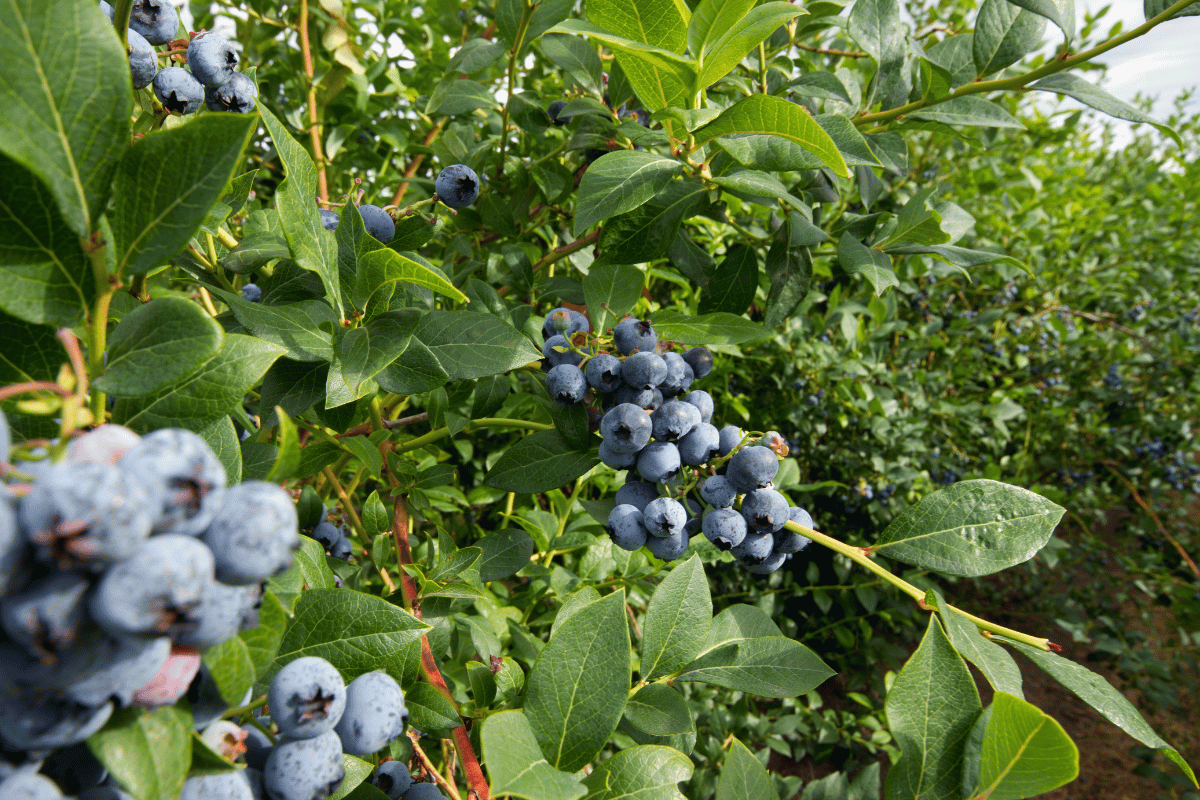
BLUEBERRIES GO GR€€N WITH POLLINATION!
Quoting figures from the UN’s Food and Agriculture Organization, Speiser explains:
“Since 1961, agricultural land has expanded by 600%.
In the same time period, the number of managed honeybee hives has expanded by only 83%. So, we have a supply and demand problem.”
The demand for pollination services continues to grow as fruit production expands. For blueberries, this is especially important:
“We all want big blueberries," Speiser notes. "You can charge almost twice the price for large-sized fruit."
Pienaar et al. (2022) estimated that the U.S. market consumed 36% of global blueberry production, followed by the EU (22%) and China (18%).
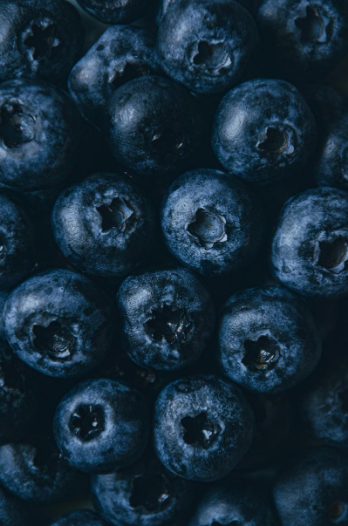
Blueberry farming in South Africa
South Africa has become one of the fastest-growing blueberry producers in the world.
- Exports: The industry grew exports from 634 tons in 2008 to more than 8,000 tons in 2018. By 2024, production reached 30,000 tons.
- Value: Export earnings rose from R133 million in 2013 to R1.058 billion in 2018, with about 70% of production exported.
- Employment: Starting with employment, each hectare of blueberries planted results in the direct employment of 2.64 full-time equivalent workers, on average. This is the highest employment intensity amongst the major fruits grown in South Africa. As expected, other industries with high employment potential were table grapes (2.2), flowers (2.1), and cherries (1.9), whilst pome (apples & pears) and stone fruit (apricots, plums, prunes, peaches & nectarines) created 1.1 jobs per hectare planted.
Historical background
The South African blueberry industry began in the 1970s in Mpumalanga’s Lydenburg district. By 1987, cultivation spread to the Western Cape. The first recorded exports in 1992 were worth just R9,780, but by 2001, the figure had reached R5 million. Exports exceeded one billion Rand for the first time in 2018 (Quantec, 2019).
Blueberry production and market distribution
On average, around 70% of all blueberries are destined for export markets, while 13% go to the local fresh market. Another 17% are processed for various uses, such as Individually Quick Frozen (IQF), juices and juice concentrates, dairy, and confectionery (FAS-USDA, 2017).
The total production of blueberries in South Africa more than doubled from 2016, growing from around 4,100 tons to 11,306 tons. Export performance has shown a similar trend.
Profitability of blueberry farming
Farm-level profitability amongst blueberry growers varies considerably based on cultivar selection, management practices, selection of covering (plastic, shade-net, or open-air), plant density, and whether or not they are planted in the ground or in substrates.
In general, the industry norm for yields is around 10 tons per hectare over the 8-year production cycle, at R80 per kg, of the orchard, although newer varieties are showing signs of producing higher yields earlier in the plants' life cycle.
On average and throughout the 8-year cycle, one hectare of blueberries yielded around 10 tons annually, translating into a gross annual income of R800 000, produced at a cost of R443,000 per hectare.
Therefore, the expected net annual income or gross margin is R357 000 per hectare (WCDoA, 2019).
It is important to note that provision still needs to be made for interest on fixed capital and other fixed costs that cannot be directly allocated to the specific orchard.
Blueberry profitability increases to around R837 000 per hectare if a yield of 16 tons per hectare is realised. Those able to deliver a larger proportion of their crop for fresh sales can also realise prices of around R88 per kg.
In this case, the annual gross margin for the average yield will be around R436 000 per hectare. Combining high prices and yields, top-performing orchards have the potential to realise R964 950 per hectare per annum.
The blueberry industry is particularly export-oriented. Over the last ten years, fresh blueberries from South Africa have become sought after in international markets due to their outstanding quality.
In 2018, South Africa was ranked 12th worldwide for countries exporting blueberries, achieving an export volume of around 8,000 tons (ITC, 2019).
Pollination and yield improvement
Blueberries under net are calculated at R980 per hive placement, and six placements per season are practiced at 5 hives per hectare.
Blueberries open-air pollinated to be calculated at R700 per period of 21 days at 5 hives per hectare.
Blueberry bushes can flower for 10 weeks; however, multiple varietals extend an orchard’s flowering coverage for up to 8 months of the year in South Africa.
Depending on the varietal of blueberry planted the minimum increase in yield is 13% & 12% heavier making more blueberries and decrease in smaller berries.
Crop yield formula
- Grower with 10 tons/ha + 13% extra yield = 1.3 tons more.
- At R80/kg, that’s +R104,000/ha.
- Beekeeper cost: ~R15,000 for hives (R980 x 5 hives x multiple placements).
Blueberry pollination research
Insect-mediated pollination services increased blueberry fruit set, berry weight, and seed set (R2 values: 64.8%, 75.9% and 75.2% respectively).
We often detected pollen limitation, indicated by an increase in fruit set, berry weight and seed set (R2: 10.1%, 18.2% and 21.5%, respectively), with additional hand pollination. Increasing visitation of honeybees and wild bees contributed to blueberry pollination by increasing fruit set (R2: 5.4% and 3.5%), berry weight (R2: 6.5% and 2.8%) and seed set (R2: 6.4% and 3.8%), respectively.
Bee contributions to fruit set and berry weight were variable across regions.
On average, precision-pollinated plots had 70% more bee visits to flowers and produced 13% more fruits that were 12% heavier and 12% firmer than those obtained through conventional practices.
These results showed that pollination efficiency could be improved if key management factors related to bee strength, distribution, and health care are considered.
Due to these results, we encourage growers and beekeepers to include precision pollination practices to both increase the productivity of blueberry fields and the well-being of honey bees within agro-ecosystems.
To hear my interview with Professor Hannelie Human, Phd of Etymology, regarding her research findings regarding blueberry pollination and it's benefits and impact for growers: Honeybees DO THIS to Blueberries: earn up to R18k/ha for pollination (Prof. Hannelie Human) — YouTube
Notes to consider for pollination providers
Growers may not receive efficient pollination services if hives are low quality (i.e., hives that have low number of frames covered with bees, or bees with high levels of pests) and/or when beehives are placed far from the field to pollinate (20).
Beekeepers, on the other hand, may lose many hives if pesticides are applied during flowering (i.e., colony loss by intoxication) (21) and/or if flower resources within or surrounding the farm are not sufficient in terms of abundance or quality to sustain their well-being (i.e., colony loss by starvation)( 22).
British Columbia Blueberry Council states:
Blueberries require insect-mediated pollination (bees) to produce decent yields.
The combined visits by honeybees and wild bee species (particularly bumblebees) during blueberry bloom lead to better seed set, larger fruit, and higher yields. Adequate fruit size can make the difference between making fresh grade and process grade.
Blueberries that develop without bee pollination are small and usually don’t reach marketable size.
Research shows that without pollinators, highbush blueberry yields in B.C. decrease by 30 to 50% from typical levels. This decrease can be more substantial with some difficult-to-pollinate varieties.
Consultation findings: Eastern Cape case study
I had the pleasure of working as a consultant with the second-largest blueberry farm in South Africa in 2017, in the Eastern Cape province.
The consultation was on behalf of a local experienced beekeeper who was being contracted to provide honeybee pollination for the 60-odd hectares of blueberry orchard in the nearby area.
The beekeeper had just over 200 beehives in his operation. We had to arrange feeding and replacement of the colonies over the 8-month period of flowering. The numerous varieties that the blueberry farm grew was to sustain a production output over an extended timeline.
In the 24-month consultation, the blueberry grower agreed to change their pest control system to an organic system and also use a less intensive fertiliser. This process also led to the bees being able to operate in a healthier environment and led to fewer colony losses.
The blueberry growers experienced about 60% more blueberries and at least a 30% increase in the number of higher grade fruit.
For the beekeeper, the blueberry contract was worth R550,000 in 2017 over an 8-month period, using up to 220 bee hives in total to manage the flowering of the blueberry varieties being farmed.
The blueberry growers were responsible for replacing any colonies that were lost on site that could be impacted by poison exposure over the period to the replacement value of R1500 each at the time.
There is very little honey produced by the honeybees during the blueberry pollination therefor a beekeeper must have compensation in the form of rental fees for the placement of colonies on the farmer’s land.
A beekeeper must prepare for the added feeding cost for their colonies once they complete the 8-10 week pollination of a specific variety of the blueberry farm to recover from the pollination service provided. Additionally, transport to and from the blueberry farm to the beekeeper’s apiary sites is costly.
At the start of the season in April, the first varietal began flowering with about 5ha to pollinate, requiring 25 bee hives at pollination standard for up to 10 weeks before needing to be removed and replaced by the next batch of bees for the next varietal to flower which was about 10ha needing 50 bee hives for its 10-week period.
As there was some overlap, the colonies would need replacing each month with fresh strong colonies. At the peak there were 120 bee hives on the blueberry orchard providing pollination services and visits to the flowering varietals.
Summary: Blueberry pollination benefits
Honeybee pollination research shows a minimum yield increase of 13% with a weight increase of 12% in some varietals, while others have shown up to a 70% increase in yield.
In a nutshell, honeybees contribute to increased yield, a decrease in smaller size, larger weight, and, therefore, higher-quality fruit for blueberry farmers.
Blueberry farmers should absolutely hire bee hives from professional pollination service providers. Bees can increase yield by a minimum of 1.3 tons per hectare on average, and with an average gross income of R80 per kilogram, growers may add up to R100,000 more in revenue per hectare and more!
My experience with a blueberry project based in the Eastern Cape over two years resulted in not only larger fruit sets and heavier weights but also a grade improvement in at least 30% of the smaller fruit sets on average.
Risks involved for beekeepers are:
1) starvation for the bees
2) pesticide spray harms bees and poses a risk of contamination
3) vandalism and theft
4) loss of colonies and bees due to overhead netting
Thank you for your time in reading about the massive financial benefits for growers when hiring beekeepers to pollinate their blueberry orchards leading to more blueberries, larger berries and a longer shelf life!
These benefits are not limited to South African blueberry growers, but wherever blueberry orchards are set up and farming the berries is practiced.
Sources
- Developing Economic Models for South Africa's Blueberry Industry: Baseline for 2022-2031
- The Economic Contribution of the South African Blueberry Industry
- Top Markets for U.S. Agricultural Exports in 2017
- Eeraerts, M., DeVetter, L. W., Batáry, P., Ternest, J. J., Mallinger, R., Arrington, M., ... & Isaacs, R. (2023). Synthesis of highbush blueberry pollination research reveals region‐specific differences in the contributions of honeybees and wild bees. Journal of Applied Ecology, 60(12), 2528-2539.
- Cavigliasso, P., Negri, P., Viel, M. et al. Precision management of pollination services to blueberry crops. Sci Rep 11, 20453 (2021).
- Picture credits: Photo by Zoe on Unsplash , Photo by Jan-Niclas Aberle on Unsplash