


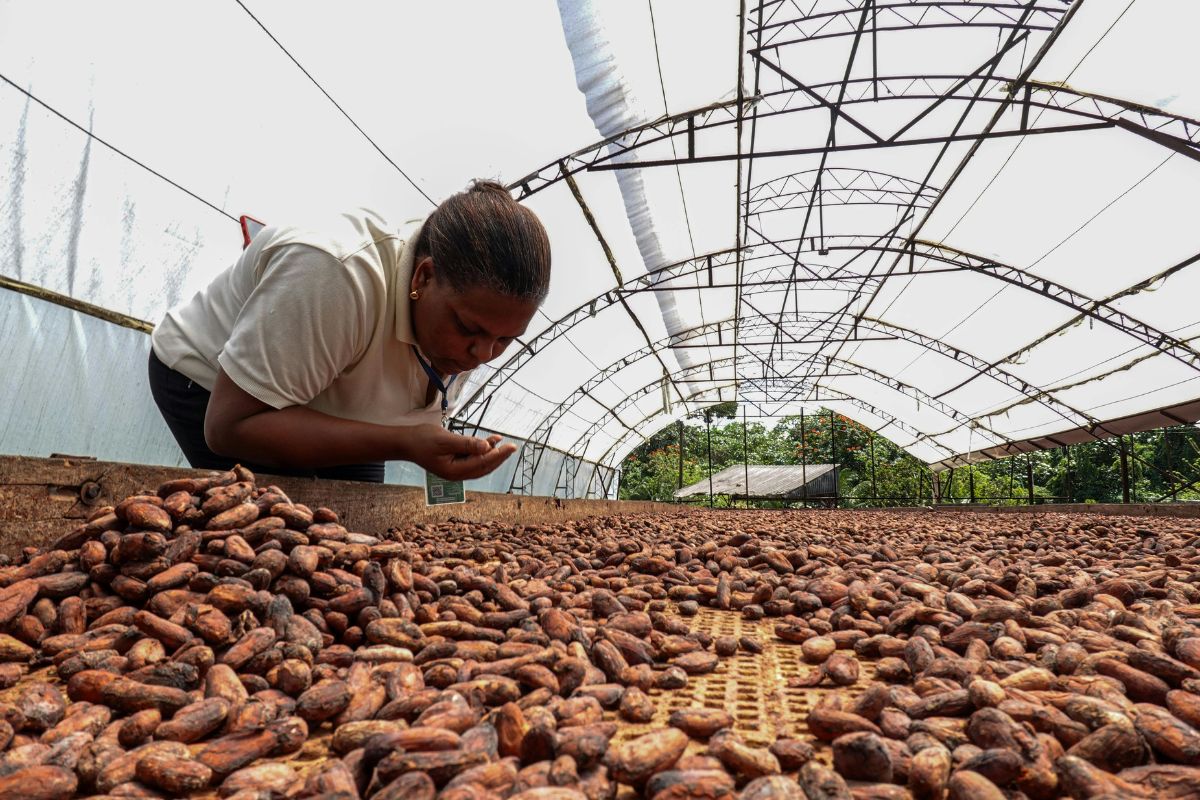
Introduction - Food and its real cost
When considering the cost of food, many people focus solely on the price tag or shelf label. However, the real cost of food extends far beyond financial figures, encompassing significant environmental impacts such as greenhouse gas emissions, water use, and land degradation. Understanding these hidden costs is crucial for making informed choices that support both the planet and future food security.
The Environmental Cost of Food
Many assume the cost of food to be the price tag, shelf label, or cost per kilogram. However, in reality, the real cost of food goes far beyond these easily quantified financial figures. A major, often overlooked component of food cost is its impact on the climate.
It was reported by Our World in Data that agriculture contributes to approximately one-quarter of global greenhouse gas emissions. Food production alone is responsible for 25% of global emissions. Additionally, 50% of the world’s habitable land is occupied by agricultural activities and consumes 92% of the planet’s freshwater, substantially contributing to water pollution (Ritchie, 2021).
This reveals a fundamental truth that food is not free even after checking out from the store, market, or any point of purchase. Every food product purchased in a market or picked from a store shelf carries with it an unseen environmental cost.
Major Contributors to Agricultural Emissions
The primary contributors to agricultural climate emissions are as follows:
- Livestock: 49%
- Farm production: 39.6%
- Land use: 31.8%
- Packaging: 5.5%
- Transport: 4.4%
- Food waste: 0.9%
(Our World in Data, 2021)
In essence, food in the real sense is not free for the environment or the climate.
Foods with the Highest Climate Emissions
Below is the hierarchy of foods contributing most to climate emissions (order: highest to least):
- Beef
- Chocolate
- Coffee
- Cheese
- Pig meat
- Poultry meat
- Palm oil
Cows are one of the major livestock contributing to this environmental menace due to the enteric methane emission from their burps.
Ways to Reduce Food’s Impact on Climate
- Minimal meat consumption: Reduction in meat consumption (most especially beef) and shifting towards more plant-based diets can significantly reduce greenhouse gas emissions, reduce deforestation, limit water usage, and also protect biodiversity. Meat and dairy production contribute about 14.5% of global greenhouse gas emissions, based on a report by the UN Food and Agriculture Organization (FAO). Dietary adjustments across the globe (most especially in countries with high meat consumption) are essential to meeting climate targets. A study by the National Institutes of Health (NIH) indicates that adopting plant-based diets could cut dietary emissions by up to 49%. Seemingly insignificant changes like reducing portion sizes or making occasional substitutions can massively lower environmental impacts. It might not demand an abrupt change, but cutting back or making substitutions can make a significant impact.
- Minimal food waste: Under anaerobic conditions (no oxygen), food that ends up in landfills decomposes and as a result releases methane, a greenhouse gas with a higher heat-trapping capacity than carbon dioxide. According to a report in the United States, discarded food generates about 58% of all methane escaping from municipal landfills. Globally, the scale of waste is enormous: 1.05 billion tonnes of food were thrown away in 2022, and 60% of that occurred at the household level. This squandered food is not just an ethical or economic concern (≈ US$1 trillion a year); it is a climate problem. Food loss and waste together account for 8–10% of humanity’s greenhouse gas emissions, nearly five times those from the entire aviation sector. Cutting this waste would therefore remove a similar share of global emissions. Beyond food, emissions are also driven by status-driven consumption: as households seek prestige through larger homes, meat-heavy diets, SUVs, or long-haul holidays, demand for high-carbon goods rises, pushing emissions higher. Halving food waste and moderating conspicuous, carbon-intensive purchases would together deliver a powerful, immediate climate dividend while conserving land, water, and biodiversity.
- Increasing food production without opening new farmland: Opening new farmland does not necessarily result in an increase in food production; rather, effective food production strategies should be employed with current open lands and technologies such as hydroponics, which will be effective in increasing food production without opening new farmlands.
- Proper soil and water conservation: Practices like drip irrigation, water capturing and storage, and irrigation scheduling will go a long way in water conservation. Also, compost, mulching, cover crops, crop rotation, rotational grazing, conservation tillage, and dry farming (particularly in areas with limited resources) are proven strategies to conserve water and the soil.
- Adaptation to climate change via climate-smart practices
- Technology innovation in livestock and pastoral farming: Precision feed/nutrient techniques, precision livestock farming, feeding cows with grains and fats has also been proven to reduce greenhouse gas emissions, use of green-feed systems, and wearables to track livestock activities.
- Reduction in over-dependence on nitrogenous fertilizer: The use of organic products in replenishing soil nutrients will limit the effect of using nitrogenous fertilizers.
- Incorporation of climate-resilient varieties in farms
- Carbon sequestration techniques should be employed regularly by farmers
- Biodiversity conservation: Conserving natural spaces and the biodiversity they contain will limit emissions and aid adaptation to climate impacts.
- Reforestation: Planting trees on abandoned farmlands will help absorb carbon dioxide and also serve as habitats for some wildlife, which will balance the ecosystem.
Conclusion
As the world’s population increases, farmers should be more conscious of sustainability in a bid to increase production and meet the global demand for food products. This can be achieved if the above strategies are properly employed in mitigating food's impact on the climate. By making informed choices and adopting sustainable practices, both consumers and producers can help secure a healthier planet for future generations.
References
FAO. (n.d.). Livestock's Long Shadow – Environmental Issues and Options. Food and Agriculture Organization of the United Nations.
NIH. (2024, October 28). Impact of plant-based diets on global greenhouse gas emissions. National Institutes of Health.
UNFCCC (2024) – Food loss and waste account for 8–10% of annual global greenhouse gas emissions; cost USD 1 trillion annually. Retrieved from: https://unfccc.int/news/food-loss-and-waste-account-for-8-10-of-global-emissions
UN Environment Programme (UNEP), Food Waste Index Report 2024 – 1.05 billion tonnes of food were wasted globally in 2022, with households contributing to over 60%. Retrieved from: https://www.unep.org/resources/report/food-waste-index-report-2024
World Resources Institute (WRI) – Reducing food loss and waste can help close the gap between current food availability and 2050 needs. Retrieved from: https://www.wri.org/insights/reducing-food-loss-and-waste
Project Drawdown – Methane from food rotting in landfills is a major climate issue; food waste reduction is among the top climate solutions. Retrieved from: https://www.drawdown.org/solutions/reduced-food-waste
Nature (2024) – How status consumption and overconsumption contribute to climate change. Retrieved from:
Ritchie, H. (2021). Environmental impacts of food production. Our World in Data. Retrieved from: https://ourworldindata.org/environmental-impacts-of-food
Further reading
Coffee tree Harvesting - Coffee Berries Picking
Cocoa Sustainability and Farmers' Empowerment
To what extent can we trust the authenticity of our fruit?
Essential Guide for Farmers on Exporting Dairy Products: Steps to Success
High Oleic Palm Oil: Sustainable Production, Challenges, and Opportunities