


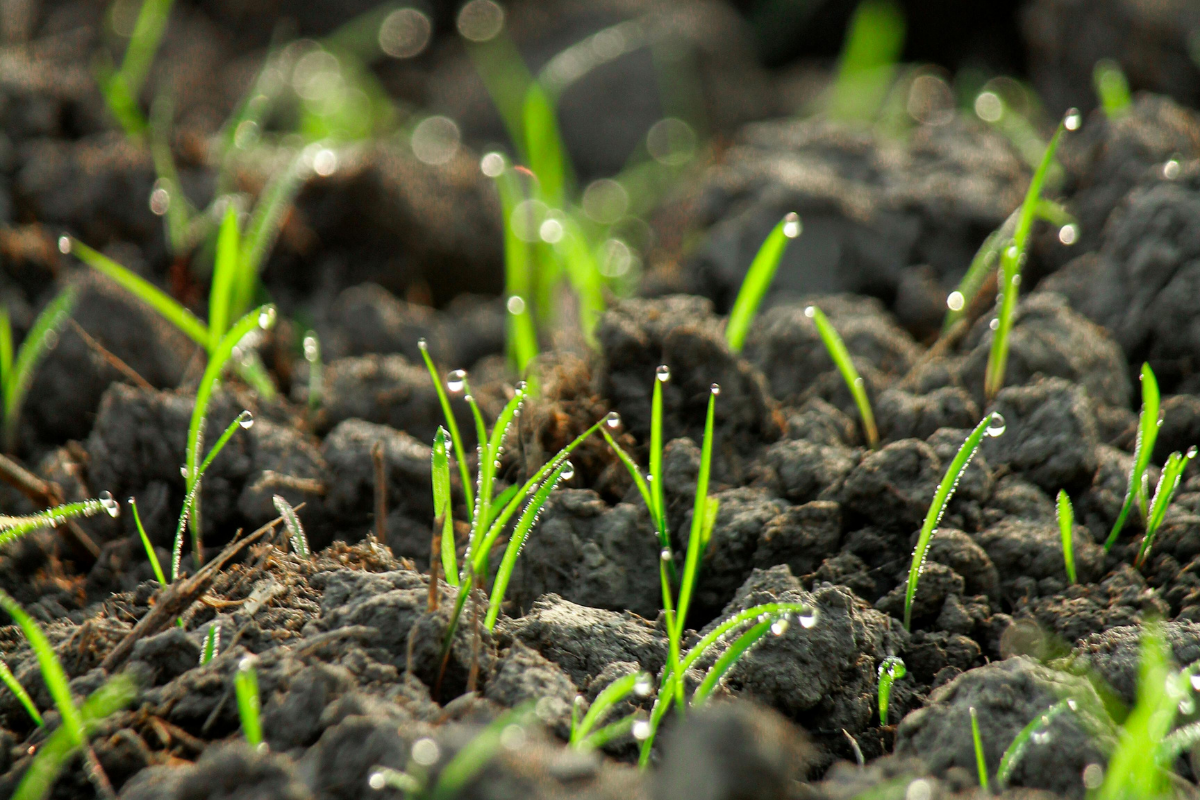
Although agriculture emits greenhouse gases through its production processes, it can also sequester carbon and store it in the deepest layers of soil. This is a process that occurs over geological timescales, and it begins with the photosynthetic capacity of plants. It requires solar energy, water, and nutrients. It also depends on the activity of soil microorganisms, which participate in the transformation of organic matter.
The good news? This sequestration mechanism becomes stronger when sustainable management practices are adopted. At the center of this process lies soil organic carbon (SOC), the main store of carbon in soils.
Soil ecosystems function as one of the most important carbon sinks in the biosphere, containing nearly twice as much carbon as vegetation and the atmosphere combined. Any change in this balance significantly affects the carbon cycle.
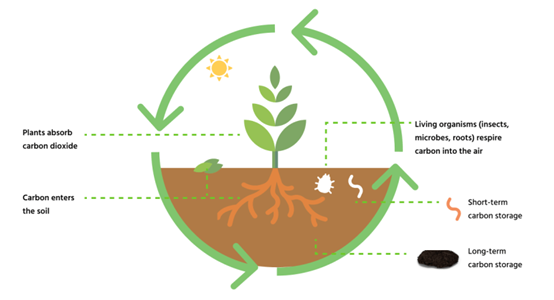
Understanding the importance of soil organic carbon is the first step for farmers seeking better soil health, higher productivity, and a real contribution to climate change mitigation.
What is soil organic carbon (SOC)
Soil organic carbon is the main fraction of soil organic matter and comes from plant residues (leaves, roots), organic fertilizers (manure, compost), and microorganisms living in the soil.
Soil organic carbon is a key index of soil health for several reasons. It helps soil hold water, which means less irrigation is needed. It improves soil structure, leading to better root growth. It increases nutrient availability, resulting in healthier crops. And it supports soil biological life, leading to a more resilient system overall.
What affects SOC sequestration
Soil carbon does not increase in the same way in every field. Its storage depends on a combination of natural conditions and farm management practices.
- Soil type. A soil's ability to preserve carbon depends largely on its texture and composition. Clay-rich soils have a high capacity to store carbon, while sandy soils are characterized by lower carbon retention.
- Climate conditions. Temperature and moisture have a strong influence on carbon behavior. High temperatures and moisture accelerate decomposition, resulting in reduced carbon storage. Cooler conditions slow decomposition, allowing carbon to accumulate.
- Farm management practices. Management is one of the most important factors farmers can actually control. Long-term intensive cultivation reduces organic carbon, but with the right management, it becomes easier for the soil to sequester carbon from the atmosphere. The most common practices that reduce soil organic carbon are intensive tillage, removal of crop residues, and soil erosion.
- Initial soil condition. Soils that have been intensively cultivated for many years usually have lower organic carbon levels and therefore greater potential to increase SOC. On the other hand, soils already rich in organic matter may have limited additional storage capacity.
- Carbon saturation. Soil cannot store carbon indefinitely. As soil improves, the rate of carbon sequestration slows as it approaches saturation, and eventually reaches a stable level.
How soil carbon helps deal with climate change
The higher the carbon in the soil, the more water the soil retains during droughts, the more stable crop yields become, and the more resilient the land grows. At the same time, healthy soils help remove atmospheric CO2, turning agriculture into part of the solution rather than the problem.
Practical ways to increase soil carbon
There is no need for complex or expensive technology to improve soil carbon. These are simple, already proven practices.
- Keep your soil covered. Maintaining continuous plant cover increases carbon inputs through roots and biomass while protecting the soil from erosion and moisture loss. This can be achieved by implementing cover crops and leaving crop residues on the field.
- Reduce tillage intensity. Minimizing soil disturbance preserves soil structure and prevents carbon release. Adopting minimum or no-till systems, where possible, benefits the soil significantly (Lal, 2015).
- Add organic matter. Adding organic materials enhances soil organic carbon levels and supports microbial activity essential for soil fertility. This works through applying compost or manure and returning crop residues to the soil.
- Increase crop diversity. Diverse systems promote ecosystem stability and improve soil carbon cycling, in contrast with monoculture, which tends to degrade soil health. This can be achieved by implementing crop rotation, using intercropping, and introducing cover crop mixtures.
- Combine crops and livestock. Properly managed livestock systems contribute organic matter and enhance nutrient cycling, supporting soil carbon accumulation. Farmers can adopt practices such as controlled grazing and returning manure to fields.
All of these practices are included in the principles of regenerative agriculture, a holistic approach that focuses on improving the soil while providing better quality products for the population without negatively affecting farmer incomes.
Can farmers make money from soil carbon management
Yes, and this is where things get very interesting.
Carbon markets as a new income stream
Farmers can earn money by increasing soil carbon through carbon credits. A carbon credit is a unit that represents one tonne of CO2 equivalent (CO2e). These credits can be generated through activities that reduce or remove greenhouse gas emissions and are traded in voluntary carbon markets (VCM).
In a simplified picture, the process works like this. A farmer successfully implements practices that store carbon in the soil. The increased carbon is measured or estimated. Verified carbon credits are created. Companies then buy these credits to offset their emissions.
There are important things to know, though. Not all farmers can easily access these markets yet. Technical support or certification may be required. Results must be monitored and verified through accredited auditors. And carbon markets are still developing, with rules, certifications, and prices varying by country and project type.
The World Bank's State and Trends of Carbon Pricing 2025 report, released in June 2025, confirmed that carbon pricing revenues exceeded $100 billion in 2024. There are now 80 carbon pricing instruments in operation worldwide, covering approximately 28% of global greenhouse gas emissions, up from 12% a decade ago. In carbon crediting markets, demand from compliance buyers almost tripled compared to the previous year, while nature-based removal credits continue to attract a price premium over other project types.
In the voluntary market, credit prices diverge sharply by quality. High-rated credits (A to AAA) averaged $14.80 per tonne in 2024, while low-rated credits (CCC to B) averaged just $3.50 per tonne. Nature-based solutions saw growing interest, with offtake agreements doubling to 18 deals, securing over 20 million tonnes at an average price exceeding $20 per tonne.
Example of carbon credit price variability across different project types (2022-2025):
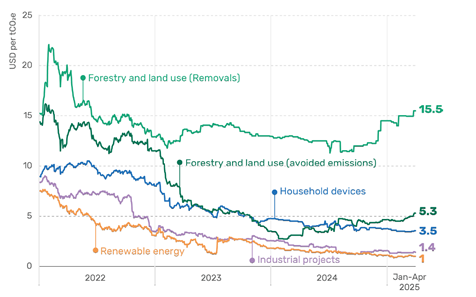
Source: World Bank Group, 2025
Final thoughts
Soil carbon management is one of the most practical ways to improve both farm productivity and environmental sustainability. Healthy soil improves yields, reduces costs, increases resilience, and opens new income opportunities through emerging carbon markets.
References
- World Bank. (2025). State and Trends of Carbon Pricing 2025. World Bank Group, Washington, D.C.
- Regreener. (2025). Voluntary Carbon Market: Latest Prices and Developments. Based on MSCI 2025 data and Ecosystem Marketplace reporting.
- Brady, N. C., & Weil, R. R. (2017). The Nature and Properties of Soils (15th ed.). Pearson.
- IPCC. (2019). Climate Change and Land: An IPCC Special Report.
- Lal, R. (2018). Digging deeper: A holistic perspective of factors affecting soil organic carbon sequestration in agroecosystems. Global Change Biology, 24(8), 3285–3301.
- Minasny, B., Malone, B. P., McBratney, A. B., et al. (2017). Soil carbon 4 per mille. Geoderma, 292, 59–86.
- FAO. (2017). Soil Organic Carbon: The Hidden Potential. FAO, Rome.
- FAO. (2022). Recarbonization of global soils. FAO, Rome.
- European Commission. (2023). Carbon Farming Initiative and Sustainable Carbon Cycles.