


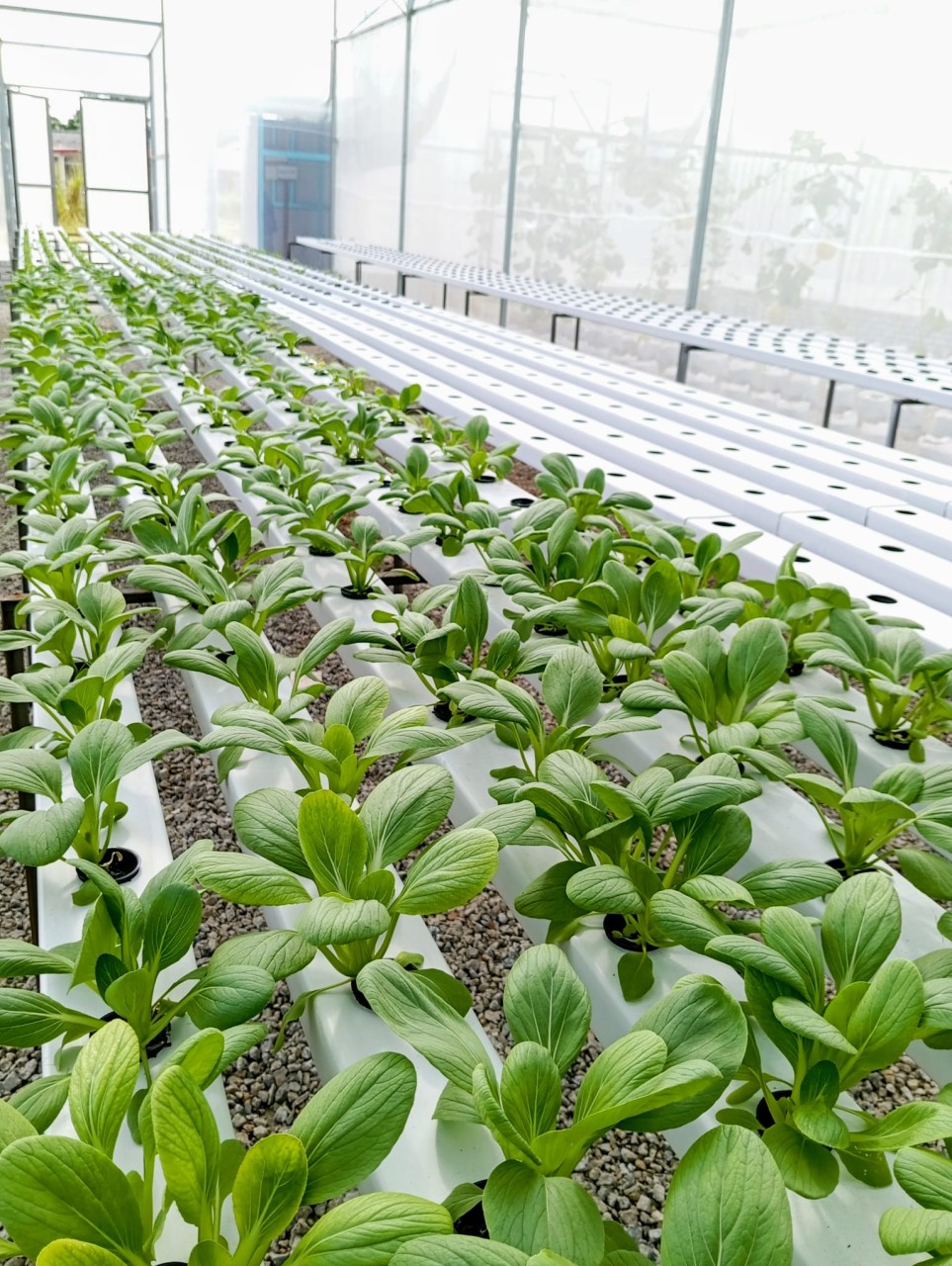
Rethinking what "good yield" really means
Imagine two farmers growing the same volume of spinach. One harvest is attractive, flavourful, and stores well on the shelf. The other looks decent but is less nutrient-dense and fades faster. Are they equally successful?
One farm can produce the same amount as another but with very different quality, nutrition, and resource efficiency behind it. That raises a useful question for soilless growers. Are we maximising the value of our production, or only the volume? The conversation is worth having from a different angle, because the goal is to grow more and better at the same time, in a way that is both profitable and sustainable.
The deeper question is what value we are actually producing. Once a grower starts thinking that way, the focus shifts from quantity alone to a combined view of quantity, quality, and efficiency. For soilless growers, this is not only about yield. It is about how efficiently the system uses nutrients to create nutritionally valuable produce, and about the quality and value of the crop measured in nutrient density, flavour, and uniformity.
Why this matters for leafy vegetables
Leafy greens like spinach, lettuce, and kale are relatively easy to cultivate, and they deliver vitamins, minerals, and antioxidants that are valuable to human health. Modern crop production, especially soilless systems, opens up a real opportunity to lift those nutritional levels further. Researchers have shown that beneficial compound concentrations in leafy vegetables can be increased by adjusting feeding frequency, nutrient solution concentration, and root temperature, while keeping productivity high (Rouphael & Kyriacou, 2018).
Through careful crop management, growers can lift both yield and quality. One thing to keep in mind is that nutrition is not constant. It varies with the composition of the nutrient solution, the intensity and spectrum of the light, the temperature and surrounding environmental conditions, and the timing of harvest in relation to crop maturity.
Even basic factors such as electrical conductivity (EC) and pH matter. When these are managed carefully, plants can absorb nutrients more effectively, grow better, and accumulate higher nutritional content (Fathidarehnijeh et al., 2023; Yang et al., 2025). Lighting (intensity and duration) can also be adjusted, the growing period extended slightly, or the nutrient solution changed at different points during cultivation to enhance final quality.
For example, hydroponically grown spinach and other leafy vegetables, when produced under optimised conditions, can carry significantly higher vitamin C and mineral content than soil-grown vegetables, even when the two look identical on the supermarket shelf (Chatzigianni et al., 2019; Rouphael & Kyriacou, 2018). This is what it means to move from producing crops to producing high-quality food.
How soilless systems open new opportunities
Soilless culture inside Controlled Environment Agriculture (CEA) brings one decisive advantage, which is precision control. Growers no longer rely on the surrounding environment. They can control nutrient supply with accuracy, manage light intensity, duration, and spectrum, and regulate temperature, humidity, and CO₂ levels.
CEA changes what success looks like. Growers can move past yield as the single metric and focus on optimising the conditions for growth and consistency between batches. With light, temperature, and nutrition under direct control, they can support efficient growth and target specific nutritional and physical characteristics. The result is more uniformity, less variability between batches, and higher-quality crops. This is where soilless systems really excel, in productivity and in precision.
Traditional versus smarter soilless farming
The shift in mindset is best captured side by side.
|
Aspect |
Traditional Farming |
Smarter Soilless Farming |
|
Focus |
Yield (kg/m²) |
Nutritional value per input |
|
Goal |
Produce more |
Produce better & efficiently |
|
Measurement |
Quantity only |
Quantity + quality + efficiency |
|
Outcome |
High volume |
High-value crops |
A practical example from a plant factory
In CEA systems, even small adjustments can make a big difference. Nitrogen content can be regulated to influence leaf development and nutrient accumulation. Higher light levels can raise concentrations of certain vitamins, including vitamin C. Slightly longer growing periods may allow nutrient accumulation to deepen.
These adjustments can be made while maintaining a high yield, which lets growers optimise yield and quality together rather than compromise one for the other. Mild salinity and eustress (positive nutritional stress) can be used to trigger specific defence responses that activate the genes regulating the synthesis of secondary metabolites. The result is higher levels of antioxidants and vitamins, achieved without sacrificing yield.
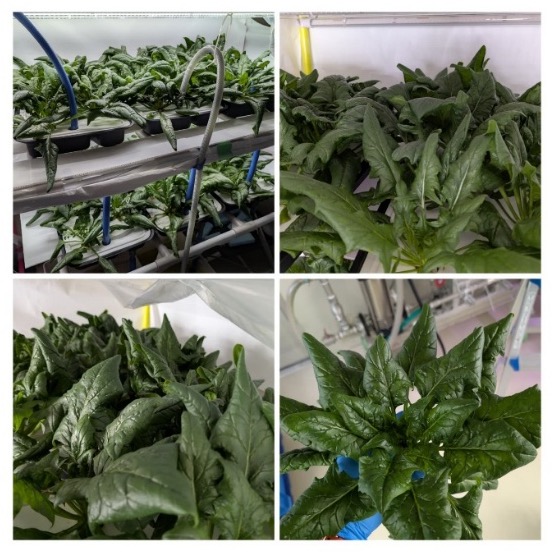
Spinach grown in a fully controlled environment
Practical ways to improve nutritional efficiency
Monitor more than yield
Weight and volume are only part of the picture. Look at the full set of quality signals:
- Taste. Improved flavour is associated with higher sugar content and antioxidants, which also raise nutritional value.
- Leaf colour. Darker green or more vibrant tones reflect higher concentrations of chlorophyll and pigments tied to vitamins and antioxidants.
- Texture. Crispness and firmness usually reflect healthy cell structure and proper moisture content, which mark good plant development.
- Shelf life. Crops that hold up longer in storage typically have better tissue integrity and nutrient balance, which reduces post-harvest waste and adds value for the consumer.
Optimise nutrient solutions
Nutrients should not be applied the same way throughout the crop cycle. A few practices keep the system on track:
- Tailor the solution to the plant's growth stage.
- Provide appropriate levels of nitrogen, potassium, and the relevant micronutrients at each phase.
- Measure EC and pH frequently.
This way the plants get what they need when they need it, and both growth and quality improve.
Use light strategically
Light is more than an energy source for photosynthesis. It is a tool for shaping product quality, because it influences plant structure, colouration, and nutritional content. Subtle changes in light intensity, duration, or spectrum can meaningfully change how the crop turns out.
Balance speed and quality
Rapid growth is not always desirable. In some cases, slower growth produces higher nutrient levels. When plants are allowed a slightly longer growing period, taste and texture often improve, and there is more time for vitamins and minerals to accumulate. Striking the right balance between speed and quality is what delivers crops that are high-yield and high-value at the same time.
Looking ahead, the future of soilless farming
Agriculture, and particularly soilless farming, is entering a new era in which success is being defined in fast-changing ways. The focus is shifting from yield alone toward the ability to balance yield, quality, and resource efficiency. As soilless technologies continue to advance, growers will gain even more control over every aspect of plant production, and that control will let them optimise both output and value at the same time.
More efficient nutrient use, better lighting control, and biological products will drive the next stage of this evolution. The future of agriculture will be less about producing the highest yield and more about producing the best crop. Growers who learn to align yield, efficiency, and quality will lift their production and deliver products of real value to consumers, to the market, and to the environment.
References
- Chatzigianni, M., Ntatsi, G., Theodorou, M. E., Stamatakis, A., Livieratos, I., Rouphael, Y., & Savvas, D. (2019). Functional quality, mineral composition and biomass production in hydroponic spiny chicory (Cichorium spinosum L.) are modulated interactively by ecotype, salinity and nitrogen supply. Frontiers in Plant Science, 10, 1040.
- Fathidarehnijeh, E., Nadeem, M., Cheema, M., Thomas, R., Krishnapillai, M., & Galagedara, L. (2023). Current perspective on nutrient solution management strategies to improve the nutrient and water use efficiency in hydroponic systems. Canadian Journal of Plant Science, 104(2), 88–102.
- Rouphael, Y., & Kyriacou, M. C. (2018). Enhancing quality of fresh vegetables through salinity eustress and biofortification applications facilitated by soilless cultivation. Frontiers in Plant Science, 9, 1254.
- Yang, T., Samarakoon, U. C., & Altland, J. E. (2025). Modified nutrient management protocol for optimum biomass production, nutritional quality, and flavor-related phytochemical properties of hydroponic-grown kale (Brassica oleracea). Frontiers in Plant Science, 16, 1629432.