Agroforestry means more than planting many different crops on the same piece of land. For a smallholder farmer, every planting decision involves land, water, labour, money, time and, eventually, the market.
Working with farmers in Indonesia, I have learned that having many possibilities can make planning harder. A crop can look promising because its price is high or because everyone is talking about it, and still grow poorly on our land. Plants compete for sunlight, water and nutrients, and too many crops make maintenance difficult and cost more time, labour and money than expected. A good agroforestry system has to work for both the land and the farmer.
Start with the land and the farmer
Before deciding what to plant, I try to understand the land. When I first come to a new plot, I start with the soil, looking at its colour and condition and whether it is loose, compact, sandy, clayey, rocky or otherwise difficult for the intended crop.
Water matters just as much. We need to know where it comes from, whether it is available all year, and how well the land drains. When the conditions do not suit a particular crop, changing the crop is often more realistic than trying to force the land to support it.
Then I look at the farmer: the capital, labour, knowledge and ability available to manage the system. No agroforestry design can simply be copied from one farm to another, because each one has to fit both the land and the capacity of the farmer who will run it.
When I am unsure about something, I learn from other farmers and talk with people who have relevant knowledge and experience. Their input widens our understanding, but the final decision still has to rest on the real conditions of the farm.
Decide what the farm is for
Farmers also need to be clear about what they want from their land. Short-term crops can meet immediate household and income needs, while medium- and long-term crops become an investment for the future. These goals do not have to compete. They can be planned together by giving each crop its own place and role, and on larger areas different parts of the land can be given to different crops according to their needs.
Decide what the farm needs to achieve first, and only then decide how the land should be arranged.
Choose crops to suit the land
Once the goals are clear, crop choice should follow the land. Open areas with strong sunlight suit food crops, fruit, horticultural crops and some commodity crops, while other crops belong where there is partial shade or shelter.
The aim is to understand the role and needs of each crop and to place it where it has a good chance to develop, rather than to collect as many species as possible. Intercropping helps make better use of the land, and in our work coffee, pepper, cacao, spices and other crops can be combined when their growth habits and management needs are compatible.
Light changes over time, too. Some crops need full sun, while others tolerate or even benefit from shade. A young tree may leave an area almost completely open, but as its canopy grows it gradually changes the conditions underneath. I often put it simply: everything has its own place and its own proportion.
Design the layout for the mature farm
When I plan the layout, I picture the plants as they will be when mature, as well as at planting. Where taller trees form the structure of the system, I place them first, because their future canopy will decide the light and shade for the crops below.
Spacing matters as well. Plants need room for their roots, stems and canopy, and farmers need room to move, look after the crops and carry the harvest out. A path that looks wide enough when the plants are small can become hard to use once they grow, so access has to be planned before planting rather than added later.
A good layout considers three things together: the future size of the plants, the changing pattern of sun and shade, and the space the farmer needs to work.
Make sure the farmer can manage it
A design that looks good on paper is not enough if the farmer cannot manage it. Every farmer and farm worker has different skills and experience, and the number of people needed depends on the size of the land and how complex the system is.
Where possible, I believe farmers do best working with a small team of people who are competent, committed and willing to cooperate. The work can be planned from the beginning: choosing planting material, raising seedlings, planting, maintenance, fertilisation, irrigation, pruning, weed control and harvesting. Farming involves tasks, authority, responsibility and shared expectations, and cooperation makes the whole process far more manageable.
Know where the harvest will go
Before deciding what to plant, think about the market. Do not plant a crop simply because it is trending, because someone says its price is high, or because everyone around you is planting it. Even when a crop is recommended through a programme or initiative, check whether it fits your land, your resources and your market.
Planting takes money, labour, time and attention, and all the more so on a large area. I see planning, production and marketing as one process, which is why I ask "where will the harvest go?" before "what should I plant?"
Markets change, so nothing is guaranteed forever. Having a clear market direction from the start still helps farmers stay focused and lowers the risk of growing a harvest with nowhere to go.
Start small before going bigger
Before a large project, we need a clear plan and clear goals, and the first step can then be tested as a pilot. A pilot shows whether the plan suits real conditions, what works, what needs to change and what problems appear along the way.
Starting small avoids wasting time, labour, money and energy. It also shows us our real capacity, the difficulties ahead and how to look after the crops until they produce good-quality harvests. Once the basic process is understood and improved, the project can grow step by step. Starting small builds a stronger foundation before the farm grows bigger.
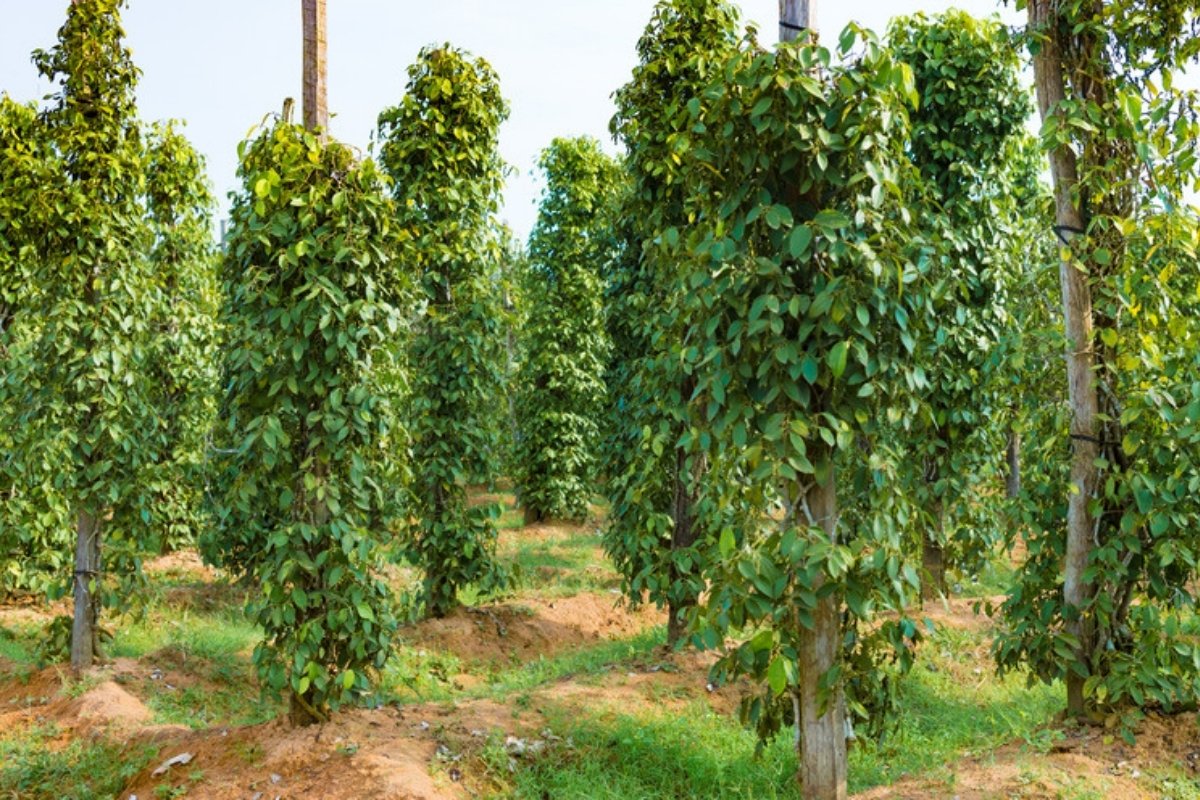
Black pepper is a climbing vine and needs support, so in mixed farms it is often trained up living trees.
What Lampung and Java taught us
Our work in Lampung and Java has shown that the same agroforestry design cannot simply be applied everywhere.
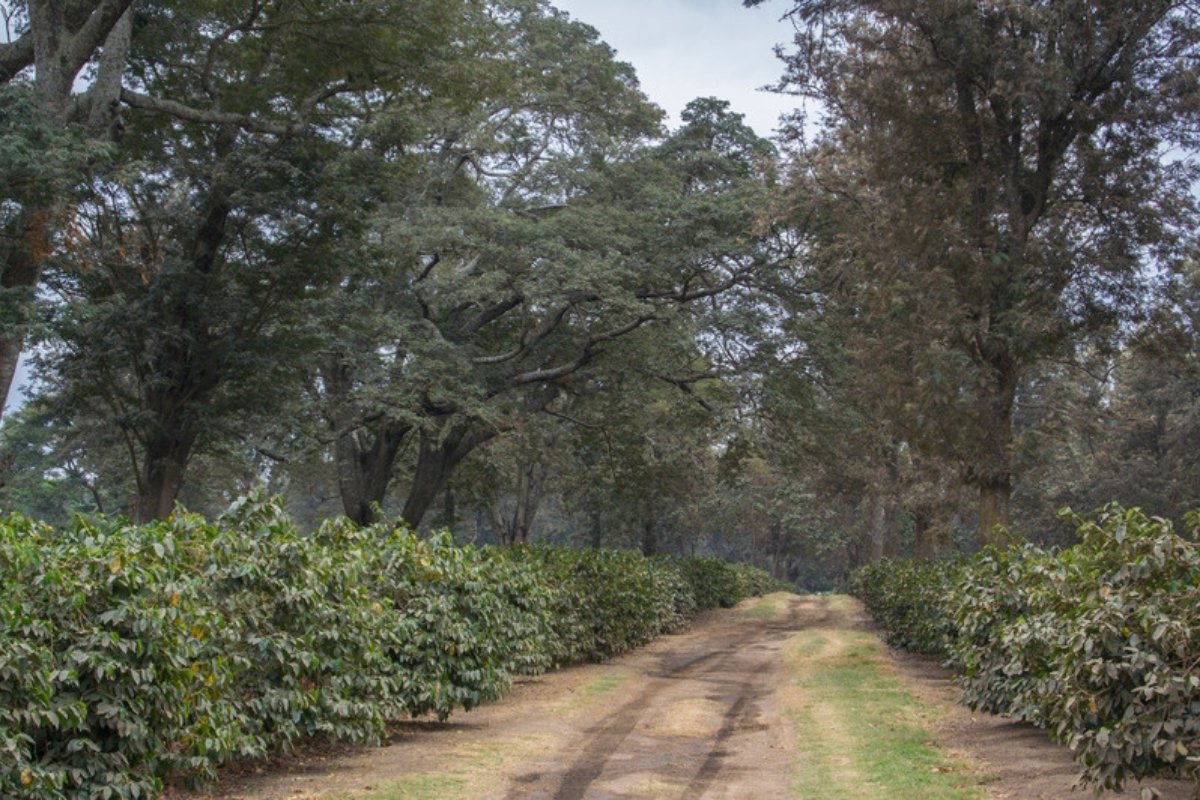
In Lampung we work with larger and more varied areas, which lets us develop a wider range of commodity crops suited to the size and character of the land. In some areas coffee is combined with pepper and other commodities. Pepper is a climber and needs support, and in Lampung it is usually trained up the gliricidia or dadap trees that also shade the coffee, so the coffee system provides its structure. Other spaces can take spices and crops such as beneng taro (Xanthosoma undipes K. Koch), and trees such as clove and cinnamon can also become part of the system, depending on the land. The point is to use the space more effectively while giving each crop a suitable place to grow, rather than simply making the land look full.
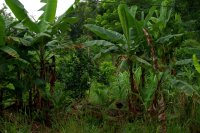
In Java our approach is simpler, because land is more limited and conditions are different. There we grow shorter-cycle crops that are easier to manage, such as turmeric and ginger, together with some beneng taro and fruit trees such as mango, banana and papaya.
The contrast between the two has taught me that agroforestry design must follow the reality of the land, and that a system cannot be copied from one place to another.
What our mistakes taught us
In our early experience with intercropping, we too were tempted to make the most of the land by planting more. Sometimes we followed a trend because we heard a crop was in high demand and fetched a high price, without enough information about the crop, the land, the water, the labour it would need, how it would grow or where it would sell.
We learned that more crops do not automatically mean more profit. Some crops need very intensive care, others compete for nutrients, water or light, and some simply do not develop as expected. The whole system can take far more time, energy and money than planned.
Those experiences taught us to be more selective, to look for reliable information and, above all, to be patient with the process. Plants are living things that need proper care throughout their growth, so farming is also about understanding the process and taking responsibility for what we plant, beyond chasing the biggest possible return.
Start with a careful plan
For farmers anywhere who want to develop agroforestry, I would suggest starting with careful planning. Look for reliable information and learn from people who know the field. Understand your land, your resources and your capacity, work patiently, stay focused, and where possible start with a pilot before expanding.
A good agroforestry system fits the land, can be managed by the people involved, has a clear purpose and can develop over time. Start with the land, understand the farmer, choose the crops carefully, know the market, then start small, learn, improve and grow.