Agriculture today is under pressure from rising input costs, declining soil fertility, water scarcity, and climate uncertainty. Many farmers are producing good yields but struggling to earn stable profits. During my professional work with farmers and agri-projects across Asia, Europe, and Africa, I have observed that farms which follow self-sustainable farming systems are more resilient, profitable, and environmentally balanced.
Self-sustainable farming is not a single technique. It is a complete farm management approach where crops, soil, livestock, water, and energy are connected in a natural cycle. The purpose of this article is to explain self-sustainable farming in a simple, practical, and farmer-friendly way, so that it can be adopted gradually on small, medium, or large farms.
What Is Self-Sustainable Farming?
Self-sustainable farming is a system in which a farm produces most of its essential inputs within the farm itself, reducing dependence on external resources.
A self-sustainable farm focuses on:
- Healthy soil and natural nutrient cycles
- Crop diversity instead of monocropping
- Integration of livestock
- On-farm production of manure and bio-inputs
- Efficient use of water and energy
In such a system, waste from one activity becomes a resource for another, creating a closed-loop farming model. This circular approach not only reduces costs but also builds ecological resilience over time.
Why farmers should shift to self-sustainable farming
Increasing cost of chemical inputs
Chemical fertilizers, pesticides, and animal feed are becoming more expensive every year. This reduces net profit even when production is good. Research demonstrates that farms adopting sustainable practices can reduce input costs by 30-50% while maintaining or increasing yields.
Declining soil fertility
Excessive chemical use and lack of organic matter have reduced soil microbial activity, leading to poor nutrient absorption and unstable yields. Healthy soils should contain 3-5% organic matter, but many agricultural soils have been depleted to 1-2% through intensive farming practices. Soil organic matter serves as the foundation of healthy agricultural systems, providing essential nutrients, improving water retention by up to 20%, and supporting beneficial microbial communities that drive nutrient cycling.
Climate and market risks
Unpredictable rainfall, temperature extremes, and fluctuating market prices demand a farming system that is flexible and risk-resistant. Climate-resilient agriculture focuses on farming systems and practices that adapt to and mitigate the impacts of climate change, including extreme weather events such as droughts, floods, and heat waves. Self-sustainable farming helps farmers face all these challenges together by creating diverse, integrated systems that buffer against individual shocks.
Key principles of self-sustainable farming
1. Soil health: The foundation of sustainable agriculture
Healthy soil is the backbone of sustainable agriculture. Soil should be treated as a living system, not just a medium for crops. Soil biodiversity is a principal driver of the accumulation and stabilization of soil organic matter (SOM), which is crucial for soil health and ecosystem stability. Microorganisms, fungi, and soil fauna drive the decomposition of plant residues into stable organic matter, with a large percentage of stable SOM originating from microbial necromass.
Practical practices include:
Regular application of compost and vermicompost: Compost enhances soil structure, water retention, and nutrient availability. Vermicompost is high in nitrates, a more readily-available form of nitrogen compared to conventional compost. The C/N ratio is lower in vermicompost, making nutrients more available for plants. Vermicompost can be produced in half the time as thermophilic composting and can be used directly after harvest, lasting anywhere from 10 days to a year depending on the system.
At La Junquera farm in Spain, a practical vermicompost system was established using IBC containers with four layers: gravel (10 cm) for filtration and oxygenation, sand (10 cm) for separation, straw (10 cm) as carbon-rich bedding for worms, and composted manure as the nutrient source. The system requires weekly monitoring of temperature (ideally around 20°C) and moisture (60-80%), with short irrigation cycles of 3-6 minutes weekly. Pre-composting materials for approximately 60 days before introducing Eisenia fetida earthworms significantly improves final product quality by eliminating thermophilic processes that could kill worms and by destroying pathogens and weed seeds.
Recycling crop residues: Instead of burning residues, which release carbon and harm soil structure, residues should be left to decompose, returning nutrients to the soil and improving organic matter. Crop residues include stalks, stubble, leaves, and seed pods that can be managed biologically through soil health practices such as no-till, strip-till and cover crops. Healthy soil will break down the residue naturally, and crops can be planted directly through the residue. Farmers in conservation agriculture leave crop residues like wheat straw on the field after harvesting, where these residues act as mulch, preserving soil moisture, reducing erosion, and improving soil fertility over time.
Green manuring and cover crops: Green manure involves growing specific crops that are later incorporated into the soil to improve fertility and organic matter content. Common green manure crops include legumes (clover, alfalfa, vetch) that fix atmospheric nitrogen, enriching the soil, and grasses (rye, barley, oats) that produce extensive root systems and abundant biomass.
Nitrogen-fixing legumes can provide 100-400 kg of nitrogen per hectare for subsequent crops. Carbon-building grasses like cereal rye and annual ryegrass provide excellent erosion control and weed suppression. A typical green manure consists of a 50:50 mixture of cereal and legumes, which produces maximum biomass and fixes more nitrogen than a pure legume stand because the grain absorbs soil nitrogen during growth, forcing the legume to fix more atmospheric nitrogen.
Cover crops also increase soil organic carbon by 41-59% compared to simple rotations. The use of deep-rooted cover crops such as ryegrass increases soil structure, reversing compaction caused by heavy equipment. These crops create macropore space within the soil layer, enabling water droplets to form and supply crops during drought, protecting them from stress and wilting.
Reduced soil disturbance: Minimizing tillage preserves the delicate web of soil life. Conservation tillage protects soil structure and microbial communities, maintains soil moisture, and reduces erosion. Crop residues should not be removed since they boost soil fertility, and tilling should be done one month before seeding or first rainfall, leaving residues in the field. Julius, a young farmer in Africa, reduced tillage on his farm and found that it maintained moisture at good levels, reduced the need for additional irrigation, and allowed beneficial soil organisms to thrive.
Soil rich in organic matter holds more water, improves nutrient availability, and supports beneficial microorganisms that play crucial roles in nutrient cycling, disease suppression, and soil structure development.
2. Crop diversity and mixed cropping systems
Growing only one crop increases economic risk and pest problems. Crop diversity improves stability and resilience. Crop rotation involves growing different crops in one specific field in a particular sequence, which reduces pest and disease problems, improves soil health and fertility, and increases the diversity of habitats for life. Four-year rotations with legumes show superior soil health benefits compared to two-year systems.
Effective rotation design includes:
- Diversity maximization: Include crops from different plant families to break pest cycles and provide varied root structures and organic matter inputs. Alternate heavy feeders (corn, tomatoes) with light feeders (herbs, leafy greens) and nitrogen-fixing legumes to maintain soil fertility without external inputs.
- Root architecture variation: Combine shallow-rooted crops with deep-rooted species to utilize different soil layers and improve overall soil structure. This vertical diversification ensures efficient nutrient extraction from multiple soil horizons.
Examples of successful crop combinations:
- Cereals with pulses: In Rwanda, maize is commonly intercropped with legumes such as common beans or soybeans. In many African countries, maize is intercropped with beans, pigeon peas, cowpeas, groundnuts, and soybeans, which fix nitrogen into the soil and enhance fertility.
- Vegetables between fruit orchards: Planting maize in single rows between vegetables provides shade in regions with intense sunlight, improving vegetable yields.
- Oilseeds with fodder crops: Such combinations ensure continuous income and improve soil fertility naturally.
Intercropping benefits: Intercropping—growing two or more crops in proximity—is a core regenerative practice that boosts soil fertility, suppresses weeds, and reduces pest pressure. In Karnataka, India, farmer Puttappa intercropped cowpea (a nitrogen-fixing legume) with maize, enhancing nutrient availability for the main crop. He also adopted mixed cropping by sowing cluster beans, groundnut, ridge gourd, cucumber, and moth beans along with maize, imitating natural ecosystems where multiple species coexist and support one another. This practice diversifies income sources, reduces total crop failure risk, and improves overall land productivity.
Intercropping maize with watermelon has emerged as a highly productive combination in land-limited areas. Maize is planted first at 75 cm between rows and 25 cm between plants, establishing a structured canopy. Watermelon is planted approximately two weeks later at 2 meters between rows and 1 meter between plants. This timing prevents watermelon vines from overshadowing young maize plants while allowing watermelons to provide soil cover as maize provides shade to the melons.
Natural pest control through diversity: The push-pull system is a well-known intercropping strategy where Desmodium (Desmodium uncinatum) and molasses grass (Melinis minutifolia) are planted between maize rows. These plants emit chemicals that repel stem borer moths, preventing infestations, while Desmodium also suppresses Striga hermonthica, a parasitic weed affecting maize growth. Intercropping naturally reduces pest infestations by 53% on average compared to pure cropping, while promoting biodiversity.
Mixed cropping ensures continuous income, improves soil fertility, and reduces pest pressure naturally.
3. Integration of livestock in farming systems
Livestock plays a vital role in self-sustainable farming. Even a small number of animals can significantly improve farm efficiency. Crop-livestock integration involves integrating crop and livestock production on the same farm, creating a closed-loop system that reduces waste and improves nutrient cycling.
Benefits include:
- Organic fertilizers from cow dung and urine: Proper handling of manure is crucial to reducing greenhouse gas emissions and preventing water pollution. By composting manure and using it as fertilizer, farmers can recycle nutrients and reduce the need for chemical fertilizers. Farmers could apply 2-3 tonnes of manure per hectare (or compost and other organic matter) 5-6 weeks before sowing as an alternative to chemical-synthetic fertilizers.
- Crop residues as fodder: By using crop residues to feed livestock, farmers maximize resource efficiency. In Indonesia, post-harvest residues from crops such as maize, rice, or sugarcane serve as supplementary livestock feed, reducing waste and improving nutrient cycling.
- Additional income streams: Livestock provide income from milk, meat, and manure sales. Diversified income sources enhance farm resilience and economic security.
- Improved soil fertility: Livestock manure is a natural fertilizer that reduces dependence on synthetic inputs and closes nutrient cycles. Integrated livestock grazing can enhance soil fertility, control weeds and pests, and promote nutrient cycling through managed rotational grazing.
4. On-farm production of inputs
One major advantage of self-sustainable farming is producing inputs on the farm itself, which reduces dependency on the market and improves cost control.
Farmers can prepare:
Compost and vermicompost: Composting transforms kitchen scraps, yard waste, and livestock manure into nutrient-rich compost—this “free fertilizer factory” provides readily available nutrients for crops. The composting process involves alternating layers of plant material (approximately 10 cm) with animal manure (10 cm) to create a pile 1.20-1.50 meters high. Initial moisture should be maintained between 55-60%, with temperature monitoring to ensure proper decomposition.
Liquid organic manures (biofertilizers): Biofertilizer is a liquid organic fertilizer that can be produced within any rural property using materials easily found on the farm itself—animal manure and plant remains. Its preparation is very easy and occurs in a relatively short time (approximately 30 days), making it ideal to complement fertilization with compost.
To produce biofertilizer, farmers need a 200L container, 20 liters of fresh manure (preferably bovine/goat/rabbit/horse), clean water, and 40L of chopped plant material. The process involves depositing all fresh manure in the container, adding chopped plant material, filling with clean water, and turning daily with a stick until fermentation is complete (approximately 30 days).
For application, biofertilizers are diluted differently depending on use: for fertigation (soil application), dilute 1 liter in 0.5-10 liters of clean water and apply evenly; for foliar spraying, dilute 1 liter in 10-20 liters of clean water and apply using a backpack sprayer.
Botanical pest control solutions: Natural liquid pesticides can be easily created with very little financial investment and have generally good performance in reducing plant pests. Traditional preparations use ingredients like neem, garlic, ginger, and cow urine, which are soaked, crushed, fermented, and then diluted for application. These botanical solutions should be applied 2-3 times per month, with results visible after 7 days.
Farm-saved seeds: Seeds saved from open-pollinated (OP) varieties and landraces can be replanted year after year, reducing dependence on commercial seed markets and supporting local food security. Landraces are traditional crop varieties that have evolved over generations through natural and farmer-led selection, adapting to specific local conditions. They possess unique traits such as tolerance to local pests, diseases, and climatic stresses, making them invaluable for sustainability and adaptability of farming systems.
Community seed banks are local repositories managed by farmers, for farmers, using a loan-and-return system where farmers borrow seeds at planting and return an agreed amount after harvest. In India, the organization Navdanya has established over 150 community seed banks in 22 states, training 750,000 farmers in seed sovereignty, food sovereignty, and sustainable agriculture over 30 years. Indigenous seeds ensure better crop performance, preserve the ecosystem, and reduce overall production costs by limiting commercial seed dependence.
5. Water conservation and management strategies
Water is becoming a limited resource, making efficient use essential. Climate change causes erratic rainfall patterns that directly impact farming activities and food production, especially in sub-Saharan Africa. Research by FAO suggests that rainwater harvesting can extend planting seasons to at least ten months of the year if done properly.
Recommended water conservation practices include:
Rainwater harvesting: The Food and Agriculture Organization describes rainwater harvesting for agriculture as the direct collection, storage, and utilization of runoff rainwater for use in food production. The practice is a crucial and sustainable water management practice that holds significant potential for addressing water scarcity and promoting drought adaptation.
Types of rainwater harvesting systems include:
- Surface runoff collection: conveying rainwater from rooftops, hard surfaces, or natural areas into storage tanks or water bodies—the most common type for small and mid-sized farms.
- Rooftop rainwater collection: mounting gutters and downpipes to guide rainwater into preinstalled tanks, popular in urban and peri-urban areas.
- Subsurface groundwater capture: allowing rainwater to penetrate the earth's surface, replenishing aquifers and providing a sustainable water source during drought.
- Check dams and contour bunds: structures used to curb and accumulate surface runoff, enabling water to penetrate the soil and recharge underground water tables, especially effective in hilly or inclined terrain.
Farm ponds and recharge structures: The use of keyline design, ponds, and swales can help retain and infiltrate rainwater on farms. These storage facilities range from simple receptacles to elaborate systems, preserving collected water for irrigation or livestock watering.
Drip irrigation systems: Drip irrigation comprises built-in emitters/drippers that pinpoint water application directly around plant roots. The primary advantage is unprecedented water savings of 50-70% over conventional irrigation. Drip-irrigated fields often achieve 30-90% higher yields depending on crop, soil, and climate.
Mulching to reduce evaporation: Mulching uses materials such as leaves, straw, and plastic to cover the soil surface and create favorable conditions for plant growth. Helen, a farmer in Africa, covers her soil with dry grass and crop residues, which reduces evaporation, suppresses weeds, and prevents soil erosion. Her vegetables remain green and healthy even in the driest months, drawing moisture from the protected soil beneath.
6. Renewable energy integration on farms
Energy costs can be reduced through renewable energy adoption, increasing farm independence and reducing operating expenses.
Renewable energy options include:
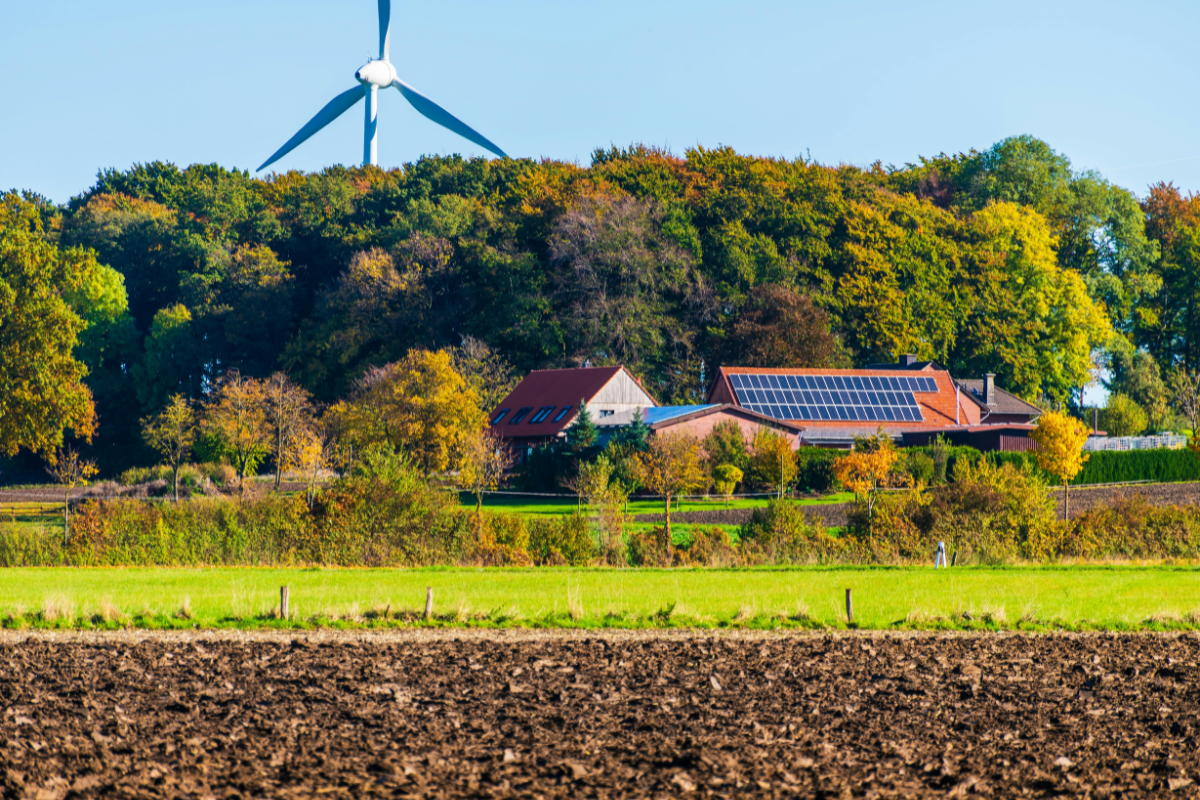
Solar irrigation pumps and solar dryers: The UAE's abundant sunshine makes it an ideal location for solar energy generation. Incorporating solar panels into agricultural operations can power irrigation systems, greenhouses, and other energy-intensive infrastructure, reducing the sector's carbon footprint and operational costs. On a family-owned dairy farm visited by a veterinarian, solar panels powered the milking parlor, reducing reliance on fossil fuels and lowering emissions.
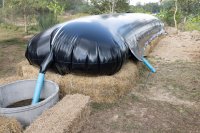
Biogas plants using animal waste: Utilizing agricultural waste and byproducts to generate bioenergy, such as biogas or biofuels, can create a closed-loop system that reduces waste, minimizes environmental impact, and provides an additional source of clean energy for farming operations. The same dairy farm featured a manure-to-biogas system that turned dung into renewable energy, which powered both the farm and nearby homes. This resulted in healthier cows, lower emissions, and a thriving farm business.
Wind turbines in suitable locations: The UAE's coastal regions experience consistent wind patterns, making them well-suited for wind power generation. Strategically placed wind turbines can provide clean energy to support agricultural activities, diversifying the renewable energy mix and enhancing the sector's sustainability.
AI can optimize the use of solar panels, wind turbines, or biogas systems in agricultural settings, calculating the most efficient configurations and usage patterns. This approach not only reduces reliance on fossil fuels but also lowers operational costs and contributes to a circular economy.
Economic benefits of self-sustainable farming
From field experience, self-sustainable farms show clear economic advantages:
30–50% reduction in input costs: By producing compost, vermicompost, botanical pest controls, and farm-saved seeds on-site, farmers dramatically reduce expenditure on external inputs. Bulk input purchasing through Farmer Producer Organizations (FPOs) can further reduce production costs by up to 25%.
Stable yields over time: Diverse systems show greater yield stability during weather extremes compared to simplified monocultures. This resilience provides economic security for farmers facing unpredictable climate conditions. Improved soil health from organic amendments and reduced tillage leads to increased organic matter content, enhanced microbial activity, and improved soil structure for better water infiltration and nutrient availability.
Premium prices for residue-free produce: Consumers increasingly demand organic and residue-free products. Studies show that FPO members can receive 15-20% higher prices than non-members through collective marketing and direct buyer links. When value chains are functioning properly, farmers increase income, decrease harvest losses, and improve crop quality.
Additional income from diversified products: Farmers can generate revenue from multiple sources:
- Compost and vermicompost sales
- Livestock products (milk, meat, manure)
- Processed and packaged agricultural products
- Agri-tourism opportunities
Small-scale farmers can make more money by adding value to their crop products. Processing, packaging, and branding agricultural products enables farmers to get higher prices and extend shelf life. Common examples include wheat grains processed into flour, fruits made into jams, milk processed into cheese, and olives processed into olive oil. Certifying products as organically produced can also lead to higher value.
Farmers move from cost-based farming to value-based farming, with the investment in soil health paying long-term dividends through enhanced productivity, environmental stewardship, and sustainable farming systems that can support future generations.
Role of technology in self-sustainable farming
Self-sustainable farming does not reject modern technology. It adopts appropriate and affordable tools that complement natural processes.
Beneficial technologies include:
Soil testing and nutrient planning: Understanding soil nutrient status through testing enables precise fertilizer application following the “4R” principle: right source of nutrients applied at the right rate, time, and location. This optimization minimizes waste while maximizing plant nutrition.
Weather-based advisories: Access to real-time weather information helps farmers make informed decisions about planting, irrigation, and harvest timing. Climate-smart agriculture promotes yield enhancement by developing technologies that reduce inputs and minimize environmental impact.
Precision irrigation systems: Automated controllers and sensors enable drip irrigation optimization, adjusting volumes and timings in response to soil moisture, plant water status, and weather conditions. Controllers enable scheduled fertigation, instantaneous problem detection via pressure changes, and modular expansion of irrigation zones. Automation unlocks the dual goals of maximizing yields while minimizing water volumes used.
Digital farm record management: Data-driven tools provide farmers with market intelligence, empowering them to make informed decisions about crop selection and production levels. Online platforms and mobile applications facilitate easy access to information and advice, particularly benefiting smallholder farmers who may lack access to traditional extension services.
When science supports natural processes, productivity improves sustainably.
How farmers can start self-sustainable farming
Transition should be gradual and practical. Consistency is more important than speed.
Suggested implementation steps:
- Start composting farm waste: Begin by setting up a simple composting system using available crop residues, kitchen scraps, and animal manure. This provides immediate cost savings on fertilizer purchases and begins the process of soil health improvement.
- Introduce livestock slowly: Start with a small number of indigenous animals suited to local conditions. Even 2-3 cattle, goats, or poultry can provide manure, additional income, and utilize crop residues effectively.
- Reduce chemical inputs in phases: Gradually replace synthetic fertilizers and pesticides with organic alternatives. Begin by reducing application rates by 25%, then 50%, while monitoring soil health and crop performance. This phased approach minimizes risk while building soil biological activity.
- Diversify crops progressively: Start by adding one or two new crops to existing rotations. Test intercropping systems on small plots before expanding. Examples include adding legumes to cereal rotations or planting cover crops during fallow periods.
- Strengthen local or direct markets: Form or join Farmer Producer Organizations (FPOs) to improve bargaining power and access better markets. Explore value-addition opportunities through processing, packaging, and branding. T
- Implement water conservation: Install simple rainwater harvesting systems starting with rooftop collection. Progress to farm ponds and eventually drip irrigation as resources allow. Each step builds resilience to water scarcity.
- Adopt one new practice per season: Avoid overwhelming changes. Implement mulching one season, try intercropping the next, then add a cover crop. This measured approach allows learning and adaptation without risking entire farm operations.
Common challenges and solutions
Challenges
- Lack of awareness: Many farmers are unfamiliar with integrated farming principles and practices. Traditional farming knowledge may not include regenerative techniques.
- Initial learning period: Transitioning to self-sustainable systems requires acquiring new skills in composting, livestock management, pest control, and crop rotation. This learning curve can be intimidating and time-consuming.
- Market access issues: Farmers may face difficulties accessing reliable markets for their products, particularly for organic or specialty crops. Many farming operations remain small-scale with poorly developed value chains and lack of branding, limiting bargaining power.
- Upfront investment: Some practices like drip irrigation, fencing for livestock, or water storage require initial capital that resource-poor farmers may lack.
Solutions
Farmer training and demonstration farms: Establishing demonstration plots where farmers can observe successful self-sustainable systems builds confidence and provides practical learning opportunities. Extension services and agricultural training programs focused on regenerative practices are essential.
Farmer producer organizations (FPOs): FPOs enable collective marketing, establish direct buyer links, and ensure farmers get fair prices—studies show 15-20% higher prices for members than non-members. They also facilitate bulk input purchasing, reducing production costs by up to 25%.
Value addition and direct consumer connections: Processing, packaging, and branding agricultural products enables farmers to capture more value. Direct-to-consumer models allow farmers to sell products without relying entirely on intermediaries. Market information systems supported by NGOs help farmers make better choices about pricing, timing, and quantity, filling knowledge gaps and ensuring fair opportunities.
Conclusion
Self-sustainable farming is not only an agricultural technique but a long-term economic and ecological solution. Farms that follow integrated, nature-based systems consistently perform better in the long run.
Research demonstrates that diversified crop rotations can increase soil organic carbon by 41-59% compared to simple two-crop rotations. Regenerative practices can sequester 0.5-2.0 tons of carbon per hectare annually while improving soil health. Farmers implementing regenerative techniques report improved soil quality, reduced input costs by 30-50%, and greater operational stability within 3-5 years of adoption.
Success requires understanding ecological principles, implementing diverse practices, and maintaining long-term commitment to soil building. With collective effort from governments, donors, researchers, extension agents, and civil society, self-sustainable farming can help secure food systems, protect ecosystems, and build resilient rural livelihoods for the future