


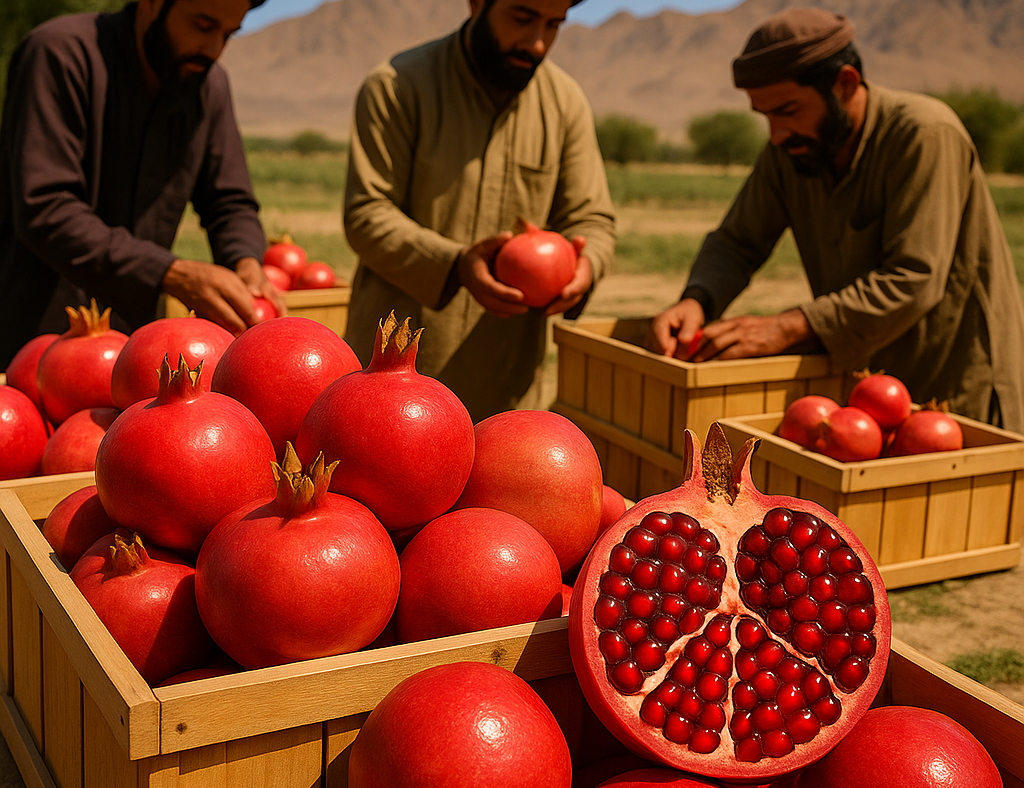
Pomegranate Products in Kandahar, Afghanistan
Kandahar, located in southern Afghanistan, is internationally recognized for producing some of the world’s finest pomegranates. The region’s unique climate and traditional cultivation methods have enabled local farmers to develop a thriving pomegranate sector, with products exported across Asia, the Middle East, and Europe. This article explores the primary pomegranate products from Kandahar, their characteristics, processing methods, and the challenges and opportunities facing the sector.
1. Fresh Pomegranates
Fresh pomegranates are the cornerstone of Kandahar’s agricultural exports, celebrated for their exceptional quality and taste.
- Varieties: The most renowned variety is the Kandahari Anar, with the “Bedana” type especially prized for its soft or nearly seedless arils.
- Harvest Season: Pomegranates are typically harvested from September to November, aligning with the region’s optimal climatic conditions.
- Key Attributes: Kandahar pomegranates are celebrated for their naturally sweet flavor, deep red color, and excellent shelf life, making them highly desirable in both domestic and international markets.
- Export Destinations: Major export markets include India, Pakistan, the United Arab Emirates, and several European countries.
2. Pomegranate Juice
Pomegranate juice is a popular product derived from freshly harvested fruit, offering both nutritional value and refreshing taste.
- Production: Juice is freshly extracted from local pomegranates and processed in regional facilities.
- Packaging: The juice is bottled for both local consumption and export, ensuring freshness and quality preservation.
- Nutritional Value: Pomegranate juice is rich in antioxidants, vitamins (notably vitamin C), and polyphenols, contributing to its popularity as a health beverage.
3. Pomegranate Molasses (Rubb-e-Anar)
Pomegranate molasses is a traditional Afghan specialty, valued for its culinary versatility and health benefits.
- Description: This traditional product is a thick, tangy syrup made by reducing pomegranate juice.
- Uses: Pomegranate molasses is widely used in Afghan and Middle Eastern cuisine for its unique flavor profile. It is also valued in traditional medicine for its potential health benefits.
4. Pomegranate Peel Powder
Pomegranate peel powder is an innovative byproduct, finding uses in both cosmetics and traditional medicine.
- Processing: The peels, a byproduct of juice and molasses production, are dried and ground into a fine powder.
- Applications: Peel powder is utilized in cosmetics and traditional medicine due to its high tannin and antioxidant content.
5. Dried Pomegranate Seeds (Anardana)
Dried pomegranate seeds, known locally as anardana, are a valued spice and herbal ingredient in regional cuisine.
- Preparation: Seeds are separated, dried, and sometimes ground.
- Culinary and Medicinal Uses: Dried seeds are used as a spice (anardana) in regional dishes and as an herbal ingredient in traditional remedies.
6. Value Chain and Sector Challenges
The pomegranate value chain in Kandahar involves multiple steps, each presenting unique opportunities and obstacles for local farmers and exporters.
- Post-Harvest Handling: After collection, pomegranates are sorted, graded, and packed, increasingly utilizing improved cold storage and packaging facilities to maintain quality during transport.
- Infrastructure and Market Access: Despite progress, the sector faces significant challenges, including inadequate infrastructure, limited cold chain logistics, and restricted access to international markets.
- Quality Assurance: Efforts are ongoing to enhance quality control and traceability to meet the standards of high-value export markets.
7. Support and Sector Development
Various organizations and initiatives are working to strengthen Kandahar’s pomegranate sector through training, infrastructure, and export support.
- Capacity Building: International organizations such as the Food and Agriculture Organization (FAO), USAID, and various NGOs have played a pivotal role in supporting Afghan pomegranate farmers. Their initiatives include training in orchard management, post-harvest handling, and export readiness.
- Impact: These interventions have contributed to improved yields, higher product quality, and increased export potential for Kandahar’s pomegranate sector.
Conclusion
Kandahar’s pomegranate industry stands as a testament to Afghanistan’s agricultural potential. With ongoing support and investment in infrastructure, quality assurance, and market development, Kandahar pomegranates and their derivative products are poised to capture an even greater share of the global market. The continued success of this sector not only benefits local farmers but also contributes to rural development and economic resilience in the region.
Ajmal Sohail Stanikzai is an agronomist specializing in fruit crop production and value chain development in Afghanistan.
LinkedIn
YouTube
Further reading
Vulnerability and Risks for Female Producers in Shea Kernel Production
Syntropic Agroforestry Orchard with Red Fruit as a Cash Crop in Mediterranean
Fruit-tree related terminology and categorization - Pomology
Fruit Tree Pruning - Basic Principles
Information, Uses, Health Benefits, and Nutritional Value for Figs
How to Cultivate Figs in Your Backyard: Step-by-Step Guide