



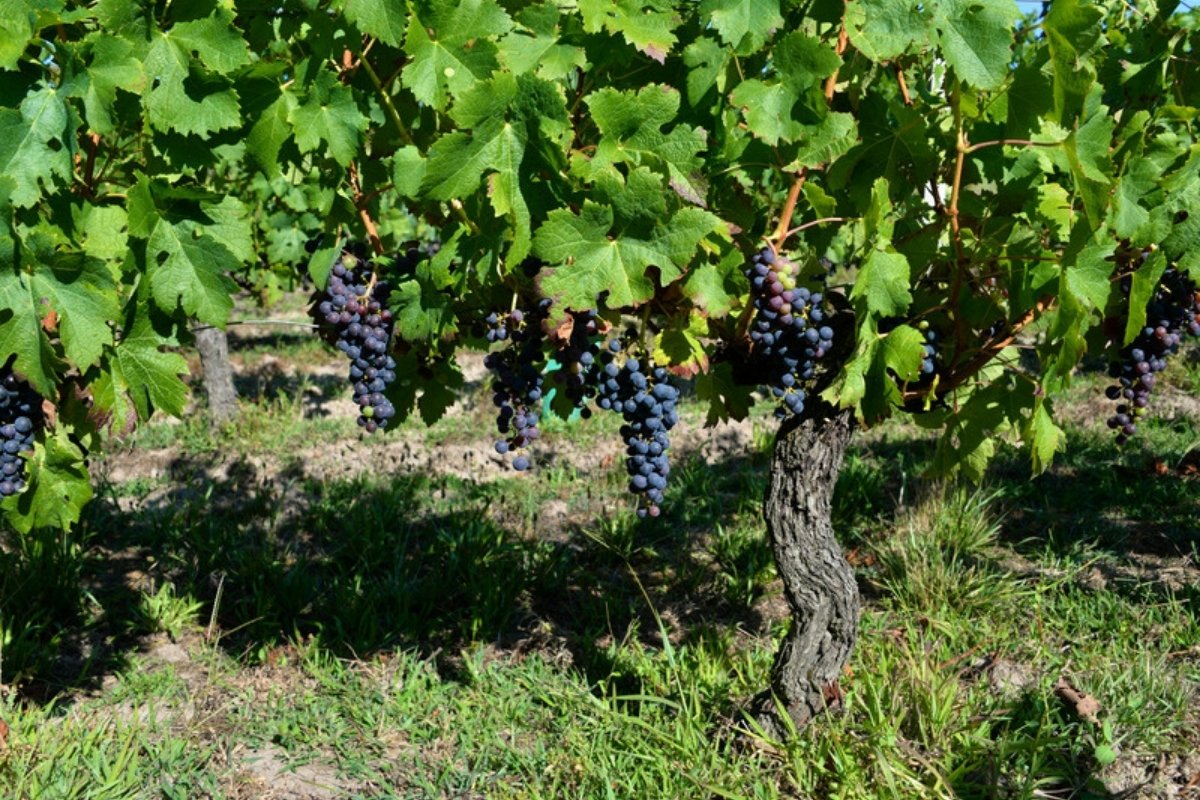
I grow grapes organically on 13 hectares and belong to a wine cooperative in Laudun, in the Gard, on the right bank of the Rhône. I set up in 2012 as a young farmer, and 2014 was my first year of conversion to organic. These are the pitfalls I have learned to avoid, sometimes after falling into them.
Start with an area you can manage
The first pitfall, organic or not, concerns the utilised agricultural area. You need to start with an area that matches both your equipment and your own physical capacity, so that you are not overwhelmed by the spring workload, disbudding and spraying above all. In the middle of the season you have to prioritise, and spraying comes before everything else.
Spraying is what holds most farmers back
Spraying is often what makes farmers hesitate to go organic. Sulphur and copper are contact products, which means heavy rain washes them off.
Never spray wet foliage: the product runs off onto the soil and the treatment does nothing. Before taking the tractor into a block, go by car or on foot to check how wet the leaves are. I was caught out once. The foliage was soaked, and since I could not leave the mixture standing in the tank with the tractor stopped, because it risks clogging, I drove through the block with the nozzles closed and the fan running to dry the leaves.
Watch sulphur in hot weather: above certain temperatures sulphur becomes harsh on the vine, what I call the hairdryer effect. I do not apply sulphur above 25°C in the morning, and I stop using it altogether once the day's maximum reaches 35°C. In the Gard climate, I start spraying early in the season so that I can finish early.
Adjust the sulphur rate: I use 4 to 6 kg/ha of wettable sulphur, with extra vigilance on my Carignan, a variety prone to powdery mildew. Once the daily maximum goes above 30°C, I drop to 4 kg/ha at most, in 100 litres of spray per hectare.
Cover flowering carefully: from flowering to bunch closure the vine is highly susceptible to disease, and this is the period to protect most closely.
Match copper to disease pressure: I use Bordeaux mixture at 300 to 600 g of metallic copper per hectare, depending on downy mildew pressure and how far the canopy has developed. For reference, EU rules limit copper to 28 kg per hectare over seven years, an average of 4 kg/ha a year, and some product authorisations set a strict annual ceiling of 4 kg.
In the Gard I apply between 5 and 9 treatments a season depending on the weather, and I have only ever used sulphur and copper. In years of heavy downy mildew pressure, I have seen organic growers come through very well.
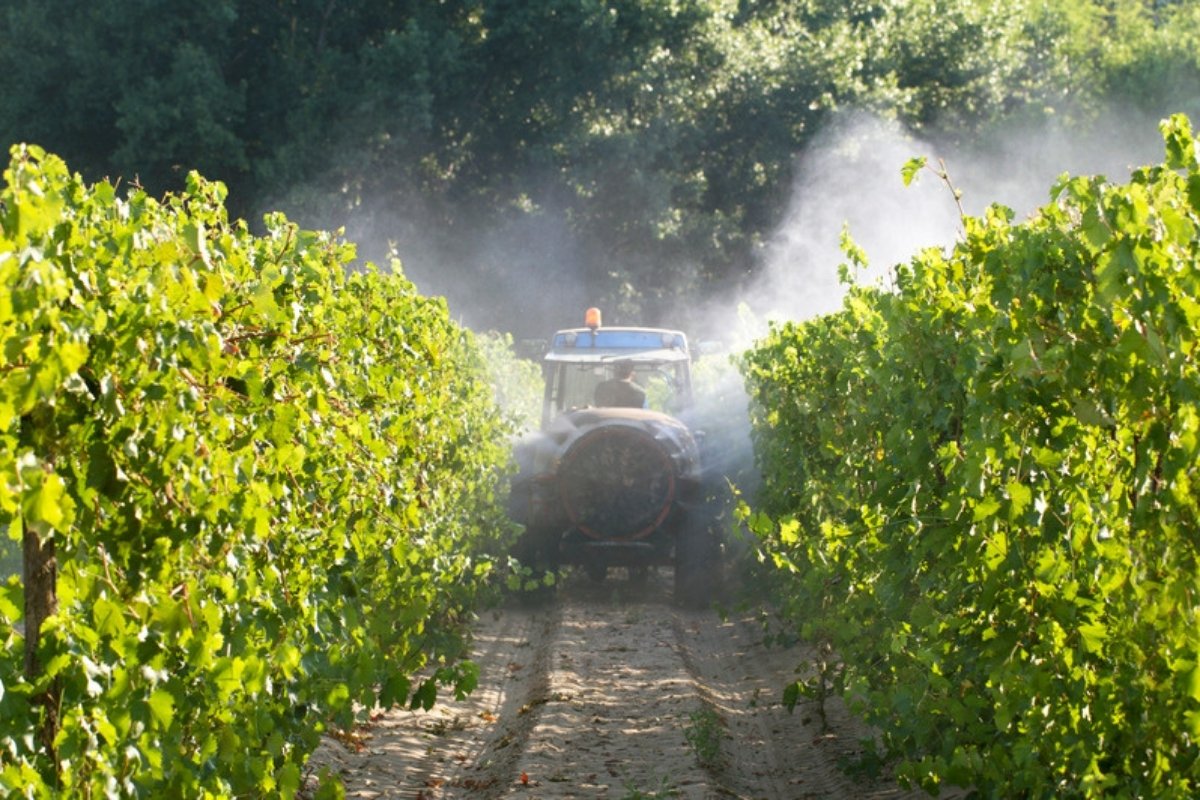
Sulphur and copper are contact products, so wet foliage is never sprayed.
Grassed rows rather than cultivated soil
It is essential to leave at least one row in three under grass, so that you can spray without getting bogged down. From my own experience, a vineyard that is not cultivated also seems to cope better with disease pressure and heavy rain, with less leaching of trace elements from grassed soil.
I mow only once a year, before disbudding, and make a single pass with under-vine hoes. That is as much about budget as about biodiversity.
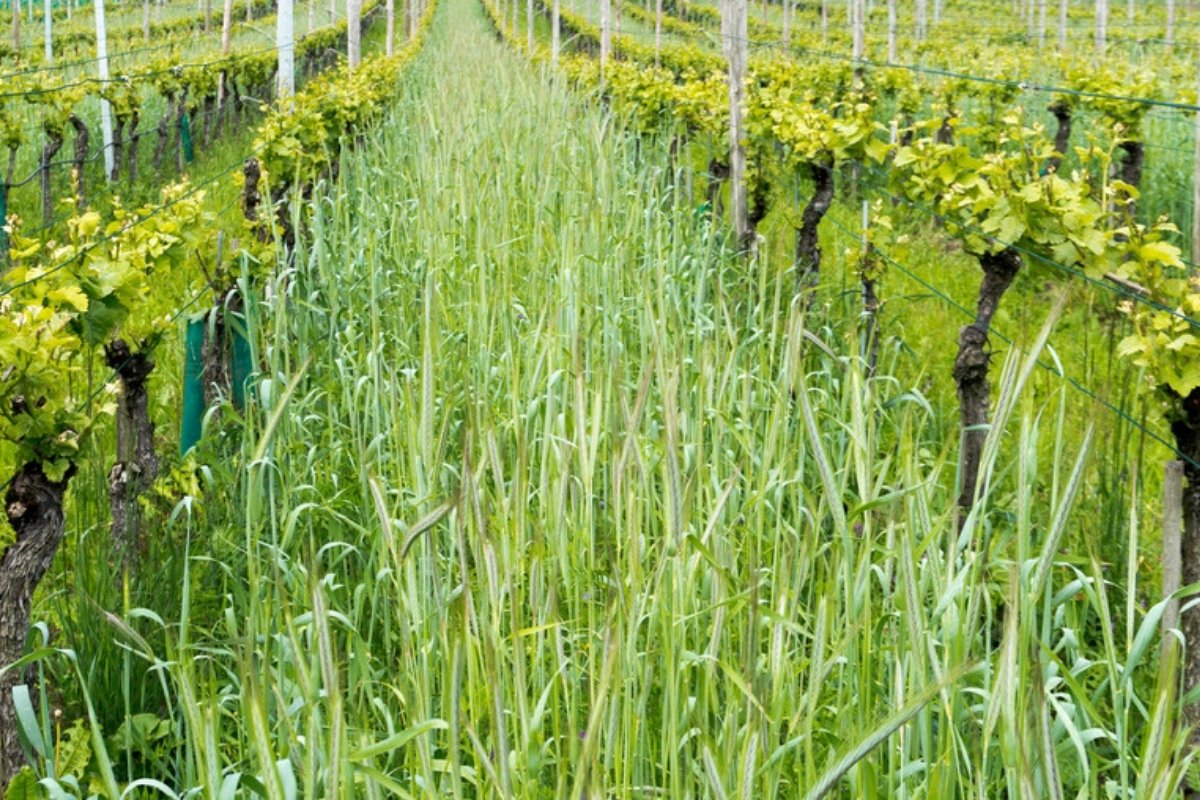
Leaving at least one row in three under grass lets the tractor pass without getting bogged down.
Keeping costs down
Wine is selling less well and costs are rising. In concrete terms, a hectare of vines costs me less than 2,300 euros a year, taking total operating costs divided by the total area farmed. My vineyard tractor, bought second hand, is 30 years old, and my equipment is finally paid off this year. For the past two years maintenance costs have been low, and I have used no fertiliser since the 2020 crisis.
I employ no labour. I prune and disbud on my own. I am also learning cleft grafting so that I do not have to buy new plants. It is a very useful alternative, because when the graft takes, the vine comes into production the following year, sometimes even the year of grafting, and it does not need watering.
The trap of never looking up
Given how hard this work is, and the uncertainties of climate and geopolitics, I want to stress how much mental health matters.
I have been trained by my regional health agency as a sentinel for suicide prevention, in farming and beyond, and I believe it is important in this job to have interests outside the vineyard that take your mind off it. I often hear colleagues say "I don't have time". That is a mistake that can cost dearly in the end, through an accident at work or burnout.
Keeping your head permanently down, what we call in French having your head on the handlebars, is risky. For a long time I thought that way myself and gave all my time to the work. It is a trap.
For the past three years I have exercised regularly, Pilates first, then strength training, and now endurance cardio. It began out of necessity, to strengthen my back after problems during pruning. Today I see every benefit of it, because exercising every day improves both the quality and the pace of my work.
In the end, the farmer adapts and does the best they can.
If you are going through a hard time, or are worried about someone close to you, farm support lines exist in many countries and are worth finding before you need them. In France, the MSA's Agri'écoute service answers around the clock on 09 69 39 29 19, and the national suicide prevention line is 3114. In an emergency, call your local emergency number.