

By Alma Balestrazzi, University of Pavia
Mediterranean agroforestry systems are under real pressure. Olive, oak, chestnut, carob, apple, almond, and date are the characteristic trees across the countries around the Mediterranean Basin, and EUFORGEN, GBIF, and FAO map their distribution. This varied, often mixed-farming landscape is being damaged by climate change, as detailed in the Mediterranean Forest Research Agenda 2030.
Moving these systems towards something more climate-resilient depends on plant material that can cope. That means selecting and adopting germplasm, meaning the seed and genetic material a farmer plants, chosen for resilience traits and suited to reducing a farmer's exposure to risk. In mixed, multifunctional Mediterranean systems, one group of crops looks particularly promising, and it is a group that has been largely overlooked.
What orphan legumes are, and why they matter
Orphan legumes, also called neglected or underutilised legumes, are species that local communities have long grown but that formal breeding and seed markets have mostly ignored. Grass pea, fenugreek, and local landraces of bean and chickpea are examples. They represent a biodiversity niche adapted to extreme soil and climate conditions, and that adaptation is exactly what makes them interesting now.
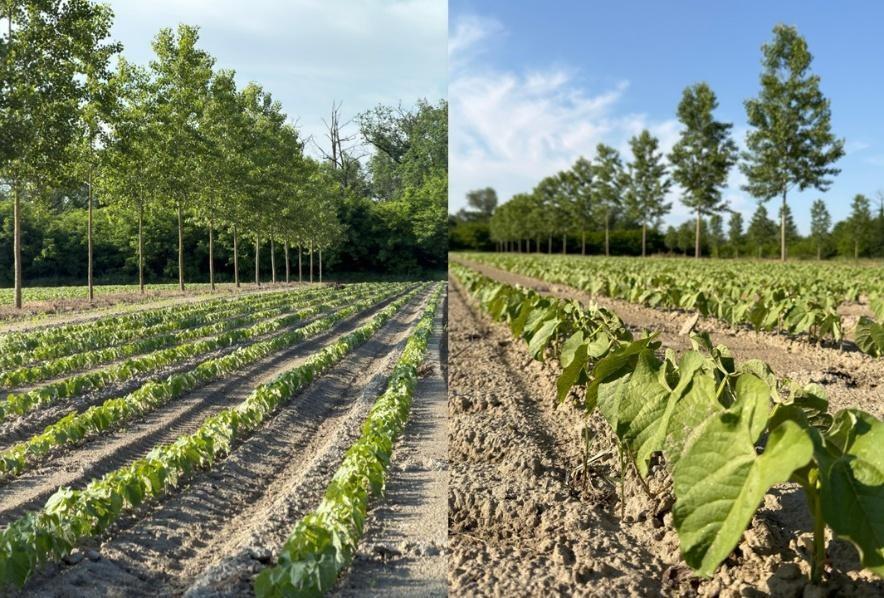
Poplars and orphan legumes (beans, chickpeas) (credit Pier Mario
Chiarabaglio, CREA-FW, Casale Monferrato, Alessandria, Italy.
For a farmer, their value is practical. They provide balanced nutrition and add value in rotations and intercropping. Grown in association with trees, legumes improve soil fertility by fixing atmospheric nitrogen, raise soil organic matter, and improve water infiltration, which in turn reduces soil erosion. They serve as fodder and forage in both natural and cultivated pasture. And rotations that include legumes cut the need for chemical fertiliser while reducing the incidence of pests and diseases.
Why trees and legumes work well together
The combination is the point. In a silvopastoral system, where trees, forage, and grazing animals share the same ground, the legume works below and between the trees, feeding the soil that the trees depend on. The practical constraint is light. A legume grown under a tree canopy has to tolerate shade, the same limitation that shapes other tree-and-crop combinations in agroforestry systems. Selecting and managing locally adapted, shade-tolerant legumes is therefore central to making these systems work, and it is one of the specific problems the FORECAST project is addressing.
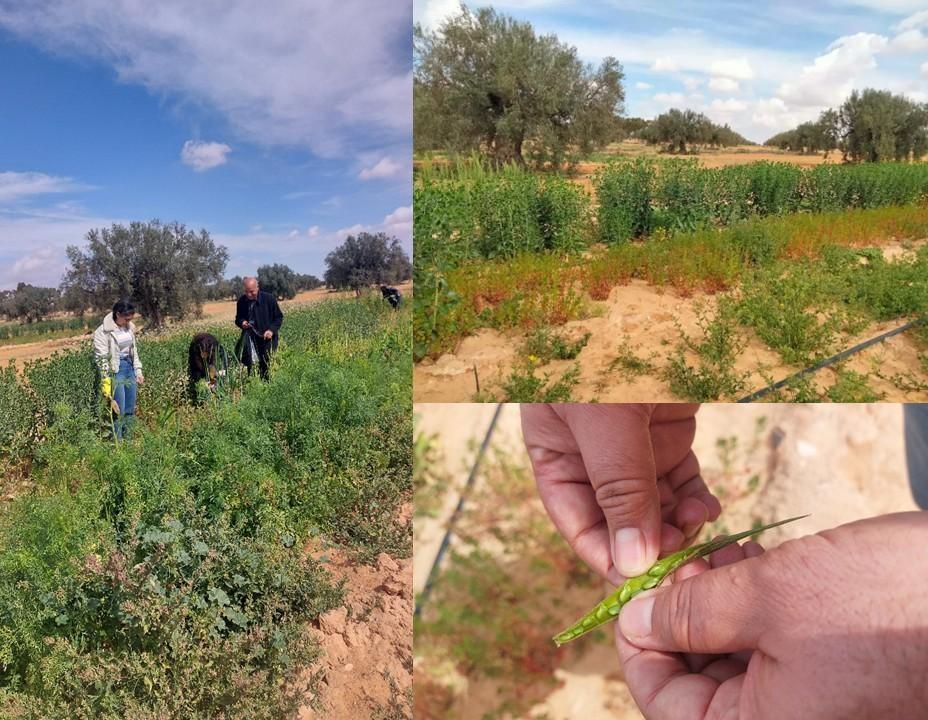
Olive trees and fenugreek (credit Hanen El Abed, University of
Sfax, Tunisia)
The tree side, and why seed quality matters
The trees need attention, too. Work on target tree germplasm, such as poplar, focuses on seed physiological quality and metabolic composition, and on preserving distinctive gene pools that carry resilience traits. Pre-germination treatments for tree seed are being updated in line with recent advances in seed technology, which gives growers better tools for establishing climate-ready planting material.
What the FORECAST project is doing
FORECAST is developing sustainable solutions to revitalise agroforestry systems across the Mediterranean. The approach brings highly resilient, locally adapted orphan legumes, along with dedicated seed technology, into existing agroforestry systems across a range of socioeconomic and pedoclimatic conditions, encompassing the region's varied soil and climate settings. Part of the work is producing evidence and guidelines on how to combine precision farming techniques with traditional practice rather than replacing one with the other.
The project runs for 36 months, from 1 July 2025 to 30 June 2028. The consortium gathers partners from Italy (University of Pavia, CREA-FW, CNR), France (INRAE, AgroParisTech), Portugal (MORE-CoLAB, DEIFIL), Tunisia (University of Sfax), and Algeria (University Constantine 1), covering forest science, precision agriculture, seed technology, plant biomolecular science, physical chemistry, and socioeconomics.
Working with farmers through Living Labs
Knowledge travels only if the people who will use it are involved in creating it, which is why the project uses a multi-actor approach. Living Labs, described as open innovation ecosystems where research occurs in real-world environments rather than in isolated laboratories, have been established in Italy, France, Portugal, Tunisia, and Algeria.
Each brings together farmers and farmers' associations, agrifood companies, municipalities and regional institutions, and academic partners. The work focuses on the agroforestry problems specific to each locality and on how well orphan legumes are currently known and used there, through meetings and workshops in which the solutions proposed by researchers are discussed and tested against local judgment. The Living Labs also run demonstration activities with local farmers, with scientific support on hand.
Women in agroforestry
The project addresses gender inclusivity in a sector where it remains a live issue, ensuring women are represented across all dissemination and engagement work. Training in the management and entrepreneurship of agroforestry systems and orphan legumes is being offered to PhD and Master's students, researchers, and non-profit organisations, to support local spin-offs and build an environment in which female entrepreneurs and researchers can work.
What this should mean for farmers
The intended result is wider adoption of agroforestry practices centred on orphan legumes, and improved efficiency, productivity, and sustainability as a consequence. The knowledge and technologies are being co-created with the stakeholders who will use them, and the outputs are being assembled into a toolkit of genetic resources, farming practices, and decision-support tools aimed at the specific regions where the partners work.
Whether that improves farmers' livelihoods depends on the value chains. Existing chains from producer to consumer are being reinforced, and market access for the resulting products has to be developed for these systems to be economically viable rather than merely agronomically sound. The participatory approach is also intended to build broader awareness of what these practices offer in environmental terms, which ultimately shapes the institutional and policy frameworks that determine whether good practice spreads.
Sources
FORECAST project. Fostering Resilient Agroforestry Systems with Climate-Ready Tree and Herbaceous Germplasm.
Mediterranean Forest Research Agenda 2030.
EUFORGEN, the European Forest Genetic Resources Programme.
PRIMA, Partnership for Research and Innovation in the Mediterranean Area. European Commission.
European Network of Living Labs.
Funding
The FORECAST project is funded by the PRIMA Programme, the Partnership for Research and Innovation in the Mediterranean Area, supported by the European Union's Horizon research and innovation programmes.