
The first great agricultural transformation began in the Neolithic period, when humans had abundant resources and were starting to settle in permanent locations. That shift brought people together in one place, specialised their tools, and led to more intensive use of the land. Farming in the desert, enabled by the hydraulic systems of the Nile Valley, is a good example. This period can be considered the First Agricultural Revolution.
From British mechanisation to the Green Revolution
Population growth made it necessary to produce more from less land. The British led this stage across the eighteenth and nineteenth centuries, introducing higher-yielding crops, new rotations, and improved farm machinery. Farmers stopped ploughing by hand behind mules, horses, or donkeys and began using tractors with harrows.
The Third Agricultural Revolution, known as the Green Revolution, began in Mexico between 1950 and the late 1960s, driven by the search for food self-sufficiency for a growing and urbanising population. Conventional plant breeding produced high-yielding, short-strawed varieties that were less susceptible to disease, above all in wheat and rice. It is worth noting that these varieties arose from crossing and selection rather than genetic modification, which only entered commercial production in the 1990s. Innovations in irrigation, pesticides, and synthetic fertilisers also marked the period.
The Green Revolution decisively expanded the world food supply, and it carried costs. Synthetic products began working into the soil, depleting nutrients and contaminating freshwater sources. Many of the introduced crops required large volumes of water, increasing pressure on that resource.
We are now in the Fourth Revolution, characterised by autonomous machinery, artificial intelligence, and the gradual replacement of human labour at several stages of production. So what does any of this have to do with regenerative agriculture?
What did intensification do to the soil
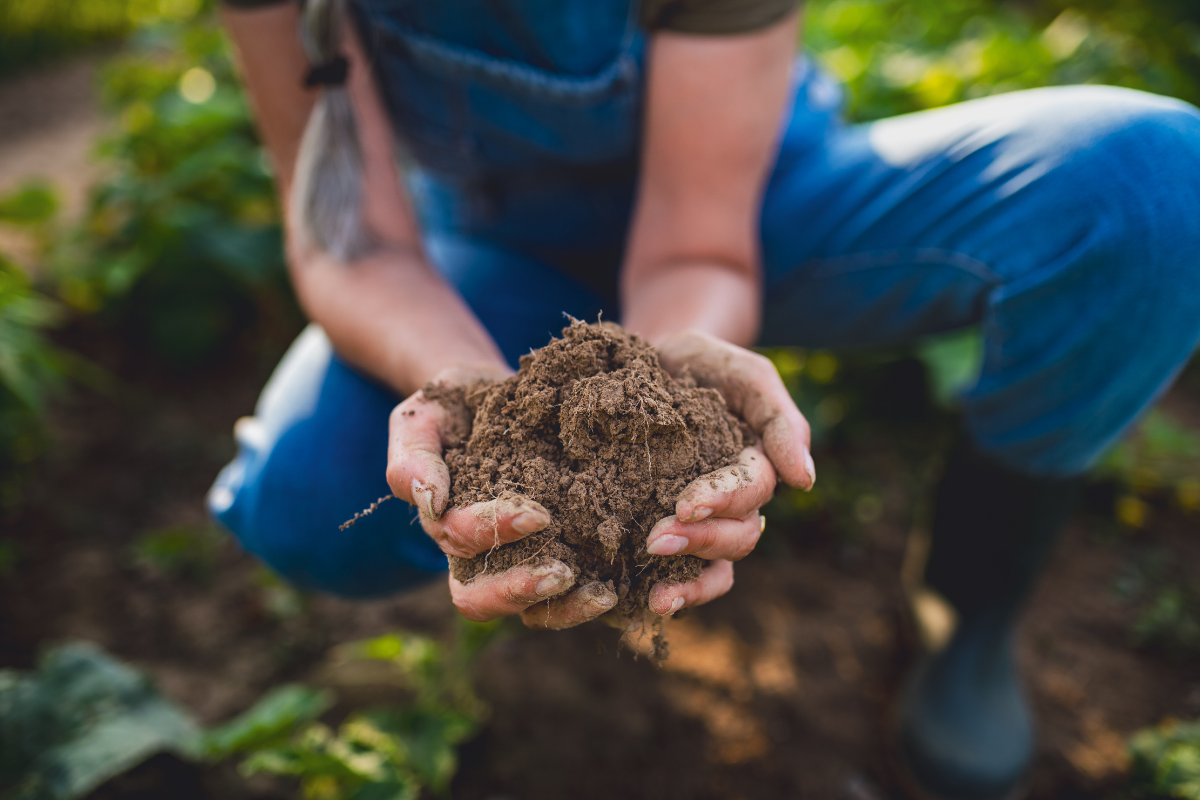
Heavy machinery brought soil compaction, which restricts root development, reduces organic matter in the upper layers, lowers biodiversity and microbial activity, and contributes to rising acidity.
The unrestrained use of synthetic inputs began killing natural pollinators, and over time, pests developed resistance, which called for new formulations. Many synthetic fertilisers, particularly nitrogen products, have been identified as significant sources of greenhouse gas emissions. Farmers began struggling to manage a range of crops as soils were depleted, while erosion accelerated markedly.
Against that background, it became urgent to build more balanced farming models. Such models aim not only to conserve but to regenerate productive ecosystems, combining science, respect for nature, and the value of traditional knowledge. Practices such as no-till, cover cropping, crop rotation, composting, and biological inputs are aimed at restoring soil health while keeping production impacts as low as possible.
What is agriculture worth to Brazil
Agriculture matters a great deal to the Brazilian economy. In 2025, the primary agricultural sector accounted for 7.1% of national GDP, up from 6.7% in 2024. Counting the industries that depend on the sector or work alongside it, agribusiness accounted for more than 24% of GDP in the same year.
A point that is rarely raised is Brazil's dependence on imported inputs, which runs above 85% of the total. That became clear during the war between Russia and Ukraine, both major suppliers of agricultural inputs to Brazil, which drove production costs sharply higher and hurt the sector. In economic terms, reducing fertiliser imports would reduce a farmer's exposure to currency movements, benefiting the country.
That raises further questions. Is regenerative agriculture better suited to small or large producers? Is it more efficient and more economical than conventional practice? And what are the long-term benefits?
What the data says about cost and productivity
Lima (2023) examined this in depth in a master's dissertation comparing costs between regenerative and conventional management in the Cerrado. The growing use of biological inputs, the author argues, redefines the farmer as a resource manager. It remains necessary to determine whether a given product meets the physiological needs of the crop, since these products are based on living organisms that may respond differently to climate and environmental conditions.
The financial question returns as a central one. Cost analysis is fundamental to any business, and the initial outlay on biological inputs can discourage smaller producers despite the long-term benefits, because the system demands precision, discipline at every stage, and more technical support than conventional practice.
The author notes that one year of study was not enough to reach a firm conclusion about which system is better for soybeans and maize, financially or agronomically, and that a proper assessment would require more time. Even so, in the one-year pilot, the regenerative system performed better financially, despite requiring more applications. Agronomically, soybeans yielded better under conventional management, while maize did better under regenerative management. The conclusion was that a well-designed planting plan that follows regenerative principles and is maintained throughout the production cycle delivers long-term benefits.
The market and corporate programmes
The present moment matters too. Many consumers are willing to pay more for higher-quality food, and demand in organic and regenerative markets continues to rise. Multinational companies have begun publicising their support for and investment in regenerative practice, and two Brazilian examples are the programmes run by Bayer and by Bunge in partnership with Orígeo.
Bayer's programme focuses on measuring greenhouse gas emissions, offering crop-level carbon footprint calculations, estimates of soil carbon sequestration, traceability of adopted practices, and access to specific credit lines. The Bunge programme with Orígeo, a joint venture between Bunge and UPL, sets out to support farmers through the transition to low-carbon agriculture with technical support and services aimed at reducing emissions, and includes a web series encouraging crops such as castor and canola within large production systems, with an eye to biofuels and soil health.
It is worth noting that these are commercial initiatives run by the companies themselves, and their results have yet to be independently assessed. They appear here as evidence that the subject has entered the sector's agenda, not as a recommendation.
Soil needs time
Sustainable practice continues to gain ground, whether through consumers seeking healthier food, pressure from governments and companies, or the simple need to restore soil health. But even when regenerative agriculture proves more financially efficient than conventional systems, it requires management and time to produce results. Nothing happens immediately.
Soil works rather like the body. Someone dependent on alcohol or cigarettes suffers in the first months after stopping and needs time to recover. Poor, exhausted soil needs careful management to rebuild its microbial life and return to expressing its productive potential.
References
Bayer Crop Science. Pro Carbono.
Bunge. Agricultura Regenerativa.
CropLife Brasil (2024). Agricultura regenerativa.
Lima, J. S. (2023). Avaliação econômica das práticas agrícolas: um estudo comparativo de custos na agricultura regenerativa e tradicional no Cerrado. Master's dissertation, Instituto Federal Goiano, Rio Verde, 99 p.
Mazoyer, M., and Roudart, L. (2010). História das agriculturas no mundo: do neolítico à crise contemporânea. São Paulo: Editora UNESP.
Orígeo. Rota Regenerativa.
Park, I. A timeline of the three major agricultural revolutions in history. Population Education.
Saraiva, A. Perfil do PIB brasileiro muda e agro ganha relevância. Valor Econômico.