A practical guide from substrate to market
Mushroom farming has emerged as one of the most accessible and profitable ventures in modern agriculture, particularly in countries like India, where rising input costs, limited landholdings, and water scarcity are pushing farmers toward diversified income sources. Unlike most crops, mushrooms don't require arable land, large water supplies, or even sunlight. They can be grown year-round in controlled indoor environments using agricultural waste as their primary growing medium, making them an ideal enterprise for smallholders, landless farmers, and young entrepreneurs entering agriculture.
India has become one of the world's fastest-growing producers of mushrooms, with states like Uttar Pradesh, Bihar, Uttarakhand, and Himachal Pradesh leading commercial cultivation. Global demand for mushrooms is also rising, driven by growing health awareness and the search for high-quality plant-based protein. Mushrooms are rich in protein, B vitamins, minerals like selenium and potassium, and bioactive compounds with antioxidant and immune-supporting properties. For growers, this translates into a crop that commands strong market prices, produces harvestable yields within 20 to 40 days, and can generate multiple production cycles each year.
This guide covers the major edible varieties, the environmental conditions each one needs, how to set up a production unit, and how to bring your mushrooms to market.
Why mushroom farming is gaining ground worldwide
Several factors are making mushroom cultivation increasingly attractive to farmers across different regions and climates.
First, the startup costs are low compared to most agricultural enterprises. Production can begin in a spare room, shed, or simple polytunnel structure. The primary substrate, straw, sawdust, or other crop residues, is often freely available as agricultural waste, which also addresses the environmental problem of crop residue disposal and stubble burning.
Second, mushrooms fit neatly alongside existing farming operations. In India, where the average landholding is just over one hectare, this is especially significant. Growers who already practice crop rotation can use their off-season labor and space for mushroom production, creating a complementary income stream without competing for land or water resources.
Third, mushroom farming is genuinely inclusive. It requires no heavy physical labor, can be managed indoors, and scales easily from household-level production to commercial operations. In India, women's Self-Help Groups (SHGs) have been particularly successful in adopting mushroom cultivation, and the model has spread across South and Southeast Asia as a proven pathway to economic independence.
Finally, the environmental credentials are strong. Mushroom production converts low-value agricultural waste into high-value food with minimal water use and a small carbon footprint, aligning well with organic farming practices and circular economy principles.
Major edible mushroom varieties
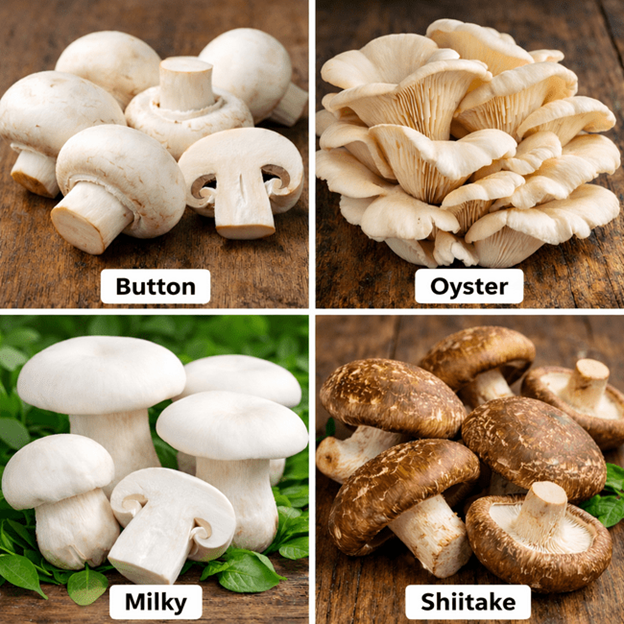
The four most widely cultivated edible mushroom species each have distinct growing requirements and market characteristics. Choosing the right variety depends on your local climate, available infrastructure, and target market.
Button mushrooms (Agaricus bisporus)
Button mushrooms are the most widely consumed mushroom globally, accounting for roughly 40% of world production. They are sold fresh at the white button stage, as cremini (brown) mushrooms, or as mature portobello mushrooms, all the same species harvested at different growth stages.
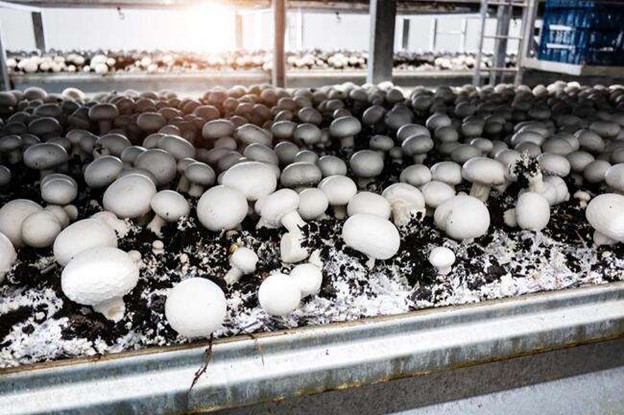
Button mushrooms require a specially prepared compost substrate and a two-phase growing environment: a warm spawn run phase at 22–25°C followed by a cooler fruiting phase at 14–18°C. Humidity must remain between 80% and 90% throughout. This temperature drop is essential for triggering fruit body formation, which means button mushroom production typically requires climate-controlled facilities or is limited to regions with naturally cool seasons.
The investment in composting infrastructure and temperature control is higher than for other varieties, but button mushrooms command premium retail prices and have the broadest consumer recognition.
Oyster mushrooms (Pleurotus spp.)
Oyster mushrooms are widely considered the best variety for beginners. They are forgiving growers that tolerate a broad temperature range (20–30°C), require only moderate humidity (70–85%), and fruit readily on simple substrates like pasteurized straw or sawdust packed into polyethylene bags.
The production cycle is fast, typically 20 to 30 days from spawning to first harvest, and each bag can produce multiple flushes over several weeks. Oyster mushrooms also come in visually appealing varieties (pink, golden, blue) that can command niche market premiums.
Their main limitation is a short shelf life. Oyster mushrooms are delicate and should ideally reach the consumer within 24 to 48 hours of harvest, making local or direct sales channels essential.
Milky mushrooms (Calocybe indica)
Milky mushrooms are an excellent choice for tropical and subtropical climates where temperatures routinely exceed 25°C. They thrive at 25–35°C with 80–90% humidity, making them particularly well suited to much of India, where button mushroom production would require expensive cooling infrastructure during the warmer months.
Originally domesticated in India by researchers at the Tamil Nadu Agricultural University, milky mushrooms are gaining popularity across warm-climate regions of South Asia and Sub-Saharan Africa. They have a firm, meaty texture with good shelf life compared to oyster mushrooms, and their ability to produce successfully even during hot Indian summers fills a seasonal gap in mushroom supply that other varieties cannot.
Good ventilation is particularly important for milky mushrooms, as stagnant air encourages contamination and reduces yields.
Shiitake mushrooms (Lentinula edodes)
Shiitake mushrooms are prized both as a culinary ingredient and for their well-documented medicinal properties, including immune-modulating compounds like lentinan. They are the second most cultivated mushroom worldwide after button mushrooms and carry significant export potential, particularly to East Asian markets.
Shiitake cultivation requires hardwood-based substrates (traditionally oak logs, now commonly supplemented sawdust blocks) and moderate temperatures of 18–25°C with 75–85% humidity. The production cycle is longer than oyster or milky mushrooms, but shiitake's premium pricing, longer shelf life, and suitability for drying make them economically attractive.
Climate and environmental requirements
Successful mushroom cultivation depends on maintaining the right balance of temperature, humidity, light, and ventilation. The table below summarizes the key environmental parameters for each major variety:
|
Parameter |
Button |
Oyster |
Milky |
Shiitake |
|
Spawn run temperature |
22–25°C |
20–30°C |
25–35°C |
18–25°C |
|
Fruiting temperature |
14–18°C |
15–25°C |
25–35°C |
15–20°C |
|
Humidity |
80–90% |
70–85% |
80–90% |
75–85% |
|
Ventilation needs |
High |
Moderate |
High |
High |
|
Best suited climate |
Cool/controlled |
Most climates |
Tropical/subtropical |
Temperate |
|
Difficulty level |
Intermediate |
Beginner |
Intermediate |
Intermediate–Advanced |
Regardless of variety, all mushroom growing spaces share a few non-negotiable requirements. Relative humidity must be monitored and maintained using spray systems or humidifiers, as mushrooms are roughly 90% water and will not develop properly in dry conditions. Fresh air exchange is critical to prevent the buildup of carbon dioxide, which causes abnormal fruiting body development. Light should be indirect and low-level, mushrooms don't photosynthesize, but many species need a light cue to initiate fruiting.
Materials and equipment needed
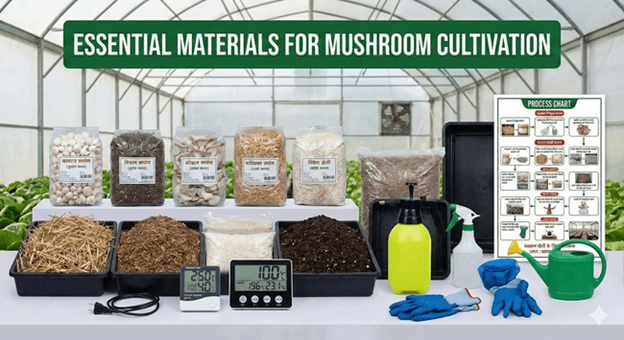
Setting up a mushroom production unit doesn't require specialized agricultural machinery, but attention to material quality and hygiene is essential.
Substrates and raw materials
The growing medium (substrate) varies by species. Oyster and milky mushrooms grow well on pasteurized cereal straw, wheat, rice, or barley straw are all suitable. Button mushrooms require a prepared compost made from straw, poultry manure, and gypsum that undergoes a controlled fermentation process. Shiitake mushrooms are typically grown on supplemented hardwood sawdust blocks.
The principles behind substrate preparation share much in common with composting. The goal is to create a nutritious, moisture-balanced medium that has been treated to eliminate competing organisms while remaining hospitable to mushroom mycelium.
You will also need mushroom spawn, the fungal equivalent of seed. Spawn is produced by specialized laboratories and should be purchased from reputable suppliers who can guarantee strain purity and viability. Using poor-quality spawn is one of the most common reasons new growers experience crop failure.
Essential equipment
A basic mushroom production setup requires polyethylene bags or trays for holding the substrate, a large drum or container for pasteurizing straw (typically by hot water immersion at 70–80°C for one to two hours), a spray pump or humidifier for maintaining moisture levels, a thermometer and hygrometer for environmental monitoring, and clean cutting tools for harvest.
For growers scaling up, investments in shelving or rack systems, automated misting, and simple air handling (exhaust fans with filtered intakes) significantly improve yield consistency and labor efficiency.
Hygiene and disinfection
Contamination by competing molds, particularly green mold (Trichoderma spp.), is the single biggest challenge in mushroom farming. Every surface, tool, and container that contacts the substrate or spawn must be thoroughly cleaned. Common disinfection protocols use dilute bleach solutions, formalin, or hydrogen peroxide.
Clean work habits matter as much as chemical treatments. Operators should wash hands thoroughly, wear clean clothing, and avoid working in the growing area immediately after handling soil, compost, or decaying plant material. The principles of integrated pest management apply here: prevention through hygiene is far more effective than treating contamination after it appears.
Step-by-step mushroom production process
While specific protocols differ between varieties, the overall production sequence follows three main phases.
Preparing the substrate
For straw-based substrates (oyster, milky mushrooms), chop the straw to lengths of 3–5 cm and soak it in clean water for 12 to 24 hours. Then pasteurize by immersing in hot water at 70–80°C for 60 to 90 minutes. Allow the pasteurized straw to cool and drain until the moisture content reaches approximately 65–70%, when you squeeze a handful firmly, only a few drops of water should emerge.
For composted substrates (button mushrooms), the composting process takes roughly three to four weeks. Phase I composting involves mixing straw with nitrogen supplements (poultry manure, urea, or gypsum) and turning the pile every two to three days while it heats to 70–80°C. Phase II involves pasteurizing the finished compost at 58–60°C for several hours to eliminate pathogens while preserving beneficial microorganisms.
Spawning and incubation
Mix the cooled, prepared substrate with spawn at a rate of 2–3% of the substrate's wet weight. For bag cultivation, fill polyethylene bags in layers. A layer of substrate, a scattering of spawn, another layer of substrate, until the bag is full. Tie or fold the top closed and punch small holes for gas exchange.
Place the inoculated bags in a clean, dark room maintained at the optimal spawn run temperature for your chosen variety. Over the next 15 to 25 days, white mycelium will colonize the substrate, spreading through the bag in a visible network. This incubation phase should proceed without disturbance; resist the temptation to open or move the bags.
Fruiting and harvest
Once the substrate is fully colonized (the entire bag appears white with mycelium), move to fruiting conditions. This typically means increasing fresh air exchange, raising humidity to 80–90%, providing indirect light, and, for button mushrooms, lowering the temperature.
For bag-grown oyster mushrooms, cut or enlarge the holes in the bags to allow fruiting bodies to emerge. Mushroom pins (tiny bumps of emerging fungi) should appear within 5 to 7 days of initiating fruiting conditions. Harvest by twisting or cutting the mature mushrooms at the base when the cap edges are still slightly curled inward. This indicates peak freshness and shelf life.
Most substrates will produce two to four flushes of mushrooms over several weeks, with decreasing yields per flush. After the final harvest, the spent substrate makes an excellent soil amendment or composting ingredient.
Common challenges and how to manage them
Even experienced growers encounter setbacks. The most frequent problems and their solutions include:
Contamination is the leading cause of crop loss. Green, black, or orange mold patches appearing on the substrate usually indicate a failure in pasteurization or hygiene. Remove contaminated bags immediately to prevent spore spread, review your pasteurization protocol, and ensure the growing space is properly cleaned between batches.
Poor or uneven fruiting often results from inadequate humidity or ventilation. If mushrooms are small, malformed, or appear only on one side of the bag, check that humidity remains consistently above 70% and that CO₂ levels do not build up due to insufficient air exchange.
Quality spawn availability can be difficult in regions without established mushroom industries. Building a relationship with a reliable spawn supplier, or eventually learning to produce your own spawn, is a worthwhile investment for any serious grower.
Post-harvest losses are significant because fresh mushrooms are highly perishable. Harvested mushrooms should be cooled quickly (ideally to 2–4°C), handled gently to avoid bruising, and packed in breathable containers. Attending to food safety and handling standards from harvest onward protects both product quality and consumer trust.
Marketing and selling your mushrooms
Mushrooms can be sold through multiple channels depending on your scale and location. Fresh mushrooms move through local markets, restaurants, retail stores, and increasingly through online delivery platforms. In India, platforms like Flipkart, Amazon, Blinkit, and Zepto have opened up new direct-to-consumer channels for growers near urban centers. Direct relationships with restaurants and specialty food shops often yield the best prices, particularly for gourmet varieties like shiitake and specialty oyster mushrooms.
For growers looking to extend shelf life and reach wider markets, processing opens significant opportunities. Dried mushrooms, mushroom powder, mushroom-based snack products, pickles, and ready-made soup mixes are all examples of value-added agricultural products that can command substantially higher prices per kilogram of raw input than fresh sales alone.
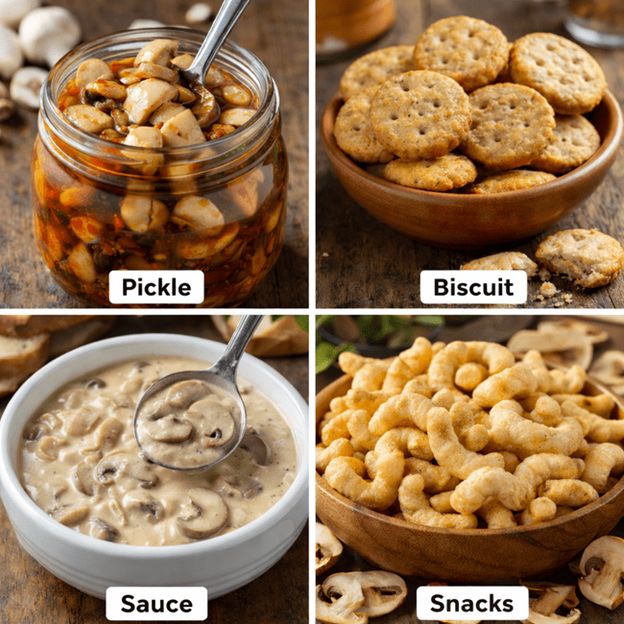
Forming or joining producer cooperatives strengthens bargaining power with buyers, enables shared investment in cold storage and processing equipment, and provides access to larger wholesale markets that individual smallholders cannot serve alone.
Branding matters in mushroom marketing. Labels that communicate freshness, local origin, sustainable production methods, or organic certification build consumer trust and justify premium pricing.
Why mushroom farming works as a small-scale enterprise
Mushroom cultivation checks many of the boxes that make an agricultural enterprise viable for small and beginning farmers. The land and capital requirements are minimal, production can genuinely start in a single room using locally available agricultural waste. The turnaround from investment to income is measured in weeks rather than months or seasons. Multiple production cycles per year smooth out cash flow. The labor is light enough to be managed alongside other farming activities or household responsibilities.
Government agricultural extension services in many countries now offer mushroom cultivation training programs, recognizing its potential for rural income generation. India has one of the most developed support ecosystems for aspiring mushroom growers. The ICAR–Directorate of Mushroom Research in Solan, Himachal Pradesh, is a leading global research and training center, while the network of over 700 Krishi Vigyan Kendras (KVKs) across the country offers hands-on training courses ranging from 5-day introductory programs to 21-day comprehensive courses. State agricultural universities, including Dr. Rajendra Prasad Central Agricultural University in Pusa (Bihar) and Bihar Agricultural University in Sabour, run dedicated mushroom entrepreneurship programs.
Financial support is also available through various central and state government schemes. In Bihar, for example, the Directorate of Horticulture offers specific programs for mushroom kits, mushroom huts, compost and spawn production units, and low-cost production facilities. Nationally, the Prime Minister's Formalisation of Micro Food Processing Enterprises (PMFME) scheme provides loans for processed mushroom products like mushroom powder, pickles, soups, and snacks. Farmer-Producer Organizations (FPOs) can access additional collective benefits.
Similar training programs exist through extension services across Southeast Asia, Sub-Saharan Africa, and Latin America, though India's institutional network remains among the most comprehensive.
The combination of low barriers to entry, strong and growing market demand, and genuine nutritional value makes mushroom farming one of the more compelling diversification options available to farming households worldwide. In India, many farmers across Uttar Pradesh, Bihar, and Uttarakhand have significantly increased their household incomes through mushroom production, with some, like growers in eastern Uttar Pradesh who transitioned from conventional agriculture to air-conditioned button mushroom units, scaling up to employ dozens of workers and even attracting investor interest at national summits.
A success story from eastern India
Many farmers across Uttar Pradesh, Bihar, and Uttarakhand have doubled their household income through mushroom production. One notable example is Mr. Anjani Kumar Singh from Village Dighera in Mau district, Uttar Pradesh.
Mr. Singh owns 10 acres of farmland but previously worked as a medical representative for a private pharmaceutical company, a demanding job with limited satisfaction. His trajectory changed after connecting with scientists at the Krishi Vigyan Kendra (KVK) in Pilkhi, Mau, where he completed a 21-day mushroom production training program. With technical guidance from KVK experts and a government grant facilitated through the District Horticulture Officer, he set up two air-conditioned button mushroom production units with a combined capacity of 1,600 bags.
The results were immediate. Mr. Singh began generating strong income from the first production cycle and soon expanded, adding two more units with a target of producing 5–6 quintals of mushrooms per day. As his operation grew, he invested in an automatic mushroom compost unit that would become the largest compost facility in the Purvanchal region, now supplying the prepared substrate his button mushroom units require.
The impact extends well beyond his own household. Mr. Singh's enterprise currently employs 10 skilled workers in mushroom production and 8 in marketing, with additional labor brought on during composting and spawning seasons. His success earned him an invitation to the G-20 Investor Summit, where he signed a memorandum of understanding for the compost unit expansion. From a pharmaceutical sales representative to a role model for young agricultural entrepreneurs, his story illustrates what structured training, government support, and market awareness can achieve in mushroom farming.
Conclusion
Mushroom cultivation offers a rare combination of low startup costs, rapid returns, and strong nutritional and market value. Whether grown as a side enterprise to complement existing farm operations or developed into a dedicated commercial venture, mushrooms can generate meaningful income using minimal land, water, and capital.
Success depends on understanding the specific environmental needs of your chosen variety, maintaining rigorous hygiene throughout the production process, and building reliable market channels for your harvest. For farmers and aspiring agricultural entrepreneurs, mushroom production is a practical, proven pathway to diversified and resilient livelihoods.
- ICAR–Directorate of Mushroom Research. Mushroom cultivation technologies. Indian Council of Agricultural Research, Solan, India.
- Sánchez, C. (2010). Cultivation of Pleurotus ostreatus and other edible mushrooms. Applied Microbiology and Biotechnology, 85(5), 1321–1337.