


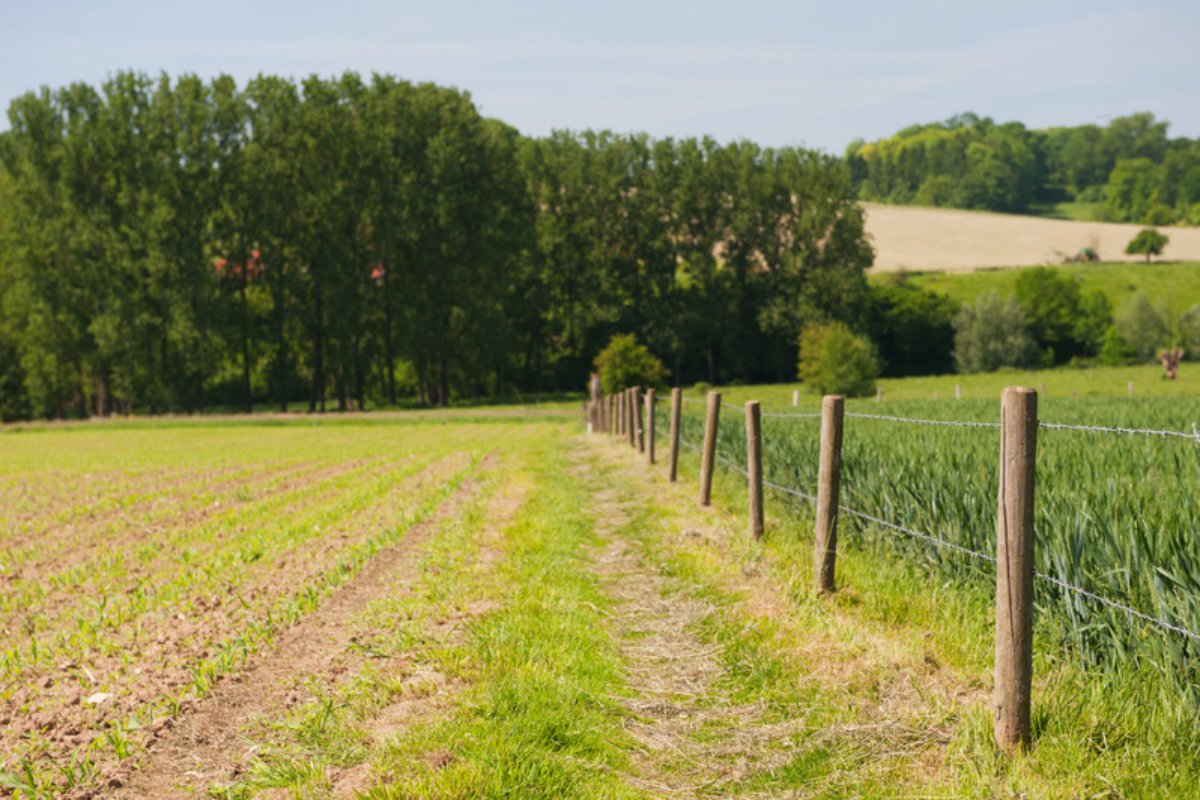
Field experiments rarely fail for the reasons taught in the classroom, and they rarely fail only once. My final-year project was a maize (Zea mays) experiment comparing 20 varieties in three replicates, a total of 60 plots and about 2,160 plants. The first field was lost to repeated seed removal, then to birds and fall armyworm after three plantings. I moved the experiment to a second field, where cattle destroyed an almost mature crop only days before harvest.
No yield data came out of the project, so this is a case record rather than a trial report. What it does show is how a chain of avoidable problems can end an experiment, and what I would do differently on any field, especially one that has hosted student projects before.
How the field was prepared and planted
The land was cleared, ploughed and ridged. Before planting, existing weeds were controlled with a mix of atrazine, a residual herbicide that suppresses germinating weeds, and paraquat, a contact herbicide that kills the green tissue of weeds already growing. Plots, rows, columns and planting stations were then measured out and marked.
Twenty maize varieties were planted with three replicates each, giving 60 plots. Table 1 lists the planting parameters.
Table 1. Planting parameters of the maize experiment
| Parameter | Value |
| Number of varieties | 20 |
| Replicates per variety | 3 |
| Total plots | 60 |
| Spacing between rows | 75 cm |
| Spacing within rows | 50 cm |
| Seeds per hole | 2 |
| Plants per row | 9 |
| Expected plants per plot | 36 |
| Expected plants in total | about 2,160 |
With this many plots and a fixed seed supply, there was little room to absorb losses.
What went wrong in each planting
Seeds dug up and eaten after the first sowing
Planting was finished in the evening, and the field looked undisturbed the next day. By the third day the soil over the planting holes had been opened, and the seeds were either missing or partly eaten. The field had been used for maize before, and project students before me had reported the same problem. No fence or netting had been put up, largely because the field was large.
A chemical bait gave short relief after the second sowing
I replanted, and the losses started again. For the second planting, non-viable maize seed was soaked for 48 hours in water mixed with dichlorvos, an organophosphate insecticide, and scattered along the edges of the field as bait. Treated seed was kept well away from the planting area. The bait reduced the losses for a while.
Birds and fall armyworm ended the third planting
After a third planting, the crop established well until birds began attacking it. Scarecrows made from discs, tins and bottles were set around the field to keep birds, rodents and other animals away, and this also worked for a time.
Next came the worst damage. Leaves showed holes, and there were droppings in the whorls of the young plants. Closer inspection confirmed fall armyworm (Spodoptera frugiperda). Most of the leaf area and many growing points had been eaten, and a maize plant cannot develop normally once its growing point is gone. Because the larvae feed hidden inside the whorl, the visible damage tends to show only after much of the harm is done, and the insecticide I applied did not reach all of them. With bird damage continuing at the same time, the crop could not be saved, and work on that field was stopped.
Cattle destroyed the crop in the second field
The experiment moved to a different field and was replanted. This attempt came close to success, until cattle got into the field a few days before harvest and destroyed the entire crop.
Table 2. Summary of plantings and causes of loss
| Planting | Field | Stage reached | Main cause of loss |
| First | Original | Seeds in soil (day 3) | Seeds removed or eaten |
| Second | Original | Seeds in soil | Repeated seed loss, partly relieved by bait |
| Third | Original | Established crop | Bird attack and fall armyworm, field abandoned |
| Fourth | New | Days before harvest | Cattle destroyed the crop |
Field history should have been checked before land preparation
The most avoidable mistake was preparing the land before asking about the history of the field. Earlier students had met the same problem on a smaller scale, and anyone who asked could have learned about it. The time, seed and labour spent on a field with a known problem could have gone into securing it or choosing another one.
A perimeter fence would have prevented most of the losses
Three of the four plantings were lost, at least in part, because animals reached the crop. A fence or netting, even a modest one, would have dealt directly with the seed losses and with the cattle. The size of the field made fencing look expensive, but replanting three times and then losing a nearly mature crop cost far more. The bushes around the edges should also have been cleared, so that the field was surrounded by open ground with less cover for animals.
Hazardous chemicals were the wrong answer to seed loss
Using dichlorvos as a seed bait was, in hindsight, a poor decision. Dichlorvos is highly toxic to people and animals, and a mistake in handling or placement could have harmed anyone working in the field or left residues in the grain. In Nigeria, for example, the national regulator banned the manufacture and import of the 100 ml dichlorvos packs and prohibited the hawking of agrochemicals in 2019, and the same regulator has since phased out paraquat and atrazine, with bans in force from January 2024 and January 2025 respectively. Before trying any chemical measure, check what is legal in your country and ask an extension officer or an experienced farmer for safer options.
Fall armyworm has to be caught while the larvae are small
Fall armyworm is hard to control once it is established deep in the whorl. FAO's quick guide for smallholders advises starting field visits about one week after planting and checking every 3 to 4 days, or at least once a week. In the 3 to 5 youngest leaves, look for small holes, fresh droppings, cream or grey egg masses and young larvae, which are easiest to find in the early morning or evening. Eggs and young larvae are the stage at which control works best, and young larvae can still be picked off by hand before they move deeper into the whorl. In my case, the pest was found after the damage was already extensive. Stem borers, cutworms and the other maize pests and diseases call for the same habit of regular field checks.
Regular scouting is the base of integrated pest management in maize, and field-level methods such as push-pull intercropping can lower pest pressure before any spray is needed.
Practical advice for students and new farmers
- Ask before you plant: Visit the land and talk to the people who have worked it. They can tell you which animals come at night and what went wrong in earlier seasons, information you will not find on paper.
- Fence before you sow: A fence or netting costs much less than replanting several times.
- Scout young maize often: Check the whorls from one week after planting so that armyworm is caught early.
- Treat chemicals with care: Avoid anything that could harm you, the crop or the people who will eat it, and check what is permitted before buying.
- Keep a backup: Extra seed or a second field means that one bad day does not end the whole project.
- Keep livestock out: Agree with neighbouring herders on grazing routes, and make sure gates and fences hold until the harvest is in.
The experiment did not produce the results it was designed for, but it taught me that protecting a field matters as much as planting it. Problems tend to arrive one after another rather than one at a time, and each loss is information for the next season. In any future planting, the fence comes first.
Sources
FAO (2018). How to manage fall armyworm, a quick guide for smallholders (FAW Guidance Note 4). Food and Agriculture Organization of the United Nations, Rome.
NAFDAC. Press statement on the regulation of dichlorvos, paraquat and atrazine. National Agency for Food and Drug Administration and Control, Nigeria.