

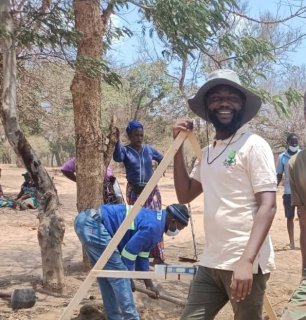
I have sat with farmers across Karonga, Rumphi, Nkhata Bay, Kasungu, Dowa, Lilongwe, Dedza, Mangochi, Ntcheu, Blantyre, Thyolo, Chikwawa, and Nsanje and heard the same painful truth. "The chemical fertiliser bag is now K150,000, about 90 US dollars," they say, "but our soil is dead."
They are looking for an alternative that gives them relief from the high cost of inputs. But when they see a standard Bokashi recipe calling for molasses or sugar and commercial yeast, their hearts sink. The solution feels just as expensive as the problem.
Here is what I have learned from my journey with thousands of farmers in 14 districts of Malawi. Bokashi is not about expensive ingredients. It is about understanding microbes. In this article, I will share the practical, low-cost Bokashi recipe that works in rural Malawi. We replace molasses and sugar with juice packets called Jolly Jus that cost less than 0.30 US dollars, swap commercial yeast for local Mahewu or fermented rice or maize wash, and make biochar from the crop residues farmers usually burn. This is what I use on my own 15-acre Bioland Farm.
What is Bokashi
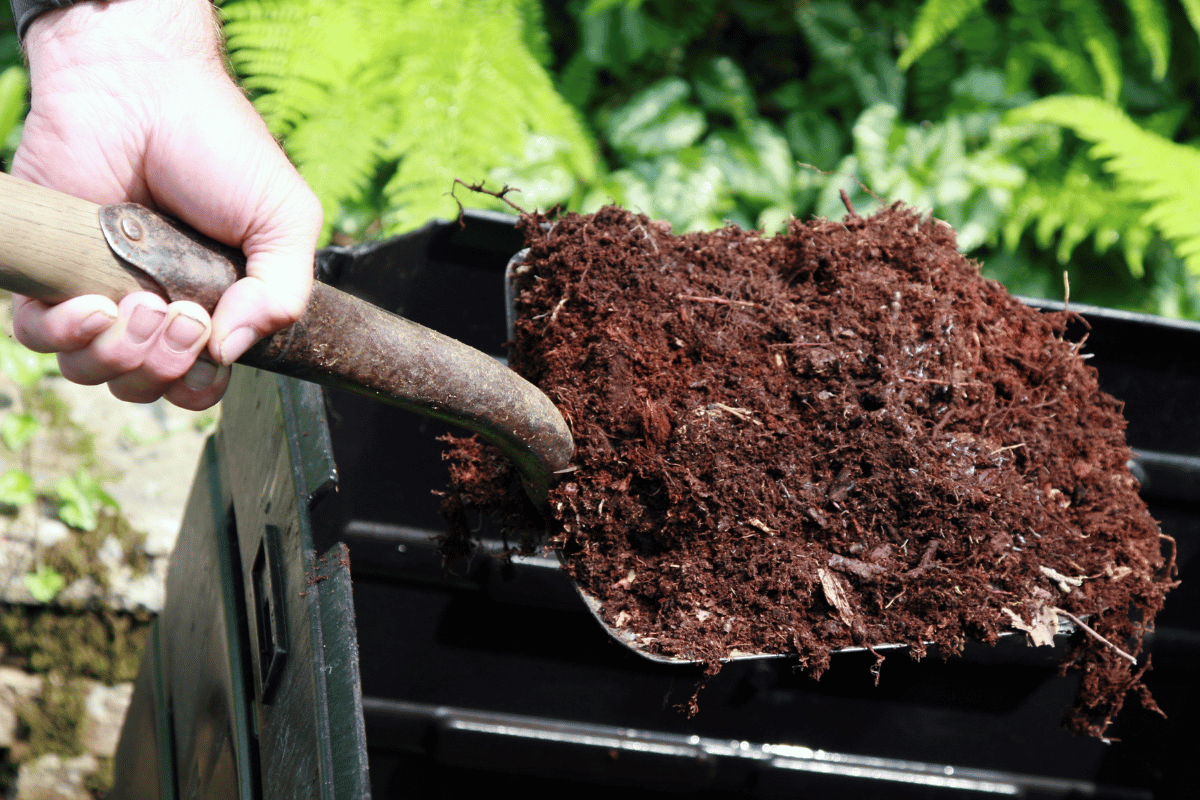
Bokashi is a Japanese word for fermented organic matter. Unlike compost, which takes months, Bokashi is "half-cooked." It ferments in 12 to 15 days. Think of it as a nest for beneficial microbes. When you put it in the soil, those microbes wake up and start feeding your plants straight away.
Many farmers fail because they treat Bokashi like chemical fertiliser. Chemical fertiliser feeds the plant. Bokashi feeds the soil. If you expect a green leaf in three days, you will be disappointed. If you look for healthier roots and softer soil after one season, you will be hooked.
The recipe, no molasses and no shop yeast
This is the recipe I use, adapted for our reality. For one heap, about one metre high, you need:
- 7 buckets of dry manure (goat, cow, or chicken, and mixing is best)
- 7 buckets of dry matter (maize stover, groundnut shells, rice husks, broken into small pieces)
- 5 buckets of soil (clay soil is best, as it holds microbes)
- 1 bucket of bran (maize, rice, or sorghum bran, which is good microbe food)
- 1 bucket of ash
- 1 bucket of biochar
For the ferment, which substitutes for the sugar, molasses, and yeast, you need 5 litres of water, 2 packets of Jolly Jus (or peels from sweet fruits such as bananas, pineapples, or pawpaws), and 1 litre of local Mahewu (fermented porridge) or 1 litre of fermented rice, maize, or cassava wash.
You will also need a shovel, hoes, buckets, and water. As a guide on cost, 2 packets of Jolly Jus are about K400, which is less than 0.30 US dollars.
Why local fermented wash or Mahewu works so well
Option 1: rice, maize, cassava, or sorghum wash
In Malawi, the staple food is maize, but in some areas, such as the Northern region (Karonga, Rumphi, Mzimba) and parts of the south, cassava and rice are treated as the main staple. When people prepare flour from maize or cassava, they usually soak and ferment it in water for about a week before taking it to the mill. This is a common practice across the country, and the fermentation water is rich in beneficial microbes and highly concentrated in yeast, making it excellent for Bokashi production. Those who prepare rice normally soak it in water for a few minutes before cooking, and that water, which many communities throw away and a few use to make porridge, works the same way.
Option 2: Mahewu, known locally as Thobwa
Thobwa is a popular Malawian traditional fermented drink made from maize or sorghum flour and malted grain. It has a milky appearance, a thick cereal-like texture, and a refreshing, slightly sweet and tangy taste. It is made by cooking a thin porridge (phala) from maize or sorghum flour, inoculating it with sprouted grain flour (chimela), letting it ferment, and cooking it a second time. In its first few days of fermentation, Thobwa is rich in beneficial microbes and highly concentrated in active yeast, making it excellent for Bokashi production. Where no Thobwa is available, these communities usually have local beer-brewing spots producing chibuku or masese, and the dregs and residues from these carry a highly potent microbial starter culture that accelerates Bokashi production.
How I make Bokashi with Malawian smallholder farmers
Step 1: Make biochar from scraps
The idea is to stop buying charcoal, since most farmers assume they need to buy it for biochar. Dig a trench or a cone-shaped pit in the ground. Add your crop residues tightly inside, such as maize stover, soybean shells, groundnut shells, or sawdust. Light the fire strictly at the very top of the pile and let it burn downward. As soon as the top layer turns into a glowing black charcoal bed with a thin hint of grey ash, immediately quench the entire pit with plenty of water to stop the burning. The result is biochar that holds microbes in your soil, made without spending a penny.
Step 2: Layer and mix
The idea is to build a heap in layers using the standard quantities above. Before building the heap, mix the ferment in a 10-liter bucket, combining the Mahewu or the maize, cassava, or rice wash water with 5 liters of water. For those who can afford the Jolly Jus sachets or use the fruit residues, mix them all together.
Start by adding a layer of dry material, then a layer of manure, a layer of soil, a layer of biochar, a layer of bran, and, lastly, a layer of ash. Start again in the same order until the materials are finished, sprinkling the ferment mixture over every layer. Then mix everything together while adding a little water.
Be careful with the water, as you do not need too much, so farmers are taught to turn the heap two to three times until they reach the right amount. To test it, grab a handful of the mix and squeeze:
- If water drips out between your fingers, it is too wet, so add dry soil.
- If it crumbles and will not hold a sausage shape, it is too dry, so sprinkle on more water.
- At the right moisture, about 50%, it holds its shape but does not drip.
Step 3: Manage the heap
Because of the food available in the Bokashi and the active nature of the microbes in the first four days, the temperature normally rises above 55°C, which is hot enough to kill beneficial microbes. The common way to test the heat is to hold a hand inside for 10 seconds. If you can just barely keep it there, the temperature is about right, around 55°C. If you must pull out immediately because it burns, the heap is too hot.
For this reason, I tell farmers to turn the heap twice a day for the first four days. This depends on the materials, since the mix above heats up fast and needs turning twice a day early on. We also regulate the temperature by keeping the heap below 1.2 metres in height. From day 5 to day 14, we turn once a day, until the heap has cooled to the point where it is the same temperature as the surrounding air. That is the sign your Bokashi is ready to use.
A few other points matter. Bokashi should be bagged, kept off moisture, and used within 3 months; it gives better results when used fresh. For nursery crops, ready-made Bokashi can burn the seedlings, so mix 1 part Bokashi with 4 parts soil.
The hard truth about labour, quantity, and expectations
I think it is important to be honest with farmers about Bokashi.
The first issue is labour. You need 20 to 24 bags of Bokashi for one acre, and that is hard work. In the communities we work in, labour is scarce because young people have moved to the city. The solution is to make Bokashi as a group, since five families contributing materials for one large heap is far easier than one family doing it alone.
The second is the fertiliser comparison trap. I once sent Bokashi for a lab test, and the results showed 0.80% nitrogen, 1.46% phosphorus, and 0.68% potassium. Compared with a bag of chemical fertiliser, that is much lower, and I must be honest, I felt flattened. I thought, why are we doing all this? What helped me was understanding the difference between chemistry and biology. Chemical fertiliser is a sugar rush. It feeds the plant but kills the soil life. Bokashi is a slow, healthy meal. It feeds the bacteria, and those bacteria then feed the plant.
After using Bokashi for more than two years on fruit such as bananas, the soil becomes soft, not hard like concrete, and the yields are much better. We have cases where farmers harvest a huge banana bunch, and in my own case the last bananas I harvested weighed around 62 kg. Compare that with chemical farmers who must buy more bags every year while their soil grows poorer. In our case the soil gets better every year.
Final advice for the practicing farmer
Start small. Do not try to cover one acre. Make one small heap and try it on your vegetable garden or 10 fruit trees. That experience is how you will come to appreciate Bokashi.
Do not burn your residues. Carbonise them into biochar instead.
Use what you have. Jolly Jus and Mahewu work for us, so keep experimenting to find what works for you.
Be patient. You are not growing a crop. You are rebuilding a universe of life under your feet.
Bokashi changed my life. Wanting to make it for farmers at a low cost is what gave me the idea of owning a piece of land, because I felt I could not sell something to farmers without having tried it myself. That is how Bioland Farm was born.
References
Seed and Knowledge Initiative (SKI). (2019). How to make biofertilisers: Bocashi, Booklet 3.