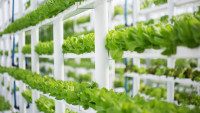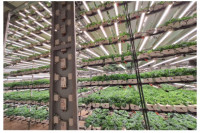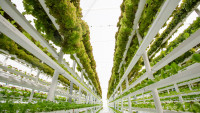
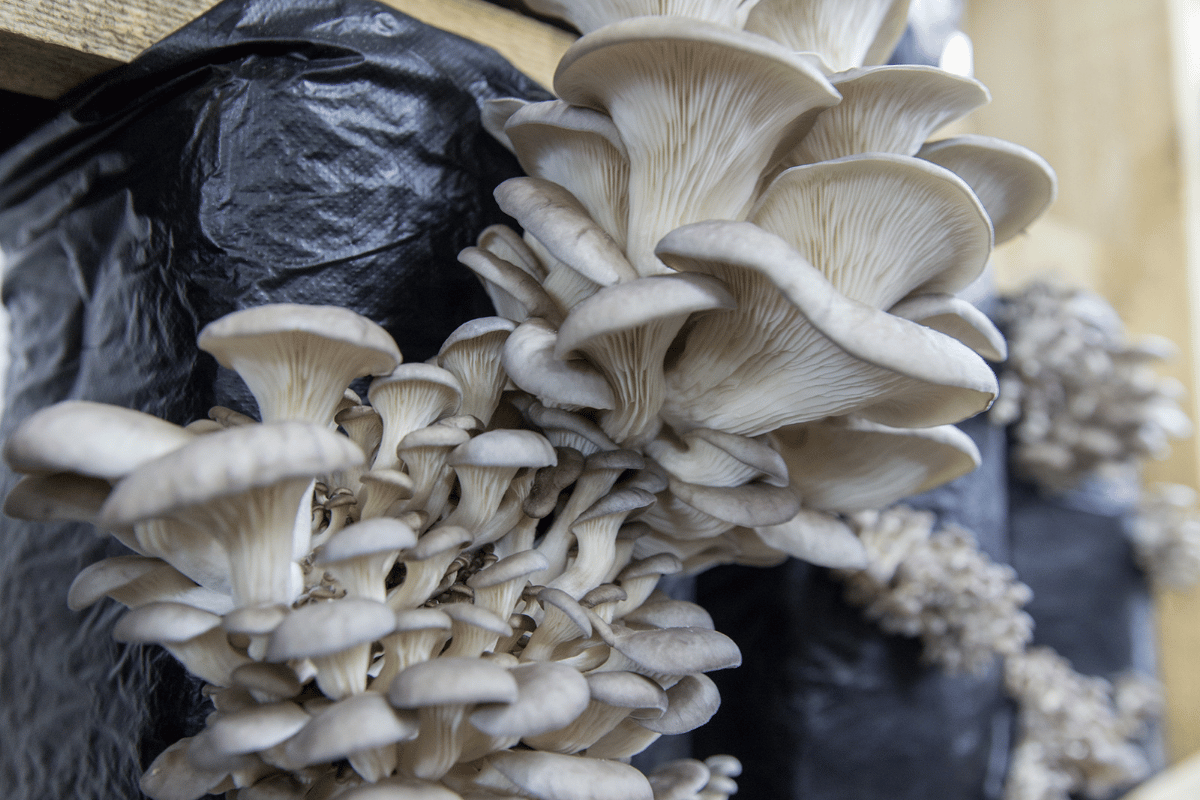
The vertical farming industry is changing. Leafy greens still dominate most controlled-environment agriculture (CEA) systems, but mushrooms are quietly becoming one of the more practical, profitable, and sustainable crops for indoor production. Among the most promising species are Lion's Mane (Hericium erinaceus), oyster (Pleurotus spp.), and shiitake (Lentinula edodes). What used to be niche gourmet items now sit at the intersection of fresh produce, functional foods, and high-value indoor agriculture, especially in regions where conventional CEA economics struggle.
Why mushrooms fit indoor farming, especially in hot climates
Unlike most crops grown in vertical farms, mushrooms do not require sunlight or high-intensity LED lighting to grow. That single difference reshapes the economics of indoor production, and it matters most in hot regions such as the Gulf.
In a typical leafy greens or strawberry vertical farm, artificial lighting is one of the largest operational costs. Commercial LED systems often run 14 to 18 hours a day, drawing significant electricity and generating heat inside the grow room. Every watt drawn by an LED eventually has to be removed by HVAC, chillers, dehumidifiers, and air circulation equipment. In countries where outdoor summer temperatures exceed 45 °C, holding stable indoor temperatures for photosynthetic crops becomes both technically demanding and financially difficult. The pattern is familiar to any grower in the region. More LEDs lead to more heat, which leads to more cooling, which leads to higher electricity bills and higher maintenance costs.
Mushrooms operate on a different model. Lion's Mane, oyster, and shiitake do not need photosynthesis-based lighting. Some farms add minimal low-energy lighting for harvesting visibility or fruit-body morphology, but the electricity demand is far lower than for plant-focused vertical farms. The practical advantages add up quickly. Lower lighting load reduces HVAC pressure, infrastructure cost, and maintenance expense. Operational sustainability improves in desert climates, and energy efficiency per kilogram of production rises noticeably.
For container farms and other tightly insulated growing environments, this difference becomes critical. High-powered LEDs raise internal temperatures rapidly inside a sealed box, which forces the cooling system to fight back continuously. Mushroom production sidesteps most of that problem. Resources can shift from lighting to environmental optimisation instead, which means humidity control, fresh air exchange, CO₂ management, and temperature stability.
Vertical layout and resource use
Mushrooms grow well on vertical shelving systems, which lets a grower maximise yield per square metre while keeping water consumption and land use low. The cultivation model works in several built environments, from shipping container farms to warehouse vertical setups, urban agriculture systems, and AI-controlled grow rooms.
Substrate is another quiet advantage. Many mushroom species can be grown on agricultural by-products such as straw, sawdust, cotton waste, corn cobs, and coffee waste. This converts low-value lignocellulosic material into a high-value food product, which lines up with the circular agriculture goals that many countries in the region are now writing into policy.
Sustainability with substance
Indoor mushroom farming addresses several pressures at once that conventional agriculture struggles with, including land area, water availability, transport distance, seasonal cycles, and chemical pest management.
Water efficiency comes from the controlled growing environment, where moisture can be managed precisely. In water-scarce regions like the Gulf, this is a meaningful operational and strategic advantage. Land efficiency comes from stacking, which lets production grow vertically inside warehouses, containers, or shipping infrastructure rather than horizontally across new land. The pressure on arable farmland, forest ecosystems, and natural habitats eases as a result.
Urban mushroom farms also shorten transportation distances. Specialty mushrooms imported from international suppliers travel long distances and lose freshness on the way. Local indoor production gives shorter supply chains, lower transport emissions, lower spoilage rates, and longer shelf life on arrival. The same controlled environment supports year-round production, lower pesticide dependence, consistent quality and traceability, and tighter biosecurity, which matters for food-safety monitoring and for reducing crop losses from climate fluctuation.
A point that often gets overlooked is energy optimisation in this context. Because mushrooms do not need high-intensity photosynthetic lighting, their energy demand is significantly lower than for many plant-based vertical farming systems. In hot climates, avoiding large LED installations also reduces cooling requirements and lowers total HVAC pressure. Long-term economic sustainability of indoor agriculture projects improves as a result.
Mushrooms and carbon-conscious agriculture
Agriculture is under growing pressure to lower its environmental footprint. Conventional farming at scale tends to involve heavy transportation, intensive water use, soil degradation, chemical fertiliser dependence, long cold-chain logistics, and high post-harvest losses. Indoor mushroom production cuts into several of those pressures at once.
Because mushrooms can be cultivated close to urban populations, transportation distances drop and produce reaches consumers fresher with lower fuel use and lower logistics emissions. The substrate side is just as important. Using agricultural waste as cultivation substrate supports circular carbon use, redirecting organic material that would otherwise decompose unmanaged or be burned at field margins, particularly in regions where straw burning still contributes to seasonal air-quality problems.
Spent mushroom substrate also retains value after the production cycle. It can be reused for compost, soil improvement, organic fertiliser production, vermicomposting feed, and broader agricultural soil conditioning. A single production cycle ends up generating multiple downstream sustainability layers rather than a single waste stream.
The role of mushrooms in regional food security
Food security is becoming one of the bigger strategic concerns for governments in the region. Population growth, climate instability, water shortages, supply-chain disruption, and shrinking agricultural land are pushing many countries to look for more resilient production systems. Many Gulf nations rely heavily on imported fresh produce and specialty foods, which makes the food system both economically and strategically exposed.
Mushroom farming offers a way to lift local production using comparatively small footprints. Indoor mushroom production does not depend on seasonal rainfall, fertile farmland, long outdoor growing seasons, or stable external climate conditions. It runs year-round in controlled facilities regardless of what the weather is doing outside.
For desert regions, this matters more than it might in temperate countries. The UAE and Saudi Arabia are investing heavily in food security, controlled-environment agriculture, and local production capacity. Mushrooms align with those national objectives because they combine efficient resource use with premium-value output. As global supply chains continue to face uncertainty, localised indoor mushroom production has a real role to play in national agricultural resilience.
Functional mushrooms and the wellness market
The functional food and wellness industry is growing, and mushrooms are central to that growth. Lion's Mane in particular is now widely associated with cognitive support, immune support, and healthy-lifestyle products. The shift creates new market opportunities beyond fresh mushrooms, including mushroom powders, extracts, capsules, tinctures, functional beverages, and broader nutraceutical products. For vertical farms, this opens value-added production pathways alongside fresh-produce sales, and adds business resilience when fresh-produce prices fluctuate.
Technology and smart farming integration
The mushroom industry is becoming increasingly technology-driven. Modern commercial farms now combine automated climate control, CO₂ monitoring, humidity management, AI-based environmental optimisation, IoT sensors, automated fresh-air exchange, and digital farm management software. Mushrooms respond strongly to environmental conditions, which means CEA technologies translate directly into improved consistency, quality, and yield. In practice, mushroom vertical farming is one of the better-aligned crop categories for the next phase of precision indoor agriculture.
Why mushrooms make sense for the Middle East specifically
For Gulf countries facing water scarcity, rising electricity costs, import dependency, and extreme outdoor temperatures, mushrooms may be one of the most economically realistic forms of indoor farming. Instead of fighting heat generated by intensive lighting, mushroom farms can run with much lower energy pressure while still producing premium-value crops year-round. That makes the model relevant for UAE indoor farms, Saudi food-security projects, container farming start-ups, urban agriculture initiatives, and climate-smart farming investment more broadly.
The future of CEA in this region will not be about growing every crop indoors. It will be about growing the right crops indoors. Mushrooms fit because they are space-efficient, climate-resilient, resource-efficient, and aligned with consumer demand for healthy, functional, and sustainable foods.
Beyond food, the wider bioeconomy
Mushrooms are no longer only a specialty food product. They sit inside a broader bioeconomy that is attracting capital from sustainability-focused start-ups, food technology companies, and agricultural innovators. Several factors are driving the interest in parallel, including growing demand for functional foods, expansion of plant-based food categories, sustainable protein research, advances in biotechnology and applied mycology, and the growth of urban agriculture.
Beyond fresh production, mushrooms are now being explored for mycelium leather, sustainable packaging, biodegradable products, pharmaceutical research, alternative proteins, bio-based construction materials, and environmental remediation technologies. This wider ecosystem is what transforms mushrooms from a traditional agricultural product into something closer to a modern bioeconomy industry, with multiple revenue streams reachable from the same basic biological infrastructure.
A growing sector for researchers and new growers
One of the more interesting developments in the sector is who it is now attracting. Mycology and controlled-environment agriculture are pulling in a new generation of growers, researchers, and entrepreneurs who want to work at the intersection of biology, sustainability, and technology. Compared with many traditional farming sectors, mushroom cultivation offers room for innovation across multiple layers at once, including climate optimisation, genetics and strain improvement, substrate engineering, AI-based environmental control, automation and robotics, functional product development, and waste-recycling systems.
The result is a sector that is attractive across multiple perspectives at once, including farming, science, engineering, and entrepreneurship. As universities and research organisations continue to invest in applied mycology, the commercial mushroom sector should continue to advance technologically over the coming decade.
Looking forward
For years, vertical farming conversations focused on leafy greens and hydroponic vegetables. The next phase will be more diverse. The farms that succeed will prioritise crops that are resource-efficient, climate-resilient, high-value, scalable indoors, and economically sustainable, while remaining compatible with urban infrastructure and not depending on excessive energy consumption. Lion's Mane, oyster, and shiitake mushrooms fit that description well, especially in hot, water-scarce climates where the economics of leafy-greens CEA are getting harder rather than easier.
In a region looking for smarter ways to feed itself under increasingly difficult environmental conditions, mushrooms are moving from specialty crop status toward something closer to a foundational indoor-agriculture industry.
About the author
Abid Ali Mirani is a mushroom and hydroponic specialist based in Dubai, United Arab Emirates. He has cultivated button, oyster, king oyster, shiitake, Lion's Mane, and portobello mushrooms commercially, and has worked on one of the UAE's largest saffron-farming projects. His broader CEA work covers vertically grown leafy greens (NFT and DWC) and exotic herbs in controlled environments. He writes regularly on controlled-environment agriculture, vertical farming, and functional mushrooms.
Contact: [email protected] | LinkedIn