


The role of intestinal microbiota in poultry health and behavior
The desire to improve animal health through improving intestinal health has been a constant in animal production for decades. Specific and detailed studies in different species of animals, including humans, show the impact of the microbiota (MB) on intestinal function, digestion, metabolism, and the immune system. However, only recently have numerous studies been carried out that have provided us with valuable tools to understand the close relationship between the intestinal microbiota and the various pathologies and aberrant behaviors found in the productive cycle of farm animals.
What is intestinal dysbiosis?
The normal MB of farm animals, consisting of bacteria, fungi, yeasts, protozoa, bacteriophages, and other viruses, inhabits different portions of the gastrointestinal tract (GIT) with chemical and microenvironmental conditions specific to each group, so it is to be expected that each of them also has specific functions in the host organism.
An intestinal dysbiosis, also called dysbacteriosis, is an alteration of the bacterial population specifically, in number, species, and functions, resulting in an imbalance between the number of beneficial bacteria (Lactobacillus spp., Bifidobacterium spp., Streptococcus spp., Bacteroides spp., Fusobacterium spp., and Eubacterium spp.) and those harmful (Salmonella spp., Clostridium spp., Escherichia spp., Campylobacter spp., Staphylococcus spp., Listeria spp., among others). In intestinal dysbiosis, harmful bacteria increase in number, and by doing so, compete efficiently for food, which further facilitates their multiplication. The end metabolites of these pathogenic bacteria are generally toxins that, when released in the intestine, cause inflammation, triggering an aberrant immune response.
Causes of dysbiosis in poultry
Key contributing factors include:
- Diet: poor diversity, low-quality fiber, toxins, or contaminated water.
- Medications: overuse or misuse of antibiotics.
- Environmental stress: overcrowding, heat stress, or poor housing conditions.
- Other factors: mycotoxins, epigenetic influences, circadian rhythm disruption, sedentary behavior in intensive systems, and chronic autoimmune conditions.
These disruptions have cascading effects, influencing not only the immune system but also the nervous and endocrine systems, leading to atypical behaviors and common poultry diseases.
The microbiota–gut–brain axis
This is the name basically given to the neuroendocrine network that facilitates bidirectional communication between the gut and the brain through the enteric nervous system (ENS) and the central nervous system (CNS), respectively. This axis is specifically made up of: the microbiota, the ENS, the autonomic nervous system (ANS), the neuroendocrine system, the neuroimmune system, and the CNS.
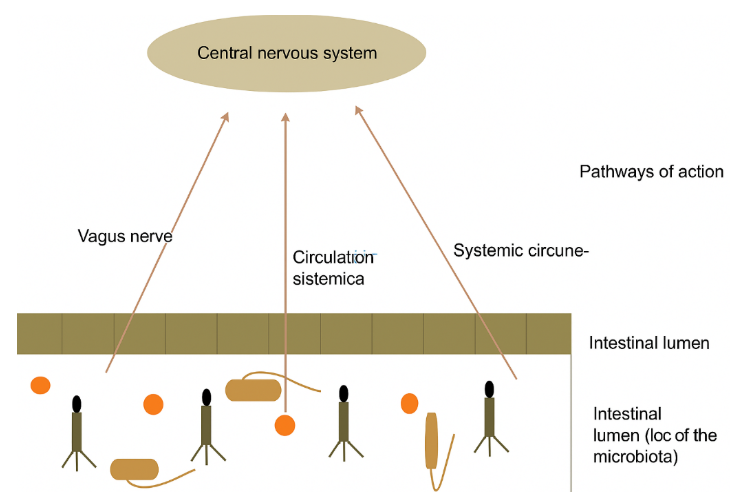
- The ENS manages gastrointestinal processes such as motility, mucous secretion, and blood flow.
- Communication with the CNS occurs mainly via the vagus nerve.
- The microbiota influences this communication through the production of metabolites such as neurotransmitters, hormones, and short-chain fatty acids, as well as by stimulating immune responses.
This intricate relationship explains how intestinal health can directly influence animal behavior and welfare.
Intestinal dysbiosis and poultry behavior
The pathologies and atypias observed in intensive poultry farming
As explained above, the excessive growth of pathogenic bacteria and the reduction of beneficial bacteria (dysbiosis) provide the intestine with toxins, causing chronic inflammation. This chronic inflammation, together with the weakening of the intestinal epithelium, results in the intestinal barrier being affected due to increased permeability. When the intestine becomes permeable, it will not only allow amino acids, glucose, vitamins, and minerals to pass freely, but it will also make possible the entry of toxins produced by pathogenic bacteria, and large molecules resulting from incomplete digestion (peptides, disaccharides, etc.).
Both the toxins and the large molecules that reach the bloodstream are considered foreign agents to the organism, which triggers an alteration of the microbiota–gut–brain axis, altering the function of the vagus nerve, neuroendocrine cells, and immune system cells, modifying the release of neurotransmitters such as serotonin, dopamine, and GABA. All these factors are directly related to animal behavior and welfare. What I have just mentioned may be the most coherent explanation so far for aberrant behaviors in birds such as:
Examples of behavioral changes
- Feather pecking in laying hens
- Cannibalism in broilers
- Abnormal grouping or isolation behaviors
Cannibalism in chickens or feather pecking in laying hens, for example, is commonly associated with a lack of amino acids, minerals, or fiber. In my experience, I see how these supplements help improve the condition, but especially insoluble fiber greatly reduces this behavior, but not necessarily because a direct nutritional deficiency in the bird has been corrected, but because nutrients have been provided that act as prebiotics favoring the growth of beneficial microbiota and, therefore, the production of volatile fatty acids (acetate, propionate, butyrate) that cross the blood–brain barrier, regulating the levels of the previously described behavior-related neurotransmitters. Although feather pecking decreases, it does not disappear, since the cause of that dysbiosis and the intestinal and neurological damage have not been reversed.
Vital functions of intestinal microbiota in poultry
On the other hand, to talk about poultry diseases, it is important to first know some of the vital functions performed by the intestinal microbiota:
- They constitute the first line of defense of the organism against external pathogens.
- They act on the morpho-physiology of the intestine (longer villi and deeper crypts).
- They produce short-chain volatile fatty acids (essential in energy metabolism and hormonal regulation).
- They participate in the metabolism and synthesis of vitamins, amino acids, polysaccharides, among other important substances.
- They modulate the quantity and composition of bile acids, important in lipid metabolism, inflammation control, and bacterial overgrowth.
The low variability of feed, poor water quality, the presence of food and environmental toxins, and the constant use of antibiotics cause intestinal dysbiosis, which in turn generates chronic inflammation, a dysfunctional intestine, and altered central nervous and immune systems.
When dysbiosis disrupts these functions, poultry become more susceptible to common diseases such as:
- Necrotic enteritis
- Coccidiosis
- Salmonellosis
- Clostridiosis
- Colibacillosis (often linked to Mycoplasma infections)
All these diseases give rise to a vicious cycle, aggravating the dysbiosis already present, causing diarrhea, wet litter, ammonia production, imbalances in the respiratory tract, making it susceptible to infections that further worsen animal health, leading to economic losses due to poor weight gain, treatments, and deaths. In addition, it is worth noting that several of these diseases can be transmitted to humans through the consumption of meat and eggs from affected birds, causing gastroenteritis, which currently constitutes a public health problem.
Μanaging intestinal dysbiosis in poultry
First of all, it is necessary to eliminate or reduce the dietary and environmental stress factors that trigger primary dysbiosis.
Reducing risk factors
- Quality of water and feed (inputs, levels, processing, mycotoxins, etc.).
- The use of antibiotics not technically justified nor adequately controlled.
- Proper poultry house management (biosecurity, curtains, litter, removal of dead birds or other animals, vector control, cleaning, and disinfection, etc.).
Using feed additives
On the other hand, the use of feed additives that promote dietary diversity for adequate growth and maintenance of beneficial microbiota is recommended. The main ones include: prebiotics, probiotics, enzymes, organic acids, plant extracts, essential oils, and symbiotics:
- Prebiotics: seaweeds (macroalgae), yeasts, yeast cell walls and yeast metabolites, inulin, etc.
- Probiotics: bacilli, lactobacilli, enterococci, bifidobacteria, Escherichia, yeasts, molds, etc.
- Enzymes: β-glucanases, xylanases, amylases, β-galactosidases, β-mannanases, phytases, proteases, lipases, etc.
- Organic acids: propionic, acetic, butyric, formic, benzoic, sorbic, etc.
- Plant extracts: oregano, garlic, cinnamon, artichoke, ginger, rosemary, mint, etc.
- Essential oils: oregano, thyme, ginger, retamilla, anise, etc.
- Symbiotics: mixture of probiotics and prebiotics.
Conclusions
Recently, the study of the composition and functions of normal intestinal microbiota, the causes of dysbiosis, the effects of intestinal permeability, and chronic inflammation have become recurring topics of research in human health. In recent years, the animal nutrition and health sector has shown unprecedented interest in the microbiota and intestinal health due to their marked effects on the physiology, behavior, welfare, and productive performance of poultry.
At present, it is possible to make use of biomarkers (normal and abnormal substances that are easily measurable in different parts of the bird’s body) with the help of the nutritionist and field veterinarian, with the aim of achieving early detection of any metabolic irregularity or pathology and taking corrective measures without delay.
Finally, special attention and interest are urgently needed in the research and control of factors that modify bacterial populations and their functionality, as well as in management measures and appropriate treatments to stabilize the microbiota quickly throughout the production process in order to reduce production costs as much as possible and achieve a more efficient, safe, profitable, and sustainable poultry activity.
References
- Salahi, A., Abd El‑Ghany, W. A., Attia, Y. A., Zabermawi, N. M., Bovera, F., & Tufarelli, V. (2025). Gut dysbiosis: Nutritional causes and risk prevention in poultry, with reference to other animals. S. Afr. J. Anim. Sci., 55(2).
- Verma, H., Chandra, G., Jaiswal, V., Maurya, P. S., & Sahu, S. (2020). A comprehensive report on poultry intestinal microbiota. [PDF]. [SpringerLink]. (2021 approx.). Gut microbiome and poultry health.
- Beldowska, A., Barszcz, M., & Dunislawska, A. (2023). State of the art in research on the gut‑liver and gut‑brain axis in poultry. J. Anim. Sci. Biotechnol., 14, 37.
- Cao, C., Chowdhury, V. S., Cline, M. A., & Gilbert, E. R. (2021). The microbiota‑gut‑brain axis during heat stress in chickens. Front. Physiol., 12:752265.
- [Systematic review]. (2025). Heat stress and the chicken gastrointestinal microbiota.
- Front. Vet. Sci.]. (2024). Emerging threat of necrotic enteritis in poultry and its control without use of antibiotics.
- Meinen-Jochum, B., et al. (2023). Segmented filamentous bacteria-based treatment to elicit protection against Enterobacteriaceae in Layer chickens (Microbiome Journal).
- JAS B. Sci. (2021). Poultry gut health – microbiome functions and environmental impacts.