


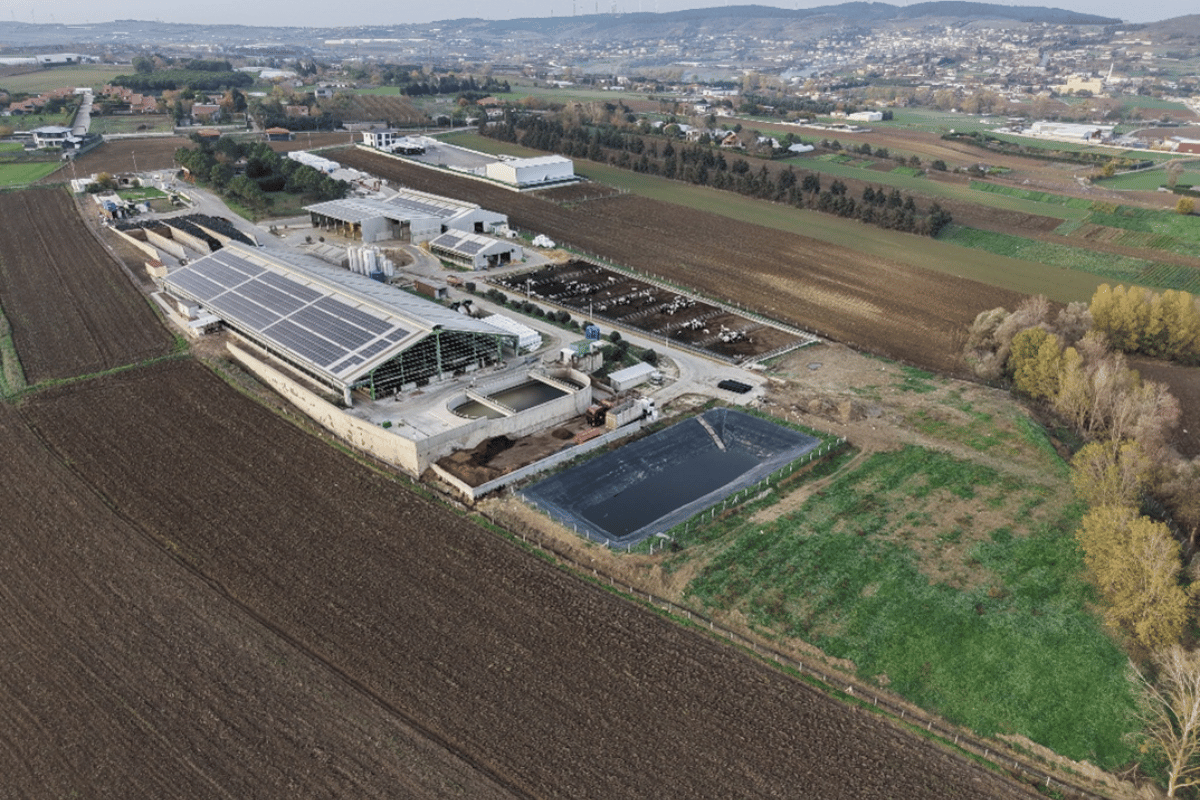
A personal journey into water quality management
First of all, I would like to take this opportunity to thank the Wikifarmer team for this great opportunity to connect with all of you. With that being said, I want to start my journey on this platform by sharing the water treatment procedures I used 10 years ago, 8 years ago, 5 years ago, and what I implement today.
As far as I'm concerned, water quality in livestock farming, especially in dairy cattle, is not being considered as much as it should be. I'm being quite harsh, perhaps, because I myself didn't take it seriously until 2 years ago. When I first started my dairy cattle business 10 years ago, I was using plain well water with no treatment whatsoever. This was way before I began testing water quality, monitoring the milk yield of my cattle, and assessing the most important part: the biochemical well-being of my animals.
Why water quality matters: The science behind dairy cow hydration
The most obvious aspect in my three-point checklist is milk yield. As we all know, approximately 87% of whole milk is pure water. According to research, dairy cows need 3–5 liters of water for every kilogram of milk produced, and inadequate access can lead to a significant drop in performance. Beyond the 30–40 liters of water required for bare survival, a cow must drink an additional 4–5 liters of water to produce each liter of milk.
Practical Example: For a cow producing 40 liters of milk daily, water intake can reach up to 250 liters. Considering an as-fed TMR (Total Mixed Ration) of 45–50 kg, 250 liters (or 250 kg) of water represents a substantial nutritional input, often more than the feed itself.
Early mistakes and learning the hard way
When I was using plain well water, my first error was not aiming for high yields. As a newbie in farming, I was averaging 22–24 liters per cow per day. For a Holstein, this number is quite low compared to what I'm achieving now. Of course, water was not the sole factor responsible for this number, but aside from genetics and accommodation factors, daily feed and water intake should not be taken lightly.
Understanding Holstein Potential
Holstein Friesian cows are known for their exceptional milk production capabilities. Studies have shown that breed significantly influences productivity, Holstein Friesian cows demonstrate greater efficiency compared to other dairy breeds. When managed properly with adequate nutrition, clean water, and appropriate housing, Holsteins can reach milk yields of 40+ kg per cow per day during peak lactation. The dry period is a critical phase of the lactation cycle, and a good dry cow program can increase milk yield during the following lactation and minimize metabolic problems at or immediately following calving.
Evolution of my water treatment systems
Stage 1: Basic Filtration (Year 1–3)
My first water treatment system was very simple: a basic sand filter for particle separation and a softener resin. This system was more equipment-friendly than animal-friendly—it had nothing to do with heavy metals, bacteria, or viruses.
What this system addressed:
- Physical particles and sediment
- Water hardness (to protect pipes and equipment)
What it missed:
- Microbial contamination
- Heavy metals
- Chemical contaminants
The location of any livestock facility really needs a supply of clean water every day without interruption. Clean water is needed not only by livestock but also by employees on the farm. The quality of the water must be drinkable, which is why well water, springs, and lakes are typically used as sources.
Stage 2: Adding chlorine disinfection (Year 3–5)
After a while, with my father's consideration, we added an online chlorine treatment system for basic bacteria and virus elimination. While still a relatively basic system, this was a significant leap forward because it was the first system I implemented that had solely the animal's health in mind.
The Science of Chlorine Disinfection
Chlorine has been the preferred disinfectant for water treatment for decades. However, research shows that while chlorine is effective against many bacteria, some microorganisms can develop resistance. Additionally, chlorine treatment can produce trihalomethanes (THM), a hazardous disinfection byproduct, which is why many farms are now exploring alternative or complementary disinfection methods. Ozone, for instance, has been shown to be effective at eliminating bacteria even at quantities as low as 0.01 ppm, with no evidence of disinfection resistance due to its mechanism of action.
Stage 3: UV treatment integration (Year 5–7)
At my third treatment stage, I added UV treatment to the whole system. This provided a more advanced bacteria and virus treatment combined with the chlorine dispenser.
Benefits of UV Water Treatment:
- No chemical residuals in water
- Effective against chlorine-resistant pathogens
- Environmentally friendly
- No risk of overdosing
Stage 4: Advanced reverse osmosis system (Current)
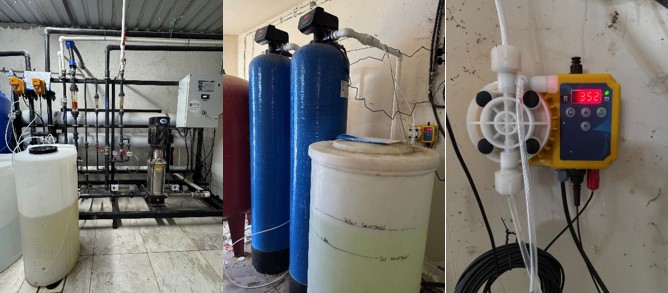
My final and current system is quite advanced and creates water at bottled water quality. Here's the complete treatment train:
Step 1: chlorine sensor with dosage pump
We use a chlorine sensor equipped with a dosage pump. This system measures the chlorine level in the pre-storage tank and dispenses the needed amount automatically.
Step 2: sand and carbon filtration
After initial disinfection, we use a sand filter for particles and a carbon filter for pre-treatment. Carbon filtration also removes chlorine residuals and organic compounds that affect taste and odor.
Step 3: reverse osmosis (RO) system
The pre-treated water then goes into a reverse osmosis system. This system uses very thin membranes that strip water from all ingredients that are not pure H₂O.
Step 4: Post-RO UV Treatment
Pure H₂O is transferred to the final storage tank, followed by a final UV treatment. This makes the water completely pure and free of any germs, heavy metals, and other harmful substances.
Step 5: Remineralization and pH Adjustment
This final step is critical and often overlooked. As reverse osmosis strips water from harmful substances, it also removes essential minerals and makes water very acidic. Before feeding to cows, we have a final treatment that remineralizes the water and makes it alkaline.
Why Remineralization Matters:
Dairy cattle require various macrominerals including calcium, phosphorus, magnesium, sodium, chlorine, sulphur, and potassium. Trace minerals needed in smaller amounts include iron, copper, manganese, zinc, iodine, cobalt, and selenium. Water supplies contaminated with bacteria or high in nitrates and sulphates may cause health problems and reduce animal performance, but water completely stripped of minerals can also create nutritional imbalances.
Practical tips for implementing water treatment
Getting started: What to prioritize
Testing comes first. Before choosing any system, it is better to know exactly what you are working with. A basic lab analysis for bacteria, minerals, pH, hardness, and heavy metals gives you a clear baseline and prevents unnecessary spending later.
Starting simple is usually enough in the beginning. A basic filtration unit combined with chlorination already improves water safety for most livestock farms. Filtration removes sediments and organic matter, while chlorination keeps microbial risks under control. Reverse osmosis offers the highest level of purification, albeit at a higher cost in terms of installation and maintenance.
Daily monitoring is recommended when using advanced systems such as reverse osmosis, since membrane performance and pressure levels can change quickly. Regular checks help ensure that the water quality remains stable and that the system works as intended.
It is also important to consider the type of water source you have. Groundwater, springs, and surface water each carry different risks. Farms that rely on wells often face issues with minerals and hardness, whereas those with open sources are more susceptible to bacterial and organic contamination.
Housing and infrastructure considerations
The design of your watering system can support or undermine all your treatment efforts. A few practical points make a big difference.
Water supply placement
Animals, machinery, and farm workers all need access to clean and safe water. The source must be protected and the water must be drinkable, not just acceptable for livestock.
Temperature matters
Cattle drink more when the water temperature stays between 15 and 20°C. Cooler or warmer water can reduce intake, which affects feed consumption, milk yield, and overall health.
Clean and accessible troughs
Water troughs should be easy for cattle to reach and easy to clean. A concrete standing area helps prevent mud contamination, while a small barrier wall keeps animals from stepping inside the trough.
System components
A reliable watering system usually includes a protected water source, pumps sized for the herd, a temporary storage tank, reticulation lines, and sturdy troughs. When all components work together, daily management becomes easier and water quality stays consistent.
Results: From 22 to 46 kg of milk per cow
This reflects the outcome of a decade of improving water quality on the farm. With a complete water treatment setup in place, our cows now reach an average of 46 kg of milk per day, compared to the 22 kg we produced in the early years. More importantly, water-related issues have disappeared entirely.
Water alone is not responsible for high milk yields, but it plays a central role. Comfortable, healthy, and well-hydrated cattle eat better, produce more, and handle stress more effectively. When water stops being a limiting factor, everything else in the production system works more smoothly.
A journey worth taking
I didn't reach this level in a day. This process took years of field experience, failures, animal sickness, and extensive research. I don't know what tomorrow will bring to my farm, but I'm very pleased with what we have today.
For fellow dairy farmers reading this: don't underestimate the importance of water quality. Water is the nutrient required in the most significant amount by dairy cattle. It is the cheapest feed ingredient compared to the others, yet it is essential, as a deficiency can affect milk production more quickly than the lack of any other nutrient.