


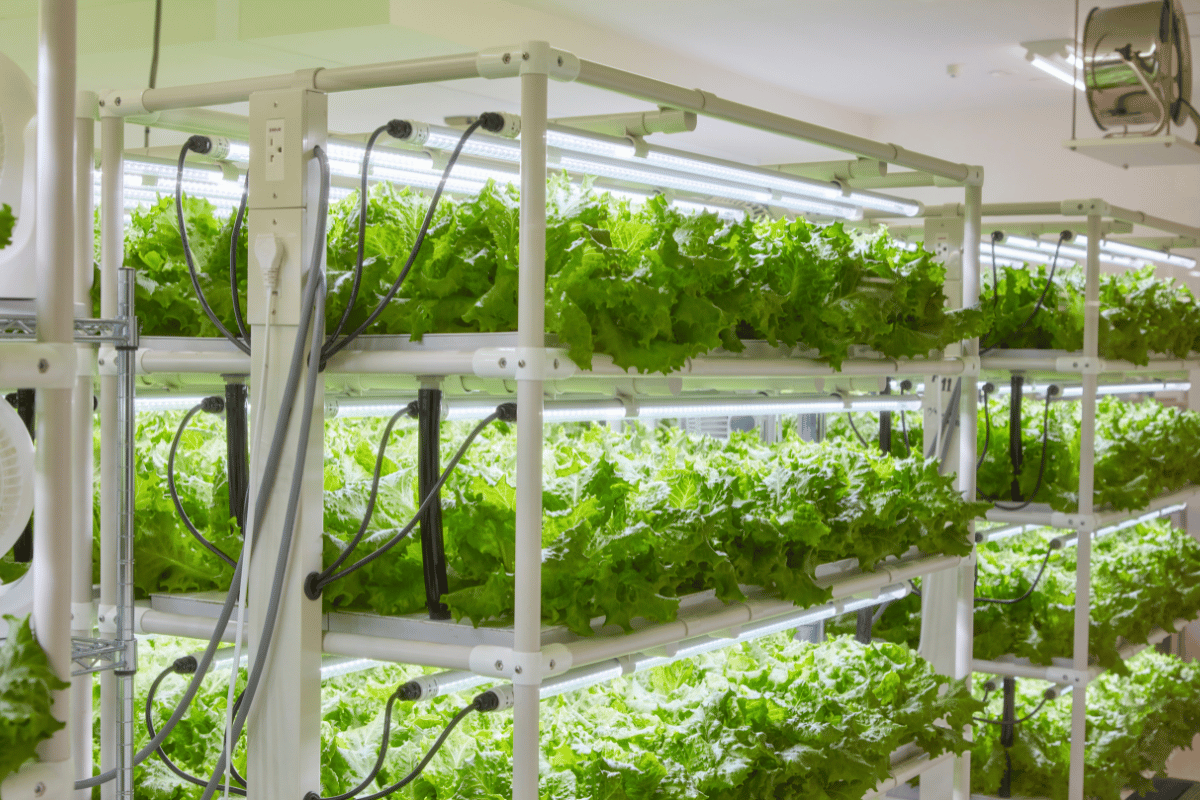
Imagine a world where farming has no boundaries by way of land, water, or space. Fresh, healthy produce all year round, grown in your backyard or even indoors. Welcome to a whole new growing concept: hydroponics, a breakthrough method for farming that is poised to revolutionize agriculture in Northern Nigeria and pave the way for a more promising future for young people.
What is hydroponics?
Hydroponics is a state-of-the-art method of growing plants without soil, instead using nutrient-rich water solutions delivered directly to plant roots. This innovative technique provides optimal control over the growing environment, resulting in faster growth, higher yields, and increased efficiency in resource utilization. The best part? You can set up a hydroponic system nearly anywhere, either in a small urban space or a large greenhouse.
The technology enables year-round cultivation in any environment and allows for significantly higher yields with substantially reduced water consumption. By eliminating soil from the equation, hydroponics reduces exposure to soil-borne pests and diseases while enabling precise nutrient delivery.
Why Northern Nigeria's youth should embrace hydroponics
Higher yields and more efficiency in resources
Hydroponics represents the future of agriculture in terms of yields and resource efficiency. Since nutrient solutions are delivered directly to the roots, plants receive optimal nutrition for perfect growth and health. Research demonstrates that plants grown hydroponically can reach maturity 20 to 50% faster than those growing in soil, with most commercial operations reporting consistent 50% acceleration in growth rates.
For water conservation, the benefits are even more dramatic. Hydroponic systems utilize up to 90% less water compared to traditional soil-based farming. The recirculating nature of these systems captures and reuses water that would otherwise be lost to evaporation or runoff in conventional agriculture. In regions like Northern Nigeria, where water scarcity and climate variability present significant agricultural challenges, this water efficiency offers a critical advantage.
Consider the practical impact: harvesting fresh vegetables within half the time while preserving precious water resources—it's a win-win for productivity and sustainability.
Exciting economic opportunities
The youth of Northern Nigeria possess tremendous potential and entrepreneurial drive. With youth unemployment in Nigeria exceeding 42%, and agricultural sector participation among young people declining, hydroponics offers an excellent pathway to channel energy into profitable and sustainable enterprises.
Young entrepreneurs can start business-oriented hydroponic farms producing high-value crops, target specialty or niche markets with premium produce, or establish urban farming operations serving city centers. The consistent rise in demand for fresh, locally grown produce creates substantial market opportunities.
Success stories already exist across Nigeria and Africa. Fresh Direct Nigeria, founded by Angel Adelaja, pioneered container farms growing leafy greens and herbs using hydroponics, bringing fresh produce to urban centers while reducing transportation costs and carbon footprint. Soilless Farm Lab in Nigeria has trained more than 10,000 young people in hydroponics and agricultural entrepreneurship, demonstrating the scalability of youth-focused hydroponic training programs.
Research indicates that hydroponic lettuce production can generate yields up to 20 times higher per acre compared to soil-based cultivation, resulting in improved financial returns and faster return on investment. For youth seeking economically viable agricultural ventures, these productivity advantages translate directly into business sustainability.
Environmental sustainability
One of the most striking features of hydroponics is its low environmental impact. Hydroponic systems typically do not require harmful pesticides and herbicides because the controlled environment reduces pest invasion and crop disease. This results in cleaner, safer food with minimal chemical residues.
Soil erosion and land degradation are eliminated with hydroponics, preserving land resources for future generations. By operating in enclosed systems, hydroponic farms prevent agricultural runoff, which is a major source of water pollution in traditional farming that contributes to contamination of water bodies and creation of aquatic dead zones.
Through hydroponic practice, young farmers contribute to sustainable agriculture and climate resilience. In the context of climate change impacts across Nigeria, where projections indicate warming of 3-4°C over the next century and decreased rainfall threatening rain-fed agriculture, hydroponics offers a climate-independent production alternative.
Getting started with hydroponics
Ready to begin your hydroponic journey? Here is a comprehensive guide to get you underway:
Learn and educate yourself
Knowledge is power! There's an enormous quantity of resources available online, in courses, workshops, and training programs that can provide proper grounding in hydroponics principles. Understanding the fundamentals—including nutrient management, pH control, system maintenance, and crop selection, significantly improves your chances of success.
Wikifarmer offers extensive educational content on hydroponic cultivation, covering everything from system types to crop-specific production guides.
- The Potential for Combining Hydroponics and Crop Circle Farming with Traditional Practices
- A practical guide to hydroponic greenhouse leafy greens
- Irrigation Tips for NFT Hydroponic Leafy Greens
- A Beginner's Guide to Hydroponics Farming: From Seed to Harvest
Set up your hydroponic system
Choose a hydroponic system best suited for your space, budget, and target crops. The most common systems include:
Nutrient Film Technique (NFT): A thin film of nutrient solution flows through a channel or tube where plant roots are exposed to continuous contact with the liquid. The solution flows from a reservoir to the top of the channel and returns by gravity. NFT systems work exceptionally well for leafy greens like lettuce, basil, kale, and Swiss chard.
Deep Water Culture (DWC): Plant roots are submerged in aerated nutrient solution with constant oxygen supply provided by air pumps and airstones. This system promotes accelerated growth rates, with plants growing up to 50% faster than soil-based counterparts due to superior nutrient and oxygen uptake. DWC is ideal for lettuce and other leafy greens.
Drip System: A pump delivers nutrient solution to each plant through drip emitters, providing precise control over water and nutrient delivery. Drip systems excel for larger fruiting crops like bell peppers, tomatoes, cucumbers, and zucchini.
Aeroponics: Plant roots are suspended in air and sprayed with a fine mist of nutrient solution. This method maximizes oxygen exposure and nutrient absorption, with NASA research showing 80% increases in dry weight biomass compared to hydroponics.
While initial setup requires investment in infrastructure, equipment, and technology, the long-term benefits—including higher yields, faster growth cycles, and reduced operating costs- often outweigh upfront expenses.
Source quality supplies
Supplying your farm with top-quality materials is essential for success:
Growing Medium: Choose appropriate substrate based on your system. Popular options include rockwool cubes, coconut coir (cocopeat), perlite, and oasis cubes. For NFT systems producing lettuce and leafy greens, oasis cubes work particularly well. A 4.5 x 5 cm plug size is commonly used for lettuce varieties reaching 250 grams or more at harvest.
Nutrient Solutions: Invest in high-quality hydroponic nutrients formulated for your specific crops. Regular monitoring and adjustment ensure plants receive the right balance of essential nutrients.
Water Quality: Start with proper water testing to assess basic parameters including sodium, chloride, and bicarbonate levels. Consider water filtration and UV-C disinfection treatment to neutralize bacteria, viruses, and fungi while maintaining nutrient stability. Municipal water is generally safe from pathogens like Pythium, though well water requires thorough testing.
pH and EC Management: Maintain pH levels between 5.5 and 6.5 for optimal nutrient uptake in leafy greens. Keep electrical conductivity (EC) between 1.1 and 1.3 for lettuce and similar crops to prevent disease promotion from excessive fertility. Invest in pH and EC meters for regular monitoring.
Start growing
Begin with the easiest crops first—lettuce, spinach, and herbs are excellent choices for beginners to work out the details of your hydroponic system. These fast-growing, high-value crops enable multiple harvests per year.
Recommended Lettuce Varieties: Based on proven performance in hydroponic systems, consider varieties like Locarno, Concorde, Rex, Maximus, and Starfighter. These varieties have demonstrated consistent results in commercial hydroponic production.
Optimal Growing Conditions: Maintain water temperature between 20-22°C, which effectively controls pathogen infections. Ensure dissolved oxygen levels reach 6-9 ppm in your nutrient solution for healthy root development—especially critical during hot weather when oxygen levels naturally decline. Consider nanobubble technology to enhance dissolved oxygen, strengthening root systems and reducing disease pressure.
Once you're comfortable and confident, progress to more diverse and potentially more lucrative crops. Basil, kale, and other herbs perform excellently in NFT systems, while fruiting vegetables like tomatoes and peppers thrive in drip systems with cocopeat substrate.
System maintenance and monitoring
Regular maintenance ensures optimal plant health and system performance:
- Check for leaks at joints, valves, and connections. Test your system thoroughly before planting.
- Monitor root growth to prevent clogging in NFT channels. Prune basil roots after 30 days if growing in NFT systems.
- Maintain reservoir cleanliness with regular cleaning and disinfection to prevent pathogen buildup like Pythium.
- Ensure adequate aeration at all times, as low oxygen levels increase disease susceptibility.
- Automate where possible using IoT-based solutions for remote monitoring and control of nutrient levels, pH, and environmental conditions.
Overcoming challenges
Of course, hydroponics, like other new ventures, has its challenges. Initial setup costs, technical knowledge requirements, and continuous maintenance demands can feel overwhelming. However, extensive support exists to help you succeed:
Financial Support: Government initiatives in Nigeria and across Africa provide subsidies and grants to incentivize hydroponic adoption, directing funds toward infrastructure setup and training. Collaborative initiatives like farmer cooperatives help distribute setup costs among multiple participants, making entry more manageable.
Training Programs: Comprehensive training programs cover hydroponic techniques, system maintenance, and troubleshooting, empowering farmers with necessary technical knowledge. Organizations like Soilless Farm Lab actively train thousands of young Nigerians in hydroponic farming and entrepreneurship.
Technical Challenges: Common issues include system leaks, lighting selection for indoor systems, pH fluctuations, and nutrient management. Solutions involve regular system testing and maintenance, appropriate crop-system matching (lettuce in NFT, tomatoes in drip systems), and consistent monitoring of water quality parameters.
Disease Management: While hydroponics reduces many soil-borne disease risks, water-borne pathogens like Pythium can occur. Effective prevention includes maintaining proper water temperature (20-22°C), ensuring adequate dissolved oxygen (6-9 ppm), using UV-C or hydrogen peroxide for water disinfection, and regular reservoir changes in recirculating systems.
Food security and climate resilience
Hydroponics addresses critical food security challenges facing Nigeria. The country's agricultural production currently meets only half of domestic cereal and meat needs and 60% of domestic fish consumption. With approximately 70% of Nigerians dependent on rain-fed agriculture, an activity highly vulnerable to climate change stresses, hydroponic systems offer a climate-independent production alternative.
Pilot hydroponics projects in Nigeria specifically target food security improvement through increased crop yields, secured livelihoods for farmers, and the development of climate-resilient agricultural practices. By reducing reliance on unpredictable weather patterns and operating within controlled environments, hydroponics mitigates climate change impacts on food availability.
The technology proves particularly valuable during off-seasons, enabling year-round production of fresh vegetables regardless of external weather conditions. This consistent availability strengthens local food security while reducing dependence on food imports.
A bright future ahead
Hydroponics is more than just a farming method; it is a pathway to a sustainable and prosperous future for the youth of Northern Nigeria. Through hydroponics, young people can contribute to food security, create viable business opportunities, and advance environmental sustainability.
The convergence of youth unemployment, climate change impacts, and food security needs creates an urgent opportunity for hydroponic innovation in Northern Nigeria. With proper training, financial support, and commitment to learning, young farmers can establish profitable hydroponic enterprises that address both economic and environmental challenges.
The journey to a better tomorrow starts with one step. Are you ready?
Join the hydroponic revolution today and be a part of the change. The future is green, bright, and full of possibilities!