


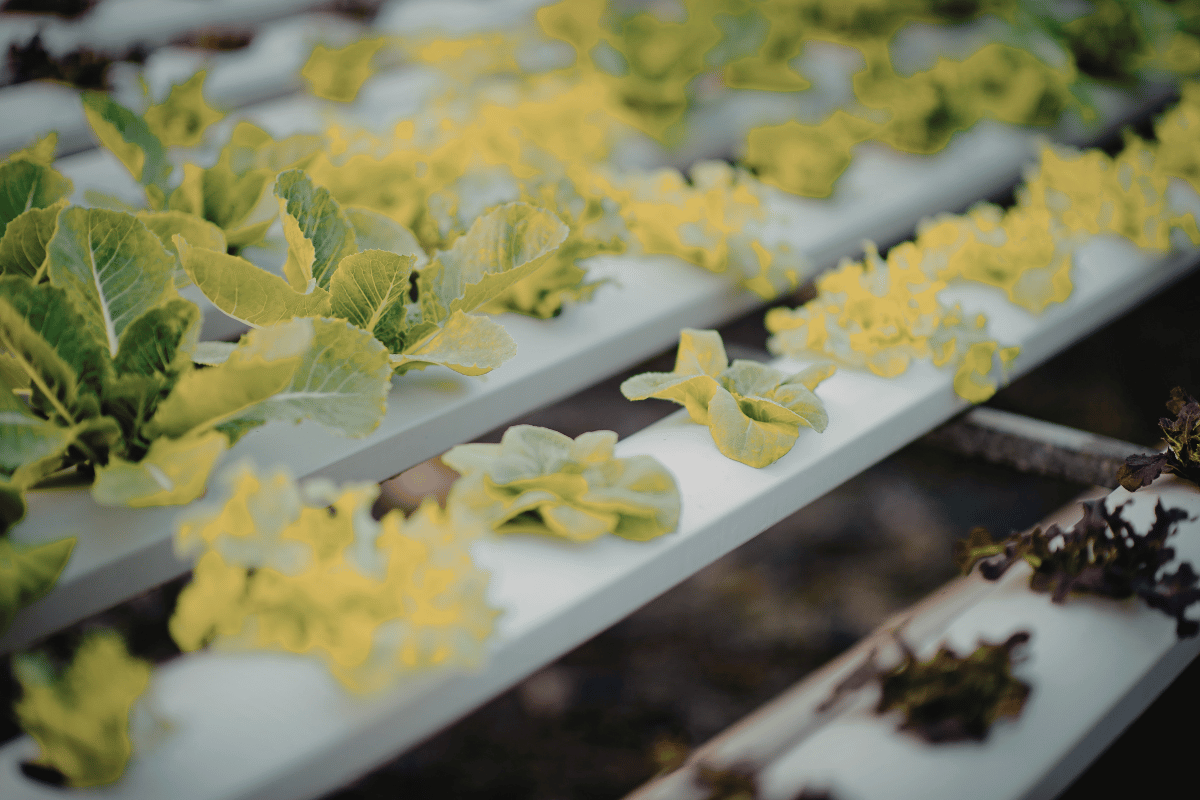
Growing leafy greens in a hydroponic greenhouse combines controlled environment agriculture with efficient, high-density production. It is a fast-growing commercial sector, yet the process is far from simple. Sensors, monitoring systems, and a well-planned greenhouse layout are essential, since every plant site represents potential profit.
Greenhouse design and system layout
Greenhouse design fundamentally influences the production techniques and overall success of leafy green cultivation. The choice between horizontal and vertical growing configurations, combined with decisions about greenhouse closure, directly impacts yield potential, operational costs, and crop management complexity.
Greenhouse orientation and structure
Semi-closed and fully closed structures function differently in terms of airflow, temperature control, and energy use. Closed greenhouses rely on mechanical heating and cooling systems and exchange very little air with the outdoors. Semi-closed structures still depend on ridge vents or side vents, which reduces climate stability but lowers energy demand.
A controlled and stable microclimate supports more efficient photosynthesis and reduces abiotic stress. This is especially important for Lactuca sativa, which reacts strongly to heat spikes, high vapor pressure deficit, and irregular light exposure.
Hydroponic leafy greens can be grown in ebb and flood benches, deep water culture, nutrient film technique systems, or hybrid layouts.
Vertical stacking systems
Beyond traditional horizontal layouts, vertical stacking systems integrated with semi-closed greenhouses significantly increase production density. Research demonstrates that vertical farming systems produce 13.8 times more crop per unit of growing floor area compared to conventional horizontal hydroponics, with some operations achieving yields of 5–10× higher per square meter of ground area. Leafy greens' compact morphology, shallow root systems, and relatively short cultivation periods make them ideal for multi-tier vertical configurations.
Growing system selection
The hydroponic system type determines cultivation techniques and environmental management strategies. Common options include:
- Ebb-and-flood systems: Periodic nutrient solution flooding followed by drainage
- Deep water culture (DWC): Plants suspended in continuously aerated nutrient solution
- Nutrient film technique (NFT): Thin film of nutrient solution flowing across root systems
Water quality and nutrient balance
Water quality is one of the key drivers of growth rate and final product quality.
Nutrient management
Monitoring electrical conductivity and pH ensures balanced nutrient uptake. Typical EC ranges are around 1.5 to 2.0 mS/cm, while recommended pH levels fall between 5.5 and 6.0. Correct nutrition lowers the risk of tip burn, which is closely linked to limited calcium mobility under stressful conditions.
Dissolved oxygen and water temperature
Dissolved oxygen (DO) is essential for healthy root respiration and nutrient uptake. Maintain DO levels at 6–8 ppm, with a minimum threshold of 4 ppm. At lower DO concentrations, roots cannot respire adequately, and pathogenic anaerobic organisms proliferate in the nutrient solution.
Water temperature directly influences DO availability: cooler water holds more dissolved oxygen than warm water. Additionally, elevated water temperature increases bacterial populations in the nutrient solution and reduces root respiration efficiency. The optimal nutrient solution temperature for lettuce is approximately 24°C (75°F). Maintaining proper water temperature through heaters (rather than heating the entire greenhouse) represents a more cost-effective approach to environmental management while improving overall crop performance.
Climate monitoring and environmental control
Climate factors play an equally important role. Light intensity, photoperiod, temperature, humidity, airflow, and carbon dioxide levels all need to be monitored and adjusted.
Leafy greens thrive under a photoperiod of at least 12 hours. Light requirements can range from 150–350 µmol/m²/s depending on greenhouse location and system type.
Vertical systems require particularly precise lighting strategies to ensure uniform light distribution across all growing tiers. Supplemental LED or high-intensity discharge (HID) lighting becomes essential to maintain consistent PPFD throughout vertical columns, preventing the significant yield reduction observed in lower tiers under natural light alone.
CO₂ enrichment strategy
CO₂ is a critical input for robust leafy green production. Ambient CO₂ concentrations are typically recorded at 400 ppm; lettuce thrives with supplemental CO₂ input ranging from 500 to 1,000 ppm. Within fully closed greenhouses, CO₂ can be injected directly and precisely into a sealed growing space. In semi-closed greenhouses, however, opening ventilation vents to manage temperature can release enriched CO₂ and valuable heat energy.
The design of the greenhouse has a significant impact on the efficiency of CO₂ management. Semi-closed systems with active air exchange corridors enable growers to treat incoming air (heating, cooling, and CO₂ enrichment) before it circulates through the crop zone, thereby maintaining higher CO₂ concentrations with greater energy efficiency than traditional open ventilation systems.
Growth rate monitoring and data tracking
Comprehensive record-keeping of crop performance metrics enables data-driven optimization and reveals how environmental inconsistencies affect yields over time. Key tracking parameters include:
- Crop growth stage and duration: Time to harvest and total cultivation period
- Yield metrics: Fresh weight, dry weight, and marketable head count
- Plant morphology: Diameter, leaf count, and appearance uniformity
- Seasonal and annual trends: Production consistency across growing periods
By correlating environmental sensor data (EC, pH, DO, temperature, light, humidity, and CO₂) with harvest performance, growers develop predictive models for their specific greenhouse operations and can systematically improve yields through targeted environmental adjustments.
Integrated pest and disease management
Producing healthy lettuce or other leafy greens is not always straightforward. A strong integrated pest management plan is necessary to limit pest pressure.
Aphids are a common issue in leafy greens, which can reduce the sugar content. Cabbage loopers and other caterpillars can also damage plants, especially if they enter through ventilation systems. Semi-closed greenhouses should use insect netting on ventilation openings to prevent entry.
Cultural practices, such as installing vestibules for staff movement between outdoor and indoor spaces, help reduce the introduction of pests. Depending on local regulations, growers may also use approved crop protection products as part of an IPM plan.
Root diseases
Rootborne pathogens are a risk in monocrop lettuce systems. Fusarium and botrytis are major concerns and can spread quickly in hydroponic setups if water is not properly sterilized or replaced. High dissolved oxygen levels and cool water temperatures help maintain root health and reduce disease pressure.
Bringing it all together
Growing leafy greens in a greenhouse may look straightforward, but consistent production requires careful planning and constant monitoring. Water quality, climate control, growth rate data, and pest management form the foundation of a reliable strategy.
Different varieties respond differently to environmental conditions. For instance, red leaf lettuces often need a different light spectrum and intensity compared to green leaf types. Understanding these details helps growers match the crop with the specific strengths of their greenhouse system.
References
Miller, A., Langenhoven, P., & Nemali, K. (2020). Maximizing productivity of greenhouse-grown hydroponic lettuce during winter. HortScience, 55(12), 1963-1969.
Carotti, L., Pistillo, A., Zauli, I., Meneghello, D., Martin, M., Pennisi, G., ... & Orsini, F. (2023). Improving water use efficiency in vertical farming: Effects of growing systems, far-red radiation and planting density on lettuce cultivation. Agricultural Water Management, 285, 108365.