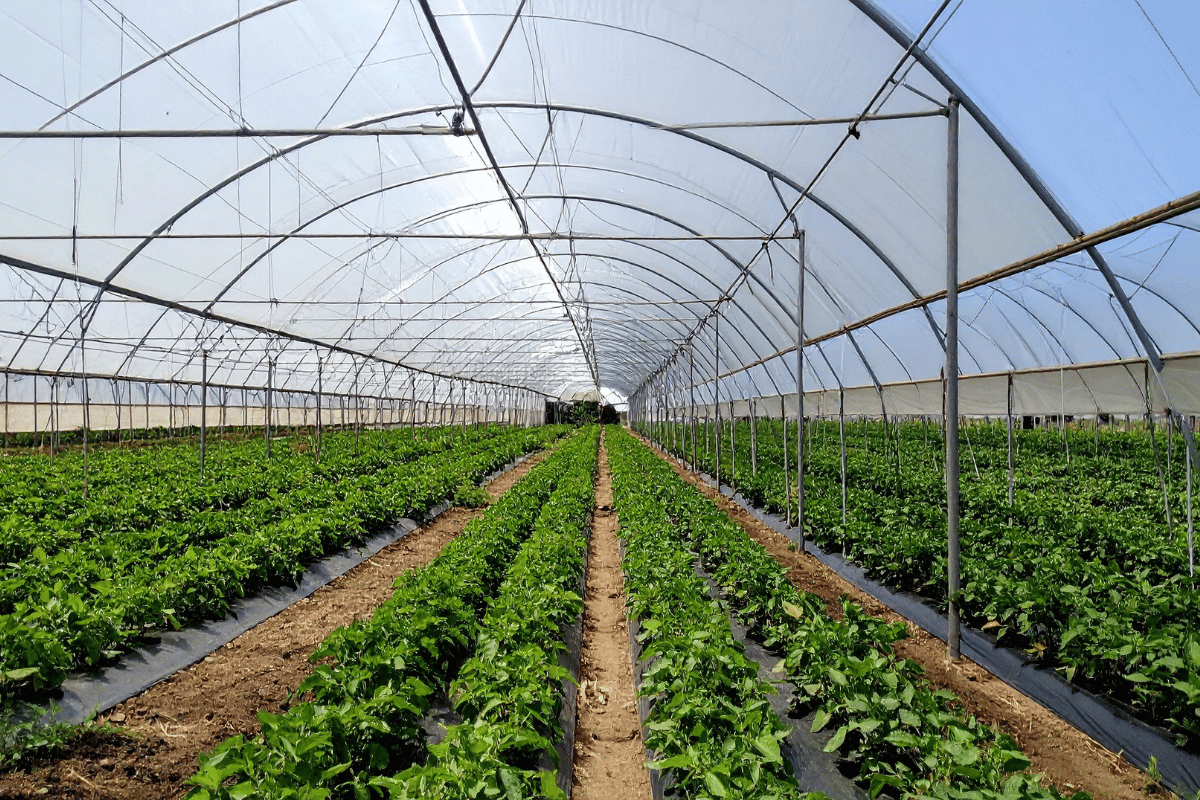
Smart greenhouses, growth chambers, and biofactories enhance adaptability, reduce environmental impacts, and boost the productivity of agricultural systems.
In the face of emerging climate challenges, science and technology are quietly transforming Brazil’s agri-food landscape through Climate-Smart Agriculture (CSA). This innovative approach is designed to enhance resilience in Brazilian agribusiness. With the increasing frequency of extreme weather events, the term “Climate-Smart Agriculture” gained traction after being introduced by the FAO in 2010 and later adopted by institutions such as the World Bank.
The concept of CSA involves practices and technologies that foster adaptability, reduce environmental impact, and improve the productive capacity of agricultural systems. In Brazil, two key initiatives—one from the research sector and the other from the private sector—exemplify how these principles are being applied.
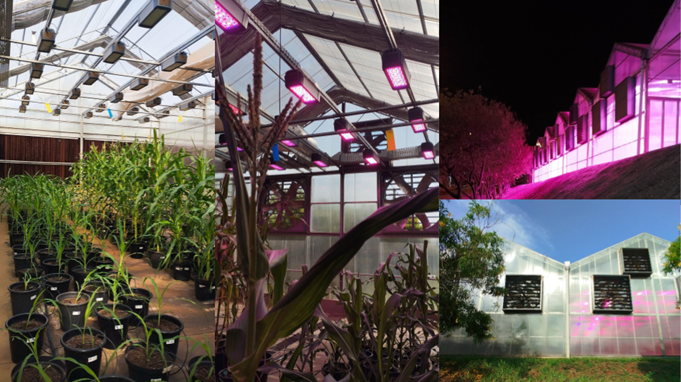
Image credits: GCCRC. By: Davi Souza.
Controlled environments and their value for agricultural research
Structures such as greenhouses and growth chambers allow for precise control of environmental variables like temperature, humidity, and light. Technologies like sensors, artificial lighting, and automated climate and irrigation systems are essential for research efforts ranging from genetic improvement of crop species to adapting agricultural systems to extreme climate scenarios.
The genomics for climate change research center
The Genomics for Climate Change Research Center (GCCRC) is a notable example of CSA in action. The Center is located in the city of Campinas, Brazil, and it is a joint initiative between the State University of Campinas (Unicamp) and Brazilian Agricultural Research Corporation (Embrapa), funded by São Paulo Research Foundation (FAPESP). The GCCRC is a reference in plant genomics and biotechnology, and conducts part of its research with maize in controlled environments. This controlled setup enables year-round simulations of various climate conditions, making it possible to evaluate the performance of genetically improved plants, which is usually difficult to replicate in open fields with multiple stress factors.
Juliana Yassitepe, an Embrapa researcher and GCCRC principal investigator specializing in plant breeding, explains that these environments help researchers understand how specific genotypes respond to certain variables and accelerate the selection of more resilient plants, cutting costs. “Protected environments help plant breeders understand how a specific genotype behaves under combined conditions, such as elevated temperature and CO2, for instance”, highlights Yassitepe.
GCCRC also employs drones and digital phenotyping to collect real-time data, monitor experimental areas, and support decision-making technologies with strong potential for use in the field. “In the short term, drones will become common tools for farmers, delivering relevant information for targeted applications, reducing waste, and increasing productivity,” Juliana predicts.
Biofactories and the future of agricultural production
CSA solutions are considered vital to reducing import dependency and accelerating agricultural innovation. In Brazil, this innovation is particularly relevant to sectors such as fruit and vegetable production and biofuels, where demand for high-quality output is rapidly increasing.
One promising concept is the biofactory, which has the potential to revolutionize food production. According to a study published in the Brazilian Journal of Science, the biofactories in Brazil are being developed as facilities that apply biotechnology to produce seedlings and agricultural bioproducts on a large scale in a controlled and efficient way. Using techniques such as micropropagation of plant materials, along with equipment like bioreactors, enables rapid plant multiplication and the development of biological inputs for pest control, thereby supporting sustainable agriculture.
Private sector innovation: the case of C4 Científica
“With biofactories, we can turn each cubic meter into a productive unit, optimizing space, cutting costs, and scaling up production,” says Carlos Conte, founder of C4 Científica, a company specializing in high-tech solutions and bioproducts for controlled-environment agriculture. “Smart greenhouses, growth chambers, and biofactories are examples of controlled-environment technologies that make farming more efficient and sustainable,” explains Conte.
To expand large-scale plant production systems, C4 Científica is investing in research and development, seeing a promising market in Brazil. According to Conte, this still-imminent model in Brazil has the potential to meet the rising demand for biotechnology, indoor farming, and more efficient production systems, while fostering new business opportunities and democratizing access to agro-technology.
Both the research-driven and private-sector initiatives demonstrate Brazil’s potential to lead in the development and implementation of Climate-Smart Agriculture all over the country. Beyond research, GCCRC strengthens the sector through national and international partnerships and by training skilled professionals, including entrepreneurs and the biotech workforce. Similarly, C4 Científica invests in strategic partnerships with universities and research centers and is seeking international expansion to position Brazil as a global leader in agricultural biotechnology.
*Davi Souza (LinkedIn) is an electrical engineer who graduated from UNICAMP and is a former science journalism fellow at the GCCRC, as part of the FAPESP’s "Comunicar Ciência" program. Davi was part of the GCCRC’s science communication team from July 2024 to June 2025, creating multimedia content for online platforms. This article is a freely translated piece with additional insights for Wikifarmer’s readers. The original version of this article was written in Portuguese and published in July 2025, and it is available at: Tecnologias Csa – Unicamp