



We often wonder why cultivation costs keep rising while yields decline, even when we faithfully follow practices and "recipes" that delivered excellent results in the past. The answer lies largely in climate change, which has intensified considerably in recent years. Each growing season now differs significantly from the one before, making it increasingly difficult to rely on established, time-tested methods.
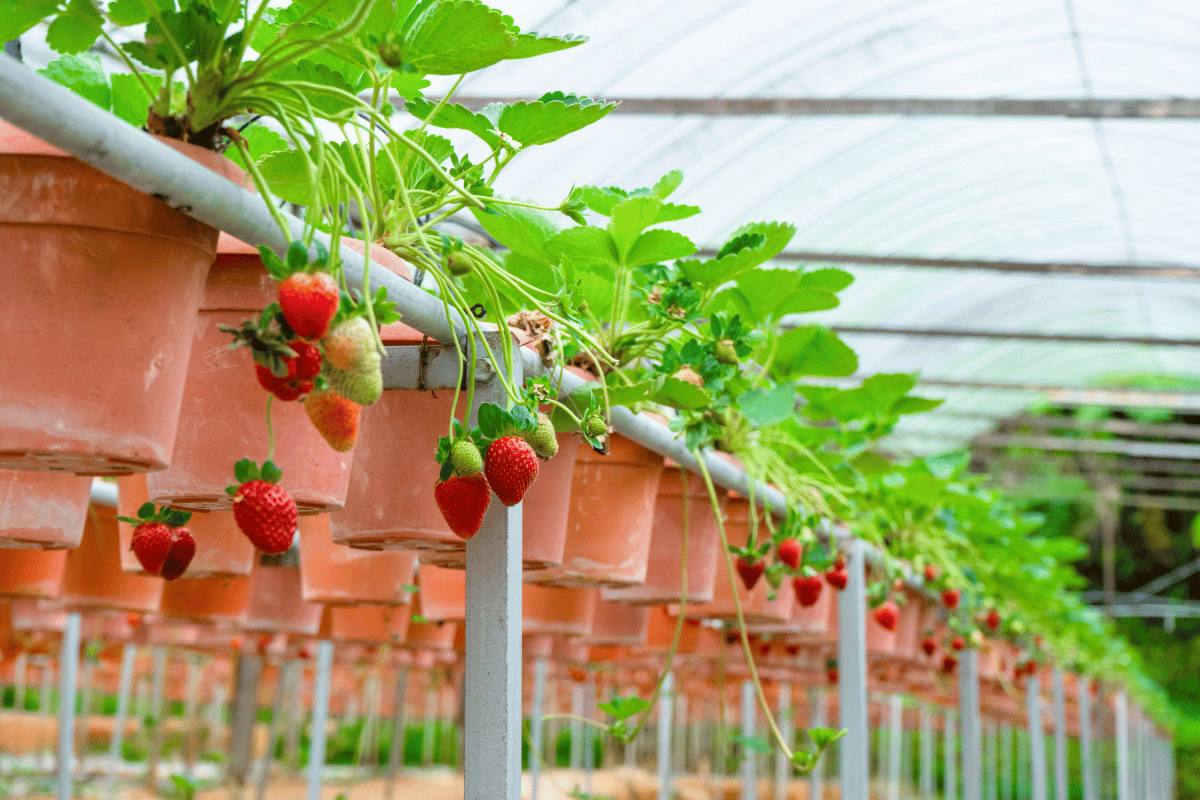
In this article, I will focus on greenhouse strawberry cultivation in the Manolada area of Ilia, a region that serves as a key pillar of strawberry production in Greece. Over the past fifteen years, cultivation there has undergone major changes, driven primarily by shifts in climate. Drawing on my personal experience as both an agronomist and a producer, I will try to capture these changes and describe how I have been adapting my crop management approach.
From frost protection to tropical growing conditions
In recent years, the climate has been getting steadily warmer, with conditions that resemble tropical weather more than the temperate patterns we were used to. Temperatures are higher and rainfall is more frequent and intense. In the past, the cold winter period typically began in late November and lasted through January, peaking in December when frost was common. These frosts posed a serious threat to strawberry plants and could cause significant damage.
For that reason, growers took protective measures such as closing greenhouses and covering plants with special materials to reduce exposure to the cold. Today, winters are noticeably milder. Temperatures rarely drop to levels that are destructive for strawberries, since serious damage requires temperatures below 2°C at ground level. This means that many of the old frost protection practices are no longer necessary.
New challenges in pest and disease management
Instead, the new challenge comes from the combination of high temperatures and increased humidity caused by frequent rainfall. Under these conditions, it is critical that greenhouses remain as open and well-ventilated as possible to prevent the development of fungal diseases. Fungi such as powdery mildew and Botrytis thrive in humid environments, while pest activity also increases. Spider mites, for example, reproduce faster in warmer conditions.
Spraying and fertilization in a changing climate
Weather conditions directly affect cultivation practices such as spraying and fertilization. A spray application for powdery mildew, for example, is most effective when carried out at temperatures around 12-15°C under conditions with no rain or strong wind. Atmospheric humidity also plays an important role in how well plant protection products are absorbed through the leaves, making the timing of application a critical decision.
Fertilization is similarly influenced by sunlight and weather. During periods of strong sunshine, drip irrigation is more effective for delivering nutrients, as it facilitates nutrient transport within the plant. During overcast and rainy periods, foliar feeding through spraying can offer more direct nutrient absorption and better results.
Irrigation as a critical factor in climate adaptation
Another essential cultivation technique in greenhouse strawberry farming that depends directly on weather conditions is irrigation management. Irrigation is not a fixed process applied the same way throughout the year. It is constantly adjusted according to temperature, sunlight, humidity, and rainfall.
During periods of high temperatures and strong sunshine, plants need more water because transpiration rates are higher. More frequent watering is required under these conditions, but with care to avoid creating excess soil moisture. During overcast periods or frequent rain, plant water needs drop. Overwatering under such conditions can lead to soil saturation, reduced oxygen in the root zone, and the development of pathogens such as root rot. In greenhouses with insufficient ventilation, excess humidity can create ideal conditions for disease.
Water temperature also matters. Very cold water during low-temperature periods can stress the root system.
Timing plays an important role as well. On warm days, watering early in the morning is preferred so that plants have sufficient water available throughout the day. Evening watering should be avoided, as it raises nighttime humidity and encourages fungal infections.
Conclusions
Proper irrigation management, adapted to current weather conditions, is a key factor for plant health and production efficiency. Modern agriculture demands constant observation and flexibility.
Through these examples, I want to make the point that we need to adapt to prevailing weather conditions each time and stay as observant as possible, so we can fully take advantage of the benefits that new technologies offer in both crop protection products and fertilizers. I will close with my personal motto. Growing and cultivating a plant is no different from raising a human being or an animal. When we have doubts about something, it helps to remember that plants are living organisms and to treat them accordingly. And of course, to consult agronomists.