

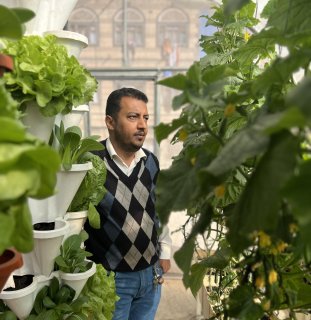
I am Sharaf Abdullah Mohammed Al-Najjar. I graduated from the Faculty of Commerce, majoring in accounting, in 2012. But my journey with hydroponics began in 2020, when a hydroponic farm was being set up for one of our colleagues in Amran Governorate. It was announced through the Bank of Yemen and Kuwait, and at that time I was working in the sales department of Abdullah Hassan Al-Sinidar Company, which specializes in pumps and agricultural equipment.
We asked the general manager about this technology. At first, none of us knew much about it, but we decided to research it further. The general manager had seen hydroponic farming during his travels, and he was impressed by the possibilities. A training course was organized with one of the agricultural engineers. We joined, but it was not a complete success; it only covered the basics. Still, that was where it all started. I began researching and learning on my own, reaching out to experienced people in Egypt, Jordan, and Saudi Arabia. There was an Iraqi doctor with a YouTube channel that we followed closely, and I connected with someone in Saudi Arabia who was running free online courses. Groups were opened through social media, and the learning continued. For those starting from zero, a beginner's guide to hydroponics farming can be a helpful starting point.
First experiment – growing lettuce
After two months of continuous self-education, I started my first experiment. It was a small system consisting of 24 seedlings, and we cultivated lettuce. The result was about 55% success, not perfect, but it was a real beginning. Understanding the different types of hydroponic systems and how they work was an important part of this early learning phase. A picture of the first experiment is below.
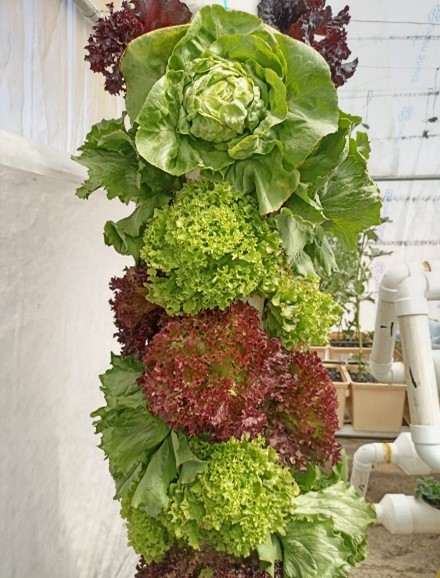
From this point, we set out to collect more integrated data to start more serious work.
The incubator and the strawberry experiment
After the previous experience, my work contract with Abdullah Hassan Al-Sindar Company came to an end, and I dedicated myself to collecting data from references for four months. Then we were hosted by Sister Suad Al-Arhibi, who had an office in the Misbahi building dedicated to consulting and entrepreneurs. She had a business incubator space, and when she heard about our project, she hosted us for free for over eight months to encourage us. She truly had faith in what we were doing.
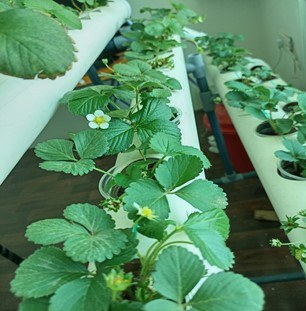
I then invited my colleague Shaima Fouad Al-Najjar and presented the project idea to her. Although her specialization was in marketing, she accepted and committed to learning and self-education. Together, we started the second experiment with our miniature system, this time cultivating strawberries in a hydroponic system. We were working from inside the office (the incubator space), and there were no proper conditions for plants: no adequate lighting, no sunlight, no temperature or humidity control. Despite all that, we achieved around 50% success.
Building a rooftop greenhouse
After that, Sister Suad Al-Arhabi gave us a space on the roof of the building. We started to build a miniature greenhouse with an area of 4 × 6 meters. We established the hydroponic system and connected water and electricity, with the help of our colleague Shaimaa Al-Najjar. Choosing the best growing medium and managing the nutrient solution became part of our daily practice. We started farming as shown in the pictures below.
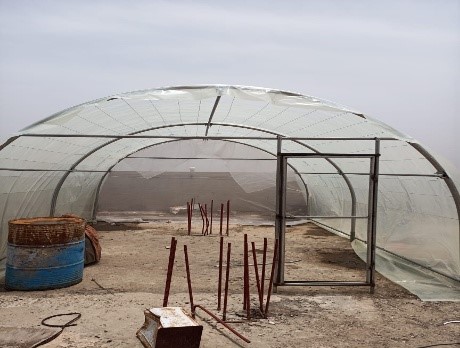
Seedling production and youth training
After that, we started the seedling production phase to continue the cultivation cycle. At the same time, we worked to train marginalized youth for free, sharing everything we had learned.
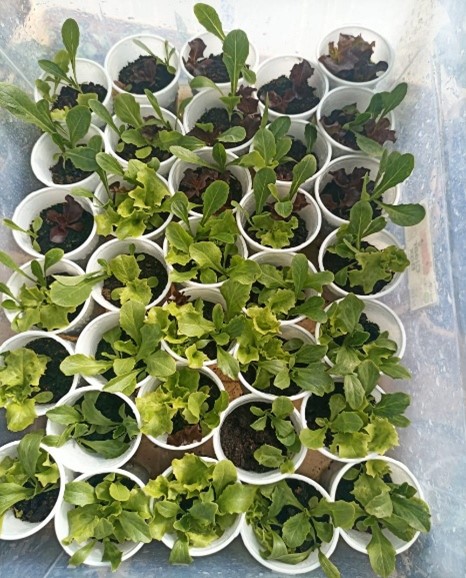
A setback and a new beginning
After eight months of hosting us, Sister Suad Al-Arhabi made the decision to leave Yemen. From that point, the greenhouse and all our tools had to be moved to a warehouse. I stopped the practical farming work and joined a job again, this time in project management at Al-Raabi Company. But the learning never stopped. I continued collecting data and studying, always hoping for the chance to expand again.
Building systems from recycled materials
My passion for reading and experimenting remained strong. One of my colleagues proposed building hydroponic systems from recycled plastic products and waste, such as used oil tanks. With the help of an Egyptian colleague, we built experimental setups as shown below.
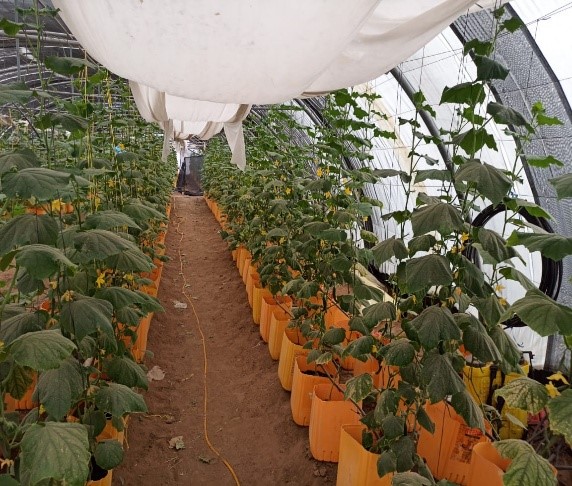
Continuing at home in 2024
Due to the pressure of work in the private sector, I had to pause farming in larger spaces. But we continued to learn, and in 2024 I established a small hydroponic setup on the roof of our rented house, near the workplace. Hydroponics as a practical solution to food insecurity resonated strongly with me, even a small rooftop system can make a difference.
Teaching and workshops
There were important milestones in teaching and learning along the way. We held courses and workshops through institutions like the National Finance Corporation, and we delivered online courses for students at the Faculty of Agriculture, University of Hadramawt, and others. These experiences helped us grow as much as they helped our students, and they connected us with a wider community that shares our goals for sustainable greenhouse crop production.
Potato seed production through hydroponics
In one of our training sessions, we came up with the idea of producing or multiplying potato seeds using hydroponics. The potato is the third most important crop in the world after wheat and rice, and it is an essential part of food security. To understand why this matters, it helps to know how conventional growing potatoes works, and how vulnerable traditional seed production is to soil-borne diseases.
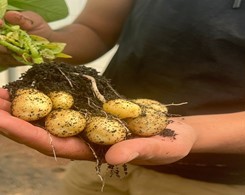
Partnering with the General Company for Potato Seed Production
We approached the General Company for the Production of Potato Seeds in Yemen. They had experience from partnerships with international organizations in Kenya, so we exchanged knowledge. They shared their experience in field propagation of seeds, including the problems and diseases that affect production. We then presented our idea: producing potato seeds in hydroponics, which could deliver disease-free seed stock.
There was a real risk involved. The company was concerned that the experiment might fail and they would lose valuable seeds. So they offered to give us small seeds weighing less than 2 grams each, seeds that would normally fail in field production anyway. We were given 10,000 of these micro-tubers, with the condition that the Zad Yemen team would bear the cost of fertilizers and pesticides.
A breakthrough for Yemen
After planting, the seed company was surprised by how healthy and vigorous the plants looked. We carefully followed up with plant nutrition methods during the growth stages, examining the plants and the process of tuber formation until we reached harvest.
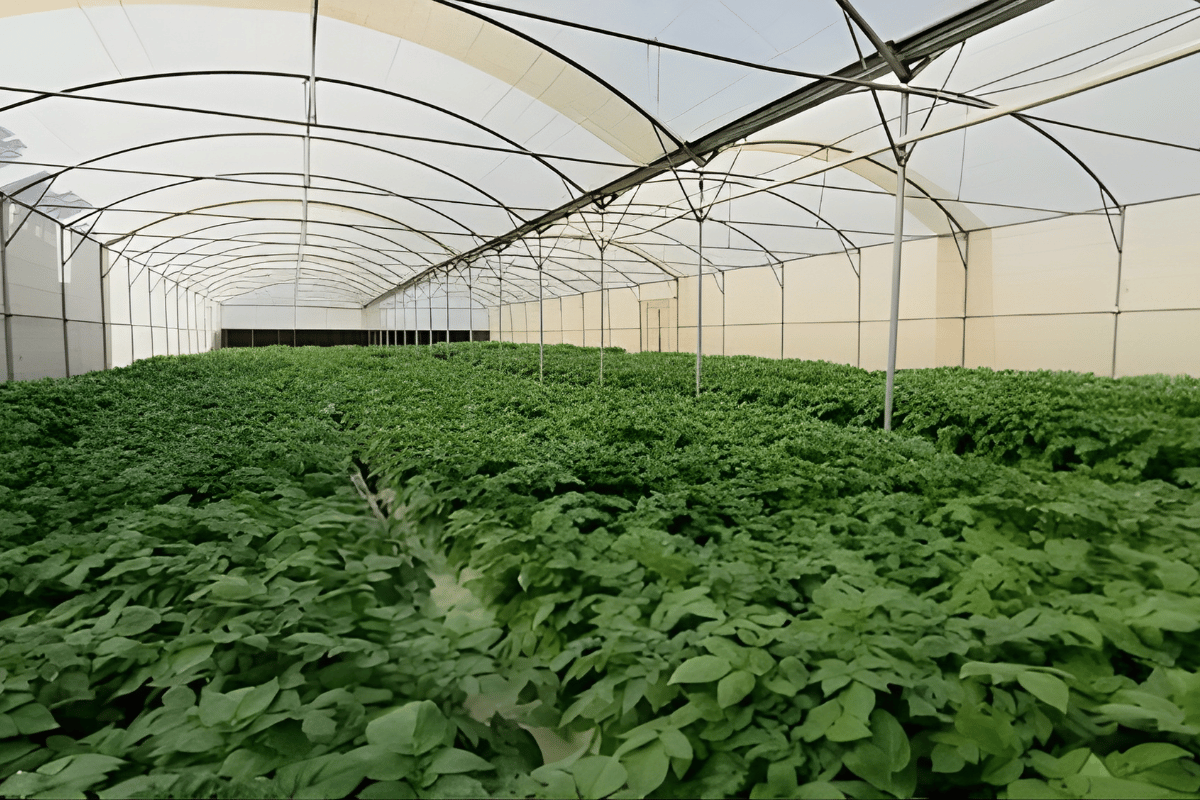
After receiving references from the International Center for Potato Seed Production in Kenya and continuing our research, even while I was busy with my regular job, we succeeded in propagating and producing potato seeds using hydroponics. We rented a dedicated growing space, and this became the first experience at the level of Yemen and the Arab world in producing upper-grade potato seeds in commercial quantities through hydroponics.
This is hugely significant for our country. Yemen currently imports seed potatoes at great expense, millions of dollars every year, and only at the fourth multiplication grade. Thanks to tissue culture, the zero-grade and grade 1 have now been cloned in Yemen, and with hydroponic multiplication, we are working toward self-sufficiency in this critical crop.
Show Image Show Image
Show Image
Challenges and future goals
There have been difficult stages in this journey. Testing nutrient solutions to reach the required formulations was a major challenge, due to the lack of available fertilizers in the local market and insufficient funding to expand production and export. These are challenges of hydroponic farming that many growers face, but they are especially acute in a country with limited supply chains.
We strive to develop this technology further, and our goal is to achieve aeroponic cultivation for potato seed production, if we can secure the conditions and resources needed.
Show Image
This is our story, and God is the guardian of guidance and success.
The Zad Yemen team
- Sharaf Abdullah Mohammed Ali
- Sultan Ali Ahmed Sudan
- Sultan Abdullah Abu Shawarib
- Khaled Jarada