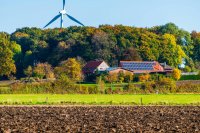
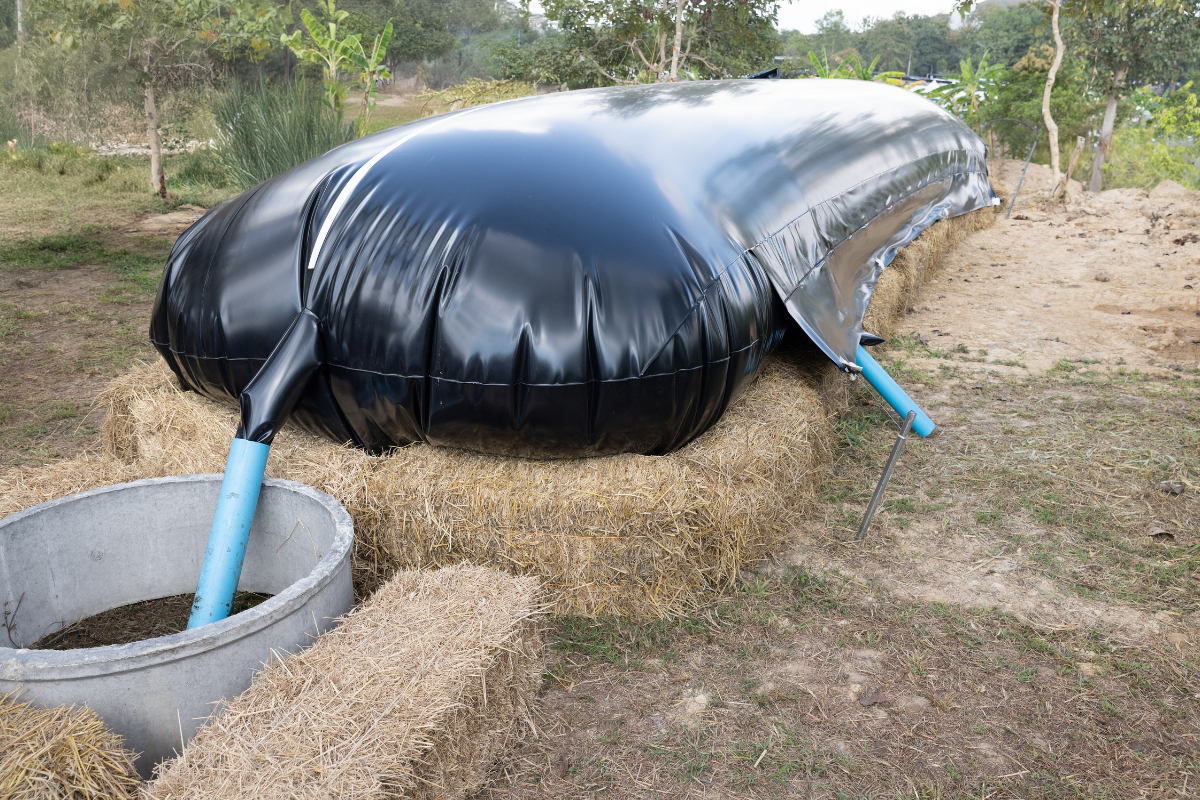
Rising energy prices and the climbing cost of synthetic fertiliser squeeze small mixed farms from two directions at once. Over a 24-month field trial in north-western India, we observed what happened when a small dairy-horticulture farm, with five crossbred dairy cows and 1.5 hectares of papaya and seasonal vegetables, installed a 10 m³ flexible tubular biogas digester and fed it with manure and other organic farm waste.
The results were unambiguous. The farm reached complete energy autonomy for cooking and water heating, cut its synthetic fertiliser use by 65%, and recovered the full capital cost of the system in under two years.
The farm before the digester
The farm sits on sandy clay loam at pH 7.6, with soil organic carbon at a depleted 0.42%. Before the digester, it ran on entirely conventional lines.
- Livestock: five crossbred dairy cows producing 60 to 70 kg of wet manure a day.
- Energy: liquefied petroleum gas for cooking, at 24 cylinders a year, with grid and diesel power for water heating.
- Nutrients: raw manure stored in open heaps, losing volatile nitrogen, breeding flies, and releasing methane to no one's benefit, while crop nutrition leaned on synthetic NPK at 120:60:60 kg per hectare.
The system and how it runs
A 10 m³ high-density polyethylene flexible membrane digester was installed in a semi-excavated, insulated earth trough, which keeps its temperature more stable than a fully above-ground installation.
- Feeding: 60 kg of fresh cattle dung daily, mixed with water at a ratio of one to one, holding total solids between 8% and 10%.
- Digestion: mesophilic anaerobic digestion at ambient temperatures of 22 to 35°C, producing 2.8 to 3.2 m³ of biogas a day at 60 to 65% methane.
- The slurry: the effluent runs into a twin-basin filtration system. The liquid fraction is fertigated to the crops through gravity-fed drip lines, and the solid digestate is solar-dried and used as a soil conditioner.
What changed over two years
| Performance indicator | Before installation | Year 2 | Change |
| LPG consumption (cylinders/year) | 24 | 0 | Full autonomy |
| Synthetic NPK use (kg/ha) | 240 | 84 | −65% |
| Soil organic carbon | 0.42% | 0.68% | +0.26 percentage points |
| Annual thermal energy cost | ₹30,600 | ₹0 | −₹30,600/year |
| Annual fertiliser cost | ₹52,700 | ₹17,850 | −₹34,850/year |
| Net operational savings | ₹0 | ₹65,450/year | +₹65,450/year |
The financial arithmetic is straightforward. The full installation, including the digester unit, piping, sulphur filter, bi-fuel burner, and civil work, cost ₹114,750, approximately US$1,350. Maintenance runs at ₹3,825 per year for filter media and hose inspections, resulting in net savings of ₹61,625 per year. That pays the system back in 1.86 years, roughly 22 months, and projects to an internal rate of return of about 42% over a ten-year lifespan.
The two problems, and what fixed them
No system of this kind runs itself, and two problems need to be solved.
Pressure fluctuations: flexible membrane digesters deliver variable gas pressure when the bag runs low, making cooking flames unstable. Counterweight pressure belts fitted over the bag stabilised delivery to the stoves at 12-15 mbar.
Winter slowdown: in December and January, when night temperatures fall below 12°C, methanogenic microbial activity dropped by around 30%, and gas production fell with it. A low-cost polytunnel erected over the digester trough raised slurry temperatures by 4 to 6°C during the cold months and maintained production. Simple greenhouse structures over tubular digesters are a documented solution for exactly this problem in cold conditions.
What this means for a smallholder
The slurry is a better fertiliser than the raw manure was: liquid bio-slurry carries readily available ammoniacal nitrogen, which crops take up faster than nutrients from raw manure or uncomposted organic matter, and it arrives at the root zone through the drip lines rather than sitting in a heap losing nitrogen to the air.
The entry barrier is low: flexible digesters cost far less to install than fixed-dome concrete designs, which puts them within reach of smallholders for whom a concrete digester never pencils out.
The climate gain comes free: capturing manure methane on farm cuts direct emissions while the slurry gradually rebuilds depleted soil carbon, which is what the soil organic carbon gain in the table shows happening.
The history of small domestic biogas plants in the developing world is long, with millions installed across India and China, most of them fixed designs fed by animal manure. What the flexible membrane generation changes is the price of entry, and on this farm, the numbers say the change is worth making.
Sources
Bond, T., and Templeton, M. R. (2011). History and future of domestic biogas plants in the developing world. Energy for Sustainable Development, 15(4), 347-354.